


 Home
HomeAgility Robotics Expands Operations in Direct Competition with Tesla
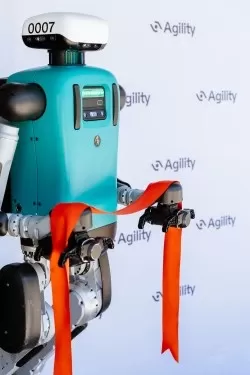
Agility Robotics is set to open a 60,000-square-foot training facility in Fremont, California, to develop its humanoid robot models. The site is located near the factory where Tesla plans to begin producing its Optimus robots this year.
Tesla has placed increasing emphasis on the Optimus project. Elon Musk recently stated that he anticipates it will become “the biggest product ever” once it can be used outside of Tesla’s own operations sometime next year.
Although Agility Robotics does not have access to Tesla’s substantial funding, it already possesses a functional robot named Digit that is in active use across various industries. This robot generates revenue by transporting boxes and containers in manufacturing and warehouse environments for clients such as Amazon, GXO, Schaeffler, and Toyota Motor Manufacturing Canada. The company has also secured $300 million worth of contract orders for its robots.
“It’s wonderful to have [Tesla] operating in the same region as us,” said CEO Peggy Johnson to TechCrunch. “For a long time, Agility was working alone in this space, so it’s great to see other companies entering the humanoid robotics field as well. We’ve successfully commercialized our technology, and now we understand exactly what’s required to meet industry safety standards, regulatory requirements, and integration needs with existing IT infrastructure and warehouse management systems.”
Agility has not disclosed the exact number of Digits robots it has built or deployed, but external analysts estimate that dozens have been used in pilot projects or for generating revenue. The company has indicated that its Digits units have already moved 100,000 containers at a GXO logistics facility.
Johnson is currently steering Agility through a reverse merger that is expected to establish the company as the first pure-play humanoid robotics firm listed on public stock markets later this year. Founded in 2015 by a group of researchers who developed advanced techniques enabling robots to walk safely on two legs, Agility aims to leverage its early advantages over newer AI-driven robotic startups such as Figure, 1X, the Bot Company, and Sunday Robotics.
While transformer-based neural networks that powered the development of large language models also hold promise for advancing robotic behavior, Agility is pursuing a more practical approach to achieving autonomy.
“Think about self-driving cars as a non-humanoid example,” explained Damion Shelton, co-founder and chairman of Agility Robotics, to TechCrunch. “You certainly don’t want the anti-lock brake system under AI control. For humanoid robots, all safety-related systems need to follow a path that avoids reliance on generative AI — you definitely don’t want to experiment with creative approaches to your safety mechanisms.”
That said, AI does help fulfill the goal of scaling up robotic capabilities.
“Early on, when [Bruce Leak, inventor of Quicktime and a member of Agility’s board] asked us how we planned to write software for our robots, we didn’t have a clear answer,” Shelton said. “The number of tasks a robot could perform is far greater than the number of engineers available to program them. Generative AI resolves this issue completely.”
The new training facility is designed to speed up the deployment of Agility’s robotic solutions. Johnson stated that more than 30 customers are currently in discussions with the company regarding the use of Digit, and it will be at this facility that the six-foot-tall robots learn new skills in environments similar to those they will face in real-world applications.
Unlike many newer competitors entering the humanoid robotics space, Agility does not plan to offer household versions of its robots in the near future. This perspective aligns with most independent robotics experts, who believe that today’s most advanced robots are not yet safe enough for consumer use. While current Digits models operate in spaces free of humans, version 5, scheduled to be released this fall, will include human detection capabilities and won’t require isolation in dedicated robot zones.
Jonathan Hurst, co-founder and chief robot officer at Agility, said that the company has plenty of work ahead of it even just within the manufacturing and logistics sectors.
“Let’s start with handling boxes and containers,” Hurst told TechCrunch. “After that, we can move on to tasks like picking items and assembling products. Then we can tackle more complex challenges such as working with cardboard, loading and unloading tractor trailers, and so on. Once we reach 100 million robots, imagine what a trillion-dollar company we could become.”
Related article
 Apple's New Hardware Chief John Ternus Steers Vision for Future Products
Loading the player…The Ternus era at Apple has officially begun.Tim Cook stepped down as CEO this week, handing leadership to former hardware chief John Ternus. Ternus’s first memo promised a “huge launch next week,” meaning the next iPhone event lan
SpaceX Buys $329M in Tesla Megapacks This Year
SpaceX has significantly increased its acquisition of Tesla Megapack units, investing $295 million during the second quarter and $329 million year-to-date, as detailed in the company’s earnings report published on Tuesday.This move highlights the dee
What Drives Bear Robotics’ Decision to Acquire Kinisi
Brennand Pierce serves as the founder and CEO of Kinisi Robotics. | Image source: Kinisi RoboticsHaving earned a Ph.D. in humanoid robotics from the Technical University of Munich and spent over a decade conducting research worldwide, Bren Pierce fou
Related Special Topic Recommendations
Data Analysis
Apple's New Hardware Chief John Ternus Steers Vision for Future Products
Loading the player…The Ternus era at Apple has officially begun.Tim Cook stepped down as CEO this week, handing leadership to former hardware chief John Ternus. Ternus’s first memo promised a “huge launch next week,” meaning the next iPhone event lan
SpaceX Buys $329M in Tesla Megapacks This Year
SpaceX has significantly increased its acquisition of Tesla Megapack units, investing $295 million during the second quarter and $329 million year-to-date, as detailed in the company’s earnings report published on Tuesday.This move highlights the dee
What Drives Bear Robotics’ Decision to Acquire Kinisi
Brennand Pierce serves as the founder and CEO of Kinisi Robotics. | Image source: Kinisi RoboticsHaving earned a Ph.D. in humanoid robotics from the Technical University of Munich and spent over a decade conducting research worldwide, Bren Pierce fou
Related Special Topic Recommendations
Data Analysis
 Best AI Anomaly Detection Tools for KPI Monitoring across SaaS and Ecommerce Teams
2026 Latest Best Top-rated AI Anomaly Detection Tools for KPI Monitoring in SaaS and Ecommerce teams! XIX.AI has curated a powerful, game-changing collection based on rigorous real-world tests and weekly updated rankings. You’ll find detailed free vs paid comparison insights to help you identify the must-try solution that boosts productivity and unlocks your AI edge. Explore now!
 10 tools
 xix.ai
writing
Best AI Outline Generators for Long-Form SEO Articles
xix.ai
writing
Best AI Outline Generators for Long-Form SEO Articles
2026 Latest Best Top-Rated AI Outline Generators for Long-Form SEO Articles, meticulously curated by XIX.AI. These powerful tools offer game-changing assistance in creating high-quality content quickly, boosting writing efficiency significantly. Get a free vs paid comparison along with real-world tests and detailed rankings to help you find the must-try option that suits your needs. Explore now to unlock your AI edge.
8 tools
xix.ai
Education and Learning
AI Study Tools for Homework and Exam Prep
2026 Latest Best AI Study Tools for Homework and Exam Prep! XIX.AI curates a top-rated list of powerful, game-changing tools that help students boost productivity, streamline homework completion, and ace exams through real-world tests. Get a free vs paid comparison, detailed rankings, and must-try options to unlock your AI edge. Explore now!
10 tools
xix.ai
Music composition
AI Vocal Demo Tools for Songwriters, Hooks, Toplines, and Multilingual Draft Sessions
2026 Latest Best AI Vocal Demo Tools for Songwriters, Hook Creators, and Multi-Language Content Teams! XIX.AI has curated a top-rated list of powerful game-changing tools that go through rigorous real-world tests. You’ll find detailed free vs paid comparison data, comprehensive rankings, and must-try options to help you boost writing efficiency and unlock your creative potential. Explore now to discover your perfect tool for all your content needs!
9 tools
xix.ai
Business
Best AI Competitive Research Tools for Small Businesses
2026 Latest Best Top-rated AI Competitive Research Tools for Small Businesses! XIX.AI has curated a highly powerful game-changing collection, updated weekly with rigorous real-world tests and detailed rankings. You can find a comprehensive free vs paid comparison to help you identify the must-try tools that boost your productivity and give you a competitive edge. Explore now to discover your perfect tool!
9 tools
xix.ai
Image editing
Photoshop AI Retouch Tools for Ecommerce Apparel, Skin Cleanup, and Color Consistency
2026 Latest Best Photoshop AI retouch tools for ecommerce apparel, skin cleanup, and color consistency! This top-rated curated list features powerful game-changing solutions that help you boost writing efficiency, streamline content creation, and achieve perfect visual results effortlessly. Each tool has undergone real-world tests through weekly updated rankings, complete with free vs paid comparison details. Backed by XIX.AI, it’s the must-try guide for anyone aiming to unlock your AI edge. Explore now!
10 tools
xix.ai

 Comments (0)
0/500
Comments (0)
0/500
Agility Robotics is set to open a 60,000-square-foot training facility in Fremont, California, to develop its humanoid robot models. The site is located near the factory where Tesla plans to begin producing its Optimus robots this year.
Tesla has placed increasing emphasis on the Optimus project. Elon Musk recently stated that he anticipates it will become “the biggest product ever” once it can be used outside of Tesla’s own operations sometime next year.
Although Agility Robotics does not have access to Tesla’s substantial funding, it already possesses a functional robot named Digit that is in active use across various industries. This robot generates revenue by transporting boxes and containers in manufacturing and warehouse environments for clients such as Amazon, GXO, Schaeffler, and Toyota Motor Manufacturing Canada. The company has also secured $300 million worth of contract orders for its robots.
“It’s wonderful to have [Tesla] operating in the same region as us,” said CEO Peggy Johnson to TechCrunch. “For a long time, Agility was working alone in this space, so it’s great to see other companies entering the humanoid robotics field as well. We’ve successfully commercialized our technology, and now we understand exactly what’s required to meet industry safety standards, regulatory requirements, and integration needs with existing IT infrastructure and warehouse management systems.”
Agility has not disclosed the exact number of Digits robots it has built or deployed, but external analysts estimate that dozens have been used in pilot projects or for generating revenue. The company has indicated that its Digits units have already moved 100,000 containers at a GXO logistics facility.
Johnson is currently steering Agility through a reverse merger that is expected to establish the company as the first pure-play humanoid robotics firm listed on public stock markets later this year. Founded in 2015 by a group of researchers who developed advanced techniques enabling robots to walk safely on two legs, Agility aims to leverage its early advantages over newer AI-driven robotic startups such as Figure, 1X, the Bot Company, and Sunday Robotics.
While transformer-based neural networks that powered the development of large language models also hold promise for advancing robotic behavior, Agility is pursuing a more practical approach to achieving autonomy.
“Think about self-driving cars as a non-humanoid example,” explained Damion Shelton, co-founder and chairman of Agility Robotics, to TechCrunch. “You certainly don’t want the anti-lock brake system under AI control. For humanoid robots, all safety-related systems need to follow a path that avoids reliance on generative AI — you definitely don’t want to experiment with creative approaches to your safety mechanisms.”
That said, AI does help fulfill the goal of scaling up robotic capabilities.
“Early on, when [Bruce Leak, inventor of Quicktime and a member of Agility’s board] asked us how we planned to write software for our robots, we didn’t have a clear answer,” Shelton said. “The number of tasks a robot could perform is far greater than the number of engineers available to program them. Generative AI resolves this issue completely.”
The new training facility is designed to speed up the deployment of Agility’s robotic solutions. Johnson stated that more than 30 customers are currently in discussions with the company regarding the use of Digit, and it will be at this facility that the six-foot-tall robots learn new skills in environments similar to those they will face in real-world applications.
Unlike many newer competitors entering the humanoid robotics space, Agility does not plan to offer household versions of its robots in the near future. This perspective aligns with most independent robotics experts, who believe that today’s most advanced robots are not yet safe enough for consumer use. While current Digits models operate in spaces free of humans, version 5, scheduled to be released this fall, will include human detection capabilities and won’t require isolation in dedicated robot zones.
Jonathan Hurst, co-founder and chief robot officer at Agility, said that the company has plenty of work ahead of it even just within the manufacturing and logistics sectors.
“Let’s start with handling boxes and containers,” Hurst told TechCrunch. “After that, we can move on to tasks like picking items and assembling products. Then we can tackle more complex challenges such as working with cardboard, loading and unloading tractor trailers, and so on. Once we reach 100 million robots, imagine what a trillion-dollar company we could become.”








 Apple's New Hardware Chief John Ternus Steers Vision for Future Products
Loading the player…The Ternus era at Apple has officially begun.Tim Cook stepped down as CEO this week, handing leadership to former hardware chief John Ternus. Ternus’s first memo promised a “huge launch next week,” meaning the next iPhone event lan
Apple's New Hardware Chief John Ternus Steers Vision for Future Products
Loading the player…The Ternus era at Apple has officially begun.Tim Cook stepped down as CEO this week, handing leadership to former hardware chief John Ternus. Ternus’s first memo promised a “huge launch next week,” meaning the next iPhone event lan
 SpaceX Buys $329M in Tesla Megapacks This Year
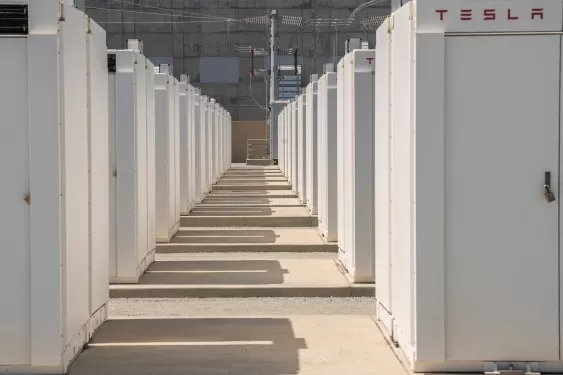
SpaceX has significantly increased its acquisition of Tesla Megapack units, investing $295 million during the second quarter and $329 million year-to-date, as detailed in the company’s earnings report published on Tuesday.This move highlights the dee
SpaceX Buys $329M in Tesla Megapacks This Year
SpaceX has significantly increased its acquisition of Tesla Megapack units, investing $295 million during the second quarter and $329 million year-to-date, as detailed in the company’s earnings report published on Tuesday.This move highlights the dee
 What Drives Bear Robotics’ Decision to Acquire Kinisi
Brennand Pierce serves as the founder and CEO of Kinisi Robotics. | Image source: Kinisi RoboticsHaving earned a Ph.D. in humanoid robotics from the Technical University of Munich and spent over a decade conducting research worldwide, Bren Pierce fou
What Drives Bear Robotics’ Decision to Acquire Kinisi
Brennand Pierce serves as the founder and CEO of Kinisi Robotics. | Image source: Kinisi RoboticsHaving earned a Ph.D. in humanoid robotics from the Technical University of Munich and spent over a decade conducting research worldwide, Bren Pierce fou

2026 Latest Best Top-rated AI Anomaly Detection Tools for KPI Monitoring in SaaS and Ecommerce teams! XIX.AI has curated a powerful, game-changing collection based on rigorous real-world tests and weekly updated rankings. You’ll find detailed free vs paid comparison insights to help you identify the must-try solution that boosts productivity and unlocks your AI edge. Explore now!
10 tools
xix.ai

2026 Latest Best Top-Rated AI Outline Generators for Long-Form SEO Articles, meticulously curated by XIX.AI. These powerful tools offer game-changing assistance in creating high-quality content quickly, boosting writing efficiency significantly. Get a free vs paid comparison along with real-world tests and detailed rankings to help you find the must-try option that suits your needs. Explore now to unlock your AI edge.
8 tools
xix.ai

2026 Latest Best AI Study Tools for Homework and Exam Prep! XIX.AI curates a top-rated list of powerful, game-changing tools that help students boost productivity, streamline homework completion, and ace exams through real-world tests. Get a free vs paid comparison, detailed rankings, and must-try options to unlock your AI edge. Explore now!
10 tools
xix.ai

2026 Latest Best AI Vocal Demo Tools for Songwriters, Hook Creators, and Multi-Language Content Teams! XIX.AI has curated a top-rated list of powerful game-changing tools that go through rigorous real-world tests. You’ll find detailed free vs paid comparison data, comprehensive rankings, and must-try options to help you boost writing efficiency and unlock your creative potential. Explore now to discover your perfect tool for all your content needs!
9 tools
xix.ai

2026 Latest Best Top-rated AI Competitive Research Tools for Small Businesses! XIX.AI has curated a highly powerful game-changing collection, updated weekly with rigorous real-world tests and detailed rankings. You can find a comprehensive free vs paid comparison to help you identify the must-try tools that boost your productivity and give you a competitive edge. Explore now to discover your perfect tool!
9 tools
xix.ai

2026 Latest Best Photoshop AI retouch tools for ecommerce apparel, skin cleanup, and color consistency! This top-rated curated list features powerful game-changing solutions that help you boost writing efficiency, streamline content creation, and achieve perfect visual results effortlessly. Each tool has undergone real-world tests through weekly updated rankings, complete with free vs paid comparison details. Backed by XIX.AI, it’s the must-try guide for anyone aiming to unlock your AI edge. Explore now!
10 tools
xix.ai












