


 Home
HomeOmen AI’s data center optimization plan draws sharp criticism
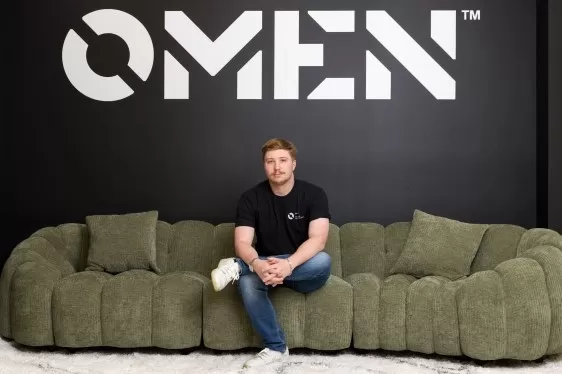
The surging demand for AI computing power is pushing data centers to maximize every rack of GPUs. One unintended side effect? Bacterial contamination.
The coolant used for liquid-cooled chips is a mixture of water and a biocide. To run chips at higher temperatures, operators adjust the ratio to include more water—better at absorbing heat, but also more prone to microbial growth that clogs the system. Fixing that means flushing the loop, which can idle a rack for five or six hours, potentially costing millions of dollars.
Omen AI offers an alternative: a tiny spectrometer that monitors coolant quality in real time, catching bacterial growth before it becomes a major crisis. “You’re not risking massive downtime because you have no visibility into the chemistry,” says founder and CEO Zach Laberge.
Today, Omen AI announced a $31 million Series A round led by Nava Ventures, with participation from CRV, Vanderbilt University, Mann+Hummel, Starhill Holdings, Hard Launch Capital, and personal investments from executives at Bridgestone, GM, Johnson Controls, and Tensorwave.
Laberge started his first company in 2020 at age 14, raising $3 million to embed sensors in construction equipment—and eventually dropping out of high school. (His parents, including his mother, a former Ontario Minister of Education, supported his decision to forge his own path.)
After that startup shut down, Laberge launched Omen in 2024, focusing on fluid systems as the key to making construction machinery smart enough to know when it needs repair. The idea was to replace the slow process of extracting samples and sending them to a lab with real-time awareness. Beyond detecting bacterial growth, the device can spot pump wear if it picks up copper or chromium, and seal degradation if it detects silicon.
Caterpillar dealerships were an early customer for Omen’s heavy-vehicle business, but Cat is also a major supplier of gas-powered turbines and generators for on-site data center power. It didn’t take long for Omen to see where the industry was heading.
“That was kind of the turning point,” Laberge told TechCrunch. About six months ago, “many dealerships started saying, ‘Hey, we’re putting sensors on our turbines—can you help with the building side?’”
Omen realized those buildings are full of fluid, from HVAC systems to chip cooling. Spotting a fast-growing customer base, the company shifted focus to data centers.
“It’s rare to see a founder so young who commands the respect of large, established companies in a slow-moving industry,” said Cory Rellas, a partner at Nava Ventures who sits on Omen’s board. “For Omen, much of our due diligence came through introductions with major customers that quickly validated their approach.”
Omen, which has raised $40 million since its 2024 founding, is now working with a dozen data center customers to build out its offering—including TensorWave, a company creating an AI compute cloud on AMD chips.
“The fluid running through these massive systems is a critical variable that most of the industry is flying blind on,” Piotr Tomasik, TensorWave’s president, said in a statement. “Omen sees the future of infrastructure exactly as we do: better monitoring to optimally support compute customers.”
While many organizations still mail fluid samples to labs, Omen isn’t the only player pursuing on-site analytics—Pyxis, an established water-monitoring firm, launched its own data center coolant monitoring product earlier this month.
The key technological breakthroughs that made this approach possible are recent advances in both optical hardware and signal-processing software. “Hardware is now cheap enough that scaling makes sense, and signal processing lets us extract more meaning from the noise,” Laberge said.
Related article
 Former Infosys Chief’s AI Startup Secures Another $53M
Hang Ten Systems, an AI startup established by former Infosys CEO Vishal Sikka just four months ago, has secured an additional $53 million in seed funding. This latest investment round was finalized merely five weeks after the initial $32 million see
Crypto exchange OKX aims to empower AI agents to hire and pay each other
As AI agents start serving individuals and collaborating with each other, they require mechanisms to locate tasks, compensate for services, and establish credibility. Crypto exchange OKX anticipates this future is arriving sooner than anticipated, in
Thiel-backed startup claims AI can judge journalism, despite risks to whistleblowers
Following his role in the lawsuit that led to Gawker’s bankruptcy, Aron D’Souza identified a critical flaw in the American media landscape: individuals harmed by coverage lacked effective means to respond.His answer is technology. D’Souza’s new ventu
Related Special Topic Recommendations
Image editing
Former Infosys Chief’s AI Startup Secures Another $53M
Hang Ten Systems, an AI startup established by former Infosys CEO Vishal Sikka just four months ago, has secured an additional $53 million in seed funding. This latest investment round was finalized merely five weeks after the initial $32 million see
Crypto exchange OKX aims to empower AI agents to hire and pay each other
As AI agents start serving individuals and collaborating with each other, they require mechanisms to locate tasks, compensate for services, and establish credibility. Crypto exchange OKX anticipates this future is arriving sooner than anticipated, in
Thiel-backed startup claims AI can judge journalism, despite risks to whistleblowers
Following his role in the lawsuit that led to Gawker’s bankruptcy, Aron D’Souza identified a critical flaw in the American media landscape: individuals harmed by coverage lacked effective means to respond.His answer is technology. D’Souza’s new ventu
Related Special Topic Recommendations
Image editing
 Photoshop AI Retouch Tools for Ecommerce Apparel, Skin Cleanup, and Color Consistency
2026 Latest Best Photoshop AI retouch tools for ecommerce apparel, skin cleanup, and color consistency! This top-rated curated list features powerful game-changing solutions that help you boost writing efficiency, streamline content creation, and achieve perfect visual results effortlessly. Each tool has undergone real-world tests through weekly updated rankings, complete with free vs paid comparison details. Backed by XIX.AI, it’s the must-try guide for anyone aiming to unlock your AI edge. Explore now!
 10 tools
 xix.ai
Prompt
Best AI Prompt Libraries for ChatGPT Workflows
xix.ai
Prompt
Best AI Prompt Libraries for ChatGPT Workflows
2026 Latest Best Top-Rated AI Prompt Libraries for optimizing all types of ChatGPT workflows. XIX.AI has curated a powerful, game-changing collection that goes through rigorous real-world tests to ensure top performance. You can find detailed free vs paid comparisons and expert rankings to help you choose the must-try tools that boost your productivity and unlock your AI edge. Explore now!
11 tools
xix.ai
Education and Learning
AI Quiz Builder Platforms for Teachers, Tutors, and Cohort-Based Learning Programs
2026 Latest Best AI Quiz Builder Platforms for Teachers, Tutors, and Cohort-Based Learning Programs! XIX.AI has curated a top-rated list of powerful game-changing tools that go through real-world tests to deliver accurate rankings. These must-try platforms help boost writing efficiency, streamline content creation, and simplify quiz design across all learning scenarios. Explore now to discover your perfect tool for unlocking your AI edge in teaching!
13 tools
xix.ai
code
AI Pull Request Review Tools for GitHub Teams Handling Refactors, Bugs, and Security Gaps
2026 Latest Best AI Pull Request Review Tools for GitHub Teams are here on XIX.AI! This top-rated curated list showcases powerful game-changing solutions that streamline refactoring, bug fixing, and security gap detection across all team workflows. Enjoy a free vs paid comparison along with real-world tests and detailed rankings to help you find the perfect tool that boosts productivity significantly. Explore now to unlock your AI edge!
12 tools
xix.ai
Text-to-speech
Best AI Text to Speech Tools for Natural Voiceovers
2026 Latest Best Top-rated AI Text to Speech Tools for Natural Voiceovers are here on XIX.AI! This curated list features powerful, game-changing options that deliver crystal-clear voices for every use case, backed by real-world tests and weekly updated rankings. Get a free vs paid comparison to find the must-try solution that boosts your productivity instantly. Explore now to Unlock your AI edge!
11 tools
xix.ai
Comic Creation
Manga AI Background Generators for Serialized Chapters, Covers, and Promo Art
2026 Latest Best Manga AI Background Generators Ranked Top-Rated! This curated collection showcases powerful game-changing tools perfect for creating high-quality chapter backgrounds, book covers, and promotional art. Every option has undergone rigorous real-world tests to ensure reliability. Get a free vs paid comparison along with detailed insights. Explore now to discover your perfect tool and unlock your AI edge in manga creation.
6 tools
xix.ai

 Comments (0)
0/500
Comments (0)
0/500
The surging demand for AI computing power is pushing data centers to maximize every rack of GPUs. One unintended side effect? Bacterial contamination.
The coolant used for liquid-cooled chips is a mixture of water and a biocide. To run chips at higher temperatures, operators adjust the ratio to include more water—better at absorbing heat, but also more prone to microbial growth that clogs the system. Fixing that means flushing the loop, which can idle a rack for five or six hours, potentially costing millions of dollars.
Omen AI offers an alternative: a tiny spectrometer that monitors coolant quality in real time, catching bacterial growth before it becomes a major crisis. “You’re not risking massive downtime because you have no visibility into the chemistry,” says founder and CEO Zach Laberge.
Today, Omen AI announced a $31 million Series A round led by Nava Ventures, with participation from CRV, Vanderbilt University, Mann+Hummel, Starhill Holdings, Hard Launch Capital, and personal investments from executives at Bridgestone, GM, Johnson Controls, and Tensorwave.
Laberge started his first company in 2020 at age 14, raising $3 million to embed sensors in construction equipment—and eventually dropping out of high school. (His parents, including his mother, a former Ontario Minister of Education, supported his decision to forge his own path.)
After that startup shut down, Laberge launched Omen in 2024, focusing on fluid systems as the key to making construction machinery smart enough to know when it needs repair. The idea was to replace the slow process of extracting samples and sending them to a lab with real-time awareness. Beyond detecting bacterial growth, the device can spot pump wear if it picks up copper or chromium, and seal degradation if it detects silicon.
Caterpillar dealerships were an early customer for Omen’s heavy-vehicle business, but Cat is also a major supplier of gas-powered turbines and generators for on-site data center power. It didn’t take long for Omen to see where the industry was heading.
“That was kind of the turning point,” Laberge told TechCrunch. About six months ago, “many dealerships started saying, ‘Hey, we’re putting sensors on our turbines—can you help with the building side?’”
Omen realized those buildings are full of fluid, from HVAC systems to chip cooling. Spotting a fast-growing customer base, the company shifted focus to data centers.
“It’s rare to see a founder so young who commands the respect of large, established companies in a slow-moving industry,” said Cory Rellas, a partner at Nava Ventures who sits on Omen’s board. “For Omen, much of our due diligence came through introductions with major customers that quickly validated their approach.”
Omen, which has raised $40 million since its 2024 founding, is now working with a dozen data center customers to build out its offering—including TensorWave, a company creating an AI compute cloud on AMD chips.
“The fluid running through these massive systems is a critical variable that most of the industry is flying blind on,” Piotr Tomasik, TensorWave’s president, said in a statement. “Omen sees the future of infrastructure exactly as we do: better monitoring to optimally support compute customers.”
While many organizations still mail fluid samples to labs, Omen isn’t the only player pursuing on-site analytics—Pyxis, an established water-monitoring firm, launched its own data center coolant monitoring product earlier this month.
The key technological breakthroughs that made this approach possible are recent advances in both optical hardware and signal-processing software. “Hardware is now cheap enough that scaling makes sense, and signal processing lets us extract more meaning from the noise,” Laberge said.








 Former Infosys Chief’s AI Startup Secures Another $53M
Hang Ten Systems, an AI startup established by former Infosys CEO Vishal Sikka just four months ago, has secured an additional $53 million in seed funding. This latest investment round was finalized merely five weeks after the initial $32 million see
Former Infosys Chief’s AI Startup Secures Another $53M
Hang Ten Systems, an AI startup established by former Infosys CEO Vishal Sikka just four months ago, has secured an additional $53 million in seed funding. This latest investment round was finalized merely five weeks after the initial $32 million see
 Crypto exchange OKX aims to empower AI agents to hire and pay each other
As AI agents start serving individuals and collaborating with each other, they require mechanisms to locate tasks, compensate for services, and establish credibility. Crypto exchange OKX anticipates this future is arriving sooner than anticipated, in
Crypto exchange OKX aims to empower AI agents to hire and pay each other
As AI agents start serving individuals and collaborating with each other, they require mechanisms to locate tasks, compensate for services, and establish credibility. Crypto exchange OKX anticipates this future is arriving sooner than anticipated, in
 Thiel-backed startup claims AI can judge journalism, despite risks to whistleblowers
Following his role in the lawsuit that led to Gawker’s bankruptcy, Aron D’Souza identified a critical flaw in the American media landscape: individuals harmed by coverage lacked effective means to respond.His answer is technology. D’Souza’s new ventu
Thiel-backed startup claims AI can judge journalism, despite risks to whistleblowers
Following his role in the lawsuit that led to Gawker’s bankruptcy, Aron D’Souza identified a critical flaw in the American media landscape: individuals harmed by coverage lacked effective means to respond.His answer is technology. D’Souza’s new ventu

2026 Latest Best Photoshop AI retouch tools for ecommerce apparel, skin cleanup, and color consistency! This top-rated curated list features powerful game-changing solutions that help you boost writing efficiency, streamline content creation, and achieve perfect visual results effortlessly. Each tool has undergone real-world tests through weekly updated rankings, complete with free vs paid comparison details. Backed by XIX.AI, it’s the must-try guide for anyone aiming to unlock your AI edge. Explore now!
10 tools
xix.ai

2026 Latest Best Top-Rated AI Prompt Libraries for optimizing all types of ChatGPT workflows. XIX.AI has curated a powerful, game-changing collection that goes through rigorous real-world tests to ensure top performance. You can find detailed free vs paid comparisons and expert rankings to help you choose the must-try tools that boost your productivity and unlock your AI edge. Explore now!
11 tools
xix.ai

2026 Latest Best AI Quiz Builder Platforms for Teachers, Tutors, and Cohort-Based Learning Programs! XIX.AI has curated a top-rated list of powerful game-changing tools that go through real-world tests to deliver accurate rankings. These must-try platforms help boost writing efficiency, streamline content creation, and simplify quiz design across all learning scenarios. Explore now to discover your perfect tool for unlocking your AI edge in teaching!
13 tools
xix.ai

2026 Latest Best AI Pull Request Review Tools for GitHub Teams are here on XIX.AI! This top-rated curated list showcases powerful game-changing solutions that streamline refactoring, bug fixing, and security gap detection across all team workflows. Enjoy a free vs paid comparison along with real-world tests and detailed rankings to help you find the perfect tool that boosts productivity significantly. Explore now to unlock your AI edge!
12 tools
xix.ai

2026 Latest Best Top-rated AI Text to Speech Tools for Natural Voiceovers are here on XIX.AI! This curated list features powerful, game-changing options that deliver crystal-clear voices for every use case, backed by real-world tests and weekly updated rankings. Get a free vs paid comparison to find the must-try solution that boosts your productivity instantly. Explore now to Unlock your AI edge!
11 tools
xix.ai

2026 Latest Best Manga AI Background Generators Ranked Top-Rated! This curated collection showcases powerful game-changing tools perfect for creating high-quality chapter backgrounds, book covers, and promotional art. Every option has undergone rigorous real-world tests to ensure reliability. Get a free vs paid comparison along with detailed insights. Explore now to discover your perfect tool and unlock your AI edge in manga creation.
6 tools
xix.ai












