


 Home
HomeNvidia Aims to Become the Android Platform for General-Purpose Robotics
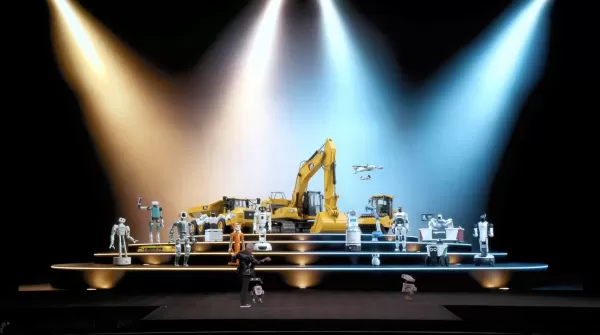
At CES 2026, Nvidia unveiled a comprehensive new suite of robot foundation models, simulation tools, and edge hardware. These moves underscore the company's ambition to establish itself as the foundational platform for general-purpose robotics, aiming for a position analogous to Android's role in the smartphone industry.
Nvidia's push into robotics mirrors a wider industry trend where AI is transitioning from the cloud into physical machines. This shift is powered by more affordable sensors, sophisticated simulation technology, and AI models that are becoming capable of generalizing their learning across a variety of tasks.
On Monday, Nvidia detailed its full-stack ecosystem for physical AI. This includes new open foundation models designed to give robots the ability to reason, plan, and adapt to diverse tasks and environments, moving beyond single-purpose automation. All these models are accessible via HuggingFace.
Key models announced include: Cosmos Transfer 2.5 and Cosmos Predict 2.5, which are world models for generating synthetic data and evaluating robot policies in simulation; Cosmos Reason 2, a reasoning vision-language model (VLM) that enables AI systems to perceive, understand, and interact with the physical world; and Isaac GR00T N1.6, the next-generation vision-language-action (VLA) model specifically engineered for humanoid robots. GR00T utilizes Cosmos Reason as its cognitive core, unlocking whole-body control for humanoids to move and manipulate objects simultaneously.
Nvidia also introduced Isaac Lab-Arena at CES, an open-source simulation framework available on GitHub. This framework serves as another critical component of Nvidia's physical AI platform, allowing for the safe and efficient virtual testing of robotic capabilities.
This platform aims to solve a major industry challenge: as robots learn increasingly complex skills—from delicate object manipulation to cable installation—validating these abilities in the real world is often expensive, slow, and hazardous. Isaac Lab-Arena addresses this by consolidating resources, task scenarios, training tools, and established benchmarks like Libero, RoboCasa, and RoboTwin into a unified standard where none previously existed.
Supporting this entire ecosystem is Nvidia OSMO, an open-source command center that acts as connective infrastructure. It integrates the complete workflow, from data generation to training, seamlessly across both desktop and cloud environments.
Techcrunch event Join the Disrupt 2026 Waitlist
Secure your spot on the Disrupt 2026 waitlist for priority access when Early Bird tickets are released. Past Disrupt stages have hosted giants like Google Cloud, Netflix, Microsoft, Box, Phia, a16z, ElevenLabs, Wayve, HuggingFace, Elad Gil, and Vinod Khosla. They're part of over 250 industry leaders driving 200+ sessions designed to accelerate your growth and sharpen your competitive edge. You'll also have the chance to connect with hundreds of startups innovating across every industry sector.
Join the Disrupt 2026 Waitlist
Secure your spot on the Disrupt 2026 waitlist for priority access when Early Bird tickets are released. Past Disrupt stages have hosted giants like Google Cloud, Netflix, Microsoft, Box, Phia, a16z, ElevenLabs, Wayve, HuggingFace, Elad Gil, and Vinod Khosla. They're part of over 250 industry leaders driving 200+ sessions designed to accelerate your growth and sharpen your competitive edge. You'll also have the chance to connect with hundreds of startups innovating across every industry sector.
San Francisco | October 13-15, 2026 WAITLIST NOW Powering this ecosystem is the new Blackwell-powered Jetson T4000 graphics card, the latest addition to the Thor family. Nvidia positions it as a cost-effective, on-device computing upgrade, delivering 1200 teraflops of AI performance and 64 gigabytes of memory while operating efficiently at just 40 to 70 watts.
Nvidia is also expanding its partnership with HuggingFace to make robot training more accessible, reducing the need for expensive hardware or deep technical expertise. This collaboration integrates Nvidia's Isaac and GR00T technologies into HuggingFace's LeRobot framework, connecting Nvidia's community of 2 million robotics developers with HuggingFace's 13 million AI builders. The open-source Reachy 2 humanoid robot on the developer platform now works directly with Nvidia's Jetson Thor chip, allowing developers to experiment with various AI models without vendor lock-in.
The overarching goal for Nvidia is to make robotics development more accessible, positioning itself as the essential hardware and software provider—similar to how Android serves as the default platform for smartphone manufacturers.
Early indicators suggest Nvidia's strategy is gaining traction. Robotics is now the fastest-growing category on HuggingFace, with Nvidia's models leading in downloads. Furthermore, a range of robotics companies—from Boston Dynamics and Caterpillar to Franka Robots and NEURA Robotics—are already deploying Nvidia's technology.
Follow all of TechCrunch's coverage of the annual CES conference here.
Nvidia's focus on bringing AI into the physical realm through robotics, demonstrated in one clip from #CES2026, with some help from some assistants. pic.twitter.com/9et5JYtq2I
— TechCrunch (@TechCrunch) January 5, 2026
Related article
 Musk Considered Leaving OpenAI to His Kids as Altman Testifies
This morning, OpenAI CEO Sam Altman took the stand to address former co-founder Elon Musk’s lawsuit challenging the company’s corporate structure.When asked about Musk’s claim that other founders “stole a charity” by launching a for-profit subsidiary
Sam Altman Sparks Debate Over AI's Deceleration
Listen onApple PodcastsListen onSpotifyOpenAI CEO Sam Altman recently suggested that it may be time to “pace the rate of AI development” to allow society to “harden around some of these new capability levels.”On the latest episode of TechCrunch’s Equ
Anthropic Opens Doors to EU Cybersecurity Agency as Mythos5 Model Faces Compliance Exam
Artificial intelligence compliance regulations are advancing significantly. Leading AI firm Anthropic has officially granted the European Union's cybersecurity authority access to its Mythos AI model, a pivotal move for this advanced large language m
Related Special Topic Recommendations
Business
Musk Considered Leaving OpenAI to His Kids as Altman Testifies
This morning, OpenAI CEO Sam Altman took the stand to address former co-founder Elon Musk’s lawsuit challenging the company’s corporate structure.When asked about Musk’s claim that other founders “stole a charity” by launching a for-profit subsidiary
Sam Altman Sparks Debate Over AI's Deceleration
Listen onApple PodcastsListen onSpotifyOpenAI CEO Sam Altman recently suggested that it may be time to “pace the rate of AI development” to allow society to “harden around some of these new capability levels.”On the latest episode of TechCrunch’s Equ
Anthropic Opens Doors to EU Cybersecurity Agency as Mythos5 Model Faces Compliance Exam
Artificial intelligence compliance regulations are advancing significantly. Leading AI firm Anthropic has officially granted the European Union's cybersecurity authority access to its Mythos AI model, a pivotal move for this advanced large language m
Related Special Topic Recommendations
Business
 Best AI Competitive Research Tools for Small Businesses
2026 Latest Best Top-rated AI Competitive Research Tools for Small Businesses! XIX.AI has curated a highly powerful game-changing collection, updated weekly with rigorous real-world tests and detailed rankings. You can find a comprehensive free vs paid comparison to help you identify the must-try tools that boost your productivity and give you a competitive edge. Explore now to discover your perfect tool!
 9 tools
 xix.ai
Image editing
Photoshop AI Retouch Tools for Ecommerce Apparel, Skin Cleanup, and Color Consistency
xix.ai
Image editing
Photoshop AI Retouch Tools for Ecommerce Apparel, Skin Cleanup, and Color Consistency
2026 Latest Best Photoshop AI retouch tools for ecommerce apparel, skin cleanup, and color consistency! This top-rated curated list features powerful game-changing solutions that help you boost writing efficiency, streamline content creation, and achieve perfect visual results effortlessly. Each tool has undergone real-world tests through weekly updated rankings, complete with free vs paid comparison details. Backed by XIX.AI, it’s the must-try guide for anyone aiming to unlock your AI edge. Explore now!
10 tools
xix.ai
Prompt
Best AI Prompt Libraries for ChatGPT Workflows
2026 Latest Best Top-Rated AI Prompt Libraries for optimizing all types of ChatGPT workflows. XIX.AI has curated a powerful, game-changing collection that goes through rigorous real-world tests to ensure top performance. You can find detailed free vs paid comparisons and expert rankings to help you choose the must-try tools that boost your productivity and unlock your AI edge. Explore now!
11 tools
xix.ai
Education and Learning
AI Quiz Builder Platforms for Teachers, Tutors, and Cohort-Based Learning Programs
2026 Latest Best AI Quiz Builder Platforms for Teachers, Tutors, and Cohort-Based Learning Programs! XIX.AI has curated a top-rated list of powerful game-changing tools that go through real-world tests to deliver accurate rankings. These must-try platforms help boost writing efficiency, streamline content creation, and simplify quiz design across all learning scenarios. Explore now to discover your perfect tool for unlocking your AI edge in teaching!
13 tools
xix.ai
code
AI Pull Request Review Tools for GitHub Teams Handling Refactors, Bugs, and Security Gaps
2026 Latest Best AI Pull Request Review Tools for GitHub Teams are here on XIX.AI! This top-rated curated list showcases powerful game-changing solutions that streamline refactoring, bug fixing, and security gap detection across all team workflows. Enjoy a free vs paid comparison along with real-world tests and detailed rankings to help you find the perfect tool that boosts productivity significantly. Explore now to unlock your AI edge!
12 tools
xix.ai
Text-to-speech
Best AI Text to Speech Tools for Natural Voiceovers
2026 Latest Best Top-rated AI Text to Speech Tools for Natural Voiceovers are here on XIX.AI! This curated list features powerful, game-changing options that deliver crystal-clear voices for every use case, backed by real-world tests and weekly updated rankings. Get a free vs paid comparison to find the must-try solution that boosts your productivity instantly. Explore now to Unlock your AI edge!
11 tools
xix.ai

 Comments (1)
0/500
Comments (1)
0/500
![RichardSmith]()
Nvidia's push into robotics with those CES 2026 announcements is wild! 🤖 Honestly, if they pull off a unified platform for general-purpose robots, it could change everything from manufacturing to home help. But let's be real, the hardware costs might keep this out of reach for average folks for a while. Still, watching them try to dominate the Android of robots is fascinating. 🚀
At CES 2026, Nvidia unveiled a comprehensive new suite of robot foundation models, simulation tools, and edge hardware. These moves underscore the company's ambition to establish itself as the foundational platform for general-purpose robotics, aiming for a position analogous to Android's role in the smartphone industry.
Nvidia's push into robotics mirrors a wider industry trend where AI is transitioning from the cloud into physical machines. This shift is powered by more affordable sensors, sophisticated simulation technology, and AI models that are becoming capable of generalizing their learning across a variety of tasks.
On Monday, Nvidia detailed its full-stack ecosystem for physical AI. This includes new open foundation models designed to give robots the ability to reason, plan, and adapt to diverse tasks and environments, moving beyond single-purpose automation. All these models are accessible via HuggingFace.
Key models announced include: Cosmos Transfer 2.5 and Cosmos Predict 2.5, which are world models for generating synthetic data and evaluating robot policies in simulation; Cosmos Reason 2, a reasoning vision-language model (VLM) that enables AI systems to perceive, understand, and interact with the physical world; and Isaac GR00T N1.6, the next-generation vision-language-action (VLA) model specifically engineered for humanoid robots. GR00T utilizes Cosmos Reason as its cognitive core, unlocking whole-body control for humanoids to move and manipulate objects simultaneously.
Nvidia also introduced Isaac Lab-Arena at CES, an open-source simulation framework available on GitHub. This framework serves as another critical component of Nvidia's physical AI platform, allowing for the safe and efficient virtual testing of robotic capabilities.
This platform aims to solve a major industry challenge: as robots learn increasingly complex skills—from delicate object manipulation to cable installation—validating these abilities in the real world is often expensive, slow, and hazardous. Isaac Lab-Arena addresses this by consolidating resources, task scenarios, training tools, and established benchmarks like Libero, RoboCasa, and RoboTwin into a unified standard where none previously existed.
Supporting this entire ecosystem is Nvidia OSMO, an open-source command center that acts as connective infrastructure. It integrates the complete workflow, from data generation to training, seamlessly across both desktop and cloud environments.
Techcrunch eventJoin the Disrupt 2026 Waitlist
Secure your spot on the Disrupt 2026 waitlist for priority access when Early Bird tickets are released. Past Disrupt stages have hosted giants like Google Cloud, Netflix, Microsoft, Box, Phia, a16z, ElevenLabs, Wayve, HuggingFace, Elad Gil, and Vinod Khosla. They're part of over 250 industry leaders driving 200+ sessions designed to accelerate your growth and sharpen your competitive edge. You'll also have the chance to connect with hundreds of startups innovating across every industry sector.
Join the Disrupt 2026 Waitlist
Secure your spot on the Disrupt 2026 waitlist for priority access when Early Bird tickets are released. Past Disrupt stages have hosted giants like Google Cloud, Netflix, Microsoft, Box, Phia, a16z, ElevenLabs, Wayve, HuggingFace, Elad Gil, and Vinod Khosla. They're part of over 250 industry leaders driving 200+ sessions designed to accelerate your growth and sharpen your competitive edge. You'll also have the chance to connect with hundreds of startups innovating across every industry sector.
San Francisco | October 13-15, 2026 WAITLIST NOWPowering this ecosystem is the new Blackwell-powered Jetson T4000 graphics card, the latest addition to the Thor family. Nvidia positions it as a cost-effective, on-device computing upgrade, delivering 1200 teraflops of AI performance and 64 gigabytes of memory while operating efficiently at just 40 to 70 watts.
Nvidia is also expanding its partnership with HuggingFace to make robot training more accessible, reducing the need for expensive hardware or deep technical expertise. This collaboration integrates Nvidia's Isaac and GR00T technologies into HuggingFace's LeRobot framework, connecting Nvidia's community of 2 million robotics developers with HuggingFace's 13 million AI builders. The open-source Reachy 2 humanoid robot on the developer platform now works directly with Nvidia's Jetson Thor chip, allowing developers to experiment with various AI models without vendor lock-in.
The overarching goal for Nvidia is to make robotics development more accessible, positioning itself as the essential hardware and software provider—similar to how Android serves as the default platform for smartphone manufacturers.
Early indicators suggest Nvidia's strategy is gaining traction. Robotics is now the fastest-growing category on HuggingFace, with Nvidia's models leading in downloads. Furthermore, a range of robotics companies—from Boston Dynamics and Caterpillar to Franka Robots and NEURA Robotics—are already deploying Nvidia's technology.
Follow all of TechCrunch's coverage of the annual CES conference here.
Nvidia's focus on bringing AI into the physical realm through robotics, demonstrated in one clip from #CES2026, with some help from some assistants. pic.twitter.com/9et5JYtq2I
— TechCrunch (@TechCrunch) January 5, 2026








 Musk Considered Leaving OpenAI to His Kids as Altman Testifies
This morning, OpenAI CEO Sam Altman took the stand to address former co-founder Elon Musk’s lawsuit challenging the company’s corporate structure.When asked about Musk’s claim that other founders “stole a charity” by launching a for-profit subsidiary
Musk Considered Leaving OpenAI to His Kids as Altman Testifies
This morning, OpenAI CEO Sam Altman took the stand to address former co-founder Elon Musk’s lawsuit challenging the company’s corporate structure.When asked about Musk’s claim that other founders “stole a charity” by launching a for-profit subsidiary
 Sam Altman Sparks Debate Over AI's Deceleration
Listen onApple PodcastsListen onSpotifyOpenAI CEO Sam Altman recently suggested that it may be time to “pace the rate of AI development” to allow society to “harden around some of these new capability levels.”On the latest episode of TechCrunch’s Equ
Sam Altman Sparks Debate Over AI's Deceleration
Listen onApple PodcastsListen onSpotifyOpenAI CEO Sam Altman recently suggested that it may be time to “pace the rate of AI development” to allow society to “harden around some of these new capability levels.”On the latest episode of TechCrunch’s Equ
 Anthropic Opens Doors to EU Cybersecurity Agency as Mythos5 Model Faces Compliance Exam
Artificial intelligence compliance regulations are advancing significantly. Leading AI firm Anthropic has officially granted the European Union's cybersecurity authority access to its Mythos AI model, a pivotal move for this advanced large language m
Anthropic Opens Doors to EU Cybersecurity Agency as Mythos5 Model Faces Compliance Exam
Artificial intelligence compliance regulations are advancing significantly. Leading AI firm Anthropic has officially granted the European Union's cybersecurity authority access to its Mythos AI model, a pivotal move for this advanced large language m

2026 Latest Best Top-rated AI Competitive Research Tools for Small Businesses! XIX.AI has curated a highly powerful game-changing collection, updated weekly with rigorous real-world tests and detailed rankings. You can find a comprehensive free vs paid comparison to help you identify the must-try tools that boost your productivity and give you a competitive edge. Explore now to discover your perfect tool!
9 tools
xix.ai

2026 Latest Best Photoshop AI retouch tools for ecommerce apparel, skin cleanup, and color consistency! This top-rated curated list features powerful game-changing solutions that help you boost writing efficiency, streamline content creation, and achieve perfect visual results effortlessly. Each tool has undergone real-world tests through weekly updated rankings, complete with free vs paid comparison details. Backed by XIX.AI, it’s the must-try guide for anyone aiming to unlock your AI edge. Explore now!
10 tools
xix.ai

2026 Latest Best Top-Rated AI Prompt Libraries for optimizing all types of ChatGPT workflows. XIX.AI has curated a powerful, game-changing collection that goes through rigorous real-world tests to ensure top performance. You can find detailed free vs paid comparisons and expert rankings to help you choose the must-try tools that boost your productivity and unlock your AI edge. Explore now!
11 tools
xix.ai

2026 Latest Best AI Quiz Builder Platforms for Teachers, Tutors, and Cohort-Based Learning Programs! XIX.AI has curated a top-rated list of powerful game-changing tools that go through real-world tests to deliver accurate rankings. These must-try platforms help boost writing efficiency, streamline content creation, and simplify quiz design across all learning scenarios. Explore now to discover your perfect tool for unlocking your AI edge in teaching!
13 tools
xix.ai
2026 Latest Best AI Pull Request Review Tools for GitHub Teams are here on XIX.AI! This top-rated curated list showcases powerful game-changing solutions that streamline refactoring, bug fixing, and security gap detection across all team workflows. Enjoy a free vs paid comparison along with real-world tests and detailed rankings to help you find the perfect tool that boosts productivity significantly. Explore now to unlock your AI edge!
12 tools
xix.ai

2026 Latest Best Top-rated AI Text to Speech Tools for Natural Voiceovers are here on XIX.AI! This curated list features powerful, game-changing options that deliver crystal-clear voices for every use case, backed by real-world tests and weekly updated rankings. Get a free vs paid comparison to find the must-try solution that boosts your productivity instantly. Explore now to Unlock your AI edge!
11 tools
xix.ai

Nvidia's push into robotics with those CES 2026 announcements is wild! 🤖 Honestly, if they pull off a unified platform for general-purpose robots, it could change everything from manufacturing to home help. But let's be real, the hardware costs might keep this out of reach for average folks for a while. Still, watching them try to dominate the Android of robots is fascinating. 🚀












