


 Home
HomeGoogle Exposes User Private Keys and Company Secrets in Claude Link Configuration Failure
Anthropic’s Claude AI recently faced a serious privacy breach: numerous user-generated session sharing links were publicly indexed by major search engines like Google and Bing, allowing anyone to view conversation history directly via search. This was not a backend database hack, but a technical configuration error by Anthropic—failing to block search engine crawlers from accessing these links.

The core issue stems from a disconnect between users’ perception of “sharing” and internet reality. Many users assume sharing a link with colleagues or friends is safe, unaware that once the link appears on public websites, forums, or social media, search engine crawlers can follow it and index the content.
Tests revealed that indexed sessions contained sensitive data—wallet private keys, illegal consultation records, internal company tasks, and personally identifiable information—all exposed in search results.
Technical misconfiguration leads to severe consequences: conflicting settings
The root cause was a contradictory technical setup. The /share/ path in Claude’s robots.txt disallowed crawling, yet the page response header also included X-Robots-Tag: none (equivalent to noindex, nofollow). While this seems like a double safeguard, it backfired. Google’s official documentation states that if a page is blocked by robots.txt, crawlers cannot read the noindex tag. As a result, crawlers fail to access the page content but still discover the URL via external links and index it. Users can then click the link to view the full session.
Anthropic has since contacted major search engines to remove the links and updated its strategy to fully block crawling. However, some cached or residual links remain. This is not an isolated incident—many ChatGPT sharing links in 2025 were also indexed by Google, and earlier, Baidu Netdisk’s public sharing feature caused large-scale exposure of user files due to similar issues. After repeated failures, a critical question arises: AI companies emphasize security and privacy, yet fail to manage basic technical configurations. Why should users trust them?
Related article
 How Unitree is Shaping the Future of Humanoid Robotics
Unitree’s New Creature of Embodied AI with ultra-wide 4D LiDAR technology for advanced real-world navigation. Credit: UnitreeWang Xingxing, CEO of Unitree, targets world model breakthroughs to help humanoid machines execute 80% of tasks when placed i
Why Abnormal AI Partnered With OpenAI on Daybreak
Michael Aiello, Head of Product for Cyber at OpenAI | Credit: Michael Aiello/LinkedInAbnormal AI joins OpenAI’s Daybreak programme, as Mike Aiello says the partnership will accelerate the adoption of practical defences for enterprisesLeading frontier
LFM2.5 DSpark Draft Model Released: Inference Speed Boosted 3.18x
Liquid AI and Hugging Face have officially released the DSpark draft model checkpoints for the LFM2.5 series, covering LFM2.5-1.2B-Instruct, LFM2.5-2.6B, and LFM2.5-8B-A1B. This innovation introduces a novel speculative decoding path that significant
Related Special Topic Recommendations
Health & Wellness
How Unitree is Shaping the Future of Humanoid Robotics
Unitree’s New Creature of Embodied AI with ultra-wide 4D LiDAR technology for advanced real-world navigation. Credit: UnitreeWang Xingxing, CEO of Unitree, targets world model breakthroughs to help humanoid machines execute 80% of tasks when placed i
Why Abnormal AI Partnered With OpenAI on Daybreak
Michael Aiello, Head of Product for Cyber at OpenAI | Credit: Michael Aiello/LinkedInAbnormal AI joins OpenAI’s Daybreak programme, as Mike Aiello says the partnership will accelerate the adoption of practical defences for enterprisesLeading frontier
LFM2.5 DSpark Draft Model Released: Inference Speed Boosted 3.18x
Liquid AI and Hugging Face have officially released the DSpark draft model checkpoints for the LFM2.5 series, covering LFM2.5-1.2B-Instruct, LFM2.5-2.6B, and LFM2.5-8B-A1B. This innovation introduces a novel speculative decoding path that significant
Related Special Topic Recommendations
Health & Wellness
 Best AI Sleep Coaching Tools for Shift Workers, Jet Lag Recovery, and Better Routines
2026 Latest Best AI Sleep Coaching Tools for Shift Workers, Jet Lag Recovery, and Better Routines! XIX.AI has curated a top-rated list of powerful game-changing tools that go through real-world tests to deliver accurate guidance. You can find detailed free vs paid comparison info and see how these must-try solutions help boost sleep quality, speed up jet lag recovery, and build healthier routines. Explore now to discover your perfect tool!
 7 tools
 xix.ai
code
ChatGPT Debugging Tools for Python Errors, API Logs, and Stack Trace Triage
xix.ai
code
ChatGPT Debugging Tools for Python Errors, API Logs, and Stack Trace Triage
2026 Latest Best ChatGPT debugging tools for Python errors, API logs, and stack trace triage are here on XIX.AI. This curated list of top-rated solutions offers a free vs paid comparison, real-world tests, and detailed rankings to help you find the most powerful tool that can significantly boost your productivity and help you solve complex technical issues faster. Explore now to discover your perfect solution!
9 tools
xix.ai
Text-to-speech
AI Voiceover Tools for Product Demo Videos
2026 Latest Best Top-Rated AI Voiceover Tools for Product Demo Videos are here on XIX.AI! This curated list features powerful, game-changing options that help you create professional-quality audio content fast, boosting your demo efficiency significantly. We conduct real-world tests and provide a free vs paid comparison along with weekly updated rankings to help you find the perfect fit. Explore now to Unlock your AI edge!
10 tools
xix.ai
Business
AI Business Plan Tools for Startup Validation
2026 Latest Best AI Business Plan Tools for Startup Validation! XIX.AI has curated a top-rated list of powerful game-changing tools that go through real-world tests to deliver accurate results. You’ll find a free vs paid comparison, detailed rankings, and easy-to-understand insights to help you choose the perfect solution and boost your startup’s success rate. Explore now to Unlock your AI edge!
9 tools
xix.ai
chatbot
AI Chat Apps for Roleplay and Conversation Practice
2026 Latest Best AI Chat Apps for Roleplay and Conversation Practice! XIX.AI curates a top-rated list of powerful must-try tools that go through rigorous real-world tests to deliver exceptional results. You’ll find detailed free vs paid comparison, comprehensive rankings, and insights into how these apps can boost your language skills and communication confidence effectively. Explore now to discover your perfect tool for practice!
10 tools
xix.ai
design
Best AI Wireframe Tools for Product Teams
2026 Latest Best Top-rated AI Wireframe Tools for Product Teams! This curated list showcases powerful, game-changing solutions that significantly boost productivity through real-world tests and rigorous rankings. It includes a detailed free vs paid comparison to help you find the perfect fit. XIX.AI provides expert insights to guide your decision. Explore now to Discover your perfect tool and Unlock your AI edge in product development!
8 tools
xix.ai

 Comments (0)
0/500
Comments (0)
0/500
Anthropic’s Claude AI recently faced a serious privacy breach: numerous user-generated session sharing links were publicly indexed by major search engines like Google and Bing, allowing anyone to view conversation history directly via search. This was not a backend database hack, but a technical configuration error by Anthropic—failing to block search engine crawlers from accessing these links.
The core issue stems from a disconnect between users’ perception of “sharing” and internet reality. Many users assume sharing a link with colleagues or friends is safe, unaware that once the link appears on public websites, forums, or social media, search engine crawlers can follow it and index the content.
Tests revealed that indexed sessions contained sensitive data—wallet private keys, illegal consultation records, internal company tasks, and personally identifiable information—all exposed in search results.
Technical misconfiguration leads to severe consequences: conflicting settings
The root cause was a contradictory technical setup. The /share/ path in Claude’s robots.txt disallowed crawling, yet the page response header also included X-Robots-Tag: none (equivalent to noindex, nofollow). While this seems like a double safeguard, it backfired. Google’s official documentation states that if a page is blocked by robots.txt, crawlers cannot read the noindex tag. As a result, crawlers fail to access the page content but still discover the URL via external links and index it. Users can then click the link to view the full session.
Anthropic has since contacted major search engines to remove the links and updated its strategy to fully block crawling. However, some cached or residual links remain. This is not an isolated incident—many ChatGPT sharing links in 2025 were also indexed by Google, and earlier, Baidu Netdisk’s public sharing feature caused large-scale exposure of user files due to similar issues. After repeated failures, a critical question arises: AI companies emphasize security and privacy, yet fail to manage basic technical configurations. Why should users trust them?








 How Unitree is Shaping the Future of Humanoid Robotics
Unitree’s New Creature of Embodied AI with ultra-wide 4D LiDAR technology for advanced real-world navigation. Credit: UnitreeWang Xingxing, CEO of Unitree, targets world model breakthroughs to help humanoid machines execute 80% of tasks when placed i
How Unitree is Shaping the Future of Humanoid Robotics
Unitree’s New Creature of Embodied AI with ultra-wide 4D LiDAR technology for advanced real-world navigation. Credit: UnitreeWang Xingxing, CEO of Unitree, targets world model breakthroughs to help humanoid machines execute 80% of tasks when placed i
 Why Abnormal AI Partnered With OpenAI on Daybreak
Michael Aiello, Head of Product for Cyber at OpenAI | Credit: Michael Aiello/LinkedInAbnormal AI joins OpenAI’s Daybreak programme, as Mike Aiello says the partnership will accelerate the adoption of practical defences for enterprisesLeading frontier
Why Abnormal AI Partnered With OpenAI on Daybreak
Michael Aiello, Head of Product for Cyber at OpenAI | Credit: Michael Aiello/LinkedInAbnormal AI joins OpenAI’s Daybreak programme, as Mike Aiello says the partnership will accelerate the adoption of practical defences for enterprisesLeading frontier
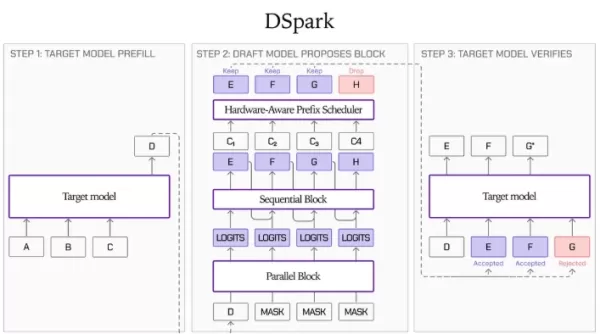 LFM2.5 DSpark Draft Model Released: Inference Speed Boosted 3.18x
Liquid AI and Hugging Face have officially released the DSpark draft model checkpoints for the LFM2.5 series, covering LFM2.5-1.2B-Instruct, LFM2.5-2.6B, and LFM2.5-8B-A1B. This innovation introduces a novel speculative decoding path that significant
LFM2.5 DSpark Draft Model Released: Inference Speed Boosted 3.18x
Liquid AI and Hugging Face have officially released the DSpark draft model checkpoints for the LFM2.5 series, covering LFM2.5-1.2B-Instruct, LFM2.5-2.6B, and LFM2.5-8B-A1B. This innovation introduces a novel speculative decoding path that significant

2026 Latest Best AI Sleep Coaching Tools for Shift Workers, Jet Lag Recovery, and Better Routines! XIX.AI has curated a top-rated list of powerful game-changing tools that go through real-world tests to deliver accurate guidance. You can find detailed free vs paid comparison info and see how these must-try solutions help boost sleep quality, speed up jet lag recovery, and build healthier routines. Explore now to discover your perfect tool!
7 tools
xix.ai

2026 Latest Best ChatGPT debugging tools for Python errors, API logs, and stack trace triage are here on XIX.AI. This curated list of top-rated solutions offers a free vs paid comparison, real-world tests, and detailed rankings to help you find the most powerful tool that can significantly boost your productivity and help you solve complex technical issues faster. Explore now to discover your perfect solution!
9 tools
xix.ai

2026 Latest Best Top-Rated AI Voiceover Tools for Product Demo Videos are here on XIX.AI! This curated list features powerful, game-changing options that help you create professional-quality audio content fast, boosting your demo efficiency significantly. We conduct real-world tests and provide a free vs paid comparison along with weekly updated rankings to help you find the perfect fit. Explore now to Unlock your AI edge!
10 tools
xix.ai

2026 Latest Best AI Business Plan Tools for Startup Validation! XIX.AI has curated a top-rated list of powerful game-changing tools that go through real-world tests to deliver accurate results. You’ll find a free vs paid comparison, detailed rankings, and easy-to-understand insights to help you choose the perfect solution and boost your startup’s success rate. Explore now to Unlock your AI edge!
9 tools
xix.ai

2026 Latest Best AI Chat Apps for Roleplay and Conversation Practice! XIX.AI curates a top-rated list of powerful must-try tools that go through rigorous real-world tests to deliver exceptional results. You’ll find detailed free vs paid comparison, comprehensive rankings, and insights into how these apps can boost your language skills and communication confidence effectively. Explore now to discover your perfect tool for practice!
10 tools
xix.ai

2026 Latest Best Top-rated AI Wireframe Tools for Product Teams! This curated list showcases powerful, game-changing solutions that significantly boost productivity through real-world tests and rigorous rankings. It includes a detailed free vs paid comparison to help you find the perfect fit. XIX.AI provides expert insights to guide your decision. Explore now to Discover your perfect tool and Unlock your AI edge in product development!
8 tools
xix.ai












