


 Home
HomeEON shifts focus from ocean fiber to space lasers for next-gen data superhighway
As hyperscalers expand data center infrastructure globally, they require high-speed data transfer, often relying on fragile undersea fiber-optic cables that crisscross the oceans.
These cables are difficult to access, repair, or install, and viable alternatives remain scarce. Radio transmissions lack the necessary bandwidth, ruling out most terrestrial or orbital wireless solutions. However, laser technology may now offer a viable path forward.
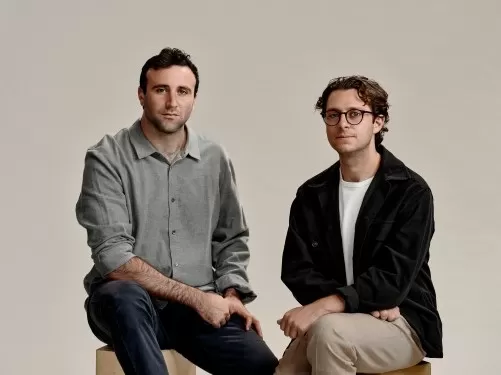
Endeavor Optical Networks, a startup founded in May and emerging from stealth today with $10.75 million in seed funding from General Catalyst and Andreessen Horowitz, is betting on this approach. Co-founders CEO Charlie Horowitz and CTO Tyler Presser aim to deploy a network of laser-equipped spacecraft to connect data centers from orbit.
Most existing satellite communications networks, including those providing broadband internet, cannot match the 200 terabits per second throughput of undersea fiber.
However, more powerful satellites and advances in optical technology are making space-to-ground laser communications increasingly feasible. NASA recently used laser comms to transmit data from its latest Moon mission, while private companies like York, Kepler, and Cailabs have demonstrated Earth-to-orbit links.
Previous connections targeted a throughput of 2.5 Gbps, but EON aims higher, with an initial goal of 2.4 terabits per second, according to Horowitz. Achieving this requires innovative solutions to atmospheric distortion, particularly when clouds obstruct the signal.
EON plans to deploy approximately 20 satellites, each providing a dedicated link between two continents. The initial fleet will offer 24-hour coverage for early adopters. The company will strategically select ground stations in various regions to serve local data centers and CDNs, using redundant sites and weather data to ensure reliable connectivity.
The startup is engaging with hyperscalers and AI labs as primary customers, focusing on underserved or expensive routes such as long-haul connections (e.g., France to Australia) or regions lacking extensive infrastructure (e.g., Africa to South America). They plan to sell dedicated capacity to customers seeking full control over data transit.
Initially, EON will use its seed funding to establish an optics lab, hire engineers, and conduct ground tests ahead of a demo satellite launch expected by late 2027. Horowitz anticipates this spacecraft will achieve the highest optical downlink throughput recorded to date—at least 800 gigabits, potentially reaching one terabit.
Success requires precise engineering. EON will focus on developing the optical communications terminal, allocating resources to critical components like laser-pointing gimbals. The company plans to purchase powerful off-the-shelf satellite buses, such as those from Apex Space, Horowitz’s previous employer.
Horowitz previously served as chief of staff and director of special projects for Apex CEO Ian Cinnamon. “Charlie is a force of nature—he can seamlessly transition from strategy to the detailed execution required to make something real,” Cinnamon told TechCrunch. “Charlie is the ideal founder, and I invested personally because I believe deeply in Charlie and what he’s building at EON with Tyler.”
Alongside Presser, a PhD astronautical engineer who has planned frontier missions for NASA, the technical team includes Michael David Francois, a long-time Google executive specializing in global network infrastructure, and Wesley Baxter, an optics engineer who recently worked on Amazon’s LEO satellite network.
Jeannette zu Fürstenburg, General Catalyst partner leading the investment, sees the venture aligning with the fund’s core themes of AI and resilience.
“I don’t worry about demand,” she told TechCrunch. “I believe the market will solve for itself. The real question is whether you can get this into space within the discussed timeframe. We focus heavily on founder-product fit; [Horowitz] is exactly the caliber of leader needed to tackle a problem like this.”
They are not alone in pursuing this solution. Blue Origin, Jeff Bezos’ space company, has announced TeraWave, a 5,048-satellite network aiming to deliver speeds up to 6 Tbps to large-scale users. While Blue’s plan is more ambitious, it will take longer to launch and deploy. EON’s smaller fleet should enable faster deployment, though it must overcome similar technical hurdles.
“Data centers demand high quality and redundancy,” notes Caleb Henry, research director at Quilty Space. “Satellite internet is only now transitioning from a last-resort technology to dependable, high-bandwidth infrastructure. This doesn’t mean optimizing satellites for data center connectivity is impossible, just that it will be harder and take longer than many entrepreneurs suggest.”
Nevertheless, a project like EON’s may be more practical than the popular concept of building data centers in space.
“We have one rule at the company: no physics problems,” Horowitz says. “There is a market today that we can serve. In the future, we will take on more as it emerges, but we know this is a current problem that is only worsening. That is our bet—more data is moving terrestrially than ever before.”
Related article
 Former Infosys Chief’s AI Startup Secures Another $53M
Hang Ten Systems, an AI startup established by former Infosys CEO Vishal Sikka just four months ago, has secured an additional $53 million in seed funding. This latest investment round was finalized merely five weeks after the initial $32 million see
Crypto exchange OKX aims to empower AI agents to hire and pay each other
As AI agents start serving individuals and collaborating with each other, they require mechanisms to locate tasks, compensate for services, and establish credibility. Crypto exchange OKX anticipates this future is arriving sooner than anticipated, in
Thiel-backed startup claims AI can judge journalism, despite risks to whistleblowers
Following his role in the lawsuit that led to Gawker’s bankruptcy, Aron D’Souza identified a critical flaw in the American media landscape: individuals harmed by coverage lacked effective means to respond.His answer is technology. D’Souza’s new ventu
Related Special Topic Recommendations
writing
Former Infosys Chief’s AI Startup Secures Another $53M
Hang Ten Systems, an AI startup established by former Infosys CEO Vishal Sikka just four months ago, has secured an additional $53 million in seed funding. This latest investment round was finalized merely five weeks after the initial $32 million see
Crypto exchange OKX aims to empower AI agents to hire and pay each other
As AI agents start serving individuals and collaborating with each other, they require mechanisms to locate tasks, compensate for services, and establish credibility. Crypto exchange OKX anticipates this future is arriving sooner than anticipated, in
Thiel-backed startup claims AI can judge journalism, despite risks to whistleblowers
Following his role in the lawsuit that led to Gawker’s bankruptcy, Aron D’Souza identified a critical flaw in the American media landscape: individuals harmed by coverage lacked effective means to respond.His answer is technology. D’Souza’s new ventu
Related Special Topic Recommendations
writing
 Best AI Outline Generators for Long-Form SEO Articles
2026 Latest Best Top-Rated AI Outline Generators for Long-Form SEO Articles, meticulously curated by XIX.AI. These powerful tools offer game-changing assistance in creating high-quality content quickly, boosting writing efficiency significantly. Get a free vs paid comparison along with real-world tests and detailed rankings to help you find the must-try option that suits your needs. Explore now to unlock your AI edge.
 8 tools
 xix.ai
Education and Learning
AI Study Tools for Homework and Exam Prep
xix.ai
Education and Learning
AI Study Tools for Homework and Exam Prep
2026 Latest Best AI Study Tools for Homework and Exam Prep! XIX.AI curates a top-rated list of powerful, game-changing tools that help students boost productivity, streamline homework completion, and ace exams through real-world tests. Get a free vs paid comparison, detailed rankings, and must-try options to unlock your AI edge. Explore now!
10 tools
xix.ai
Music composition
AI Vocal Demo Tools for Songwriters, Hooks, Toplines, and Multilingual Draft Sessions
2026 Latest Best AI Vocal Demo Tools for Songwriters, Hook Creators, and Multi-Language Content Teams! XIX.AI has curated a top-rated list of powerful game-changing tools that go through rigorous real-world tests. You’ll find detailed free vs paid comparison data, comprehensive rankings, and must-try options to help you boost writing efficiency and unlock your creative potential. Explore now to discover your perfect tool for all your content needs!
9 tools
xix.ai
Business
Best AI Competitive Research Tools for Small Businesses
2026 Latest Best Top-rated AI Competitive Research Tools for Small Businesses! XIX.AI has curated a highly powerful game-changing collection, updated weekly with rigorous real-world tests and detailed rankings. You can find a comprehensive free vs paid comparison to help you identify the must-try tools that boost your productivity and give you a competitive edge. Explore now to discover your perfect tool!
9 tools
xix.ai
Image editing
Photoshop AI Retouch Tools for Ecommerce Apparel, Skin Cleanup, and Color Consistency
2026 Latest Best Photoshop AI retouch tools for ecommerce apparel, skin cleanup, and color consistency! This top-rated curated list features powerful game-changing solutions that help you boost writing efficiency, streamline content creation, and achieve perfect visual results effortlessly. Each tool has undergone real-world tests through weekly updated rankings, complete with free vs paid comparison details. Backed by XIX.AI, it’s the must-try guide for anyone aiming to unlock your AI edge. Explore now!
10 tools
xix.ai
Prompt
Best AI Prompt Libraries for ChatGPT Workflows
2026 Latest Best Top-Rated AI Prompt Libraries for optimizing all types of ChatGPT workflows. XIX.AI has curated a powerful, game-changing collection that goes through rigorous real-world tests to ensure top performance. You can find detailed free vs paid comparisons and expert rankings to help you choose the must-try tools that boost your productivity and unlock your AI edge. Explore now!
11 tools
xix.ai

 Comments (0)
0/500
Comments (0)
0/500
As hyperscalers expand data center infrastructure globally, they require high-speed data transfer, often relying on fragile undersea fiber-optic cables that crisscross the oceans.
These cables are difficult to access, repair, or install, and viable alternatives remain scarce. Radio transmissions lack the necessary bandwidth, ruling out most terrestrial or orbital wireless solutions. However, laser technology may now offer a viable path forward.
Endeavor Optical Networks, a startup founded in May and emerging from stealth today with $10.75 million in seed funding from General Catalyst and Andreessen Horowitz, is betting on this approach. Co-founders CEO Charlie Horowitz and CTO Tyler Presser aim to deploy a network of laser-equipped spacecraft to connect data centers from orbit.
Most existing satellite communications networks, including those providing broadband internet, cannot match the 200 terabits per second throughput of undersea fiber.
However, more powerful satellites and advances in optical technology are making space-to-ground laser communications increasingly feasible. NASA recently used laser comms to transmit data from its latest Moon mission, while private companies like York, Kepler, and Cailabs have demonstrated Earth-to-orbit links.
Previous connections targeted a throughput of 2.5 Gbps, but EON aims higher, with an initial goal of 2.4 terabits per second, according to Horowitz. Achieving this requires innovative solutions to atmospheric distortion, particularly when clouds obstruct the signal.
EON plans to deploy approximately 20 satellites, each providing a dedicated link between two continents. The initial fleet will offer 24-hour coverage for early adopters. The company will strategically select ground stations in various regions to serve local data centers and CDNs, using redundant sites and weather data to ensure reliable connectivity.
The startup is engaging with hyperscalers and AI labs as primary customers, focusing on underserved or expensive routes such as long-haul connections (e.g., France to Australia) or regions lacking extensive infrastructure (e.g., Africa to South America). They plan to sell dedicated capacity to customers seeking full control over data transit.
Initially, EON will use its seed funding to establish an optics lab, hire engineers, and conduct ground tests ahead of a demo satellite launch expected by late 2027. Horowitz anticipates this spacecraft will achieve the highest optical downlink throughput recorded to date—at least 800 gigabits, potentially reaching one terabit.
Success requires precise engineering. EON will focus on developing the optical communications terminal, allocating resources to critical components like laser-pointing gimbals. The company plans to purchase powerful off-the-shelf satellite buses, such as those from Apex Space, Horowitz’s previous employer.
Horowitz previously served as chief of staff and director of special projects for Apex CEO Ian Cinnamon. “Charlie is a force of nature—he can seamlessly transition from strategy to the detailed execution required to make something real,” Cinnamon told TechCrunch. “Charlie is the ideal founder, and I invested personally because I believe deeply in Charlie and what he’s building at EON with Tyler.”
Alongside Presser, a PhD astronautical engineer who has planned frontier missions for NASA, the technical team includes Michael David Francois, a long-time Google executive specializing in global network infrastructure, and Wesley Baxter, an optics engineer who recently worked on Amazon’s LEO satellite network.
Jeannette zu Fürstenburg, General Catalyst partner leading the investment, sees the venture aligning with the fund’s core themes of AI and resilience.
“I don’t worry about demand,” she told TechCrunch. “I believe the market will solve for itself. The real question is whether you can get this into space within the discussed timeframe. We focus heavily on founder-product fit; [Horowitz] is exactly the caliber of leader needed to tackle a problem like this.”
They are not alone in pursuing this solution. Blue Origin, Jeff Bezos’ space company, has announced TeraWave, a 5,048-satellite network aiming to deliver speeds up to 6 Tbps to large-scale users. While Blue’s plan is more ambitious, it will take longer to launch and deploy. EON’s smaller fleet should enable faster deployment, though it must overcome similar technical hurdles.
“Data centers demand high quality and redundancy,” notes Caleb Henry, research director at Quilty Space. “Satellite internet is only now transitioning from a last-resort technology to dependable, high-bandwidth infrastructure. This doesn’t mean optimizing satellites for data center connectivity is impossible, just that it will be harder and take longer than many entrepreneurs suggest.”
Nevertheless, a project like EON’s may be more practical than the popular concept of building data centers in space.
“We have one rule at the company: no physics problems,” Horowitz says. “There is a market today that we can serve. In the future, we will take on more as it emerges, but we know this is a current problem that is only worsening. That is our bet—more data is moving terrestrially than ever before.”








 Former Infosys Chief’s AI Startup Secures Another $53M
Hang Ten Systems, an AI startup established by former Infosys CEO Vishal Sikka just four months ago, has secured an additional $53 million in seed funding. This latest investment round was finalized merely five weeks after the initial $32 million see
Former Infosys Chief’s AI Startup Secures Another $53M
Hang Ten Systems, an AI startup established by former Infosys CEO Vishal Sikka just four months ago, has secured an additional $53 million in seed funding. This latest investment round was finalized merely five weeks after the initial $32 million see
 Crypto exchange OKX aims to empower AI agents to hire and pay each other
As AI agents start serving individuals and collaborating with each other, they require mechanisms to locate tasks, compensate for services, and establish credibility. Crypto exchange OKX anticipates this future is arriving sooner than anticipated, in
Crypto exchange OKX aims to empower AI agents to hire and pay each other
As AI agents start serving individuals and collaborating with each other, they require mechanisms to locate tasks, compensate for services, and establish credibility. Crypto exchange OKX anticipates this future is arriving sooner than anticipated, in
 Thiel-backed startup claims AI can judge journalism, despite risks to whistleblowers
Following his role in the lawsuit that led to Gawker’s bankruptcy, Aron D’Souza identified a critical flaw in the American media landscape: individuals harmed by coverage lacked effective means to respond.His answer is technology. D’Souza’s new ventu
Thiel-backed startup claims AI can judge journalism, despite risks to whistleblowers
Following his role in the lawsuit that led to Gawker’s bankruptcy, Aron D’Souza identified a critical flaw in the American media landscape: individuals harmed by coverage lacked effective means to respond.His answer is technology. D’Souza’s new ventu

2026 Latest Best Top-Rated AI Outline Generators for Long-Form SEO Articles, meticulously curated by XIX.AI. These powerful tools offer game-changing assistance in creating high-quality content quickly, boosting writing efficiency significantly. Get a free vs paid comparison along with real-world tests and detailed rankings to help you find the must-try option that suits your needs. Explore now to unlock your AI edge.
8 tools
xix.ai

2026 Latest Best AI Study Tools for Homework and Exam Prep! XIX.AI curates a top-rated list of powerful, game-changing tools that help students boost productivity, streamline homework completion, and ace exams through real-world tests. Get a free vs paid comparison, detailed rankings, and must-try options to unlock your AI edge. Explore now!
10 tools
xix.ai

2026 Latest Best AI Vocal Demo Tools for Songwriters, Hook Creators, and Multi-Language Content Teams! XIX.AI has curated a top-rated list of powerful game-changing tools that go through rigorous real-world tests. You’ll find detailed free vs paid comparison data, comprehensive rankings, and must-try options to help you boost writing efficiency and unlock your creative potential. Explore now to discover your perfect tool for all your content needs!
9 tools
xix.ai

2026 Latest Best Top-rated AI Competitive Research Tools for Small Businesses! XIX.AI has curated a highly powerful game-changing collection, updated weekly with rigorous real-world tests and detailed rankings. You can find a comprehensive free vs paid comparison to help you identify the must-try tools that boost your productivity and give you a competitive edge. Explore now to discover your perfect tool!
9 tools
xix.ai

2026 Latest Best Photoshop AI retouch tools for ecommerce apparel, skin cleanup, and color consistency! This top-rated curated list features powerful game-changing solutions that help you boost writing efficiency, streamline content creation, and achieve perfect visual results effortlessly. Each tool has undergone real-world tests through weekly updated rankings, complete with free vs paid comparison details. Backed by XIX.AI, it’s the must-try guide for anyone aiming to unlock your AI edge. Explore now!
10 tools
xix.ai

2026 Latest Best Top-Rated AI Prompt Libraries for optimizing all types of ChatGPT workflows. XIX.AI has curated a powerful, game-changing collection that goes through rigorous real-world tests to ensure top performance. You can find detailed free vs paid comparisons and expert rankings to help you choose the must-try tools that boost your productivity and unlock your AI edge. Explore now!
11 tools
xix.ai












