


 Home
Home
ByteDance Unveils Lance 3B: A Unified Model for Vision and Language Understanding and Generation
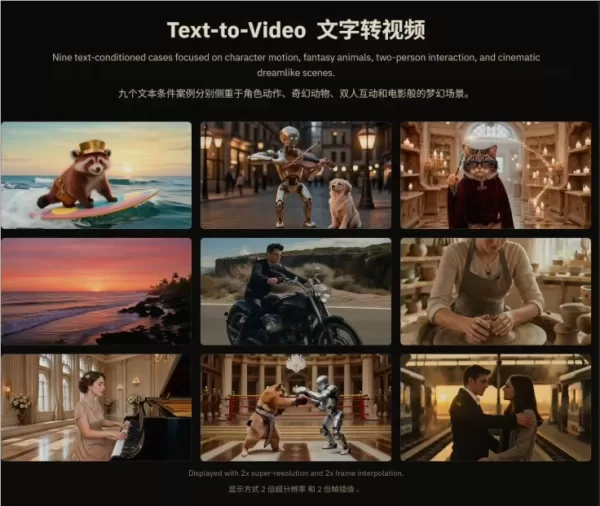
ByteDance Research has officially open-sourced Lance, its native unified multimodal large model.
While the AI industry typically relies on models with hundreds of billions or trillions of parameters, or those assembled by combining separate components, Lance represents a major breakthrough. It delivers full functionality with an exceptionally lightweight activation parameter count of 3B (3 billion), effectively bridging the technical divide between "understanding models (VLM)" and "generative models (DiT/Diffusion)".
Key Highlights:
Natively Unified: Built from scratch rather than stitched together, it integrates image and video understanding, generation, and cross-modal editing into a single system.
Comprehensive Performance: A single model seamlessly handles $X rightarrow T$ (text/video understanding), $X rightarrow I$ (image generation/editing), and $X rightarrow V$ (video generation/editing) — three core output tasks.
Open Source & Free: Released under the highly permissive Apache 2.0 license. Weights are fully available on Hugging Face, and the entire process can be run on a modest budget of 128 A100 GPUs.
Technical Breakdown: How Does It Achieve "Synchronization" Between Contrasting Demands?
In traditional AI architectures, "understanding" and "generation" capabilities have often been at odds: understanding tasks require filtering noise to extract high-level semantic features, whereas generation tasks focus on low-level textures, geometric structures, and temporal dynamics.
To address this industry-wide challenge, Lance employs a clever "shared context + parallel capability decoupling" design:
1. Unified Interleaved Sequence and Dual-Stream Expert Architecture
All text, image, and video inputs are first tokenized and converted into a unified "interleaved sequence." This sequence is then processed by a Dual-Stream MoE (Multi-Expert) architecture, allowing experts dedicated to "understanding" and "generation" to operate independently, effectively resolving capability conflicts.
Understanding Side: Text tokens and visual inputs utilize the embedding layer of Qwen2.5-VL and the ViT encoder to accurately extract high-level semantic visual tokens.
Generation Side: Visual inputs are compressed by Wan2.2's powerful 3D causal VAE, achieving $16times$ spatial down-sampling and $4times$ temporal down-sampling, thereby preserving detailed dynamic continuous representations.
2. MaPE (Modal-Aware Rotational Position Encoding)
Mixed visual tokens (images, text, and videos) in long sequences can lead to "boundary confusion" hallucinations. Lance introduces the MaPE mechanism, which adds fixed time offsets to different modal groups. This elegant design enables strong spatial and temporal boundary identification without disrupting the internal structure and temporal order of images and videos.
[Unified Interleaved Sequence] ──► [MaPE Modal Boundary Isolation] ──► [Dual-Stream Expert Architecture (MoE)]
Four-Phase Extreme Training: A "Lean Battle" with 128 GPUs
Contrasting with the "brute-force aesthetics" of major companies using thousands of GPUs, Lance's training process demonstrates high financial efficiency. The entire lifecycle is strictly capped at a maximum budget of 128 GPUs, progressing through four tightly integrated phases:
Phase 1: Pre-training (1.5T Tokens) —— Processes 1B image-text pairs and 140M video-text pairs to establish a robust foundation for multimodal understanding.
Phase 2: Continuous Training (300B Tokens) —— Incorporates editing, subject-driven generation, and multi-modal understanding data to activate multi-task synergy.
Phase 3: Supervised Fine-tuning (72B Tokens) —— Extensively injects human instructions, focusing on instruction following and visual identity consistency.
Phase 4: Reinforcement Learning (GRPO Algorithm) —— Utilizes group-based relative policy optimization and, notably, employs PaddleOCR as a reward model to specifically address AI issues such as inaccurate text rendering and misalignment between text and images.
Outstanding Results: 3B Model Defeats 7B Giants Across Multiple Domains
Thanks to cross-task data collaboration (where the model deepens understanding while learning to generate, and enhances generation while learning to understand), the 3B-sized Lance achieved remarkable performance across various benchmarks:
Video Generation (VBench): Scored 85.11 points! It surpassed similar all-in-one models like TUNA (84.06) and outperformed specialized video generation models such as HunyuanVideo (83.33) and Wan2.1-T2V (83.69).
Image Generation (GenEval): Scored 0.90, firmly securing a top position among global open-source models.
Video Understanding (MVBench): Scored 62.0 points, significantly exceeding the dedicated understanding model Show-o2 (7B, 55.7 points), which is twice the size of Lance.
Industry Shock: Deployment Costs for Multimodal Applications Will Plunge Dramatically
Lance's open source represents a significant industry disruption, particularly for booming fields such as AI short films, intelligent agents (Agent) collaboration, and interactive media.
Previously, developing an AI tool capable of understanding scripts, generating storyboards, and modifying visuals in real-time while maintaining character consistency required deploying, scheduling, and stitching together multiple large models (one for VLM semantics, one for Diffusion image generation, and one for temporal video). This not only caused system latency but also made pipeline alignment a nightmare for developers.
Now, Lance3B achieves "left eye sees, right eye edits, both hands create" with a single model
Related article
 AI startup Relay folds as staff join Google’s Chrome team
Relay, an AI-driven workflow automation platform launched in 2021 with aspirations to rival Zapier, is ceasing operations, with key team members, including its CEO, transitioning to Google’s Chrome division.Jacob Bank, Relay’s founder and CEO, announ
Anthropic Embeds Invisible Watermarks in Claude Outputs Globally: The Era of AI Content Traceability Has Officially Begun
Anthropic has committed to the EU AI Act Code of Practice, confirming that all newly released Claude models will embed global content identifiers starting in August 2026. This mandate extends beyond the EU, covering every Claude product line, includi
Doubao Unveils Paid Subscription Tiers, Rivaling Global Giants on Cost-Effectiveness
The commercialization of AI large model services has reached a pivotal milestone. On June 24, Douyin officially introduced three paid subscription tiers: Standard (68 yuan/month), Enhanced (200 yuan/month), and Advanced (500 yuan/month). With the pai
Related Special Topic Recommendations
Design & Art
AI startup Relay folds as staff join Google’s Chrome team
Relay, an AI-driven workflow automation platform launched in 2021 with aspirations to rival Zapier, is ceasing operations, with key team members, including its CEO, transitioning to Google’s Chrome division.Jacob Bank, Relay’s founder and CEO, announ
Anthropic Embeds Invisible Watermarks in Claude Outputs Globally: The Era of AI Content Traceability Has Officially Begun
Anthropic has committed to the EU AI Act Code of Practice, confirming that all newly released Claude models will embed global content identifiers starting in August 2026. This mandate extends beyond the EU, covering every Claude product line, includi
Doubao Unveils Paid Subscription Tiers, Rivaling Global Giants on Cost-Effectiveness
The commercialization of AI large model services has reached a pivotal milestone. On June 24, Douyin officially introduced three paid subscription tiers: Standard (68 yuan/month), Enhanced (200 yuan/month), and Advanced (500 yuan/month). With the pai
Related Special Topic Recommendations
Design & Art
 Top AI Illustration Tools: Create Editorial Scenes and Cover Art Faster
2026 Latest Top-rated AI Illustration Tools: Our curated list features the best powerfully designed tools for creating stunning editorial scenes and eye-catching cover art quickly. Each option has gone through rigorous real-world tests, offering a free vs paid comparison to help you find the perfect match for your workflow. Try these must-try solutions today to unlock your AI edge and boost your creative productivity. Explore now at XIX.AI.
 10 tools
 xix.ai
Education and Learning
Top AI Tutors for Exam Prep: Practice Math, Science, and English
xix.ai
Education and Learning
Top AI Tutors for Exam Prep: Practice Math, Science, and English
2026 Latest Top-Rated Best AI Tutors for Exam Prep are here on XIX.AI! Our curated list features powerful game-changing tools that offer free vs paid comparison, real-world tests, and weekly updated rankings. They help boost your writing efficiency, simplify complex topic learning, and unlock your academic potential. Explore now to Discover your perfect exam prep tool and Start creating today to Unlock your AI edge!
10 tools
xix.ai
Finance
AI Budget Planning Tools for Personal Money Management
2026 Latest Best Top-Rated AI Budget Planning Tools for Personal Money Management are here on XIX.AI! This curated collection features powerful, game-changing solutions that help you conduct real-world tests, understand spending habits, and create personalized plans to boost productivity. Enjoy a free vs paid comparison along with detailed rankings. Must-try tools designed to simplify money management and unlock your AI edge. Explore now!
11 tools
xix.ai
Health & Wellness
AI Sleep Tracking Assistants: Improve Recovery with Better Bedtime Habits
2026 Latest Best Top-Rated AI Sleep Tracking Assistants curated for ultimate recovery. This fully updated weekly guide features powerful tools that deliver real-world tests, free vs paid comparison, and detailed rankings to help you find the must-try solution that boosts sleep quality and supports better bedtime habits. Explore now at XIX.AI to Unlock your AI edge.
10 tools
xix.ai
Data Analysis
AI SQL Copilots for Product and Revenue Analytics
2026 Latest Best Top-Rated AI SQL Copilots for Product and Revenue Analytics! XIX.AI has curated a powerful, game-changing collection of must-try tools that undergo real-world tests through weekly updated rankings. These tools help users boost productivity significantly by accelerating data analysis, streamlining complex queries, and generating accurate insights to drive smarter business decisions. Explore now to Discover your perfect tool for unlocking your AI edge!
14 tools
xix.ai
Education and Learning
Best AI Homework Helpers That Teach: Learn Concepts, Not Just Answers
2026 Latest Best Top-Rated AI Homework Helpers That Teach Core Concepts Not Just Answers Powerful Tools for Students Must-Try Curated List Weekly Updated Free vs Paid Comparison Real-World Tests Accurate Rankings to Help You Unlock Your Full Learning Potential Explore now to Discover your perfect tool for smarter studying.
10 tools
xix.ai

 Comments (0)
0/500
Comments (0)
0/500
ByteDance Research has officially open-sourced Lance, its native unified multimodal large model.
While the AI industry typically relies on models with hundreds of billions or trillions of parameters, or those assembled by combining separate components, Lance represents a major breakthrough. It delivers full functionality with an exceptionally lightweight activation parameter count of 3B (3 billion), effectively bridging the technical divide between "understanding models (VLM)" and "generative models (DiT/Diffusion)".
Key Highlights:
Natively Unified: Built from scratch rather than stitched together, it integrates image and video understanding, generation, and cross-modal editing into a single system.
Comprehensive Performance: A single model seamlessly handles $X rightarrow T$ (text/video understanding), $X rightarrow I$ (image generation/editing), and $X rightarrow V$ (video generation/editing) — three core output tasks.
Open Source & Free: Released under the highly permissive Apache 2.0 license. Weights are fully available on Hugging Face, and the entire process can be run on a modest budget of 128 A100 GPUs.
Technical Breakdown: How Does It Achieve "Synchronization" Between Contrasting Demands?
In traditional AI architectures, "understanding" and "generation" capabilities have often been at odds: understanding tasks require filtering noise to extract high-level semantic features, whereas generation tasks focus on low-level textures, geometric structures, and temporal dynamics.
To address this industry-wide challenge, Lance employs a clever "shared context + parallel capability decoupling" design:
1. Unified Interleaved Sequence and Dual-Stream Expert Architecture
All text, image, and video inputs are first tokenized and converted into a unified "interleaved sequence." This sequence is then processed by a Dual-Stream MoE (Multi-Expert) architecture, allowing experts dedicated to "understanding" and "generation" to operate independently, effectively resolving capability conflicts.
Understanding Side: Text tokens and visual inputs utilize the embedding layer of Qwen2.5-VL and the ViT encoder to accurately extract high-level semantic visual tokens.
Generation Side: Visual inputs are compressed by Wan2.2's powerful 3D causal VAE, achieving $16times$ spatial down-sampling and $4times$ temporal down-sampling, thereby preserving detailed dynamic continuous representations.
2. MaPE (Modal-Aware Rotational Position Encoding)
Mixed visual tokens (images, text, and videos) in long sequences can lead to "boundary confusion" hallucinations. Lance introduces the MaPE mechanism, which adds fixed time offsets to different modal groups. This elegant design enables strong spatial and temporal boundary identification without disrupting the internal structure and temporal order of images and videos.
[Unified Interleaved Sequence] ──► [MaPE Modal Boundary Isolation] ──► [Dual-Stream Expert Architecture (MoE)]
Four-Phase Extreme Training: A "Lean Battle" with 128 GPUs
Contrasting with the "brute-force aesthetics" of major companies using thousands of GPUs, Lance's training process demonstrates high financial efficiency. The entire lifecycle is strictly capped at a maximum budget of 128 GPUs, progressing through four tightly integrated phases:
Phase 1: Pre-training (1.5T Tokens) —— Processes 1B image-text pairs and 140M video-text pairs to establish a robust foundation for multimodal understanding.
Phase 2: Continuous Training (300B Tokens) —— Incorporates editing, subject-driven generation, and multi-modal understanding data to activate multi-task synergy.
Phase 3: Supervised Fine-tuning (72B Tokens) —— Extensively injects human instructions, focusing on instruction following and visual identity consistency.
Phase 4: Reinforcement Learning (GRPO Algorithm) —— Utilizes group-based relative policy optimization and, notably, employs PaddleOCR as a reward model to specifically address AI issues such as inaccurate text rendering and misalignment between text and images.
Outstanding Results: 3B Model Defeats 7B Giants Across Multiple Domains
Thanks to cross-task data collaboration (where the model deepens understanding while learning to generate, and enhances generation while learning to understand), the 3B-sized Lance achieved remarkable performance across various benchmarks:
Video Generation (VBench): Scored 85.11 points! It surpassed similar all-in-one models like TUNA (84.06) and outperformed specialized video generation models such as HunyuanVideo (83.33) and Wan2.1-T2V (83.69).
Image Generation (GenEval): Scored 0.90, firmly securing a top position among global open-source models.
Video Understanding (MVBench): Scored 62.0 points, significantly exceeding the dedicated understanding model Show-o2 (7B, 55.7 points), which is twice the size of Lance.
Industry Shock: Deployment Costs for Multimodal Applications Will Plunge Dramatically
Lance's open source represents a significant industry disruption, particularly for booming fields such as AI short films, intelligent agents (Agent) collaboration, and interactive media.
Previously, developing an AI tool capable of understanding scripts, generating storyboards, and modifying visuals in real-time while maintaining character consistency required deploying, scheduling, and stitching together multiple large models (one for VLM semantics, one for Diffusion image generation, and one for temporal video). This not only caused system latency but also made pipeline alignment a nightmare for developers.
Now, Lance3B achieves "left eye sees, right eye edits, both hands create" with a single model








 AI startup Relay folds as staff join Google’s Chrome team
Relay, an AI-driven workflow automation platform launched in 2021 with aspirations to rival Zapier, is ceasing operations, with key team members, including its CEO, transitioning to Google’s Chrome division.Jacob Bank, Relay’s founder and CEO, announ
AI startup Relay folds as staff join Google’s Chrome team
Relay, an AI-driven workflow automation platform launched in 2021 with aspirations to rival Zapier, is ceasing operations, with key team members, including its CEO, transitioning to Google’s Chrome division.Jacob Bank, Relay’s founder and CEO, announ
 Anthropic Embeds Invisible Watermarks in Claude Outputs Globally: The Era of AI Content Traceability Has Officially Begun
Anthropic has committed to the EU AI Act Code of Practice, confirming that all newly released Claude models will embed global content identifiers starting in August 2026. This mandate extends beyond the EU, covering every Claude product line, includi
Anthropic Embeds Invisible Watermarks in Claude Outputs Globally: The Era of AI Content Traceability Has Officially Begun
Anthropic has committed to the EU AI Act Code of Practice, confirming that all newly released Claude models will embed global content identifiers starting in August 2026. This mandate extends beyond the EU, covering every Claude product line, includi
 Doubao Unveils Paid Subscription Tiers, Rivaling Global Giants on Cost-Effectiveness
The commercialization of AI large model services has reached a pivotal milestone. On June 24, Douyin officially introduced three paid subscription tiers: Standard (68 yuan/month), Enhanced (200 yuan/month), and Advanced (500 yuan/month). With the pai
Doubao Unveils Paid Subscription Tiers, Rivaling Global Giants on Cost-Effectiveness
The commercialization of AI large model services has reached a pivotal milestone. On June 24, Douyin officially introduced three paid subscription tiers: Standard (68 yuan/month), Enhanced (200 yuan/month), and Advanced (500 yuan/month). With the pai

2026 Latest Top-rated AI Illustration Tools: Our curated list features the best powerfully designed tools for creating stunning editorial scenes and eye-catching cover art quickly. Each option has gone through rigorous real-world tests, offering a free vs paid comparison to help you find the perfect match for your workflow. Try these must-try solutions today to unlock your AI edge and boost your creative productivity. Explore now at XIX.AI.
10 tools
xix.ai

2026 Latest Top-Rated Best AI Tutors for Exam Prep are here on XIX.AI! Our curated list features powerful game-changing tools that offer free vs paid comparison, real-world tests, and weekly updated rankings. They help boost your writing efficiency, simplify complex topic learning, and unlock your academic potential. Explore now to Discover your perfect exam prep tool and Start creating today to Unlock your AI edge!
10 tools
xix.ai

2026 Latest Best Top-Rated AI Budget Planning Tools for Personal Money Management are here on XIX.AI! This curated collection features powerful, game-changing solutions that help you conduct real-world tests, understand spending habits, and create personalized plans to boost productivity. Enjoy a free vs paid comparison along with detailed rankings. Must-try tools designed to simplify money management and unlock your AI edge. Explore now!
11 tools
xix.ai

2026 Latest Best Top-Rated AI Sleep Tracking Assistants curated for ultimate recovery. This fully updated weekly guide features powerful tools that deliver real-world tests, free vs paid comparison, and detailed rankings to help you find the must-try solution that boosts sleep quality and supports better bedtime habits. Explore now at XIX.AI to Unlock your AI edge.
10 tools
xix.ai

2026 Latest Best Top-Rated AI SQL Copilots for Product and Revenue Analytics! XIX.AI has curated a powerful, game-changing collection of must-try tools that undergo real-world tests through weekly updated rankings. These tools help users boost productivity significantly by accelerating data analysis, streamlining complex queries, and generating accurate insights to drive smarter business decisions. Explore now to Discover your perfect tool for unlocking your AI edge!
14 tools
xix.ai

2026 Latest Best Top-Rated AI Homework Helpers That Teach Core Concepts Not Just Answers Powerful Tools for Students Must-Try Curated List Weekly Updated Free vs Paid Comparison Real-World Tests Accurate Rankings to Help You Unlock Your Full Learning Potential Explore now to Discover your perfect tool for smarter studying.
10 tools
xix.ai












