


 Home
HomeUS Signals Sanctions on Chinese AI Firms Over Intellectual Property Concerns
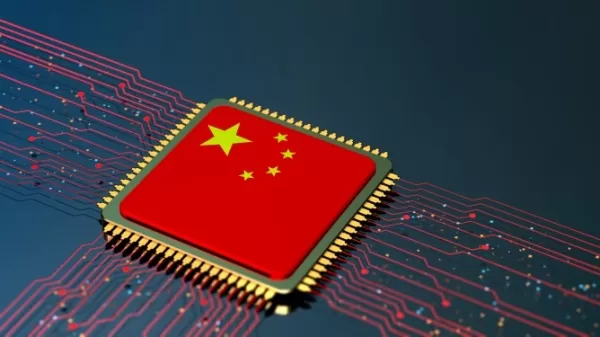
On Tuesday, Treasury Secretary Scott Bessent announced that the U.S. government would scrutinize open-source models from China for potential intellectual property theft, warning of sanctions against Chinese AI firms if such violations are confirmed.
“We’ve seen a lot of talk about open source models coming and threatening the large language models in the U.S.,” Bessent said on Fox Business Tuesday. “This administration supports open source models, but what we do not support is IP theft. If we see, especially, that overseas models are stealing from our great companies, we have the ability to sanction them because of this theft.”
Bessent’s comments were first reported by Bloomberg.
The statement comes as Chinese models — most recently Moonshot AI’s Kimi K3 — are gaining in capabilities and popularity, threatening to harm the business models of top American AI firms like OpenAI and Anthropic, as well as their abilities to raise more capital to continue developing frontier models.
On Monday, Axios reported that the Trump administration is considering a wholesale ban on Chinese open source models, although others have disputed that claim.
AI companies have been warning for months against campaigns by foreign actors to copy their AI technology and redeploy it as open source. In April, the White House said it would work closely with AI firms to combat the theft.
Sanctions from the U.S. against Chinese models would add to the growing list of strategies the government is attempting to maintain the lead in the AI race. After restricting China’s access to advanced chips and tightening export controls, Washington is now signaling it may target the AI models themselves, a move that could mark a significant escalation in the technological competition between frontier labs and Chinese open source alternatives.
Model distillation is a technique that allows some of a larger model’s capabilities to be translated into a smaller system that’s easier to run — but not everyone agrees that distilling another company’s model constitutes theft.
Earlier this month, Microsoft CEO Satya Nadella criticized large labs for making just this assumption: “While the great innovation that comes from model providers having fair use rights to train models on public data is needed, I find it ironic that the status quo is to then turn around and impose restrictive terms on distillation.”
AI labs’ training practices continue to be a source of legal risk for the companies. Anthropic this week got the green light to start cutting authors checks as part of its $1.5 billion settlement after a judge ruled it had illegally downloaded and stored millions of copyrighted books to train its AI.
Furthermore, some in the industry argue that distillation isn’t the only reason China is catching up to U.S. AI companies.
“We know distillation to be a very small factor in the ability to create good models, and it’s a practice that everyone is doing, including companies in the U.S.,” Hugging Face CEO Clem Delangue said on a recent episode of TechCrunch’s Equity podcast. “If it were easy just to do distillation to get good at building AI models, there would be many other countries, including in the U.S., with much better open source AI. The reality is they have really, really good research teams in China…taking a much more open and collaborative approach to AI than in the U.S.”
Related article
 Why I Can’t Help Rooting for Tiny Open Source AI Maker Arcee
Arcee, a lean 26-person U.S. startup, has unveiled its latest reasoning model, Trinity Large Thinking, developed on a modest $20 million budget for a massive 400B-parameter open-source LLM. CEO Mark McQuade tells TechCrunch that this is the most capa
Satya Nadella issues stark warning to companies using AI
Among the many debates surrounding AI's potential drawbacks, one concern has Silicon Valley AI enthusiasts particularly worried: that major AI labs selling proprietary models may be operating like Trojan horses.The fear is that as startups and enterp
DeepSeek Unveils AI Model Rivaling Frontier Systems
Chinese AI lab DeepSeek has released two preview versions of its latest large language model, DeepSeek V4, a highly anticipated update to last year's V3.2 model and the accompanying R1 reasoning model that made a significant impact in the AI communit
Related Special Topic Recommendations
Design & Art
Why I Can’t Help Rooting for Tiny Open Source AI Maker Arcee
Arcee, a lean 26-person U.S. startup, has unveiled its latest reasoning model, Trinity Large Thinking, developed on a modest $20 million budget for a massive 400B-parameter open-source LLM. CEO Mark McQuade tells TechCrunch that this is the most capa
Satya Nadella issues stark warning to companies using AI
Among the many debates surrounding AI's potential drawbacks, one concern has Silicon Valley AI enthusiasts particularly worried: that major AI labs selling proprietary models may be operating like Trojan horses.The fear is that as startups and enterp
DeepSeek Unveils AI Model Rivaling Frontier Systems
Chinese AI lab DeepSeek has released two preview versions of its latest large language model, DeepSeek V4, a highly anticipated update to last year's V3.2 model and the accompanying R1 reasoning model that made a significant impact in the AI communit
Related Special Topic Recommendations
Design & Art
 AI Visual Style Reference Tools for Character Sheets, Moodboards, and Pitch Decks
2026 Latest Best AI Visual Style Reference Tools for Character Sheets, Moodboards, and Pitch Decks are here on XIX.AI! This curated top-rated list features powerful game-changing tools that go through rigorous real-world tests. You’ll find a free vs paid comparison, detailed rankings, and must-try options to help you boost creativity and streamline your workflow. Explore now to discover your perfect tool for boosting productivity!
 11 tools
 xix.ai
SEO
Best AI SERP Analysis Tools for Search Strategy
xix.ai
SEO
Best AI SERP Analysis Tools for Search Strategy
2026 Latest Best Top-rated AI SERP Analysis Tools for Search Strategy are curated by XIX.AI through rigorous real-world tests and weekly updated rankings. These powerful tools help you unlock hidden optimization opportunities, boost content performance, and gain a competitive edge in search. Discover your perfect tool to elevate your search strategy today. Explore now!
13 tools
xix.ai
Data Analysis
Best AI Anomaly Detection Tools for KPI Monitoring across SaaS and Ecommerce Teams
2026 Latest Best Top-rated AI Anomaly Detection Tools for KPI Monitoring in SaaS and Ecommerce teams! XIX.AI has curated a powerful, game-changing collection based on rigorous real-world tests and weekly updated rankings. You’ll find detailed free vs paid comparison insights to help you identify the must-try solution that boosts productivity and unlocks your AI edge. Explore now!
10 tools
xix.ai
writing
Best AI Outline Generators for Long-Form SEO Articles
2026 Latest Best Top-Rated AI Outline Generators for Long-Form SEO Articles, meticulously curated by XIX.AI. These powerful tools offer game-changing assistance in creating high-quality content quickly, boosting writing efficiency significantly. Get a free vs paid comparison along with real-world tests and detailed rankings to help you find the must-try option that suits your needs. Explore now to unlock your AI edge.
8 tools
xix.ai
Education and Learning
AI Study Tools for Homework and Exam Prep
2026 Latest Best AI Study Tools for Homework and Exam Prep! XIX.AI curates a top-rated list of powerful, game-changing tools that help students boost productivity, streamline homework completion, and ace exams through real-world tests. Get a free vs paid comparison, detailed rankings, and must-try options to unlock your AI edge. Explore now!
10 tools
xix.ai
Music composition
AI Vocal Demo Tools for Songwriters, Hooks, Toplines, and Multilingual Draft Sessions
2026 Latest Best AI Vocal Demo Tools for Songwriters, Hook Creators, and Multi-Language Content Teams! XIX.AI has curated a top-rated list of powerful game-changing tools that go through rigorous real-world tests. You’ll find detailed free vs paid comparison data, comprehensive rankings, and must-try options to help you boost writing efficiency and unlock your creative potential. Explore now to discover your perfect tool for all your content needs!
9 tools
xix.ai

 Comments (0)
0/500
Comments (0)
0/500
On Tuesday, Treasury Secretary Scott Bessent announced that the U.S. government would scrutinize open-source models from China for potential intellectual property theft, warning of sanctions against Chinese AI firms if such violations are confirmed.
“We’ve seen a lot of talk about open source models coming and threatening the large language models in the U.S.,” Bessent said on Fox Business Tuesday. “This administration supports open source models, but what we do not support is IP theft. If we see, especially, that overseas models are stealing from our great companies, we have the ability to sanction them because of this theft.”
Bessent’s comments were first reported by Bloomberg.
The statement comes as Chinese models — most recently Moonshot AI’s Kimi K3 — are gaining in capabilities and popularity, threatening to harm the business models of top American AI firms like OpenAI and Anthropic, as well as their abilities to raise more capital to continue developing frontier models.
On Monday, Axios reported that the Trump administration is considering a wholesale ban on Chinese open source models, although others have disputed that claim.
AI companies have been warning for months against campaigns by foreign actors to copy their AI technology and redeploy it as open source. In April, the White House said it would work closely with AI firms to combat the theft.
Sanctions from the U.S. against Chinese models would add to the growing list of strategies the government is attempting to maintain the lead in the AI race. After restricting China’s access to advanced chips and tightening export controls, Washington is now signaling it may target the AI models themselves, a move that could mark a significant escalation in the technological competition between frontier labs and Chinese open source alternatives.
Model distillation is a technique that allows some of a larger model’s capabilities to be translated into a smaller system that’s easier to run — but not everyone agrees that distilling another company’s model constitutes theft.
Earlier this month, Microsoft CEO Satya Nadella criticized large labs for making just this assumption: “While the great innovation that comes from model providers having fair use rights to train models on public data is needed, I find it ironic that the status quo is to then turn around and impose restrictive terms on distillation.”
AI labs’ training practices continue to be a source of legal risk for the companies. Anthropic this week got the green light to start cutting authors checks as part of its $1.5 billion settlement after a judge ruled it had illegally downloaded and stored millions of copyrighted books to train its AI.
Furthermore, some in the industry argue that distillation isn’t the only reason China is catching up to U.S. AI companies.
“We know distillation to be a very small factor in the ability to create good models, and it’s a practice that everyone is doing, including companies in the U.S.,” Hugging Face CEO Clem Delangue said on a recent episode of TechCrunch’s Equity podcast. “If it were easy just to do distillation to get good at building AI models, there would be many other countries, including in the U.S., with much better open source AI. The reality is they have really, really good research teams in China…taking a much more open and collaborative approach to AI than in the U.S.”








 Why I Can’t Help Rooting for Tiny Open Source AI Maker Arcee
Arcee, a lean 26-person U.S. startup, has unveiled its latest reasoning model, Trinity Large Thinking, developed on a modest $20 million budget for a massive 400B-parameter open-source LLM. CEO Mark McQuade tells TechCrunch that this is the most capa
Why I Can’t Help Rooting for Tiny Open Source AI Maker Arcee
Arcee, a lean 26-person U.S. startup, has unveiled its latest reasoning model, Trinity Large Thinking, developed on a modest $20 million budget for a massive 400B-parameter open-source LLM. CEO Mark McQuade tells TechCrunch that this is the most capa
 Satya Nadella issues stark warning to companies using AI
Among the many debates surrounding AI's potential drawbacks, one concern has Silicon Valley AI enthusiasts particularly worried: that major AI labs selling proprietary models may be operating like Trojan horses.The fear is that as startups and enterp
Satya Nadella issues stark warning to companies using AI
Among the many debates surrounding AI's potential drawbacks, one concern has Silicon Valley AI enthusiasts particularly worried: that major AI labs selling proprietary models may be operating like Trojan horses.The fear is that as startups and enterp
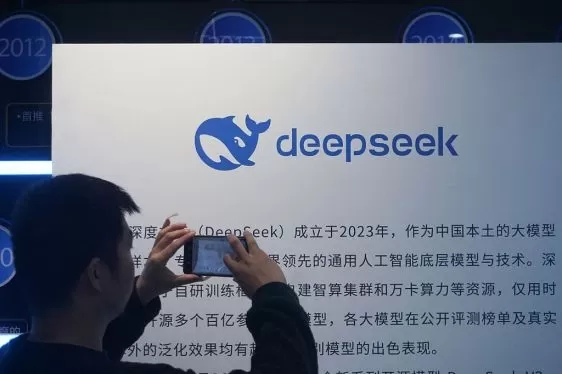 DeepSeek Unveils AI Model Rivaling Frontier Systems
Chinese AI lab DeepSeek has released two preview versions of its latest large language model, DeepSeek V4, a highly anticipated update to last year's V3.2 model and the accompanying R1 reasoning model that made a significant impact in the AI communit
DeepSeek Unveils AI Model Rivaling Frontier Systems
Chinese AI lab DeepSeek has released two preview versions of its latest large language model, DeepSeek V4, a highly anticipated update to last year's V3.2 model and the accompanying R1 reasoning model that made a significant impact in the AI communit

2026 Latest Best AI Visual Style Reference Tools for Character Sheets, Moodboards, and Pitch Decks are here on XIX.AI! This curated top-rated list features powerful game-changing tools that go through rigorous real-world tests. You’ll find a free vs paid comparison, detailed rankings, and must-try options to help you boost creativity and streamline your workflow. Explore now to discover your perfect tool for boosting productivity!
11 tools
xix.ai

2026 Latest Best Top-rated AI SERP Analysis Tools for Search Strategy are curated by XIX.AI through rigorous real-world tests and weekly updated rankings. These powerful tools help you unlock hidden optimization opportunities, boost content performance, and gain a competitive edge in search. Discover your perfect tool to elevate your search strategy today. Explore now!
13 tools
xix.ai

2026 Latest Best Top-rated AI Anomaly Detection Tools for KPI Monitoring in SaaS and Ecommerce teams! XIX.AI has curated a powerful, game-changing collection based on rigorous real-world tests and weekly updated rankings. You’ll find detailed free vs paid comparison insights to help you identify the must-try solution that boosts productivity and unlocks your AI edge. Explore now!
10 tools
xix.ai

2026 Latest Best Top-Rated AI Outline Generators for Long-Form SEO Articles, meticulously curated by XIX.AI. These powerful tools offer game-changing assistance in creating high-quality content quickly, boosting writing efficiency significantly. Get a free vs paid comparison along with real-world tests and detailed rankings to help you find the must-try option that suits your needs. Explore now to unlock your AI edge.
8 tools
xix.ai

2026 Latest Best AI Study Tools for Homework and Exam Prep! XIX.AI curates a top-rated list of powerful, game-changing tools that help students boost productivity, streamline homework completion, and ace exams through real-world tests. Get a free vs paid comparison, detailed rankings, and must-try options to unlock your AI edge. Explore now!
10 tools
xix.ai

2026 Latest Best AI Vocal Demo Tools for Songwriters, Hook Creators, and Multi-Language Content Teams! XIX.AI has curated a top-rated list of powerful game-changing tools that go through rigorous real-world tests. You’ll find detailed free vs paid comparison data, comprehensive rankings, and must-try options to help you boost writing efficiency and unlock your creative potential. Explore now to discover your perfect tool for all your content needs!
9 tools
xix.ai












