


 Home
HomeJudge Halts Anthropic's $1.5B Book Piracy Settlement

A federal judge has temporarily halted the $1.5 billion settlement between Anthropic and authors over book piracy concerns, citing issues with the agreement's terms. In a recent hearing, Judge William Alsup expressed reservations that class action attorneys might be forcing a backroom deal "down the throats of authors," as reported by Bloomberg Law and the Associated Press.
The landmark settlement, agreed upon by Anthropic last week, would have resolved a class action lawsuit filed by U.S. authors. They alleged the AI company trained its models on hundreds of thousands of copyrighted books. Judge Alsup previously allowed the case to proceed, ruling that Anthropic’s use of legally purchased books for AI training constituted fair use, though using illegally sourced material could leave the company liable.
Beyond his worries about authors being pressured into the deal, Alsup stated he requires further details about the claims process described in the settlement. "I have an uneasy feeling about hangers on with all this money on the table," the judge remarked, according to Bloomberg Law.
The proposed settlement would grant authors and publishers roughly $3,000 per eligible work. An attorney for the authors noted that approximately 465,000 books could qualify, but Judge Alsup requested a definitive count to prevent future lawsuits from "coming out of the woodwork." He emphasized that class members must receive "very good notice" to ensure they are informed about the case.
Maria Pallante, CEO of the Association of American Publishers, which supports the authors’ lawsuit, told AP that Alsup "demonstrated a lack of understanding of how the publishing industry works." She added that class actions should resolve disputes, not create new conflicts among the affected parties. The authors’ attorney, Justin Nelson, assured Bloomberg Law that the legal team is committed to ensuring "every single proper claim gets compensation."
Judge Alsup will review the settlement again in a hearing scheduled for September 25th. According to the AP, he commented, "We’ll see if I can hold my nose and approve it."
Related article
 Google Tests Remy AI Agent for Gemini as Focus Shifts to User Control
According to Business Insider, Google is testing Remy, a new AI personal agent for Gemini. This tool aims to execute tasks on behalf of users, streamlining both professional workflows and daily routines.Currently, Remy is undergoing testing in an int
Ollie bets privacy focus to win AI assistant race
To be genuinely helpful, an AI assistant must understand its user deeply. Ollie, a personal assistant designed for daily life, operates on the premise that this doesn’t require surrendering your data or compromising your privacy.While certain enterpr
How AI LIVE: London Will Explore AI & Industrial Automation
The summit will convene C-suite executives from around the globe to address pressing challenges in global industries, ranging from AI-driven disruption to economic volatility.AI LIVE: The London Summit will gather over 2,000 international leaders und
Related Special Topic Recommendations
SEO
Google Tests Remy AI Agent for Gemini as Focus Shifts to User Control
According to Business Insider, Google is testing Remy, a new AI personal agent for Gemini. This tool aims to execute tasks on behalf of users, streamlining both professional workflows and daily routines.Currently, Remy is undergoing testing in an int
Ollie bets privacy focus to win AI assistant race
To be genuinely helpful, an AI assistant must understand its user deeply. Ollie, a personal assistant designed for daily life, operates on the premise that this doesn’t require surrendering your data or compromising your privacy.While certain enterpr
How AI LIVE: London Will Explore AI & Industrial Automation
The summit will convene C-suite executives from around the globe to address pressing challenges in global industries, ranging from AI-driven disruption to economic volatility.AI LIVE: The London Summit will gather over 2,000 international leaders und
Related Special Topic Recommendations
SEO
 Best AI SERP Analysis Tools for Search Strategy
2026 Latest Best Top-rated AI SERP Analysis Tools for Search Strategy are curated by XIX.AI through rigorous real-world tests and weekly updated rankings. These powerful tools help you unlock hidden optimization opportunities, boost content performance, and gain a competitive edge in search. Discover your perfect tool to elevate your search strategy today. Explore now!
 13 tools
 xix.ai
Data Analysis
Best AI Anomaly Detection Tools for KPI Monitoring across SaaS and Ecommerce Teams
xix.ai
Data Analysis
Best AI Anomaly Detection Tools for KPI Monitoring across SaaS and Ecommerce Teams
2026 Latest Best Top-rated AI Anomaly Detection Tools for KPI Monitoring in SaaS and Ecommerce teams! XIX.AI has curated a powerful, game-changing collection based on rigorous real-world tests and weekly updated rankings. You’ll find detailed free vs paid comparison insights to help you identify the must-try solution that boosts productivity and unlocks your AI edge. Explore now!
10 tools
xix.ai
writing
Best AI Outline Generators for Long-Form SEO Articles
2026 Latest Best Top-Rated AI Outline Generators for Long-Form SEO Articles, meticulously curated by XIX.AI. These powerful tools offer game-changing assistance in creating high-quality content quickly, boosting writing efficiency significantly. Get a free vs paid comparison along with real-world tests and detailed rankings to help you find the must-try option that suits your needs. Explore now to unlock your AI edge.
8 tools
xix.ai
Education and Learning
AI Study Tools for Homework and Exam Prep
2026 Latest Best AI Study Tools for Homework and Exam Prep! XIX.AI curates a top-rated list of powerful, game-changing tools that help students boost productivity, streamline homework completion, and ace exams through real-world tests. Get a free vs paid comparison, detailed rankings, and must-try options to unlock your AI edge. Explore now!
10 tools
xix.ai
Music composition
AI Vocal Demo Tools for Songwriters, Hooks, Toplines, and Multilingual Draft Sessions
2026 Latest Best AI Vocal Demo Tools for Songwriters, Hook Creators, and Multi-Language Content Teams! XIX.AI has curated a top-rated list of powerful game-changing tools that go through rigorous real-world tests. You’ll find detailed free vs paid comparison data, comprehensive rankings, and must-try options to help you boost writing efficiency and unlock your creative potential. Explore now to discover your perfect tool for all your content needs!
9 tools
xix.ai
Business
Best AI Competitive Research Tools for Small Businesses
2026 Latest Best Top-rated AI Competitive Research Tools for Small Businesses! XIX.AI has curated a highly powerful game-changing collection, updated weekly with rigorous real-world tests and detailed rankings. You can find a comprehensive free vs paid comparison to help you identify the must-try tools that boost your productivity and give you a competitive edge. Explore now to discover your perfect tool!
9 tools
xix.ai

 Comments (3)
0/500
Comments (3)
0/500
![StevenGonzalez]()
Interesting to see how AI companies are navigating copyright issues. This case could set a big precedent for how training data is handled. Hope it leads to clearer rules for everyone involved. 🤔
![NicholasTaylor]()
法官喊停這筆15億美元的協議,看來AI公司用書訓練模型的法律爭議還遠未結束。William Alsup法官的質疑很關鍵——這種和解真的能保障作者權益嗎?感覺這只是把更棘手的版權問題往後推了而已。🤔
![NoahSmith]()
Interesting how AI copyright battles are becoming the new entertainment courtroom drama! But seriously, is a $1.5B settlement a real solution or just a pricey band-aid for a systemic issue? Makes you wonder who really profits from these deals.
A federal judge has temporarily halted the $1.5 billion settlement between Anthropic and authors over book piracy concerns, citing issues with the agreement's terms. In a recent hearing, Judge William Alsup expressed reservations that class action attorneys might be forcing a backroom deal "down the throats of authors," as reported by Bloomberg Law and the Associated Press.
The landmark settlement, agreed upon by Anthropic last week, would have resolved a class action lawsuit filed by U.S. authors. They alleged the AI company trained its models on hundreds of thousands of copyrighted books. Judge Alsup previously allowed the case to proceed, ruling that Anthropic’s use of legally purchased books for AI training constituted fair use, though using illegally sourced material could leave the company liable.
Beyond his worries about authors being pressured into the deal, Alsup stated he requires further details about the claims process described in the settlement. "I have an uneasy feeling about hangers on with all this money on the table," the judge remarked, according to Bloomberg Law.
The proposed settlement would grant authors and publishers roughly $3,000 per eligible work. An attorney for the authors noted that approximately 465,000 books could qualify, but Judge Alsup requested a definitive count to prevent future lawsuits from "coming out of the woodwork." He emphasized that class members must receive "very good notice" to ensure they are informed about the case.
Maria Pallante, CEO of the Association of American Publishers, which supports the authors’ lawsuit, told AP that Alsup "demonstrated a lack of understanding of how the publishing industry works." She added that class actions should resolve disputes, not create new conflicts among the affected parties. The authors’ attorney, Justin Nelson, assured Bloomberg Law that the legal team is committed to ensuring "every single proper claim gets compensation."
Judge Alsup will review the settlement again in a hearing scheduled for September 25th. According to the AP, he commented, "We’ll see if I can hold my nose and approve it."







 Google Tests Remy AI Agent for Gemini as Focus Shifts to User Control
According to Business Insider, Google is testing Remy, a new AI personal agent for Gemini. This tool aims to execute tasks on behalf of users, streamlining both professional workflows and daily routines.Currently, Remy is undergoing testing in an int
Google Tests Remy AI Agent for Gemini as Focus Shifts to User Control
According to Business Insider, Google is testing Remy, a new AI personal agent for Gemini. This tool aims to execute tasks on behalf of users, streamlining both professional workflows and daily routines.Currently, Remy is undergoing testing in an int
 Ollie bets privacy focus to win AI assistant race
To be genuinely helpful, an AI assistant must understand its user deeply. Ollie, a personal assistant designed for daily life, operates on the premise that this doesn’t require surrendering your data or compromising your privacy.While certain enterpr
Ollie bets privacy focus to win AI assistant race
To be genuinely helpful, an AI assistant must understand its user deeply. Ollie, a personal assistant designed for daily life, operates on the premise that this doesn’t require surrendering your data or compromising your privacy.While certain enterpr
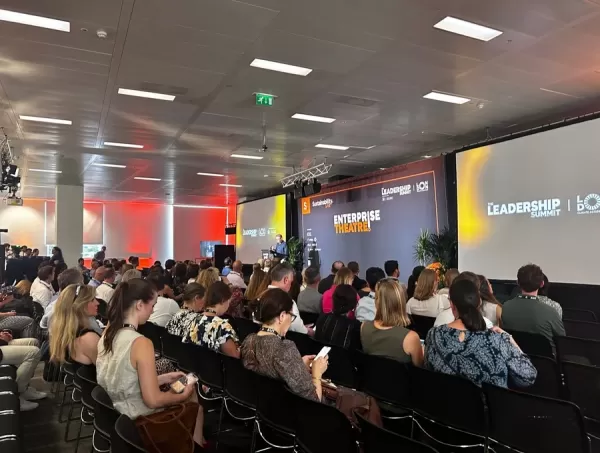 How AI LIVE: London Will Explore AI & Industrial Automation
The summit will convene C-suite executives from around the globe to address pressing challenges in global industries, ranging from AI-driven disruption to economic volatility.AI LIVE: The London Summit will gather over 2,000 international leaders und
How AI LIVE: London Will Explore AI & Industrial Automation
The summit will convene C-suite executives from around the globe to address pressing challenges in global industries, ranging from AI-driven disruption to economic volatility.AI LIVE: The London Summit will gather over 2,000 international leaders und

2026 Latest Best Top-rated AI SERP Analysis Tools for Search Strategy are curated by XIX.AI through rigorous real-world tests and weekly updated rankings. These powerful tools help you unlock hidden optimization opportunities, boost content performance, and gain a competitive edge in search. Discover your perfect tool to elevate your search strategy today. Explore now!
13 tools
xix.ai
2026 Latest Best Top-rated AI Anomaly Detection Tools for KPI Monitoring in SaaS and Ecommerce teams! XIX.AI has curated a powerful, game-changing collection based on rigorous real-world tests and weekly updated rankings. You’ll find detailed free vs paid comparison insights to help you identify the must-try solution that boosts productivity and unlocks your AI edge. Explore now!
10 tools
xix.ai

2026 Latest Best Top-Rated AI Outline Generators for Long-Form SEO Articles, meticulously curated by XIX.AI. These powerful tools offer game-changing assistance in creating high-quality content quickly, boosting writing efficiency significantly. Get a free vs paid comparison along with real-world tests and detailed rankings to help you find the must-try option that suits your needs. Explore now to unlock your AI edge.
8 tools
xix.ai

2026 Latest Best AI Study Tools for Homework and Exam Prep! XIX.AI curates a top-rated list of powerful, game-changing tools that help students boost productivity, streamline homework completion, and ace exams through real-world tests. Get a free vs paid comparison, detailed rankings, and must-try options to unlock your AI edge. Explore now!
10 tools
xix.ai

2026 Latest Best AI Vocal Demo Tools for Songwriters, Hook Creators, and Multi-Language Content Teams! XIX.AI has curated a top-rated list of powerful game-changing tools that go through rigorous real-world tests. You’ll find detailed free vs paid comparison data, comprehensive rankings, and must-try options to help you boost writing efficiency and unlock your creative potential. Explore now to discover your perfect tool for all your content needs!
9 tools
xix.ai

2026 Latest Best Top-rated AI Competitive Research Tools for Small Businesses! XIX.AI has curated a highly powerful game-changing collection, updated weekly with rigorous real-world tests and detailed rankings. You can find a comprehensive free vs paid comparison to help you identify the must-try tools that boost your productivity and give you a competitive edge. Explore now to discover your perfect tool!
9 tools
xix.ai

Interesting to see how AI companies are navigating copyright issues. This case could set a big precedent for how training data is handled. Hope it leads to clearer rules for everyone involved. 🤔
法官喊停這筆15億美元的協議,看來AI公司用書訓練模型的法律爭議還遠未結束。William Alsup法官的質疑很關鍵——這種和解真的能保障作者權益嗎?感覺這只是把更棘手的版權問題往後推了而已。🤔
Interesting how AI copyright battles are becoming the new entertainment courtroom drama! But seriously, is a $1.5B settlement a real solution or just a pricey band-aid for a systemic issue? Makes you wonder who really profits from these deals.












