


 Home
HomeWhat is a bank statement? Complete 2026 guide to decoding it.
Effectively managing your finances starts with a clear understanding of your bank statement. This document offers a comprehensive summary of all account activity within a specific period, usually a month. Learning to read your statement empowers you to monitor spending, spot inaccuracies, and maintain strong financial health. We will break down the key parts of a bank statement to boost your financial knowledge.
Key Points
Bank statements are generally issued every month.
They feature a statement period, your account number, and the bank's name.
Important details include transaction dates, descriptions, and amounts.
Withdrawals lower your balance, while deposits raise it.
Charges like overdraft and monthly fees will reduce your balance.
The running balance displays your available funds following every transaction.
Period totals at the end summarize all withdrawals and deposits.
Note that 'POS' refers to debit card purchases made at a 'Point of Sale'.
Using an ATM outside your bank's network typically results in fees.
Fund transfers move money between your different accounts.
Understanding the Basics of a Bank Statement
What is a Bank Statement?
A bank statement is a summary of all the financial transactions in your account over a set period, typically one month.
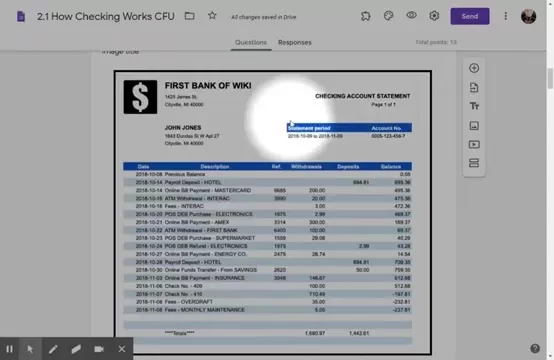
It acts as an official record from your financial institution, detailing deposits, withdrawals, fees, and any other activity impacting your balance. Making a habit of reviewing your statements is a fundamental part of personal finance, helping you track expenses, identify fraudulent activity, and keep your records accurate. This document is vital for verifying your financial transactions and understanding your overall fiscal status. Whether you get a paper copy or view it online, your bank statement is a crucial tool for informed money management. Every entry provides insight into your spending patterns and your account's current standing.
Bank statements usually contain these elements:
- Statement Period: The specific dates the statement covers.
- Account Number: The unique number identifying your account.
- Bank Name and Contact Information: Information about your financial institution.
- Beginning Balance: The funds in your account when the statement period started.
- Deposits: Money that was added to your account.
- Withdrawals: Money that was taken from your account.
- Fees: Any charges from the bank for services or penalties.
- Ending Balance: The funds remaining in your account at the period's end.
By grasping these basic parts, you can start to understand the story of your financial activity as told by your bank statement.
Key Components of a Bank Statement
A bank statement is more than a simple list of numbers; it's a detailed log of your financial life. To fully comprehend your statement, you should know its key parts.
Transaction Date: This is the date the transaction took place.
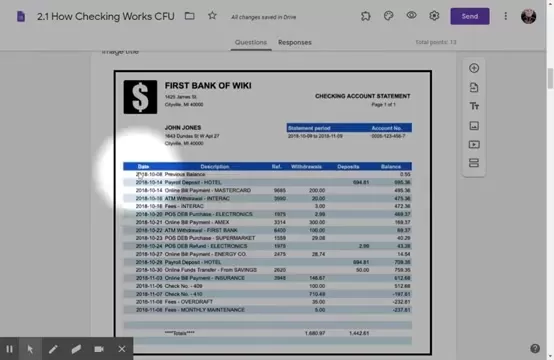
Remember that the transaction date might not be the same as the posting date, which is when the bank officially records it. This date is key for tracking the sequence of your financial activities.
Description: The description gives context about the transaction, like the merchant's name, the transaction type, or relevant reference numbers.This helps you identify the transaction's purpose and recall the specific purchase. Always check that the description aligns with your own records and that you recognize the transaction.
Reference Number: This is a unique code the bank or merchant assigns to each transaction.The reference number is helpful for tracking specific transactions and resolving any issues. If you have a question about a transaction, giving the reference number to your bank helps them locate and look into it quickly.
Withdrawals: A withdrawal is any transaction that takes money out of your account.This includes ATM withdrawals, debit card purchases, checks, online bill payments, and fees. Every withdrawal decreases your account balance. Monitoring withdrawals is essential to confirm they are authorized and correct.
Deposits: A deposit is any transaction that puts money into your account.This covers direct deposits, cash deposits, check deposits, and transfers from other accounts. Every deposit increases your account balance. Confirm that all expected deposits are correctly shown and the amounts match your records.
Balance: The balance shows how much money is in your account at a specific time.This running total reflects the net effect of all your deposits and withdrawals. Keeping an eye on your balance is crucial for avoiding overdrafts and managing your cash flow. Make sure the ending balance on your statement matches what you expect.
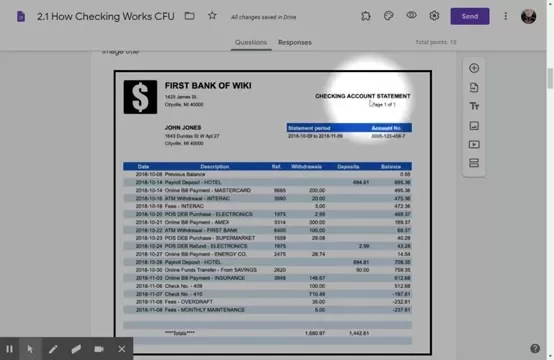
Here's a table summarizing these components:
Component Description Transaction DateThe date the transaction occurred.DescriptionDetails about the transaction (merchant name, type of transaction).Reference NumberA unique identifier assigned to each transaction.WithdrawalsTransactions that remove funds from your account.DepositsTransactions that add funds to your account.BalanceThe amount of money in your account at a particular point in time.Knowing these components is essential for accurately reading your bank statement.
Decoding Transaction Types
Common Transaction Abbreviations and Meanings
Bank statements frequently use abbreviations that can be puzzling. Knowing these terms is key to correctly understanding your financial activity. Here is a guide to common transaction types:
POS (Point of Sale): This indicates a purchase made with your debit card at a store.
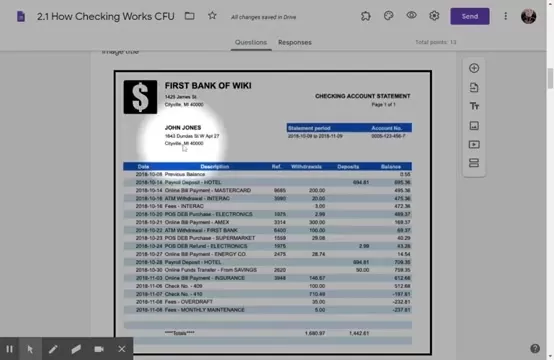
It shows you used your card to pay for items or services directly at the checkout. Always verify these transactions to ensure you know the merchant and the amount charged.
ATM (Automated Teller Machine): This indicates a cash withdrawal or deposit made at an ATM.Using an ATM outside your bank's network can result in fees. Track your ATM use to manage your cash flow.
ACH (Automated Clearing House): This refers to electronic transfers between banks, such as direct deposits for paychecks or automatic bill payments. ACH transactions are a standard method for receiving income and paying bills. Verify these entries to ensure they are correct and authorized.
Online Bill Payment: This indicates a payment you scheduled and sent through your bank’s online payment system.Online bill pay lets you manage payments to various companies from your bank account. Keep an eye on these payments to confirm they are processed as expected.
Check No.: This refers to a payment made using a physical paper check.The check number helps you identify the specific check used. Keep a record of your written checks and their amounts to reconcile your statement accurately.
Fees: This indicates various service charges from the bank, like monthly account fees or overdraft charges.Fees can significantly reduce your balance. Review fee charges to understand what you are paying for and find ways to minimize them.
Understanding these abbreviations helps you quickly identify and sort different transactions on your statement, making it easier to track spending and spot any mistakes. Recognizing these terms is a vital part of managing your money effectively.
Spotting and Understanding Bank Fees
Bank fees can slowly reduce your balance if you are not vigilant. Identifying and understanding these charges is crucial for effective financial management. Here is a guide to common bank fees:
Monthly Maintenance Fee: This is a recurring charge for keeping your account open.

Many banks will waive this fee if you maintain a minimum daily balance or meet other criteria. Check your account terms to see how you can avoid this charge.
Overdraft Fee: This is charged when a transaction causes your account to go into a negative balance.Overdraft fees are often quite high.
Cons
ider declining overdraft protection or linking your checking account to a savings account to cover any shortfalls.ATM Fee: This is charged when you use an ATM that is not operated by your bank.ATM fees can accumulate if you regularly use out-of-network machines. Try to use your bank's ATMs or get cash back at retail stores.
Non-Sufficient Funds (NSF) Fee: This is charged when a check or automatic payment is returned due to lack of funds. NSF fees are similar to overdraft fees and can be avoided by carefully tracking your account balance.
Transfer Fee: This is charged when you move money between accounts at different banks.You can often minimize transfer fees by using electronic payment services or by keeping your accounts at the same bank.
Inactive Account Fee: This is charged if your account has no activity for a specified length of time. You can avoid inactive account fees by making occasional transactions or officially closing the account.
By recognizing and understanding these fees, you can take action to avoid them and keep more of your money. Regularly check your statement for any unexpected charges and contact your bank with any questions.
Step-by-Step Guide to Reconciling Your Bank Statement
Reconciling Your Bank Statement: A Simple Process
Reconciling your bank statement is a vital process to ensure your personal records align with the bank's. This involves comparing your own transaction register with the official bank statement to find any differences. Follow this step-by-step guide:
Gather Your Documents: Collect your latest bank statement and your personal transaction register or checkbook. Have everything you need ready for comparison.
Compare Deposits: Match each deposit listed on the bank statement with the deposits you recorded. Check off each matching deposit. If you see a deposit on the statement missing from your register, add it. This could include interest payments or direct deposits you overlooked.
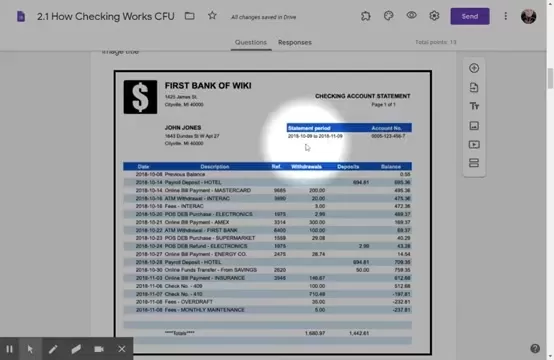
Compare Withdrawals: Match each withdrawal on the bank statement with those in your register. Check off each one that matches. Add any withdrawals from the statement that are missing from your register, such as bank fees, ATM withdrawals, or online payments you forgot to log.
Identify Outstanding Checks: Make a list of any checks you have written that have not yet been processed by the bank. These are in your register but do not appear on the statement. You will need to account for these outstanding checks in your final calculation.
Adjust Your Register Balance: Add any deposits to your register that are on the statement but not in your records. Subtract any withdrawals from your register that are on the statement but not recorded by you. Calculate your new, adjusted register balance.
Calculate the Reconciled Balance: Start with the ending balance shown on your bank statement. Add the total of any deposits you recorded that are not yet on the statement. Subtract the total of all outstanding checks. The result is your reconciled balance.
Compare Balances: Compare your adjusted register balance with the reconciled balance you just calculated. If they are the same, your statement is reconciled. If they differ, double-check your work for errors like miscalculations, transposed numbers, or missing transactions.
Investigate Discrepancies: If you cannot find the source of the error, contact your bank for help. They can assist in locating missing transactions or identifying errors on the statement.
Following these steps allows you to successfully reconcile your bank statement, ensuring your financial records are precise and current. Regular reconciliation is a key habit for maintaining financial control and preventing fraud.
Tools and Resources for Bank Statement Management
Managing and reconciling your bank statements can be simpler with the right tools. Here are some helpful options:
Banking Apps: Most banks provide mobile apps that let you view statements, track transactions, and reconcile your account from anywhere.
These apps often include features for categorizing spending and analyzing your habits.
Personal Finance Software: Applications like Mint, Quicken, and YNAB (You Need a Budget) can automatically import bank transactions to help you track spending, create budgets, and reconcile accounts. These tools offer a broad view of your financial health.
Spreadsheets: For a manual approach, use a spreadsheet to log transactions and reconcile statements. Create columns for the date, description, amount, and category. Use formulas to calculate your balance and spot discrepancies.
Online Banking Portals: Your bank's website provides a secure portal to access statements, view transaction history, and download data for use in other software. This is a safe way to manage your statements online.
Bank Reconciliation Templates: Many websites offer free, downloadable templates to guide you through the reconciliation process. These templates provide a structured format that can help prevent errors.
Using these tools and resources can make bank statement management more efficient and help ensure your financial records are accurate and up-to-date. Good statement management is a fundamental part of sound financial planning.
Pros and Cons of Online Bank Statements
Pros
Access your statements conveniently from anywhere
Better for the environment
Lower risk of statements being stolen from your mailbox
Easy to search through and store digitally
Usually provided at no cost
Cons
You need an internet connection to view them
Potential security risks if your online account is compromised
It's easy to neglect reviewing them regularly
Sometimes not accepted as official proof of address
Frequently Asked Questions
How often should I review my bank statement?
It's a good practice to review your bank statement every month as soon as you receive it.This helps you quickly identify any errors or unauthorized activity.
What should I do if I find an error on my bank statement?
Contact your bank right away to report the mistake. Give them specific details like the transaction date, amount, and description. Follow up with a written record of your dispute to ensure it is properly documented.
What is an overdraft fee, and how can I avoid it?
An overdraft fee is charged when a transaction exceeds your available balance. To avoid these fees, keep a close watch on your balance, set up low-balance alerts, and consider declining overdraft protection or linking your checking account to a savings account for backup.
What does 'POS' mean on my bank statement?
'POS' stands for Point of Sale.It indicates a debit card purchase made at a retail store.
How long should I keep my bank statements?
It is generally advised to keep bank statements for at least one year for easy reference and tax preparation. For tax-related purposes, you may need to retain them for several years, depending on local regulations.
Related Questions
What is the difference between a checking account and a savings account?
A checking account is designed for daily transactions like bill payments and purchases, offering easy access via debit cards, checks, and online banking. A savings account is intended for money you wish to set aside, typically earning interest. While you can withdraw from savings, there are often limits on monthly transactions.Checking Account: Ideal for everyday spending, offers immediate access to funds, and usually includes a debit card.Savings Account: Designed for accumulating savings, earns interest, and may restrict the number of withdrawals.Choosing between the two depends on your financial objectives. Many people use both types of accounts to manage their money effectively.
How do I set up direct deposit?
Setting up direct deposit is a convenient way to have paychecks or other regular payments automatically deposited into your checking account. To get started, you need to provide your employer or the payer with your bank's routing number and your account number. You can find these numbers on a check or through your bank's online platform.Once you provide this information, the payer will arrange for funds to be deposited directly into your account.Here are the basic steps:Get a Direct Deposit Form: Obtain the form from your employer or payer.Provide Your Bank Details: Fill in the form with your bank's routing number and your account number.Submit the Form: Return the completed form to the appropriate party.Confirm the Setup: Check your account statement to verify the direct deposit is active.Direct deposit saves time and ensures your payments are received promptly.
What is the importance of reviewing my bank statements regularly?
Regularly reviewing your bank statements is crucial for maintaining good financial health. It helps you monitor your spending, catch unauthorized transactions, and identify errors early. A monthly review allows you to address potential issues before they become significant problems.This practice can help you avoid overdraft fees, prevent fraud, and ensure your financial records are correct. Consistent review is a cornerstone of responsible money management.Here’s why it matters:Monitor Spending: See exactly where your money is going.Detect Fraud: Quickly spot any transactions you didn't authorize.Prevent Overdrafts: Stay aware of your balance to avoid insufficient funds.Catch Errors: Identify and correct mistakes from the bank or yourself.Maintain Financial Control: Keep your personal records accurate and current.Regular statement reviews put you in control of your finances and support informed decision-making.
Related article
 How to fix Core Web Vitals for better SEO rankings
How to Build a Free Website: Free Domain, Hosting & AI Website BuilderTable of ContentsIntroductionAI Website Builder 1: Hookous AIStep 1: Sign UpStep 2: Choose Business Type/NicheStep 3: Select ServicesStep 4: Define Website GoalsStep 5: Enter Busin
Apple, Google Partner With Anthropic to Address 27-Year-Old Vulnerability via Glass Wing Protection
As artificial intelligence advances rapidly in code generation and logical reasoning, the cybersecurity landscape faces unprecedented challenges. Recently, the prominent AI startup Anthropic officially launched a cross-industry collaboration called *
OpenAI Chief Scientist Addresses AI Reasoning Transparency Debate: Complexity Steady, No Sudden Jump
On September 2, Jakub Pachocki, OpenAI’s Chief Scientist, addressed public concerns on X regarding the AI model Astra, clarifying claims that it operates without oversight and lacks transparent reasoning.Why the Controversy Erupted: Deep Recurrence O
Related Special Topic Recommendations
Image editing
How to fix Core Web Vitals for better SEO rankings
How to Build a Free Website: Free Domain, Hosting & AI Website BuilderTable of ContentsIntroductionAI Website Builder 1: Hookous AIStep 1: Sign UpStep 2: Choose Business Type/NicheStep 3: Select ServicesStep 4: Define Website GoalsStep 5: Enter Busin
Apple, Google Partner With Anthropic to Address 27-Year-Old Vulnerability via Glass Wing Protection
As artificial intelligence advances rapidly in code generation and logical reasoning, the cybersecurity landscape faces unprecedented challenges. Recently, the prominent AI startup Anthropic officially launched a cross-industry collaboration called *
OpenAI Chief Scientist Addresses AI Reasoning Transparency Debate: Complexity Steady, No Sudden Jump
On September 2, Jakub Pachocki, OpenAI’s Chief Scientist, addressed public concerns on X regarding the AI model Astra, clarifying claims that it operates without oversight and lacks transparent reasoning.Why the Controversy Erupted: Deep Recurrence O
Related Special Topic Recommendations
Image editing
 AI Object Removal Editors: Clean Up Portraits, Travel, and Product Shots
2026 Latest Best Top-rated AI Object Removal Editors for portraits travel product shots! XIX.AI curates a powerful game-changing collection regularly updated with weekly rankings. These tools offer real-world tests to help you quickly remove unwanted elements, boost content quality, and save tons of time without compromising results. Must-try for anyone aiming to unlock their AI creation edge. Explore now!
 10 tools
 xix.ai
Text-to-speech
Best AI Text to Speech Tools for Online Courses
xix.ai
Text-to-speech
Best AI Text to Speech Tools for Online Courses
2026 Latest Best Top-rated AI Text to Speech Tools for Online Courses are curated by XIX.AI based on rigorous real-world tests and weekly updated rankings. These powerful tools help creators deliver crystal-clear audio content effortlessly, boosting writing efficiency and streamlining course production. Check out the free vs paid comparison to find your perfect fit. Explore now to unlock your AI edge in online education.
10 tools
xix.ai
writing
AI Blog Title Tools for Higher Click Through Rates
2026 Latest Best Top-Rated AI Blog Title Tools for Higher Click Through Rates! XIX.AI has carefully curated a powerful, game-changing collection of top tools that go through rigorous real-world tests. You’ll find a free vs paid comparison, weekly updated rankings, and detailed insights to help you boost your blog’s traffic efficiently. Must-try options are highlighted to help you unlock your AI edge. Explore now!
10 tools
xix.ai
automation
Best AI Task Routing Tools for Support Workflows
2026 Latest Best Top-rated AI Task Routing Tools for Support Workflows! XIX.AI has curated a highly powerful game-changing collection of must-try solutions, all undergoing rigorous real-world tests and updated weekly. These tools streamline workflows, boost productivity, and help teams deliver faster, more efficient support. Explore now to discover your perfect tool and unlock your AI edge!
17 tools
xix.ai
Academic Research
AI Citation and Paper Summary Tools
2026 Latest Best Top-Rated AI Citation and Paper Summary Tools Curated by XIX.AI. Get powerful game-changing solutions for quick content creation, improved writing efficiency, and boosting productivity. We offer a free vs paid comparison along with real-world tests and weekly updated rankings to help you find the must-try tool that fits your needs perfectly. Explore now to Unlock your AI edge.
10 tools
xix.ai
Productivity
Best AI Productivity Tools for Daily Work
2026 Latest Best Top-Rated AI Productivity Tools for Daily Work! XIX.AI has curated a powerful, game-changing selection based on rigorous weekly updated rankings and real-world tests. You’ll find must-try options that boost writing efficiency, streamline content creation, and help you overcome daily work challenges. Get a free vs paid comparison to find the perfect fit for your needs. Explore now to unlock your AI edge!
9 tools
xix.ai

 Comments (1)
0/500
Comments (1)
0/500
![PaulHarris]()
Honestly, I always just glance at the balance and move on 😅. This guide makes me realize I'm probably missing a lot of important details. Maybe it's time to actually decode those transactions for real!
Effectively managing your finances starts with a clear understanding of your bank statement. This document offers a comprehensive summary of all account activity within a specific period, usually a month. Learning to read your statement empowers you to monitor spending, spot inaccuracies, and maintain strong financial health. We will break down the key parts of a bank statement to boost your financial knowledge.
Key Points
Bank statements are generally issued every month.
They feature a statement period, your account number, and the bank's name.
Important details include transaction dates, descriptions, and amounts.
Withdrawals lower your balance, while deposits raise it.
Charges like overdraft and monthly fees will reduce your balance.
The running balance displays your available funds following every transaction.
Period totals at the end summarize all withdrawals and deposits.
Note that 'POS' refers to debit card purchases made at a 'Point of Sale'.
Using an ATM outside your bank's network typically results in fees.
Fund transfers move money between your different accounts.
Understanding the Basics of a Bank Statement
What is a Bank Statement?
A bank statement is a summary of all the financial transactions in your account over a set period, typically one month.
It acts as an official record from your financial institution, detailing deposits, withdrawals, fees, and any other activity impacting your balance. Making a habit of reviewing your statements is a fundamental part of personal finance, helping you track expenses, identify fraudulent activity, and keep your records accurate. This document is vital for verifying your financial transactions and understanding your overall fiscal status. Whether you get a paper copy or view it online, your bank statement is a crucial tool for informed money management. Every entry provides insight into your spending patterns and your account's current standing.
Bank statements usually contain these elements:
- Statement Period: The specific dates the statement covers.
- Account Number: The unique number identifying your account.
- Bank Name and Contact Information: Information about your financial institution.
- Beginning Balance: The funds in your account when the statement period started.
- Deposits: Money that was added to your account.
- Withdrawals: Money that was taken from your account.
- Fees: Any charges from the bank for services or penalties.
- Ending Balance: The funds remaining in your account at the period's end.
By grasping these basic parts, you can start to understand the story of your financial activity as told by your bank statement.
Key Components of a Bank Statement
A bank statement is more than a simple list of numbers; it's a detailed log of your financial life. To fully comprehend your statement, you should know its key parts.
Transaction Date: This is the date the transaction took place.
Remember that the transaction date might not be the same as the posting date, which is when the bank officially records it. This date is key for tracking the sequence of your financial activities.
Description: The description gives context about the transaction, like the merchant's name, the transaction type, or relevant reference numbers.This helps you identify the transaction's purpose and recall the specific purchase. Always check that the description aligns with your own records and that you recognize the transaction.
Reference Number: This is a unique code the bank or merchant assigns to each transaction.The reference number is helpful for tracking specific transactions and resolving any issues. If you have a question about a transaction, giving the reference number to your bank helps them locate and look into it quickly.
Withdrawals: A withdrawal is any transaction that takes money out of your account.This includes ATM withdrawals, debit card purchases, checks, online bill payments, and fees. Every withdrawal decreases your account balance. Monitoring withdrawals is essential to confirm they are authorized and correct.
Deposits: A deposit is any transaction that puts money into your account.This covers direct deposits, cash deposits, check deposits, and transfers from other accounts. Every deposit increases your account balance. Confirm that all expected deposits are correctly shown and the amounts match your records.
Balance: The balance shows how much money is in your account at a specific time.This running total reflects the net effect of all your deposits and withdrawals. Keeping an eye on your balance is crucial for avoiding overdrafts and managing your cash flow. Make sure the ending balance on your statement matches what you expect.
Here's a table summarizing these components:
Knowing these components is essential for accurately reading your bank statement.
Decoding Transaction Types
Common Transaction Abbreviations and Meanings
Bank statements frequently use abbreviations that can be puzzling. Knowing these terms is key to correctly understanding your financial activity. Here is a guide to common transaction types:
POS (Point of Sale): This indicates a purchase made with your debit card at a store.
It shows you used your card to pay for items or services directly at the checkout. Always verify these transactions to ensure you know the merchant and the amount charged.
ATM (Automated Teller Machine): This indicates a cash withdrawal or deposit made at an ATM.Using an ATM outside your bank's network can result in fees. Track your ATM use to manage your cash flow.
ACH (Automated Clearing House): This refers to electronic transfers between banks, such as direct deposits for paychecks or automatic bill payments. ACH transactions are a standard method for receiving income and paying bills. Verify these entries to ensure they are correct and authorized.
Online Bill Payment: This indicates a payment you scheduled and sent through your bank’s online payment system.Online bill pay lets you manage payments to various companies from your bank account. Keep an eye on these payments to confirm they are processed as expected.
Check No.: This refers to a payment made using a physical paper check.The check number helps you identify the specific check used. Keep a record of your written checks and their amounts to reconcile your statement accurately.
Fees: This indicates various service charges from the bank, like monthly account fees or overdraft charges.Fees can significantly reduce your balance. Review fee charges to understand what you are paying for and find ways to minimize them.
Understanding these abbreviations helps you quickly identify and sort different transactions on your statement, making it easier to track spending and spot any mistakes. Recognizing these terms is a vital part of managing your money effectively.
Spotting and Understanding Bank Fees
Bank fees can slowly reduce your balance if you are not vigilant. Identifying and understanding these charges is crucial for effective financial management. Here is a guide to common bank fees:
Monthly Maintenance Fee: This is a recurring charge for keeping your account open.
Many banks will waive this fee if you maintain a minimum daily balance or meet other criteria. Check your account terms to see how you can avoid this charge.
Overdraft Fee: This is charged when a transaction causes your account to go into a negative balance.Overdraft fees are often quite high.
Cons
ider declining overdraft protection or linking your checking account to a savings account to cover any shortfalls.ATM Fee: This is charged when you use an ATM that is not operated by your bank.ATM fees can accumulate if you regularly use out-of-network machines. Try to use your bank's ATMs or get cash back at retail stores.
Non-Sufficient Funds (NSF) Fee: This is charged when a check or automatic payment is returned due to lack of funds. NSF fees are similar to overdraft fees and can be avoided by carefully tracking your account balance.
Transfer Fee: This is charged when you move money between accounts at different banks.You can often minimize transfer fees by using electronic payment services or by keeping your accounts at the same bank.
Inactive Account Fee: This is charged if your account has no activity for a specified length of time. You can avoid inactive account fees by making occasional transactions or officially closing the account.
By recognizing and understanding these fees, you can take action to avoid them and keep more of your money. Regularly check your statement for any unexpected charges and contact your bank with any questions.
Step-by-Step Guide to Reconciling Your Bank Statement
Reconciling Your Bank Statement: A Simple Process
Reconciling your bank statement is a vital process to ensure your personal records align with the bank's. This involves comparing your own transaction register with the official bank statement to find any differences. Follow this step-by-step guide:
Gather Your Documents: Collect your latest bank statement and your personal transaction register or checkbook. Have everything you need ready for comparison.
Compare Deposits: Match each deposit listed on the bank statement with the deposits you recorded. Check off each matching deposit. If you see a deposit on the statement missing from your register, add it. This could include interest payments or direct deposits you overlooked.
Compare Withdrawals: Match each withdrawal on the bank statement with those in your register. Check off each one that matches. Add any withdrawals from the statement that are missing from your register, such as bank fees, ATM withdrawals, or online payments you forgot to log.
Identify Outstanding Checks: Make a list of any checks you have written that have not yet been processed by the bank. These are in your register but do not appear on the statement. You will need to account for these outstanding checks in your final calculation.
Adjust Your Register Balance: Add any deposits to your register that are on the statement but not in your records. Subtract any withdrawals from your register that are on the statement but not recorded by you. Calculate your new, adjusted register balance.
Calculate the Reconciled Balance: Start with the ending balance shown on your bank statement. Add the total of any deposits you recorded that are not yet on the statement. Subtract the total of all outstanding checks. The result is your reconciled balance.
Compare Balances: Compare your adjusted register balance with the reconciled balance you just calculated. If they are the same, your statement is reconciled. If they differ, double-check your work for errors like miscalculations, transposed numbers, or missing transactions.
Investigate Discrepancies: If you cannot find the source of the error, contact your bank for help. They can assist in locating missing transactions or identifying errors on the statement.
Following these steps allows you to successfully reconcile your bank statement, ensuring your financial records are precise and current. Regular reconciliation is a key habit for maintaining financial control and preventing fraud.
Tools and Resources for Bank Statement Management
Managing and reconciling your bank statements can be simpler with the right tools. Here are some helpful options:
Banking Apps: Most banks provide mobile apps that let you view statements, track transactions, and reconcile your account from anywhere.
These apps often include features for categorizing spending and analyzing your habits.
Personal Finance Software: Applications like Mint, Quicken, and YNAB (You Need a Budget) can automatically import bank transactions to help you track spending, create budgets, and reconcile accounts. These tools offer a broad view of your financial health.
Spreadsheets: For a manual approach, use a spreadsheet to log transactions and reconcile statements. Create columns for the date, description, amount, and category. Use formulas to calculate your balance and spot discrepancies.
Online Banking Portals: Your bank's website provides a secure portal to access statements, view transaction history, and download data for use in other software. This is a safe way to manage your statements online.
Bank Reconciliation Templates: Many websites offer free, downloadable templates to guide you through the reconciliation process. These templates provide a structured format that can help prevent errors.
Using these tools and resources can make bank statement management more efficient and help ensure your financial records are accurate and up-to-date. Good statement management is a fundamental part of sound financial planning.
Pros and Cons of Online Bank Statements
Pros
Access your statements conveniently from anywhere
Better for the environment
Lower risk of statements being stolen from your mailbox
Easy to search through and store digitally
Usually provided at no cost
Cons
You need an internet connection to view them
Potential security risks if your online account is compromised
It's easy to neglect reviewing them regularly
Sometimes not accepted as official proof of address
Frequently Asked Questions
How often should I review my bank statement?
It's a good practice to review your bank statement every month as soon as you receive it.This helps you quickly identify any errors or unauthorized activity.
What should I do if I find an error on my bank statement?
Contact your bank right away to report the mistake. Give them specific details like the transaction date, amount, and description. Follow up with a written record of your dispute to ensure it is properly documented.
What is an overdraft fee, and how can I avoid it?
An overdraft fee is charged when a transaction exceeds your available balance. To avoid these fees, keep a close watch on your balance, set up low-balance alerts, and consider declining overdraft protection or linking your checking account to a savings account for backup.
What does 'POS' mean on my bank statement?
'POS' stands for Point of Sale.It indicates a debit card purchase made at a retail store.
How long should I keep my bank statements?
It is generally advised to keep bank statements for at least one year for easy reference and tax preparation. For tax-related purposes, you may need to retain them for several years, depending on local regulations.
Related Questions
What is the difference between a checking account and a savings account?
A checking account is designed for daily transactions like bill payments and purchases, offering easy access via debit cards, checks, and online banking. A savings account is intended for money you wish to set aside, typically earning interest. While you can withdraw from savings, there are often limits on monthly transactions.Checking Account: Ideal for everyday spending, offers immediate access to funds, and usually includes a debit card.Savings Account: Designed for accumulating savings, earns interest, and may restrict the number of withdrawals.Choosing between the two depends on your financial objectives. Many people use both types of accounts to manage their money effectively.
How do I set up direct deposit?
Setting up direct deposit is a convenient way to have paychecks or other regular payments automatically deposited into your checking account. To get started, you need to provide your employer or the payer with your bank's routing number and your account number. You can find these numbers on a check or through your bank's online platform.Once you provide this information, the payer will arrange for funds to be deposited directly into your account.Here are the basic steps:Get a Direct Deposit Form: Obtain the form from your employer or payer.Provide Your Bank Details: Fill in the form with your bank's routing number and your account number.Submit the Form: Return the completed form to the appropriate party.Confirm the Setup: Check your account statement to verify the direct deposit is active.Direct deposit saves time and ensures your payments are received promptly.
What is the importance of reviewing my bank statements regularly?
Regularly reviewing your bank statements is crucial for maintaining good financial health. It helps you monitor your spending, catch unauthorized transactions, and identify errors early. A monthly review allows you to address potential issues before they become significant problems.This practice can help you avoid overdraft fees, prevent fraud, and ensure your financial records are correct. Consistent review is a cornerstone of responsible money management.Here’s why it matters:Monitor Spending: See exactly where your money is going.Detect Fraud: Quickly spot any transactions you didn't authorize.Prevent Overdrafts: Stay aware of your balance to avoid insufficient funds.Catch Errors: Identify and correct mistakes from the bank or yourself.Maintain Financial Control: Keep your personal records accurate and current.Regular statement reviews put you in control of your finances and support informed decision-making.








 How to fix Core Web Vitals for better SEO rankings
How to Build a Free Website: Free Domain, Hosting & AI Website BuilderTable of ContentsIntroductionAI Website Builder 1: Hookous AIStep 1: Sign UpStep 2: Choose Business Type/NicheStep 3: Select ServicesStep 4: Define Website GoalsStep 5: Enter Busin
How to fix Core Web Vitals for better SEO rankings
How to Build a Free Website: Free Domain, Hosting & AI Website BuilderTable of ContentsIntroductionAI Website Builder 1: Hookous AIStep 1: Sign UpStep 2: Choose Business Type/NicheStep 3: Select ServicesStep 4: Define Website GoalsStep 5: Enter Busin
 Apple, Google Partner With Anthropic to Address 27-Year-Old Vulnerability via Glass Wing Protection
As artificial intelligence advances rapidly in code generation and logical reasoning, the cybersecurity landscape faces unprecedented challenges. Recently, the prominent AI startup Anthropic officially launched a cross-industry collaboration called *
Apple, Google Partner With Anthropic to Address 27-Year-Old Vulnerability via Glass Wing Protection
As artificial intelligence advances rapidly in code generation and logical reasoning, the cybersecurity landscape faces unprecedented challenges. Recently, the prominent AI startup Anthropic officially launched a cross-industry collaboration called *
 OpenAI Chief Scientist Addresses AI Reasoning Transparency Debate: Complexity Steady, No Sudden Jump
On September 2, Jakub Pachocki, OpenAI’s Chief Scientist, addressed public concerns on X regarding the AI model Astra, clarifying claims that it operates without oversight and lacks transparent reasoning.Why the Controversy Erupted: Deep Recurrence O
OpenAI Chief Scientist Addresses AI Reasoning Transparency Debate: Complexity Steady, No Sudden Jump
On September 2, Jakub Pachocki, OpenAI’s Chief Scientist, addressed public concerns on X regarding the AI model Astra, clarifying claims that it operates without oversight and lacks transparent reasoning.Why the Controversy Erupted: Deep Recurrence O

2026 Latest Best Top-rated AI Object Removal Editors for portraits travel product shots! XIX.AI curates a powerful game-changing collection regularly updated with weekly rankings. These tools offer real-world tests to help you quickly remove unwanted elements, boost content quality, and save tons of time without compromising results. Must-try for anyone aiming to unlock their AI creation edge. Explore now!
10 tools
xix.ai

2026 Latest Best Top-rated AI Text to Speech Tools for Online Courses are curated by XIX.AI based on rigorous real-world tests and weekly updated rankings. These powerful tools help creators deliver crystal-clear audio content effortlessly, boosting writing efficiency and streamlining course production. Check out the free vs paid comparison to find your perfect fit. Explore now to unlock your AI edge in online education.
10 tools
xix.ai

2026 Latest Best Top-Rated AI Blog Title Tools for Higher Click Through Rates! XIX.AI has carefully curated a powerful, game-changing collection of top tools that go through rigorous real-world tests. You’ll find a free vs paid comparison, weekly updated rankings, and detailed insights to help you boost your blog’s traffic efficiently. Must-try options are highlighted to help you unlock your AI edge. Explore now!
10 tools
xix.ai

2026 Latest Best Top-rated AI Task Routing Tools for Support Workflows! XIX.AI has curated a highly powerful game-changing collection of must-try solutions, all undergoing rigorous real-world tests and updated weekly. These tools streamline workflows, boost productivity, and help teams deliver faster, more efficient support. Explore now to discover your perfect tool and unlock your AI edge!
17 tools
xix.ai

2026 Latest Best Top-Rated AI Citation and Paper Summary Tools Curated by XIX.AI. Get powerful game-changing solutions for quick content creation, improved writing efficiency, and boosting productivity. We offer a free vs paid comparison along with real-world tests and weekly updated rankings to help you find the must-try tool that fits your needs perfectly. Explore now to Unlock your AI edge.
10 tools
xix.ai

2026 Latest Best Top-Rated AI Productivity Tools for Daily Work! XIX.AI has curated a powerful, game-changing selection based on rigorous weekly updated rankings and real-world tests. You’ll find must-try options that boost writing efficiency, streamline content creation, and help you overcome daily work challenges. Get a free vs paid comparison to find the perfect fit for your needs. Explore now to unlock your AI edge!
9 tools
xix.ai

Honestly, I always just glance at the balance and move on 😅. This guide makes me realize I'm probably missing a lot of important details. Maybe it's time to actually decode those transactions for real!












