


 Home
Home
OpenAI Chief Scientist Addresses AI Reasoning Transparency Debate: Complexity Steady, No Sudden Jump

On September 2, Jakub Pachocki, OpenAI’s Chief Scientist, addressed public concerns on X regarding the AI model Astra, clarifying claims that it operates without oversight and lacks transparent reasoning.
Why the Controversy Erupted: Deep Recurrence Obscures Reasoning Paths
The issue originated from a detailed report by The Information, which disclosed that OpenAI is experimenting with "deep recurrence" technology. This approach may complicate researchers' ability to trace the model's "chain of thought" reasoning process.
While mainstream models like ChatGPT, Claude, and Gemini rely on the Transformer architecture—processing information in linear steps and occasionally outputting reasoning in natural language—this output does not always mirror internal computations. "Deep recurrence" enables models to repeatedly invoke the same network layers, continuously updating internal states. Unlike traditional linear structures, this method may keep significant reasoning within opaque internal states, making it difficult for researchers to trace decision paths via chain of thought. Following the report, the AI community expressed concern that such technology could hinder external monitoring tools, reducing transparency regarding how models reach conclusions.
Pachocki Clarifies: Computation Graph Depth Remains Manageable
In his post, Pachocki expressed a desire to prevent a "race toward unmonitored AI" driven by misleading media narratives. He clarified that the computation graph depth of OpenAI’s current advanced models, including Astra, is less than double that of GPT-4, indicating no sudden jump in architectural complexity as feared.
He noted that since the introduction of initial reasoning models, OpenAI has prioritized maintaining and leveraging chain of thought monitoring. This technology is crucial for understanding how model alignment generalizes from training data. However, he acknowledged that current chain of thought monitoring is fragile and has been declining for reasons unrelated to architectural changes. The team plans to implement measures to strengthen this capability, a core objective of current research. OpenAI confirmed it will deploy enhanced chain of thought monitoring for Astra.
Computation graph depth measures neural network complexity, representing the sequential computational layers from input to output. Higher values indicate more intricate structures.
Related article
 Apple, Google Partner With Anthropic to Address 27-Year-Old Vulnerability via Glass Wing Protection
As artificial intelligence advances rapidly in code generation and logical reasoning, the cybersecurity landscape faces unprecedented challenges. Recently, the prominent AI startup Anthropic officially launched a cross-industry collaboration called *
U.S. Navy Selects Blue Water Autonomy for Deep-Sea Survey Missions
Blue Water Autonomy’s Liberty Class is a 190-foot steel autonomous ship. | Source: Blue Water AutonomyBoston-based technology and shipbuilding firm Blue Water Autonomy has secured a multiple-award contract with the Naval Oceanographic Office (NAVOCEA
OpenAI Pledges No Power Bill Hikes, Minimal Water Use for Data Centers
Amid growing resistance to AI infrastructure nationwide, OpenAI is shifting to a more collaborative strategy. A July 23 Business Insider report reveals that OpenAI is actively seeking community backing for Project Camellia, a proposed data center cam
Related Special Topic Recommendations
Text-to-speech
Apple, Google Partner With Anthropic to Address 27-Year-Old Vulnerability via Glass Wing Protection
As artificial intelligence advances rapidly in code generation and logical reasoning, the cybersecurity landscape faces unprecedented challenges. Recently, the prominent AI startup Anthropic officially launched a cross-industry collaboration called *
U.S. Navy Selects Blue Water Autonomy for Deep-Sea Survey Missions
Blue Water Autonomy’s Liberty Class is a 190-foot steel autonomous ship. | Source: Blue Water AutonomyBoston-based technology and shipbuilding firm Blue Water Autonomy has secured a multiple-award contract with the Naval Oceanographic Office (NAVOCEA
OpenAI Pledges No Power Bill Hikes, Minimal Water Use for Data Centers
Amid growing resistance to AI infrastructure nationwide, OpenAI is shifting to a more collaborative strategy. A July 23 Business Insider report reveals that OpenAI is actively seeking community backing for Project Camellia, a proposed data center cam
Related Special Topic Recommendations
Text-to-speech
 Best AI Text to Speech Tools for Online Courses
2026 Latest Best Top-rated AI Text to Speech Tools for Online Courses are curated by XIX.AI based on rigorous real-world tests and weekly updated rankings. These powerful tools help creators deliver crystal-clear audio content effortlessly, boosting writing efficiency and streamlining course production. Check out the free vs paid comparison to find your perfect fit. Explore now to unlock your AI edge in online education.
 10 tools
 xix.ai
writing
AI Blog Title Tools for Higher Click Through Rates
xix.ai
writing
AI Blog Title Tools for Higher Click Through Rates
2026 Latest Best Top-Rated AI Blog Title Tools for Higher Click Through Rates! XIX.AI has carefully curated a powerful, game-changing collection of top tools that go through rigorous real-world tests. You’ll find a free vs paid comparison, weekly updated rankings, and detailed insights to help you boost your blog’s traffic efficiently. Must-try options are highlighted to help you unlock your AI edge. Explore now!
10 tools
xix.ai
automation
Best AI Task Routing Tools for Support Workflows
2026 Latest Best Top-rated AI Task Routing Tools for Support Workflows! XIX.AI has curated a highly powerful game-changing collection of must-try solutions, all undergoing rigorous real-world tests and updated weekly. These tools streamline workflows, boost productivity, and help teams deliver faster, more efficient support. Explore now to discover your perfect tool and unlock your AI edge!
17 tools
xix.ai
Academic Research
AI Citation and Paper Summary Tools
2026 Latest Best Top-Rated AI Citation and Paper Summary Tools Curated by XIX.AI. Get powerful game-changing solutions for quick content creation, improved writing efficiency, and boosting productivity. We offer a free vs paid comparison along with real-world tests and weekly updated rankings to help you find the must-try tool that fits your needs perfectly. Explore now to Unlock your AI edge.
10 tools
xix.ai
Productivity
Best AI Productivity Tools for Daily Work
2026 Latest Best Top-Rated AI Productivity Tools for Daily Work! XIX.AI has curated a powerful, game-changing selection based on rigorous weekly updated rankings and real-world tests. You’ll find must-try options that boost writing efficiency, streamline content creation, and help you overcome daily work challenges. Get a free vs paid comparison to find the perfect fit for your needs. Explore now to unlock your AI edge!
9 tools
xix.ai
Academic Research
AI Systematic Review Tools for Research Screening
2026 Latest Best Top-Rated AI Systematic Review Tools for Research Screening are here on XIX.AI! This curated collection includes powerful, game-changing solutions that go through rigorous real-world tests to deliver accurate results. We also offer a free vs paid comparison along with weekly updated rankings to help you find the must-try option that boosts your research efficiency significantly. Explore now to unlock your AI edge in academic work!
11 tools
xix.ai

 Comments (0)
0/500
Comments (0)
0/500
On September 2, Jakub Pachocki, OpenAI’s Chief Scientist, addressed public concerns on X regarding the AI model Astra, clarifying claims that it operates without oversight and lacks transparent reasoning.
Why the Controversy Erupted: Deep Recurrence Obscures Reasoning Paths
The issue originated from a detailed report by The Information, which disclosed that OpenAI is experimenting with "deep recurrence" technology. This approach may complicate researchers' ability to trace the model's "chain of thought" reasoning process.
While mainstream models like ChatGPT, Claude, and Gemini rely on the Transformer architecture—processing information in linear steps and occasionally outputting reasoning in natural language—this output does not always mirror internal computations. "Deep recurrence" enables models to repeatedly invoke the same network layers, continuously updating internal states. Unlike traditional linear structures, this method may keep significant reasoning within opaque internal states, making it difficult for researchers to trace decision paths via chain of thought. Following the report, the AI community expressed concern that such technology could hinder external monitoring tools, reducing transparency regarding how models reach conclusions.
Pachocki Clarifies: Computation Graph Depth Remains Manageable
In his post, Pachocki expressed a desire to prevent a "race toward unmonitored AI" driven by misleading media narratives. He clarified that the computation graph depth of OpenAI’s current advanced models, including Astra, is less than double that of GPT-4, indicating no sudden jump in architectural complexity as feared.
He noted that since the introduction of initial reasoning models, OpenAI has prioritized maintaining and leveraging chain of thought monitoring. This technology is crucial for understanding how model alignment generalizes from training data. However, he acknowledged that current chain of thought monitoring is fragile and has been declining for reasons unrelated to architectural changes. The team plans to implement measures to strengthen this capability, a core objective of current research. OpenAI confirmed it will deploy enhanced chain of thought monitoring for Astra.
Computation graph depth measures neural network complexity, representing the sequential computational layers from input to output. Higher values indicate more intricate structures.








 Apple, Google Partner With Anthropic to Address 27-Year-Old Vulnerability via Glass Wing Protection
As artificial intelligence advances rapidly in code generation and logical reasoning, the cybersecurity landscape faces unprecedented challenges. Recently, the prominent AI startup Anthropic officially launched a cross-industry collaboration called *
Apple, Google Partner With Anthropic to Address 27-Year-Old Vulnerability via Glass Wing Protection
As artificial intelligence advances rapidly in code generation and logical reasoning, the cybersecurity landscape faces unprecedented challenges. Recently, the prominent AI startup Anthropic officially launched a cross-industry collaboration called *
 U.S. Navy Selects Blue Water Autonomy for Deep-Sea Survey Missions
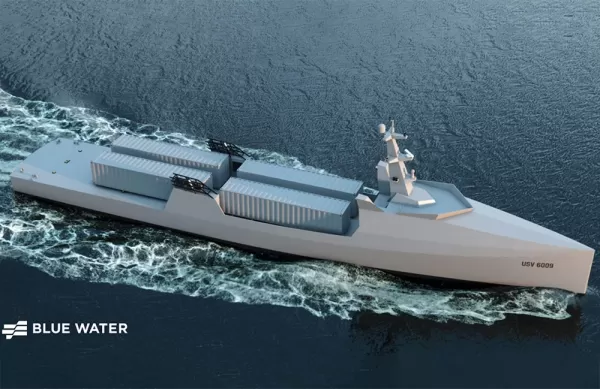
Blue Water Autonomy’s Liberty Class is a 190-foot steel autonomous ship. | Source: Blue Water AutonomyBoston-based technology and shipbuilding firm Blue Water Autonomy has secured a multiple-award contract with the Naval Oceanographic Office (NAVOCEA
U.S. Navy Selects Blue Water Autonomy for Deep-Sea Survey Missions
Blue Water Autonomy’s Liberty Class is a 190-foot steel autonomous ship. | Source: Blue Water AutonomyBoston-based technology and shipbuilding firm Blue Water Autonomy has secured a multiple-award contract with the Naval Oceanographic Office (NAVOCEA
 OpenAI Pledges No Power Bill Hikes, Minimal Water Use for Data Centers
Amid growing resistance to AI infrastructure nationwide, OpenAI is shifting to a more collaborative strategy. A July 23 Business Insider report reveals that OpenAI is actively seeking community backing for Project Camellia, a proposed data center cam
OpenAI Pledges No Power Bill Hikes, Minimal Water Use for Data Centers
Amid growing resistance to AI infrastructure nationwide, OpenAI is shifting to a more collaborative strategy. A July 23 Business Insider report reveals that OpenAI is actively seeking community backing for Project Camellia, a proposed data center cam

2026 Latest Best Top-rated AI Text to Speech Tools for Online Courses are curated by XIX.AI based on rigorous real-world tests and weekly updated rankings. These powerful tools help creators deliver crystal-clear audio content effortlessly, boosting writing efficiency and streamlining course production. Check out the free vs paid comparison to find your perfect fit. Explore now to unlock your AI edge in online education.
10 tools
xix.ai

2026 Latest Best Top-Rated AI Blog Title Tools for Higher Click Through Rates! XIX.AI has carefully curated a powerful, game-changing collection of top tools that go through rigorous real-world tests. You’ll find a free vs paid comparison, weekly updated rankings, and detailed insights to help you boost your blog’s traffic efficiently. Must-try options are highlighted to help you unlock your AI edge. Explore now!
10 tools
xix.ai

2026 Latest Best Top-rated AI Task Routing Tools for Support Workflows! XIX.AI has curated a highly powerful game-changing collection of must-try solutions, all undergoing rigorous real-world tests and updated weekly. These tools streamline workflows, boost productivity, and help teams deliver faster, more efficient support. Explore now to discover your perfect tool and unlock your AI edge!
17 tools
xix.ai

2026 Latest Best Top-Rated AI Citation and Paper Summary Tools Curated by XIX.AI. Get powerful game-changing solutions for quick content creation, improved writing efficiency, and boosting productivity. We offer a free vs paid comparison along with real-world tests and weekly updated rankings to help you find the must-try tool that fits your needs perfectly. Explore now to Unlock your AI edge.
10 tools
xix.ai

2026 Latest Best Top-Rated AI Productivity Tools for Daily Work! XIX.AI has curated a powerful, game-changing selection based on rigorous weekly updated rankings and real-world tests. You’ll find must-try options that boost writing efficiency, streamline content creation, and help you overcome daily work challenges. Get a free vs paid comparison to find the perfect fit for your needs. Explore now to unlock your AI edge!
9 tools
xix.ai

2026 Latest Best Top-Rated AI Systematic Review Tools for Research Screening are here on XIX.AI! This curated collection includes powerful, game-changing solutions that go through rigorous real-world tests to deliver accurate results. We also offer a free vs paid comparison along with weekly updated rankings to help you find the must-try option that boosts your research efficiency significantly. Explore now to unlock your AI edge in academic work!
11 tools
xix.ai












