


 Home
HomeApple’s Trade Secrets Lawsuit Against OpenAI: The Wildest Allegations
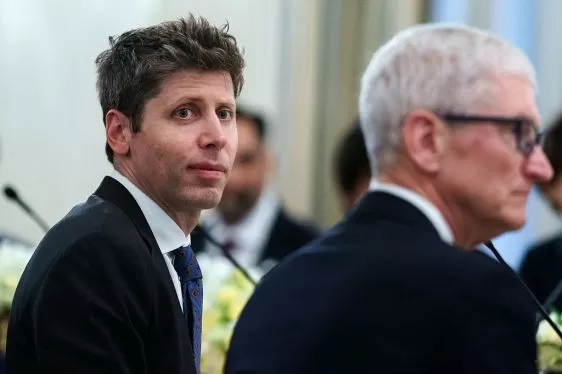
Apple’s trade secret lawsuit against OpenAI contains numerous extraordinary allegations, depicting a coordinated effort to extract confidential information from current and former Apple employees. Most striking is the casual tone of the alleged misconduct, including a message stating, “LOL, I found out I can access the [network storage], so funny.”
The 41-page complaint, filed on Friday, includes unusually detailed allegations. Here are the most notable points:
“Normalized and exemplified by leadership.” By describing OpenAI this way, Apple clarifies that the lawsuit targets not just rogue employees, but a culture of misconduct led from the top.“Rotten to its core.” Apple uses a fruit analogy to criticize OpenAI’s behavior. Rumors suggest OpenAI is developing a hardware device to challenge the iPhone, potentially a smartphone of its own. However, Apple emphasizes that OpenAI’s product allegedly relies on misappropriated trade secrets. “OpenAI’s nascent hardware business now rests on the shakiest of foundations, rotten to its core by its illegal reliance on misappropriated trade secrets,” the complaint states.“This is the tip of the iceberg.” Beyond documenting allegations against former employees, Apple suggests the misconduct outlined is only a fraction of what will be uncovered during discovery. This process involves obtaining corporate documents and communications, including texts and emails, potentially revealing more instances of such behavior. “Discovery will expose that the misappropriation has been occurring on a scale many times greater than the several instances described below,” Apple’s complaint states.“LOL, I found out I can access the [network storage], so funny.” Apple states that Chang Liu, a former senior systems electrical engineer at Apple who joined OpenAI, sent this message to Yu-Ting “Alyssa” Peng, an alleged conduit between Apple and OpenAI. Peng later joined OpenAI but is not a defendant. She allegedly replied, “I’m ready.” Apple claims Liu accessed Apple’s systems by exploiting an authentication bug from Peng’s Apple-issued work computer.“I still have another computer.” Liu allegedly texted this shortly after leaving Apple, referring to another Apple computer he planned to use for accessing confidential information. Apple discovered the message on Peng’s work laptop.“Didn’t even know we could take those from the office.” A striking allegation is that OpenAI’s chief hardware officer, Tang Yew Tan, who spent 24 years at Apple (most recently as VP of product design for iPhone and Apple Watch), directed job candidates to bring “actual parts” from Apple to interviews for “show and tell sessions.” One candidate was surprised, not realizing Apple parts could be removed from the office. Apple also claims employees were instructed to bring “CAD/design artifacts” and “prototypes” to interviews.Avoiding the “dreaded walkout.” Apple alleges OpenAI coached departing employees on evading security procedures to avoid detection of alleged trade secret theft. The complaint claims OpenAI circulated an internal document marked “Need to know” to new hires, detailing how to avoid the “dreaded walkout.” This procedure immediately removes employees upon resignation, preventing them from working the typical two weeks and accessing confidential information.“Let OpenAI know ‘asap’” if asked to sign anything when quitting Apple. The complaint alleges that if departing employees were asked to sign documents during exit interviews, they should notify OpenAI immediately and were advised not to sign.“Over four hundred former Apple employees now working at OpenAI.” The complaint highlights the extent to which Apple employees have left for OpenAI. Apple uses this figure to illustrate the potential scale of the problem, noting that “it is not surprising that certain OpenAI personnel have knowledge of Apple’s confidential and proprietary information, which they are obligated to keep confidential. But OpenAI has resorted to exploiting this confidential information…”“io…access, exploited and used Apple’s secret, proprietary industrial design techniques, processes, and know-how related to metal-finishing.” Founded by former Apple employees, including Jony Ive, io was acquired by OpenAI last year in a $6.5 billion deal. It is now a defendant, as Apple alleges the firm used industrial design techniques by misleading a partner into believing it had Apple’s permission for a “confidential metal-finishing technique.” Apple also claims OpenAI approached a supplier using confidential information about design and components related to power and batteries, using “internal terminology” to ask questions “only Apple-insiders would know to ask.”“Apple is left with no choice.” While typical legal phrasing, this suggests Apple may have attempted to resolve the issue outside court. The tech giant states it contacted OpenAI in February with concerns, but received no response. So far, OpenAI has only commented publicly via a statement on X on Friday: “We have no interest in other companies’ trade secrets. We remain focused on building innovative technology that empowers people everywhere.”
Related article
 OpenAI robotics head Caitlin Kalinowski resigns over Pentagon partnership
OpenAI robotics leader Caitlin Kalinowski has stepped down following the company’s controversial partnership with the Department of Defense.“This wasn’t an easy call,” Kalinowski explained in a social media statement. “While AI plays a vital role in
OpenAI Closes Gap With Anthropic Among Business Users, New Data Shows
With OpenAI and Anthropic still distant from their anticipated IPOs and the release of detailed financial reports, we must turn to alternative indicators to gauge their business performance. Ramp, a corporate credit card and expense management platfo
OpenAI launches safer ChatGPT for teens years after they started using it
Following a series of lawsuits regarding the absence of safety protocols in AI chatbots—which contributed to teen suicides and other mental health crises—OpenAI unveiled ChatGPT for Teens on Monday. This new offering incorporates enhanced safety feat
Related Special Topic Recommendations
Text-to-speech
OpenAI robotics head Caitlin Kalinowski resigns over Pentagon partnership
OpenAI robotics leader Caitlin Kalinowski has stepped down following the company’s controversial partnership with the Department of Defense.“This wasn’t an easy call,” Kalinowski explained in a social media statement. “While AI plays a vital role in
OpenAI Closes Gap With Anthropic Among Business Users, New Data Shows
With OpenAI and Anthropic still distant from their anticipated IPOs and the release of detailed financial reports, we must turn to alternative indicators to gauge their business performance. Ramp, a corporate credit card and expense management platfo
OpenAI launches safer ChatGPT for teens years after they started using it
Following a series of lawsuits regarding the absence of safety protocols in AI chatbots—which contributed to teen suicides and other mental health crises—OpenAI unveiled ChatGPT for Teens on Monday. This new offering incorporates enhanced safety feat
Related Special Topic Recommendations
Text-to-speech
 Best AI Text to Speech Tools for Online Courses
2026 Latest Best Top-rated AI Text to Speech Tools for Online Courses are curated by XIX.AI based on rigorous real-world tests and weekly updated rankings. These powerful tools help creators deliver crystal-clear audio content effortlessly, boosting writing efficiency and streamlining course production. Check out the free vs paid comparison to find your perfect fit. Explore now to unlock your AI edge in online education.
 10 tools
 xix.ai
writing
AI Blog Title Tools for Higher Click Through Rates
xix.ai
writing
AI Blog Title Tools for Higher Click Through Rates
2026 Latest Best Top-Rated AI Blog Title Tools for Higher Click Through Rates! XIX.AI has carefully curated a powerful, game-changing collection of top tools that go through rigorous real-world tests. You’ll find a free vs paid comparison, weekly updated rankings, and detailed insights to help you boost your blog’s traffic efficiently. Must-try options are highlighted to help you unlock your AI edge. Explore now!
10 tools
xix.ai
automation
Best AI Task Routing Tools for Support Workflows
2026 Latest Best Top-rated AI Task Routing Tools for Support Workflows! XIX.AI has curated a highly powerful game-changing collection of must-try solutions, all undergoing rigorous real-world tests and updated weekly. These tools streamline workflows, boost productivity, and help teams deliver faster, more efficient support. Explore now to discover your perfect tool and unlock your AI edge!
17 tools
xix.ai
Academic Research
AI Citation and Paper Summary Tools
2026 Latest Best Top-Rated AI Citation and Paper Summary Tools Curated by XIX.AI. Get powerful game-changing solutions for quick content creation, improved writing efficiency, and boosting productivity. We offer a free vs paid comparison along with real-world tests and weekly updated rankings to help you find the must-try tool that fits your needs perfectly. Explore now to Unlock your AI edge.
10 tools
xix.ai
Productivity
Best AI Productivity Tools for Daily Work
2026 Latest Best Top-Rated AI Productivity Tools for Daily Work! XIX.AI has curated a powerful, game-changing selection based on rigorous weekly updated rankings and real-world tests. You’ll find must-try options that boost writing efficiency, streamline content creation, and help you overcome daily work challenges. Get a free vs paid comparison to find the perfect fit for your needs. Explore now to unlock your AI edge!
9 tools
xix.ai
Academic Research
AI Systematic Review Tools for Research Screening
2026 Latest Best Top-Rated AI Systematic Review Tools for Research Screening are here on XIX.AI! This curated collection includes powerful, game-changing solutions that go through rigorous real-world tests to deliver accurate results. We also offer a free vs paid comparison along with weekly updated rankings to help you find the must-try option that boosts your research efficiency significantly. Explore now to unlock your AI edge in academic work!
11 tools
xix.ai

 Comments (0)
0/500
Comments (0)
0/500
Apple’s trade secret lawsuit against OpenAI contains numerous extraordinary allegations, depicting a coordinated effort to extract confidential information from current and former Apple employees. Most striking is the casual tone of the alleged misconduct, including a message stating, “LOL, I found out I can access the [network storage], so funny.”
The 41-page complaint, filed on Friday, includes unusually detailed allegations. Here are the most notable points:
“Normalized and exemplified by leadership.” By describing OpenAI this way, Apple clarifies that the lawsuit targets not just rogue employees, but a culture of misconduct led from the top.“Rotten to its core.” Apple uses a fruit analogy to criticize OpenAI’s behavior. Rumors suggest OpenAI is developing a hardware device to challenge the iPhone, potentially a smartphone of its own. However, Apple emphasizes that OpenAI’s product allegedly relies on misappropriated trade secrets. “OpenAI’s nascent hardware business now rests on the shakiest of foundations, rotten to its core by its illegal reliance on misappropriated trade secrets,” the complaint states.“This is the tip of the iceberg.” Beyond documenting allegations against former employees, Apple suggests the misconduct outlined is only a fraction of what will be uncovered during discovery. This process involves obtaining corporate documents and communications, including texts and emails, potentially revealing more instances of such behavior. “Discovery will expose that the misappropriation has been occurring on a scale many times greater than the several instances described below,” Apple’s complaint states.“LOL, I found out I can access the [network storage], so funny.” Apple states that Chang Liu, a former senior systems electrical engineer at Apple who joined OpenAI, sent this message to Yu-Ting “Alyssa” Peng, an alleged conduit between Apple and OpenAI. Peng later joined OpenAI but is not a defendant. She allegedly replied, “I’m ready.” Apple claims Liu accessed Apple’s systems by exploiting an authentication bug from Peng’s Apple-issued work computer.“I still have another computer.” Liu allegedly texted this shortly after leaving Apple, referring to another Apple computer he planned to use for accessing confidential information. Apple discovered the message on Peng’s work laptop.“Didn’t even know we could take those from the office.” A striking allegation is that OpenAI’s chief hardware officer, Tang Yew Tan, who spent 24 years at Apple (most recently as VP of product design for iPhone and Apple Watch), directed job candidates to bring “actual parts” from Apple to interviews for “show and tell sessions.” One candidate was surprised, not realizing Apple parts could be removed from the office. Apple also claims employees were instructed to bring “CAD/design artifacts” and “prototypes” to interviews.Avoiding the “dreaded walkout.” Apple alleges OpenAI coached departing employees on evading security procedures to avoid detection of alleged trade secret theft. The complaint claims OpenAI circulated an internal document marked “Need to know” to new hires, detailing how to avoid the “dreaded walkout.” This procedure immediately removes employees upon resignation, preventing them from working the typical two weeks and accessing confidential information.“Let OpenAI know ‘asap’” if asked to sign anything when quitting Apple. The complaint alleges that if departing employees were asked to sign documents during exit interviews, they should notify OpenAI immediately and were advised not to sign.“Over four hundred former Apple employees now working at OpenAI.” The complaint highlights the extent to which Apple employees have left for OpenAI. Apple uses this figure to illustrate the potential scale of the problem, noting that “it is not surprising that certain OpenAI personnel have knowledge of Apple’s confidential and proprietary information, which they are obligated to keep confidential. But OpenAI has resorted to exploiting this confidential information…”“io…access, exploited and used Apple’s secret, proprietary industrial design techniques, processes, and know-how related to metal-finishing.” Founded by former Apple employees, including Jony Ive, io was acquired by OpenAI last year in a $6.5 billion deal. It is now a defendant, as Apple alleges the firm used industrial design techniques by misleading a partner into believing it had Apple’s permission for a “confidential metal-finishing technique.” Apple also claims OpenAI approached a supplier using confidential information about design and components related to power and batteries, using “internal terminology” to ask questions “only Apple-insiders would know to ask.”“Apple is left with no choice.” While typical legal phrasing, this suggests Apple may have attempted to resolve the issue outside court. The tech giant states it contacted OpenAI in February with concerns, but received no response.So far, OpenAI has only commented publicly via a statement on X on Friday: “We have no interest in other companies’ trade secrets. We remain focused on building innovative technology that empowers people everywhere.”








 OpenAI robotics head Caitlin Kalinowski resigns over Pentagon partnership
OpenAI robotics leader Caitlin Kalinowski has stepped down following the company’s controversial partnership with the Department of Defense.“This wasn’t an easy call,” Kalinowski explained in a social media statement. “While AI plays a vital role in
OpenAI robotics head Caitlin Kalinowski resigns over Pentagon partnership
OpenAI robotics leader Caitlin Kalinowski has stepped down following the company’s controversial partnership with the Department of Defense.“This wasn’t an easy call,” Kalinowski explained in a social media statement. “While AI plays a vital role in
 OpenAI Closes Gap With Anthropic Among Business Users, New Data Shows
With OpenAI and Anthropic still distant from their anticipated IPOs and the release of detailed financial reports, we must turn to alternative indicators to gauge their business performance. Ramp, a corporate credit card and expense management platfo
OpenAI Closes Gap With Anthropic Among Business Users, New Data Shows
With OpenAI and Anthropic still distant from their anticipated IPOs and the release of detailed financial reports, we must turn to alternative indicators to gauge their business performance. Ramp, a corporate credit card and expense management platfo
 OpenAI launches safer ChatGPT for teens years after they started using it
Following a series of lawsuits regarding the absence of safety protocols in AI chatbots—which contributed to teen suicides and other mental health crises—OpenAI unveiled ChatGPT for Teens on Monday. This new offering incorporates enhanced safety feat
OpenAI launches safer ChatGPT for teens years after they started using it
Following a series of lawsuits regarding the absence of safety protocols in AI chatbots—which contributed to teen suicides and other mental health crises—OpenAI unveiled ChatGPT for Teens on Monday. This new offering incorporates enhanced safety feat

2026 Latest Best Top-rated AI Text to Speech Tools for Online Courses are curated by XIX.AI based on rigorous real-world tests and weekly updated rankings. These powerful tools help creators deliver crystal-clear audio content effortlessly, boosting writing efficiency and streamlining course production. Check out the free vs paid comparison to find your perfect fit. Explore now to unlock your AI edge in online education.
10 tools
xix.ai

2026 Latest Best Top-Rated AI Blog Title Tools for Higher Click Through Rates! XIX.AI has carefully curated a powerful, game-changing collection of top tools that go through rigorous real-world tests. You’ll find a free vs paid comparison, weekly updated rankings, and detailed insights to help you boost your blog’s traffic efficiently. Must-try options are highlighted to help you unlock your AI edge. Explore now!
10 tools
xix.ai

2026 Latest Best Top-rated AI Task Routing Tools for Support Workflows! XIX.AI has curated a highly powerful game-changing collection of must-try solutions, all undergoing rigorous real-world tests and updated weekly. These tools streamline workflows, boost productivity, and help teams deliver faster, more efficient support. Explore now to discover your perfect tool and unlock your AI edge!
17 tools
xix.ai
2026 Latest Best Top-Rated AI Citation and Paper Summary Tools Curated by XIX.AI. Get powerful game-changing solutions for quick content creation, improved writing efficiency, and boosting productivity. We offer a free vs paid comparison along with real-world tests and weekly updated rankings to help you find the must-try tool that fits your needs perfectly. Explore now to Unlock your AI edge.
10 tools
xix.ai
2026 Latest Best Top-Rated AI Productivity Tools for Daily Work! XIX.AI has curated a powerful, game-changing selection based on rigorous weekly updated rankings and real-world tests. You’ll find must-try options that boost writing efficiency, streamline content creation, and help you overcome daily work challenges. Get a free vs paid comparison to find the perfect fit for your needs. Explore now to unlock your AI edge!
9 tools
xix.ai
2026 Latest Best Top-Rated AI Systematic Review Tools for Research Screening are here on XIX.AI! This curated collection includes powerful, game-changing solutions that go through rigorous real-world tests to deliver accurate results. We also offer a free vs paid comparison along with weekly updated rankings to help you find the must-try option that boosts your research efficiency significantly. Explore now to unlock your AI edge in academic work!
11 tools
xix.ai












