


 Home
HomeText-to-Reward
Text-to-Reward: Open-Source Framework for RL Reward Models



Helps TikTok sellers, brands, MCNs, and TAPs discover winning products and find creators.

HelpLook is an AI-powered all-in-one knowledge base tool that helps businesses quickly build knowledge bases, help centers, and...

Your AI Workspace

302.AI is an enterprise-grade AI resource platform with pay-as-you-go pricing, API access to a full range of AI models, and ready-to-use online applications.

剧火AI — AI Screenwriter + Director, a One-Person Short Drama Studio In one sentence, what is it?
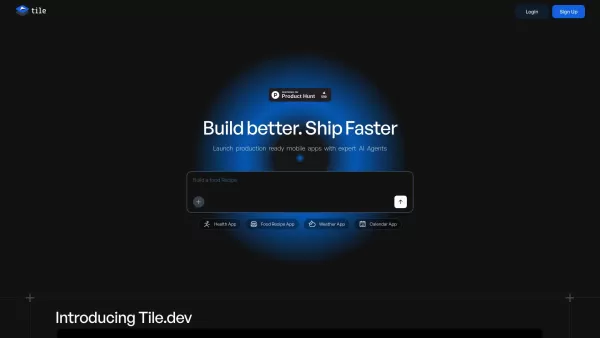
What is Tile? Tile revolutionizes mobile app development with its AI-driven platform that transforms ideas into fully functional iOS and Android apps without coding. This innovative solution combines artificial intelligence with professional-grade i
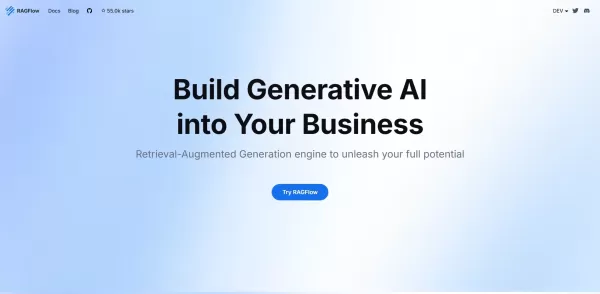
What is RAGFlow?RAGFlow is an open-source RAG (Retrieval-Augmented Generation) engine designed to simplify the creation and deployment of AI agents. It merges intelligent document processing with vector search to convert unstructured data from PDFs,
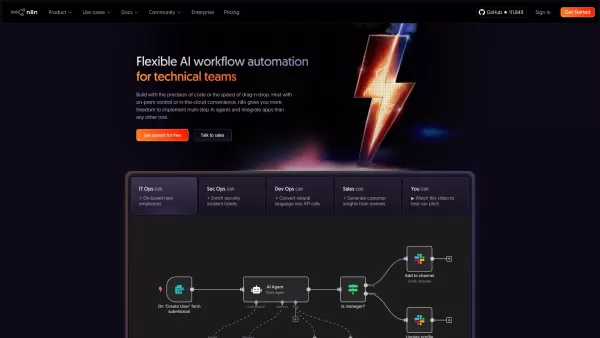
What is n8n? n8n is a powerful workflow automation platform that blends AI with process automation. It offers developers the control of code alongside the simplicity of a visual editor, empowering them to create sophisticated AI agents and connect to
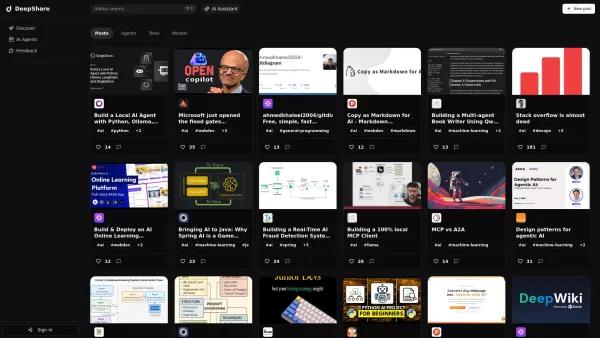
What is DeepShare? DeepShare is an ambitious, experimental platform designed to bring together a global community of creators, thinkers, and learners under one roof. It’s not just another content-sharing site—it’s a deep content aggregation hub where user
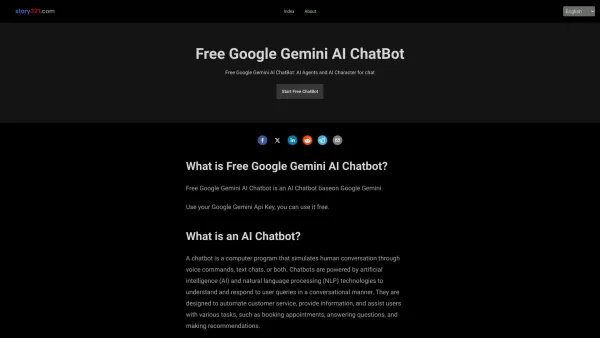
If you're curious about diving into the world of AI chatbots, let me introduce you to the Free Google Gemini AI ChatBot. This isn't just any chatbot—it's powered by the robust Google Gemini technology, making it a powerhouse for all your conversation
Text-to-Reward Product Information
What is Text-to-Reward?
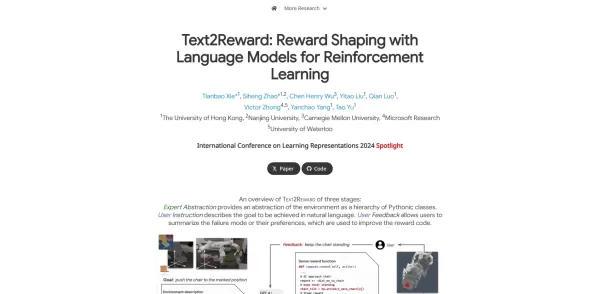
Text-to-Reward offers a complete workflow for training reward models that translate text-based task descriptions or feedback into scalar rewards for reinforcement learning agents. By leveraging transformer-based architectures and fine-tuning on human preference datasets, the system automatically learns to interpret natural language instructions as reward signals. Users can define any task through text prompts, train the model, and integrate the resulting reward function into any RL algorithm. This eliminates manual reward shaping, improves sample efficiency, and allows agents to perform complex multi-step instructions in simulated or real environments.
Who uses Text-to-Reward?
- Reinforcement learning researchers
- Machine learning engineers
- Robotics developers
- AI students and academics
- Game AI developers
How to use Text-to-Reward
- Step 1: Install the Text-to-Reward Python package using pip.
- Step 2: Prepare a dataset containing text instructions paired with preference or reward annotations.
- Step 3: Configure and train the reward model using the included training scripts.
- Step 4: Export the trained model and incorporate it into your RL pipeline (such as OpenAI Gym).
- Step 5: Run your RL agent with the learned reward function and assess its performance.
Platform
- macOS
- Windows
- Linux
Text-to-Reward Core Features & Benefits
Core Features
- Natural language–conditioned reward modeling
- Transformer-based architecture
- Training on human preference data
- Seamless integration with OpenAI Gym
- Exportable reward functions compatible with any RL algorithm
Benefits
- Removes the need for manual reward engineering
- Scales to diverse tasks and environments
- Provides interpretable language-driven reward signals
- Enhances sample efficiency
- Allows customizable task definitions through text
Main Use Cases & Applications
- Robotic control using textual task descriptions
- Game-playing agents that follow language-based goals
- Multi-task reinforcement learning with varied instructions
- Human-in-the-loop feedback for policy improvement
- Simulated environment navigation via language commands
Text-to-Reward Pros & Cons
Pros
Automatically generates dense reward functions without requiring domain knowledge or data
Uses large language models to interpret natural language goals
Supports iterative refinement with human feedback
Achieves performance comparable to or exceeding expert-designed rewards on benchmarks
Enables deployment of policies trained in simulation to real-world settings
Generates interpretable, free-form reward code
Text-to-Reward FAQs
What is Text-to-Reward?
Text-to-Reward is a framework that trains reward models from natural language instructions for reinforcement learning agents.
How do I install Text-to-Reward?
Install via pip: pip install text-to-reward and refer to the documentation for setup instructions.
Which environments are supported?
It works with OpenAI Gym by default and can be adapted for custom simulated or real-world environments.
What models does it use?
It employs transformer-based architectures fine-tuned on human preference data to predict reward values.
How do I prepare training data?
Create a dataset of instruction–reward or preference pairs formatted as outlined in the documentation.
Are pre-trained models available?
Currently, no official pre-trained models are provided; users must train models on their own data.
How can I evaluate the learned reward function?
Integrate it into an RL agent and compare performance against manually designed baselines.
What programming languages are supported?
Text-to-Reward is currently available as a Python library.
Can I contribute to the project?
Yes, contributions are welcome through the GitHub repository; please follow the contribution guidelines.
What license covers Text-to-Reward?
The project is released under the MIT License.
Text-to-Reward Company Information
- Text-to-Reward Project
- xlang-ai
- https://xlang.ai/
- @XLangNLP
- README.md
Text-to-Reward Screenshot
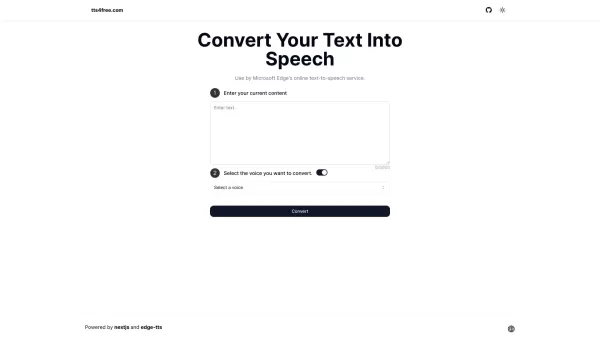
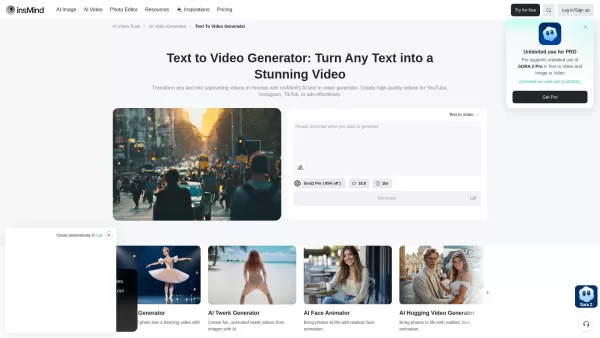
2026 Latest Best Manga AI Background Generators Ranked Top-Rated! This curated collection showcases powerful game-changing tools perfect for creating high-quality chapter backgrounds, book covers, and promotional art. Every option has undergone rigorous real-world tests to ensure reliability. Get a free vs paid comparison along with detailed insights. Explore now to discover your perfect tool and unlock your AI edge in manga creation.
 6 tools
 xix.ai
2026 Latest Best Top-rated AI Object Removal Editors for portraits travel product shots! XIX.AI curates a powerful game-changing collection regularly updated with weekly rankings. These tools offer real-world tests to help you quickly remove unwanted elements, boost content quality, and save tons of time without compromising results. Must-try for anyone aiming to unlock their AI creation edge. Explore now!
10 tools
xix.ai
2026 Latest Best Top-rated AI Text to Speech Tools for Online Courses are curated by XIX.AI based on rigorous real-world tests and weekly updated rankings. These powerful tools help creators deliver crystal-clear audio content effortlessly, boosting writing efficiency and streamlining course production. Check out the free vs paid comparison to find your perfect fit. Explore now to unlock your AI edge in online education.
10 tools
xix.ai
2026 Latest Best Top-Rated AI Blog Title Tools for Higher Click Through Rates! XIX.AI has carefully curated a powerful, game-changing collection of top tools that go through rigorous real-world tests. You’ll find a free vs paid comparison, weekly updated rankings, and detailed insights to help you boost your blog’s traffic efficiently. Must-try options are highlighted to help you unlock your AI edge. Explore now!
10 tools
xix.ai
2026 Latest Best Top-rated AI Task Routing Tools for Support Workflows! XIX.AI has curated a highly powerful game-changing collection of must-try solutions, all undergoing rigorous real-world tests and updated weekly. These tools streamline workflows, boost productivity, and help teams deliver faster, more efficient support. Explore now to discover your perfect tool and unlock your AI edge!
17 tools
xix.ai
2026 Latest Best Top-Rated AI Citation and Paper Summary Tools Curated by XIX.AI. Get powerful game-changing solutions for quick content creation, improved writing efficiency, and boosting productivity. We offer a free vs paid comparison along with real-world tests and weekly updated rankings to help you find the must-try tool that fits your needs perfectly. Explore now to Unlock your AI edge.
10 tools
xix.ai


Интересный подход к обучению с подкреплением через текстовые описания! 🧠 Возможно, это поможет создать более 'осмысленных' ИИ-агентов, которые лучше понимают цели. Хотелось бы увидеть больше примеров применения в играх или робототехнике. Есть вопросы по настройке гиперпараметров модели.


