


 Home
HomeTikTok to Expand Trend and User Data Access for Advertisers
At its annual advertiser summit on June 3rd, TikTok unveiled a wide array of new tools for brands. These range from AI-driven advertising solutions to features that better connect creators with companies, but one theme is unmistakable: ads on TikTok are set to become far more personalized and precise.
Brands will gain detailed insights into how their target audience uses the platform—including AI-generated recommendations for ad content. With a feature called Insight Spotlight, advertisers can filter by user demographics and industry to view popular videos among target viewers and the keywords driving engagement. In one TikTok-provided example, the AI suggests creating video content centered around "hormonal health" for English-speaking female users, complete with a specific keyword. Another Insight Spotlight capability scans user watch histories to spot emerging content trends.
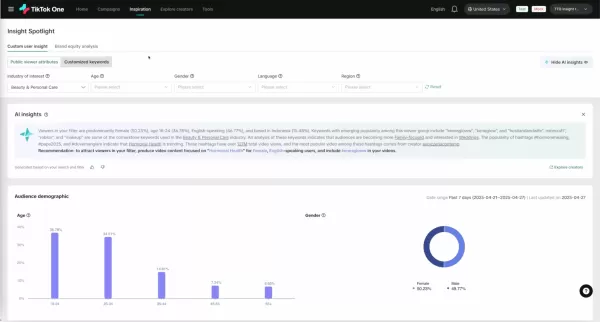
TikTok’s Insight Spotlight provides granular user data for advertisers. Image: TikTokTikTok’s explosive growth was partly fueled by its unpredictable, almost random nature—any video or creator could go viral overnight. Brands scrambled to join trends, adapting popular formats and music, and collaborating with key influencers. Now, these new tools give advertisers even more precision in aligning their content with what’s capturing attention and driving searches on the platform.
From this perspective, TikTok’s advertising tools function like search engine optimization (SEO)—flooding user feeds with content engineered to match organic behavior. The notion of TikTok as a search engine isn’t new, and the platform reports that one in four users search for something within half a minute of opening the app (brands can also purchase ad space directly on search results pages).
TikTok is also simplifying how brands source content from influencers. A tool called Content Suite gathers approved user videos that mention a brand; advertisers can browse these clips and request permission to repurpose them as ads—all within a single dashboard. Without it, brands would need to manually discover videos and negotiate usage rights via comments or direct messages. Content Suite brings that entire workflow into TikTok’s native environment.
Related article
 Ollie bets privacy focus to win AI assistant race
To be genuinely helpful, an AI assistant must understand its user deeply. Ollie, a personal assistant designed for daily life, operates on the premise that this doesn’t require surrendering your data or compromising your privacy.While certain enterpr
How AI LIVE: London Will Explore AI & Industrial Automation
The summit will convene C-suite executives from around the globe to address pressing challenges in global industries, ranging from AI-driven disruption to economic volatility.AI LIVE: The London Summit will gather over 2,000 international leaders und
Former TikTok Execs Launch AI-Powered App to Master Photo Poses
Businesses are increasingly leveraging AI image generation to educate users on photography techniques. Last year, Google introduced Camera Coach on Pixel devices to assist with framing and composition, and in July, Adobe launched a new feature in its
Related Special Topic Recommendations
Text-to-speech
Ollie bets privacy focus to win AI assistant race
To be genuinely helpful, an AI assistant must understand its user deeply. Ollie, a personal assistant designed for daily life, operates on the premise that this doesn’t require surrendering your data or compromising your privacy.While certain enterpr
How AI LIVE: London Will Explore AI & Industrial Automation
The summit will convene C-suite executives from around the globe to address pressing challenges in global industries, ranging from AI-driven disruption to economic volatility.AI LIVE: The London Summit will gather over 2,000 international leaders und
Former TikTok Execs Launch AI-Powered App to Master Photo Poses
Businesses are increasingly leveraging AI image generation to educate users on photography techniques. Last year, Google introduced Camera Coach on Pixel devices to assist with framing and composition, and in July, Adobe launched a new feature in its
Related Special Topic Recommendations
Text-to-speech
 Best AI Text to Speech Tools for Online Courses
2026 Latest Best Top-rated AI Text to Speech Tools for Online Courses are curated by XIX.AI based on rigorous real-world tests and weekly updated rankings. These powerful tools help creators deliver crystal-clear audio content effortlessly, boosting writing efficiency and streamlining course production. Check out the free vs paid comparison to find your perfect fit. Explore now to unlock your AI edge in online education.
 10 tools
 xix.ai
writing
AI Blog Title Tools for Higher Click Through Rates
xix.ai
writing
AI Blog Title Tools for Higher Click Through Rates
2026 Latest Best Top-Rated AI Blog Title Tools for Higher Click Through Rates! XIX.AI has carefully curated a powerful, game-changing collection of top tools that go through rigorous real-world tests. You’ll find a free vs paid comparison, weekly updated rankings, and detailed insights to help you boost your blog’s traffic efficiently. Must-try options are highlighted to help you unlock your AI edge. Explore now!
10 tools
xix.ai
automation
Best AI Task Routing Tools for Support Workflows
2026 Latest Best Top-rated AI Task Routing Tools for Support Workflows! XIX.AI has curated a highly powerful game-changing collection of must-try solutions, all undergoing rigorous real-world tests and updated weekly. These tools streamline workflows, boost productivity, and help teams deliver faster, more efficient support. Explore now to discover your perfect tool and unlock your AI edge!
17 tools
xix.ai
Academic Research
AI Citation and Paper Summary Tools
2026 Latest Best Top-Rated AI Citation and Paper Summary Tools Curated by XIX.AI. Get powerful game-changing solutions for quick content creation, improved writing efficiency, and boosting productivity. We offer a free vs paid comparison along with real-world tests and weekly updated rankings to help you find the must-try tool that fits your needs perfectly. Explore now to Unlock your AI edge.
10 tools
xix.ai
Productivity
Best AI Productivity Tools for Daily Work
2026 Latest Best Top-Rated AI Productivity Tools for Daily Work! XIX.AI has curated a powerful, game-changing selection based on rigorous weekly updated rankings and real-world tests. You’ll find must-try options that boost writing efficiency, streamline content creation, and help you overcome daily work challenges. Get a free vs paid comparison to find the perfect fit for your needs. Explore now to unlock your AI edge!
9 tools
xix.ai
Academic Research
AI Systematic Review Tools for Research Screening
2026 Latest Best Top-Rated AI Systematic Review Tools for Research Screening are here on XIX.AI! This curated collection includes powerful, game-changing solutions that go through rigorous real-world tests to deliver accurate results. We also offer a free vs paid comparison along with weekly updated rankings to help you find the must-try option that boosts your research efficiency significantly. Explore now to unlock your AI edge in academic work!
11 tools
xix.ai

 Comments (0)
0/500
Comments (0)
0/500
At its annual advertiser summit on June 3rd, TikTok unveiled a wide array of new tools for brands. These range from AI-driven advertising solutions to features that better connect creators with companies, but one theme is unmistakable: ads on TikTok are set to become far more personalized and precise.
Brands will gain detailed insights into how their target audience uses the platform—including AI-generated recommendations for ad content. With a feature called Insight Spotlight, advertisers can filter by user demographics and industry to view popular videos among target viewers and the keywords driving engagement. In one TikTok-provided example, the AI suggests creating video content centered around "hormonal health" for English-speaking female users, complete with a specific keyword. Another Insight Spotlight capability scans user watch histories to spot emerging content trends.
TikTok’s explosive growth was partly fueled by its unpredictable, almost random nature—any video or creator could go viral overnight. Brands scrambled to join trends, adapting popular formats and music, and collaborating with key influencers. Now, these new tools give advertisers even more precision in aligning their content with what’s capturing attention and driving searches on the platform.
From this perspective, TikTok’s advertising tools function like search engine optimization (SEO)—flooding user feeds with content engineered to match organic behavior. The notion of TikTok as a search engine isn’t new, and the platform reports that one in four users search for something within half a minute of opening the app (brands can also purchase ad space directly on search results pages).
TikTok is also simplifying how brands source content from influencers. A tool called Content Suite gathers approved user videos that mention a brand; advertisers can browse these clips and request permission to repurpose them as ads—all within a single dashboard. Without it, brands would need to manually discover videos and negotiate usage rights via comments or direct messages. Content Suite brings that entire workflow into TikTok’s native environment.








 Ollie bets privacy focus to win AI assistant race
To be genuinely helpful, an AI assistant must understand its user deeply. Ollie, a personal assistant designed for daily life, operates on the premise that this doesn’t require surrendering your data or compromising your privacy.While certain enterpr
Ollie bets privacy focus to win AI assistant race
To be genuinely helpful, an AI assistant must understand its user deeply. Ollie, a personal assistant designed for daily life, operates on the premise that this doesn’t require surrendering your data or compromising your privacy.While certain enterpr
 How AI LIVE: London Will Explore AI & Industrial Automation
The summit will convene C-suite executives from around the globe to address pressing challenges in global industries, ranging from AI-driven disruption to economic volatility.AI LIVE: The London Summit will gather over 2,000 international leaders und
How AI LIVE: London Will Explore AI & Industrial Automation
The summit will convene C-suite executives from around the globe to address pressing challenges in global industries, ranging from AI-driven disruption to economic volatility.AI LIVE: The London Summit will gather over 2,000 international leaders und
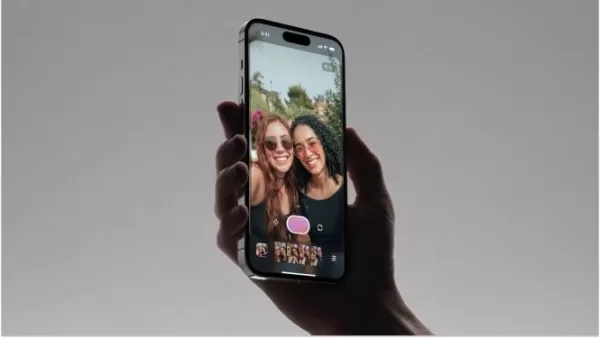 Former TikTok Execs Launch AI-Powered App to Master Photo Poses
Businesses are increasingly leveraging AI image generation to educate users on photography techniques. Last year, Google introduced Camera Coach on Pixel devices to assist with framing and composition, and in July, Adobe launched a new feature in its
Former TikTok Execs Launch AI-Powered App to Master Photo Poses
Businesses are increasingly leveraging AI image generation to educate users on photography techniques. Last year, Google introduced Camera Coach on Pixel devices to assist with framing and composition, and in July, Adobe launched a new feature in its
2026 Latest Best Top-rated AI Text to Speech Tools for Online Courses are curated by XIX.AI based on rigorous real-world tests and weekly updated rankings. These powerful tools help creators deliver crystal-clear audio content effortlessly, boosting writing efficiency and streamlining course production. Check out the free vs paid comparison to find your perfect fit. Explore now to unlock your AI edge in online education.
10 tools
xix.ai

2026 Latest Best Top-Rated AI Blog Title Tools for Higher Click Through Rates! XIX.AI has carefully curated a powerful, game-changing collection of top tools that go through rigorous real-world tests. You’ll find a free vs paid comparison, weekly updated rankings, and detailed insights to help you boost your blog’s traffic efficiently. Must-try options are highlighted to help you unlock your AI edge. Explore now!
10 tools
xix.ai

2026 Latest Best Top-rated AI Task Routing Tools for Support Workflows! XIX.AI has curated a highly powerful game-changing collection of must-try solutions, all undergoing rigorous real-world tests and updated weekly. These tools streamline workflows, boost productivity, and help teams deliver faster, more efficient support. Explore now to discover your perfect tool and unlock your AI edge!
17 tools
xix.ai
2026 Latest Best Top-Rated AI Citation and Paper Summary Tools Curated by XIX.AI. Get powerful game-changing solutions for quick content creation, improved writing efficiency, and boosting productivity. We offer a free vs paid comparison along with real-world tests and weekly updated rankings to help you find the must-try tool that fits your needs perfectly. Explore now to Unlock your AI edge.
10 tools
xix.ai
2026 Latest Best Top-Rated AI Productivity Tools for Daily Work! XIX.AI has curated a powerful, game-changing selection based on rigorous weekly updated rankings and real-world tests. You’ll find must-try options that boost writing efficiency, streamline content creation, and help you overcome daily work challenges. Get a free vs paid comparison to find the perfect fit for your needs. Explore now to unlock your AI edge!
9 tools
xix.ai

2026 Latest Best Top-Rated AI Systematic Review Tools for Research Screening are here on XIX.AI! This curated collection includes powerful, game-changing solutions that go through rigorous real-world tests to deliver accurate results. We also offer a free vs paid comparison along with weekly updated rankings to help you find the must-try option that boosts your research efficiency significantly. Explore now to unlock your AI edge in academic work!
11 tools
xix.ai












