


 Home
HomeThree hard-tech moonshots power SpaceX's blockbuster IPO
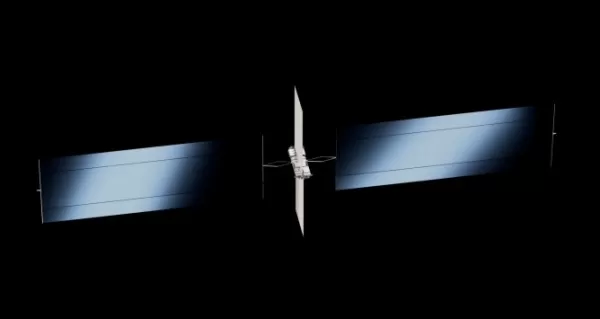
SpaceX is set to go public on Friday, and investor enthusiasm is hard to contain. The $75 billion stock offering is reportedly heavily oversubscribed, with some institutional investors committing $10 billion blocks for a piece of Elon Musk’s empire.
There are plenty of reasons to approach this investment with caution — big IPOs often underperform, the company is losing money, and Musk’s unpredictable online behavior would be alarming from any other tech CEO — yet none of this appears to deter investors. Tech investors have learned never to bet against Elon, regardless of the business logic.
A dispassionate review of SpaceX’s financial plans reveals what they are really betting on: a business built around orbital data centers, a concept that emerged over the past eighteen months as Musk sought a unifying vision for his conglomerate ahead of the IPO.
In typical Musk fashion, it’s an audacious plan that demands at least three near-impossible engineering achievements: a reusable rocket, a brand-new U.S. chip foundry, and a race to build satellites faster than ever before.
Such a business plan is hard to evaluate. This week, two analyses attempted to provide a more measured assessment of SpaceX’s plan — one from financial research firm Morningstar, and another from Aswath Damodaran, a New York University finance professor with a particular focus on corporate valuation. Both studies find SpaceX significantly less valuable than the nearly $1.8 trillion estimate put forward by the company’s bankers. Morningstar assigns a value of roughly $825 billion, while Damodaran puts the company at $1.2 trillion.
The wide gap largely reflects the combination of a world-leading space monopoly with a far riskier AI business. Morningstar’s analyst describes the difference between their fair value estimate of $63 per share and SpaceX’s offering price of $135 as a $72 call option on the company’s ability to deliver orbital data centers at the pace and capability Musk envisions.
In both analyses, the high margins from the company’s space launch business and satellite internet network are its most appealing aspects, while the AI business remains the most uncertain.
Cloud or Not Cloud?
Part of the question is: what exactly is SpaceX’s AI business? In its S-1 market analysis, the company frames its biggest opportunity as enterprise AI — with its models expected to power coding tools developed by the team it acqui-hired from Cursor, as well as the company’s Macrohard project, which aims to give digital agents the ability to perform white-collar work. SpaceX estimates the total addressable market for that business at $22.7 trillion, versus $2.4 trillion for AI infrastructure and just under $2 trillion for its space ventures.
But that stance conflicts with the company’s recent deals to sell substantial computing capacity to Anthropic and Google, both apparent competitors in the model business. Such behavior isn’t unusual for a Musk company; SpaceX often launches satellites operated by rivals to its Starlink network. However, it typically does so from a position of strength, not while trying to catch up.
Acting like a neocloud may be a good short-term business, but it raises the question of where value will accumulate in the AI tech stack: Is it better to be a compute provider or a model builder, if you can’t be both?
The scaling logic that drives the AI industry requires serious frontier labs to constantly train new, more powerful models (or, as Musk admitted in his recent lawsuit against Sam Altman, by distilling capabilities from other companies’ models). Any competitor that doesn’t race ahead risks falling behind, though the growing capabilities of cheaper open-source models might disrupt that dynamic.
Space data centers offer one way to square the circle, providing enough computing power that SpaceX could effectively do both.
Musk's Space Data Center Architecture
In a video interview released by SpaceX this week, Musk explained why SpaceX is uniquely positioned to deliver on data centers. His core argument: SpaceX is the only company that can cheaply put large amounts of mass into orbit, produce extensive solar panels, and manufacture chips at scale. While industry experts generally see large-scale space data centers as about a decade away, Musk argued — with plenty of caveats — that they are far closer.
"This is not a promise of what we will do," Musk said in the video. "This is what we are going to try to do, and think we probably can do: reach roughly an annualized rate of one gigawatt per year by the end of next year, in terms of space AI compute."
Based on his expected maximum power delivery of 150 kW per satellite, that implies a production rate of 6,666 satellites per year, or about 556 per month. That's roughly double the reported current production rate of Starlink satellites, which stands at just 70 per week. Although Musk claims the AI satellites are simpler in design, that's a huge demand for a production facility that hasn't been built yet. The company is also still expanding its solar panel production facility.
And that’s before considering Terafab, the company’s much-discussed chip foundry, which Musk envisions supporting later stages of this product as the company aims to scale up to a terawatt of annual compute production. Chip fabrication plants are among the most challenging modern industrial projects, typically costing billions of dollars and taking up to a decade to build.
Then there is the most critical question: What about Starship, the key to SpaceX’s ability to economically place all those chips into orbit?
A recent test flight went reasonably well, but it didn’t indicate that rapid reusability is just around the corner. SpaceX may end up reusing only the booster initially, which would increase the costs of the space data center rollout. For now, the company is still undergoing an accident investigation with the FAA to determine why the booster stage failed to make a controlled reentry as planned. SpaceX has not responded to questions about when the vehicle will fly again, though it has said it expects to begin launching Starlink satellites with it by the end of this year.
But take that with a grain of salt: NASA, which has a nearly $4 billion contract with SpaceX to use Starship as a lunar lander, still isn’t ready to commit to a test mission with the vehicle scheduled for late 2027.
Buyer Beware
As public investors get their hands on SpaceX shares, they will find themselves owning a near-monopoly on access to space in the U.S. and Europe, a global communications network, and a bet on the most ambitious infrastructure project of the AI era.
These projects hinge on SpaceX creating something never seen before: a fully reusable rocket. The company must also build a high-rate production facility for AI satellites, but within eighteen months, not the decade it took to develop its Starlink manufacturing. Finally, it needs to build a chip foundry in the U.S., a task that even dedicated semiconductor companies are hesitant to undertake. Musk is correct that SpaceX is the only company positioned to achieve any of this anytime soon, but that underscores the magnitude of the challenge as much as the company’s chances of success.
Musk used to say he wouldn’t take SpaceX public until he reached Mars, because fickle investors might lose faith along the way. Those plans may have been put on hold, but what he has outlined ahead of the company’s IPO could be just as challenging.
Related article
 Google Tests Remy AI Agent for Gemini as Focus Shifts to User Control
According to Business Insider, Google is testing Remy, a new AI personal agent for Gemini. This tool aims to execute tasks on behalf of users, streamlining both professional workflows and daily routines.Currently, Remy is undergoing testing in an int
How to fix Core Web Vitals for better SEO rankings
Streamline Report Card Comments with AI ToolsIntroductionAI Tools for Generating Report Card CommentsMagic SchoolAlmanac AIChat GPTUsing Magic School to Generate Report Card CommentsLogging into Magic SchoolSelecting the Report Card Comments ToolCust
Slackbot Becomes an AI Agent
Slackbot, the automated assistant embedded in Salesforce’s corporate messaging platform Slack, is evolving into an AI agent. Salesforce CTO Parker Harris envisions it achieving viral status comparable to OpenAI’s ChatGPT.The cloud software giant laun
Related Special Topic Recommendations
writing
Google Tests Remy AI Agent for Gemini as Focus Shifts to User Control
According to Business Insider, Google is testing Remy, a new AI personal agent for Gemini. This tool aims to execute tasks on behalf of users, streamlining both professional workflows and daily routines.Currently, Remy is undergoing testing in an int
How to fix Core Web Vitals for better SEO rankings
Streamline Report Card Comments with AI ToolsIntroductionAI Tools for Generating Report Card CommentsMagic SchoolAlmanac AIChat GPTUsing Magic School to Generate Report Card CommentsLogging into Magic SchoolSelecting the Report Card Comments ToolCust
Slackbot Becomes an AI Agent
Slackbot, the automated assistant embedded in Salesforce’s corporate messaging platform Slack, is evolving into an AI agent. Salesforce CTO Parker Harris envisions it achieving viral status comparable to OpenAI’s ChatGPT.The cloud software giant laun
Related Special Topic Recommendations
writing
 Best AI Outline Generators for Long-Form SEO Articles
2026 Latest Best Top-Rated AI Outline Generators for Long-Form SEO Articles, meticulously curated by XIX.AI. These powerful tools offer game-changing assistance in creating high-quality content quickly, boosting writing efficiency significantly. Get a free vs paid comparison along with real-world tests and detailed rankings to help you find the must-try option that suits your needs. Explore now to unlock your AI edge.
 8 tools
 xix.ai
Education and Learning
AI Study Tools for Homework and Exam Prep
xix.ai
Education and Learning
AI Study Tools for Homework and Exam Prep
2026 Latest Best AI Study Tools for Homework and Exam Prep! XIX.AI curates a top-rated list of powerful, game-changing tools that help students boost productivity, streamline homework completion, and ace exams through real-world tests. Get a free vs paid comparison, detailed rankings, and must-try options to unlock your AI edge. Explore now!
10 tools
xix.ai
Music composition
AI Vocal Demo Tools for Songwriters, Hooks, Toplines, and Multilingual Draft Sessions
2026 Latest Best AI Vocal Demo Tools for Songwriters, Hook Creators, and Multi-Language Content Teams! XIX.AI has curated a top-rated list of powerful game-changing tools that go through rigorous real-world tests. You’ll find detailed free vs paid comparison data, comprehensive rankings, and must-try options to help you boost writing efficiency and unlock your creative potential. Explore now to discover your perfect tool for all your content needs!
9 tools
xix.ai
Business
Best AI Competitive Research Tools for Small Businesses
2026 Latest Best Top-rated AI Competitive Research Tools for Small Businesses! XIX.AI has curated a highly powerful game-changing collection, updated weekly with rigorous real-world tests and detailed rankings. You can find a comprehensive free vs paid comparison to help you identify the must-try tools that boost your productivity and give you a competitive edge. Explore now to discover your perfect tool!
9 tools
xix.ai
Image editing
Photoshop AI Retouch Tools for Ecommerce Apparel, Skin Cleanup, and Color Consistency
2026 Latest Best Photoshop AI retouch tools for ecommerce apparel, skin cleanup, and color consistency! This top-rated curated list features powerful game-changing solutions that help you boost writing efficiency, streamline content creation, and achieve perfect visual results effortlessly. Each tool has undergone real-world tests through weekly updated rankings, complete with free vs paid comparison details. Backed by XIX.AI, it’s the must-try guide for anyone aiming to unlock your AI edge. Explore now!
10 tools
xix.ai
Prompt
Best AI Prompt Libraries for ChatGPT Workflows
2026 Latest Best Top-Rated AI Prompt Libraries for optimizing all types of ChatGPT workflows. XIX.AI has curated a powerful, game-changing collection that goes through rigorous real-world tests to ensure top performance. You can find detailed free vs paid comparisons and expert rankings to help you choose the must-try tools that boost your productivity and unlock your AI edge. Explore now!
11 tools
xix.ai

 Comments (0)
0/500
Comments (0)
0/500
SpaceX is set to go public on Friday, and investor enthusiasm is hard to contain. The $75 billion stock offering is reportedly heavily oversubscribed, with some institutional investors committing $10 billion blocks for a piece of Elon Musk’s empire.
There are plenty of reasons to approach this investment with caution — big IPOs often underperform, the company is losing money, and Musk’s unpredictable online behavior would be alarming from any other tech CEO — yet none of this appears to deter investors. Tech investors have learned never to bet against Elon, regardless of the business logic.
A dispassionate review of SpaceX’s financial plans reveals what they are really betting on: a business built around orbital data centers, a concept that emerged over the past eighteen months as Musk sought a unifying vision for his conglomerate ahead of the IPO.
In typical Musk fashion, it’s an audacious plan that demands at least three near-impossible engineering achievements: a reusable rocket, a brand-new U.S. chip foundry, and a race to build satellites faster than ever before.
Such a business plan is hard to evaluate. This week, two analyses attempted to provide a more measured assessment of SpaceX’s plan — one from financial research firm Morningstar, and another from Aswath Damodaran, a New York University finance professor with a particular focus on corporate valuation. Both studies find SpaceX significantly less valuable than the nearly $1.8 trillion estimate put forward by the company’s bankers. Morningstar assigns a value of roughly $825 billion, while Damodaran puts the company at $1.2 trillion.
The wide gap largely reflects the combination of a world-leading space monopoly with a far riskier AI business. Morningstar’s analyst describes the difference between their fair value estimate of $63 per share and SpaceX’s offering price of $135 as a $72 call option on the company’s ability to deliver orbital data centers at the pace and capability Musk envisions.
In both analyses, the high margins from the company’s space launch business and satellite internet network are its most appealing aspects, while the AI business remains the most uncertain.
Cloud or Not Cloud?
Part of the question is: what exactly is SpaceX’s AI business? In its S-1 market analysis, the company frames its biggest opportunity as enterprise AI — with its models expected to power coding tools developed by the team it acqui-hired from Cursor, as well as the company’s Macrohard project, which aims to give digital agents the ability to perform white-collar work. SpaceX estimates the total addressable market for that business at $22.7 trillion, versus $2.4 trillion for AI infrastructure and just under $2 trillion for its space ventures.
But that stance conflicts with the company’s recent deals to sell substantial computing capacity to Anthropic and Google, both apparent competitors in the model business. Such behavior isn’t unusual for a Musk company; SpaceX often launches satellites operated by rivals to its Starlink network. However, it typically does so from a position of strength, not while trying to catch up.
Acting like a neocloud may be a good short-term business, but it raises the question of where value will accumulate in the AI tech stack: Is it better to be a compute provider or a model builder, if you can’t be both?
The scaling logic that drives the AI industry requires serious frontier labs to constantly train new, more powerful models (or, as Musk admitted in his recent lawsuit against Sam Altman, by distilling capabilities from other companies’ models). Any competitor that doesn’t race ahead risks falling behind, though the growing capabilities of cheaper open-source models might disrupt that dynamic.
Space data centers offer one way to square the circle, providing enough computing power that SpaceX could effectively do both.
Musk's Space Data Center Architecture
In a video interview released by SpaceX this week, Musk explained why SpaceX is uniquely positioned to deliver on data centers. His core argument: SpaceX is the only company that can cheaply put large amounts of mass into orbit, produce extensive solar panels, and manufacture chips at scale. While industry experts generally see large-scale space data centers as about a decade away, Musk argued — with plenty of caveats — that they are far closer.
"This is not a promise of what we will do," Musk said in the video. "This is what we are going to try to do, and think we probably can do: reach roughly an annualized rate of one gigawatt per year by the end of next year, in terms of space AI compute."
Based on his expected maximum power delivery of 150 kW per satellite, that implies a production rate of 6,666 satellites per year, or about 556 per month. That's roughly double the reported current production rate of Starlink satellites, which stands at just 70 per week. Although Musk claims the AI satellites are simpler in design, that's a huge demand for a production facility that hasn't been built yet. The company is also still expanding its solar panel production facility.
And that’s before considering Terafab, the company’s much-discussed chip foundry, which Musk envisions supporting later stages of this product as the company aims to scale up to a terawatt of annual compute production. Chip fabrication plants are among the most challenging modern industrial projects, typically costing billions of dollars and taking up to a decade to build.
Then there is the most critical question: What about Starship, the key to SpaceX’s ability to economically place all those chips into orbit?
A recent test flight went reasonably well, but it didn’t indicate that rapid reusability is just around the corner. SpaceX may end up reusing only the booster initially, which would increase the costs of the space data center rollout. For now, the company is still undergoing an accident investigation with the FAA to determine why the booster stage failed to make a controlled reentry as planned. SpaceX has not responded to questions about when the vehicle will fly again, though it has said it expects to begin launching Starlink satellites with it by the end of this year.
But take that with a grain of salt: NASA, which has a nearly $4 billion contract with SpaceX to use Starship as a lunar lander, still isn’t ready to commit to a test mission with the vehicle scheduled for late 2027.
Buyer Beware
As public investors get their hands on SpaceX shares, they will find themselves owning a near-monopoly on access to space in the U.S. and Europe, a global communications network, and a bet on the most ambitious infrastructure project of the AI era.
These projects hinge on SpaceX creating something never seen before: a fully reusable rocket. The company must also build a high-rate production facility for AI satellites, but within eighteen months, not the decade it took to develop its Starlink manufacturing. Finally, it needs to build a chip foundry in the U.S., a task that even dedicated semiconductor companies are hesitant to undertake. Musk is correct that SpaceX is the only company positioned to achieve any of this anytime soon, but that underscores the magnitude of the challenge as much as the company’s chances of success.
Musk used to say he wouldn’t take SpaceX public until he reached Mars, because fickle investors might lose faith along the way. Those plans may have been put on hold, but what he has outlined ahead of the company’s IPO could be just as challenging.







 Google Tests Remy AI Agent for Gemini as Focus Shifts to User Control
According to Business Insider, Google is testing Remy, a new AI personal agent for Gemini. This tool aims to execute tasks on behalf of users, streamlining both professional workflows and daily routines.Currently, Remy is undergoing testing in an int
Google Tests Remy AI Agent for Gemini as Focus Shifts to User Control
According to Business Insider, Google is testing Remy, a new AI personal agent for Gemini. This tool aims to execute tasks on behalf of users, streamlining both professional workflows and daily routines.Currently, Remy is undergoing testing in an int
 How to fix Core Web Vitals for better SEO rankings
Streamline Report Card Comments with AI ToolsIntroductionAI Tools for Generating Report Card CommentsMagic SchoolAlmanac AIChat GPTUsing Magic School to Generate Report Card CommentsLogging into Magic SchoolSelecting the Report Card Comments ToolCust
How to fix Core Web Vitals for better SEO rankings
Streamline Report Card Comments with AI ToolsIntroductionAI Tools for Generating Report Card CommentsMagic SchoolAlmanac AIChat GPTUsing Magic School to Generate Report Card CommentsLogging into Magic SchoolSelecting the Report Card Comments ToolCust
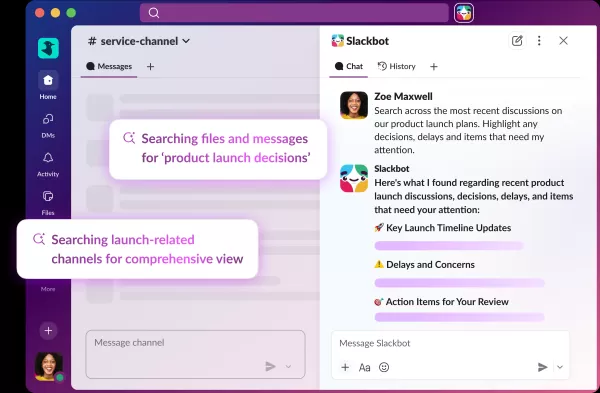 Slackbot Becomes an AI Agent
Slackbot, the automated assistant embedded in Salesforce’s corporate messaging platform Slack, is evolving into an AI agent. Salesforce CTO Parker Harris envisions it achieving viral status comparable to OpenAI’s ChatGPT.The cloud software giant laun
Slackbot Becomes an AI Agent
Slackbot, the automated assistant embedded in Salesforce’s corporate messaging platform Slack, is evolving into an AI agent. Salesforce CTO Parker Harris envisions it achieving viral status comparable to OpenAI’s ChatGPT.The cloud software giant laun

2026 Latest Best Top-Rated AI Outline Generators for Long-Form SEO Articles, meticulously curated by XIX.AI. These powerful tools offer game-changing assistance in creating high-quality content quickly, boosting writing efficiency significantly. Get a free vs paid comparison along with real-world tests and detailed rankings to help you find the must-try option that suits your needs. Explore now to unlock your AI edge.
8 tools
xix.ai

2026 Latest Best AI Study Tools for Homework and Exam Prep! XIX.AI curates a top-rated list of powerful, game-changing tools that help students boost productivity, streamline homework completion, and ace exams through real-world tests. Get a free vs paid comparison, detailed rankings, and must-try options to unlock your AI edge. Explore now!
10 tools
xix.ai

2026 Latest Best AI Vocal Demo Tools for Songwriters, Hook Creators, and Multi-Language Content Teams! XIX.AI has curated a top-rated list of powerful game-changing tools that go through rigorous real-world tests. You’ll find detailed free vs paid comparison data, comprehensive rankings, and must-try options to help you boost writing efficiency and unlock your creative potential. Explore now to discover your perfect tool for all your content needs!
9 tools
xix.ai

2026 Latest Best Top-rated AI Competitive Research Tools for Small Businesses! XIX.AI has curated a highly powerful game-changing collection, updated weekly with rigorous real-world tests and detailed rankings. You can find a comprehensive free vs paid comparison to help you identify the must-try tools that boost your productivity and give you a competitive edge. Explore now to discover your perfect tool!
9 tools
xix.ai

2026 Latest Best Photoshop AI retouch tools for ecommerce apparel, skin cleanup, and color consistency! This top-rated curated list features powerful game-changing solutions that help you boost writing efficiency, streamline content creation, and achieve perfect visual results effortlessly. Each tool has undergone real-world tests through weekly updated rankings, complete with free vs paid comparison details. Backed by XIX.AI, it’s the must-try guide for anyone aiming to unlock your AI edge. Explore now!
10 tools
xix.ai

2026 Latest Best Top-Rated AI Prompt Libraries for optimizing all types of ChatGPT workflows. XIX.AI has curated a powerful, game-changing collection that goes through rigorous real-world tests to ensure top performance. You can find detailed free vs paid comparisons and expert rankings to help you choose the must-try tools that boost your productivity and unlock your AI edge. Explore now!
11 tools
xix.ai












