


 Home
HomeSophia Space secures $10M seed to demonstrate novel space computers
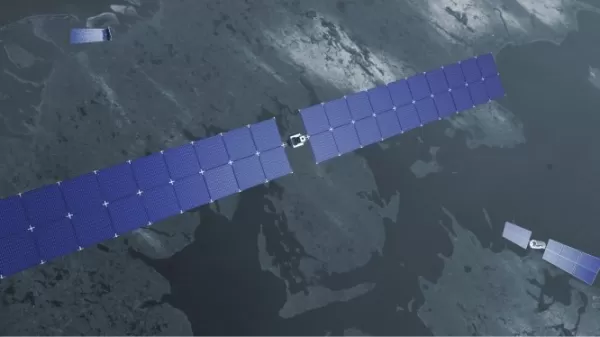
As space companies race to deploy cutting-edge chips in orbit, cooling these high-powered processors has become a critical challenge.
“It’s cold in space … but without airflow, the only way to dissipate heat is through conduction,” Nvidia CEO Jensen Huang remarked during the company’s latest earnings call when questioned about space-based data centers.
Sophia Space has secured $10 million from investors including Alpha Funds, KDDI Green Partners Fund, and Unlock Venture Partners. The company intends to validate a passive cooling method for space computers on Earth, then purchase a satellite bus from Apex Space to demonstrate its effectiveness in orbit by late 2027 or early 2028.
Companies such as SpaceX, Google, and Starcloud are exploring conventional satellite designs for their planned space data center networks, which depend on sizable radiators to maintain optimal chip temperatures. However, Sophia Space’s founders — CTO Leon Alkalai, CEO Rob DeMillo, and Chief Growth Officer Brian Monnin — are taking a distinct path.
The company’s technology originates from an unconventional source: a $100 million program at Caltech aimed at building orbital solar power stations that could transmit energy to Earth. The researchers eventually developed a sail-like design that is thin and flexible, unlike traditional boxy satellites.
Although technical and regulatory hurdles make generating power for Earth a challenge, Alkalai — a fellow at Caltech’s Jet Propulsion Laboratory — realized the design could be adapted to power processors in space. (Aetherflux, a space solar startup, has also reached a similar conclusion.)
Sophia, an Nvidia partner, has created modular server racks called TILEs that integrate solar panels. Each TILE measures 1 meter by 1 meter and is just a few centimeters thick. According to DeMillo, this thin design allows processors to be placed against a passive heat spreader, making active cooling unnecessary. He anticipates that 92% of the generated power will be used for processing — a substantial improvement over conventional designs. However, this setup demands a sophisticated software management system to balance workload across the processors.
Techcrunch eventSave up to $300 or 30% on TechCrunch Founder Summit
More than 1,000 founders and investors will gather at TechCrunch Founder Summit 2026 for a full day dedicated to growth, execution, and real-world scaling. Hear from founders and investors who have influenced the industry. Network with peers facing similar growth challenges. Leave with actionable strategies you can implement right away.
Offer expires March 13.
Save up to $300 or 30% on TechCrunch Founder Summit
More than 1,000 founders and investors will gather at TechCrunch Founder Summit 2026 for a full day dedicated to growth, execution, and real-world scaling. Hear from founders and investors who have influenced the industry. Network with peers facing similar growth challenges. Leave with actionable strategies you can implement right away
Offer expires March 13.
Boston, MA|June 9, 2026REGISTER NOWBy the 2030s, Sophia aims to construct larger space data centers using thousands of TILEs, envisioning a 50-by-50-meter structure capable of delivering 1 MW of computing power. DeMillo contends that building space data centers with less efficient systems would not be cost-effective and that a single structure, rather than a distributed network connected by lasers, would be simpler to implement.
First, Sophia plans to start by offering its TILEs to satellite operators in need of on-orbit computing. Potential customers include Earth-observation satellites that gather vast amounts of sensor data, missile warning and tracking systems that the Pentagon is pouring billions into, and increasingly sophisticated communications networks.
“The dirty little secret of the satellite industry is that we have all these incredible sensors in orbit producing terabytes or even petabytes of data every few minutes, and they discard most of it because they can’t process it onboard and can't transmit it to the surface and back quickly enough,” DeMillo told TechCrunch.
Related article
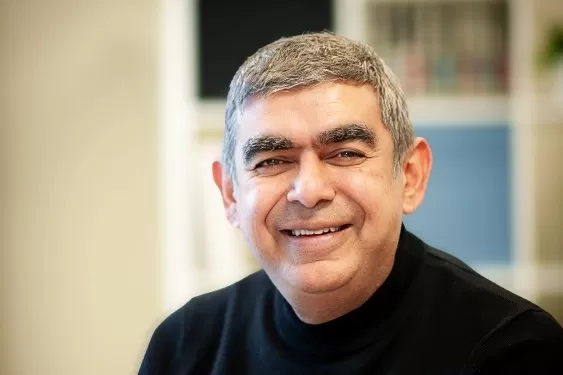
 Former Infosys Chief’s AI Startup Secures Another $53M
Hang Ten Systems, an AI startup established by former Infosys CEO Vishal Sikka just four months ago, has secured an additional $53 million in seed funding. This latest investment round was finalized merely five weeks after the initial $32 million see
Crypto exchange OKX aims to empower AI agents to hire and pay each other
As AI agents start serving individuals and collaborating with each other, they require mechanisms to locate tasks, compensate for services, and establish credibility. Crypto exchange OKX anticipates this future is arriving sooner than anticipated, in
Thiel-backed startup claims AI can judge journalism, despite risks to whistleblowers
Following his role in the lawsuit that led to Gawker’s bankruptcy, Aron D’Souza identified a critical flaw in the American media landscape: individuals harmed by coverage lacked effective means to respond.His answer is technology. D’Souza’s new ventu
Related Special Topic Recommendations
writing
Former Infosys Chief’s AI Startup Secures Another $53M
Hang Ten Systems, an AI startup established by former Infosys CEO Vishal Sikka just four months ago, has secured an additional $53 million in seed funding. This latest investment round was finalized merely five weeks after the initial $32 million see
Crypto exchange OKX aims to empower AI agents to hire and pay each other
As AI agents start serving individuals and collaborating with each other, they require mechanisms to locate tasks, compensate for services, and establish credibility. Crypto exchange OKX anticipates this future is arriving sooner than anticipated, in
Thiel-backed startup claims AI can judge journalism, despite risks to whistleblowers
Following his role in the lawsuit that led to Gawker’s bankruptcy, Aron D’Souza identified a critical flaw in the American media landscape: individuals harmed by coverage lacked effective means to respond.His answer is technology. D’Souza’s new ventu
Related Special Topic Recommendations
writing
 Best AI Outline Generators for Long-Form SEO Articles
2026 Latest Best Top-Rated AI Outline Generators for Long-Form SEO Articles, meticulously curated by XIX.AI. These powerful tools offer game-changing assistance in creating high-quality content quickly, boosting writing efficiency significantly. Get a free vs paid comparison along with real-world tests and detailed rankings to help you find the must-try option that suits your needs. Explore now to unlock your AI edge.
 8 tools
 xix.ai
Education and Learning
AI Study Tools for Homework and Exam Prep
xix.ai
Education and Learning
AI Study Tools for Homework and Exam Prep
2026 Latest Best AI Study Tools for Homework and Exam Prep! XIX.AI curates a top-rated list of powerful, game-changing tools that help students boost productivity, streamline homework completion, and ace exams through real-world tests. Get a free vs paid comparison, detailed rankings, and must-try options to unlock your AI edge. Explore now!
10 tools
xix.ai
Music composition
AI Vocal Demo Tools for Songwriters, Hooks, Toplines, and Multilingual Draft Sessions
2026 Latest Best AI Vocal Demo Tools for Songwriters, Hook Creators, and Multi-Language Content Teams! XIX.AI has curated a top-rated list of powerful game-changing tools that go through rigorous real-world tests. You’ll find detailed free vs paid comparison data, comprehensive rankings, and must-try options to help you boost writing efficiency and unlock your creative potential. Explore now to discover your perfect tool for all your content needs!
9 tools
xix.ai
Business
Best AI Competitive Research Tools for Small Businesses
2026 Latest Best Top-rated AI Competitive Research Tools for Small Businesses! XIX.AI has curated a highly powerful game-changing collection, updated weekly with rigorous real-world tests and detailed rankings. You can find a comprehensive free vs paid comparison to help you identify the must-try tools that boost your productivity and give you a competitive edge. Explore now to discover your perfect tool!
9 tools
xix.ai
Image editing
Photoshop AI Retouch Tools for Ecommerce Apparel, Skin Cleanup, and Color Consistency
2026 Latest Best Photoshop AI retouch tools for ecommerce apparel, skin cleanup, and color consistency! This top-rated curated list features powerful game-changing solutions that help you boost writing efficiency, streamline content creation, and achieve perfect visual results effortlessly. Each tool has undergone real-world tests through weekly updated rankings, complete with free vs paid comparison details. Backed by XIX.AI, it’s the must-try guide for anyone aiming to unlock your AI edge. Explore now!
10 tools
xix.ai
Prompt
Best AI Prompt Libraries for ChatGPT Workflows
2026 Latest Best Top-Rated AI Prompt Libraries for optimizing all types of ChatGPT workflows. XIX.AI has curated a powerful, game-changing collection that goes through rigorous real-world tests to ensure top performance. You can find detailed free vs paid comparisons and expert rankings to help you choose the must-try tools that boost your productivity and unlock your AI edge. Explore now!
11 tools
xix.ai

 Comments (0)
0/500
Comments (0)
0/500
As space companies race to deploy cutting-edge chips in orbit, cooling these high-powered processors has become a critical challenge.
“It’s cold in space … but without airflow, the only way to dissipate heat is through conduction,” Nvidia CEO Jensen Huang remarked during the company’s latest earnings call when questioned about space-based data centers.
Sophia Space has secured $10 million from investors including Alpha Funds, KDDI Green Partners Fund, and Unlock Venture Partners. The company intends to validate a passive cooling method for space computers on Earth, then purchase a satellite bus from Apex Space to demonstrate its effectiveness in orbit by late 2027 or early 2028.
Companies such as SpaceX, Google, and Starcloud are exploring conventional satellite designs for their planned space data center networks, which depend on sizable radiators to maintain optimal chip temperatures. However, Sophia Space’s founders — CTO Leon Alkalai, CEO Rob DeMillo, and Chief Growth Officer Brian Monnin — are taking a distinct path.
The company’s technology originates from an unconventional source: a $100 million program at Caltech aimed at building orbital solar power stations that could transmit energy to Earth. The researchers eventually developed a sail-like design that is thin and flexible, unlike traditional boxy satellites.
Although technical and regulatory hurdles make generating power for Earth a challenge, Alkalai — a fellow at Caltech’s Jet Propulsion Laboratory — realized the design could be adapted to power processors in space. (Aetherflux, a space solar startup, has also reached a similar conclusion.)
Sophia, an Nvidia partner, has created modular server racks called TILEs that integrate solar panels. Each TILE measures 1 meter by 1 meter and is just a few centimeters thick. According to DeMillo, this thin design allows processors to be placed against a passive heat spreader, making active cooling unnecessary. He anticipates that 92% of the generated power will be used for processing — a substantial improvement over conventional designs. However, this setup demands a sophisticated software management system to balance workload across the processors.
Techcrunch eventSave up to $300 or 30% on TechCrunch Founder Summit
More than 1,000 founders and investors will gather at TechCrunch Founder Summit 2026 for a full day dedicated to growth, execution, and real-world scaling. Hear from founders and investors who have influenced the industry. Network with peers facing similar growth challenges. Leave with actionable strategies you can implement right away.
Offer expires March 13.
Save up to $300 or 30% on TechCrunch Founder Summit
More than 1,000 founders and investors will gather at TechCrunch Founder Summit 2026 for a full day dedicated to growth, execution, and real-world scaling. Hear from founders and investors who have influenced the industry. Network with peers facing similar growth challenges. Leave with actionable strategies you can implement right away
Offer expires March 13.
Boston, MA|June 9, 2026REGISTER NOWBy the 2030s, Sophia aims to construct larger space data centers using thousands of TILEs, envisioning a 50-by-50-meter structure capable of delivering 1 MW of computing power. DeMillo contends that building space data centers with less efficient systems would not be cost-effective and that a single structure, rather than a distributed network connected by lasers, would be simpler to implement.
First, Sophia plans to start by offering its TILEs to satellite operators in need of on-orbit computing. Potential customers include Earth-observation satellites that gather vast amounts of sensor data, missile warning and tracking systems that the Pentagon is pouring billions into, and increasingly sophisticated communications networks.
“The dirty little secret of the satellite industry is that we have all these incredible sensors in orbit producing terabytes or even petabytes of data every few minutes, and they discard most of it because they can’t process it onboard and can't transmit it to the surface and back quickly enough,” DeMillo told TechCrunch.








 Former Infosys Chief’s AI Startup Secures Another $53M
Hang Ten Systems, an AI startup established by former Infosys CEO Vishal Sikka just four months ago, has secured an additional $53 million in seed funding. This latest investment round was finalized merely five weeks after the initial $32 million see
Former Infosys Chief’s AI Startup Secures Another $53M
Hang Ten Systems, an AI startup established by former Infosys CEO Vishal Sikka just four months ago, has secured an additional $53 million in seed funding. This latest investment round was finalized merely five weeks after the initial $32 million see
 Crypto exchange OKX aims to empower AI agents to hire and pay each other
As AI agents start serving individuals and collaborating with each other, they require mechanisms to locate tasks, compensate for services, and establish credibility. Crypto exchange OKX anticipates this future is arriving sooner than anticipated, in
Crypto exchange OKX aims to empower AI agents to hire and pay each other
As AI agents start serving individuals and collaborating with each other, they require mechanisms to locate tasks, compensate for services, and establish credibility. Crypto exchange OKX anticipates this future is arriving sooner than anticipated, in
 Thiel-backed startup claims AI can judge journalism, despite risks to whistleblowers
Following his role in the lawsuit that led to Gawker’s bankruptcy, Aron D’Souza identified a critical flaw in the American media landscape: individuals harmed by coverage lacked effective means to respond.His answer is technology. D’Souza’s new ventu
Thiel-backed startup claims AI can judge journalism, despite risks to whistleblowers
Following his role in the lawsuit that led to Gawker’s bankruptcy, Aron D’Souza identified a critical flaw in the American media landscape: individuals harmed by coverage lacked effective means to respond.His answer is technology. D’Souza’s new ventu

2026 Latest Best Top-Rated AI Outline Generators for Long-Form SEO Articles, meticulously curated by XIX.AI. These powerful tools offer game-changing assistance in creating high-quality content quickly, boosting writing efficiency significantly. Get a free vs paid comparison along with real-world tests and detailed rankings to help you find the must-try option that suits your needs. Explore now to unlock your AI edge.
8 tools
xix.ai

2026 Latest Best AI Study Tools for Homework and Exam Prep! XIX.AI curates a top-rated list of powerful, game-changing tools that help students boost productivity, streamline homework completion, and ace exams through real-world tests. Get a free vs paid comparison, detailed rankings, and must-try options to unlock your AI edge. Explore now!
10 tools
xix.ai

2026 Latest Best AI Vocal Demo Tools for Songwriters, Hook Creators, and Multi-Language Content Teams! XIX.AI has curated a top-rated list of powerful game-changing tools that go through rigorous real-world tests. You’ll find detailed free vs paid comparison data, comprehensive rankings, and must-try options to help you boost writing efficiency and unlock your creative potential. Explore now to discover your perfect tool for all your content needs!
9 tools
xix.ai

2026 Latest Best Top-rated AI Competitive Research Tools for Small Businesses! XIX.AI has curated a highly powerful game-changing collection, updated weekly with rigorous real-world tests and detailed rankings. You can find a comprehensive free vs paid comparison to help you identify the must-try tools that boost your productivity and give you a competitive edge. Explore now to discover your perfect tool!
9 tools
xix.ai

2026 Latest Best Photoshop AI retouch tools for ecommerce apparel, skin cleanup, and color consistency! This top-rated curated list features powerful game-changing solutions that help you boost writing efficiency, streamline content creation, and achieve perfect visual results effortlessly. Each tool has undergone real-world tests through weekly updated rankings, complete with free vs paid comparison details. Backed by XIX.AI, it’s the must-try guide for anyone aiming to unlock your AI edge. Explore now!
10 tools
xix.ai

2026 Latest Best Top-Rated AI Prompt Libraries for optimizing all types of ChatGPT workflows. XIX.AI has curated a powerful, game-changing collection that goes through rigorous real-world tests to ensure top performance. You can find detailed free vs paid comparisons and expert rankings to help you choose the must-try tools that boost your productivity and unlock your AI edge. Explore now!
11 tools
xix.ai












