


 Home
HomeSoftBank CEO joins growing skepticism over Elon Musk's orbital data center hype
Listen onApple PodcastsListen onSpotifyNot everyone is convinced by Elon Musk’s idea of orbital data centers.
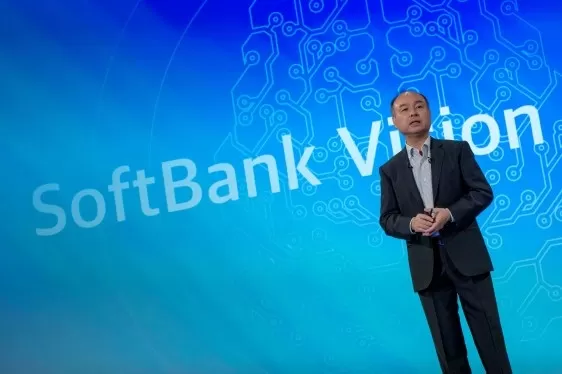
Masayoshi Son, founder and CEO of SoftBank, argued during a recent shareholder meeting that orbital data centers won't significantly reduce costs and will take too long, noting that “in the battle for AI, the next few years will be far more important than what might happen a decade or so from now.”
On the latest episode of TechCrunch’s Equity podcast, Kirsten Korosec, Sean O’Kane, and I discussed Son’s comments during a broader conversation covering OpenAI’s custom chip plans, chipmaker Groq’s recent $650 million funding round, and more.
Kirsten pointed out that it’s “very ironic” for Son to take a skeptical stance, given SoftBank’s “long history of wild bets.”
Sean, meanwhile, observed that when Musk talks about “making a constellation of satellites — satellites that need to be replaced every few years as well — to make up an ‘orbital data center,’” he’s essentially “guaranteeing that much more business” for SpaceX.
Below is a preview of our conversation, edited for length and clarity.
Sean O’Kane: Look, neo-clouds are the new oil, and everyone looking to profit is pivoting to a neo-cloud. I’m proud to announce that TechCrunch is now a neo-cloud — give us all your money.
I mean, that’s the pattern. So many players are compute-constrained, so anyone who can lease out compute is doing so — whether it’s Groq, a company that was partially hollowed out by Nvidia, or Allbirds, which filed for bankruptcy and emerged as a neo-cloud provider instead of selling shoes. Tim Fernholz interviewed the new CEO of that venture, and I’d definitely recommend reading it.
Or consider SpaceX: their idea was to build an AI platform with an addressable market the size of U.S. GDP, but until then, they’ll just rent out their compute. We’ve seen this continue — their deals aren’t as large as those with Google or Anthropic, but they just signed another deal, their first post-IPO agreement, to lease compute to a smaller player. They’re moving forward on that path.
I can see this working for Groq in the near term. The real question with all these efforts is how durable they’ll be in the long term.
Anthony Ha: If we’re discussing SpaceX and its AI and data center operations, we also need to address the recent comments from Masayoshi Son, CEO of SoftBank, who essentially asked: What’s the point of data centers in space? That’s a question we’ve raised on this show.
This ties into the industry’s acute compute constraint — they need to build as many data centers as possible, and there are many reasons why that’s difficult on Earth, so space might seem like the answer. But Son makes a fair point: even if all this works — and the costs will be enormous — it won’t happen for many years, so it’s not a solution to any immediate problem regarding current data center demand.
Kirsten Korosec: I just want to note that SoftBank has a long history of making wild bets. It says a lot when Son himself asks a question many people have already asked.
I mean, many VCs and founders have been swept up by the orbital data center concept, and suddenly everyone seems on board. A couple of years ago, mentioning that idea would have been dismissed. So I think it’s important that a high-profile figure is asking that question. But it’s ironic that he is the one asking, given his pitch deck shows they’ve poured money into some pretty bold ideas.
Sean: WeWork! Look, we’ll be saying this a lot over the next few years. Putting data centers in space is an interesting engineering challenge and certainly an economic one.
Anthony, you’re right to a certain extent. Elon Musk hates red tape, and there are no NIMBYs in space, so of course he’ll try it.
For me, it comes down to this: SpaceX’s current business, especially its launch business, is overwhelmingly reliant on Starlink. They hold 80% to 90% of the global launch market not only because they outperform other providers, but also because Starlink drives up that number. If you remove Starlink, they’d be closer to — I don’t know, maybe 20% to 40% of the launch market, certainly not 90%.
And when you talk about building a constellation of satellites — satellites that also need replacement every few years — to form an “orbital data center,” you’re essentially guaranteeing more business for your launch operation. I keep coming back to that point.
Kirsten: I just want to quickly add that SpaceX’s other big business is leasing out their compute. So we’re back to the chip conversation. Full circle.
Anthony: Another theme in this episode is the idea of talking your own book. This isn’t new. Executives at tech companies — or any company — tend to predict a future that benefits their own business.
But it’s worth remembering when discussing big AI companies, because we’re in a moment of huge uncertainty. We’re all wondering: What will the job market look like? How will this affect the environment? What skills should I learn?
All these AI CEOs and investors have opinions. It’s not that they’re wrong or deliberately misleading, but each prediction comes with an asterisk. Musk is talking about something that benefits SpaceX. SoftBank is heavily invested in Earth-based data centers. Sam Altman has also rolled his eyes at orbital data centers — and he and Musk have a long, complicated history.
In short, there are no objective, impartial observers here. Everyone involved has baggage and enormous sums of money at stake.
Related article
 OpenAI Secures $3 Billion from Retail Investors in Massive $122 Billion Fundraising Round
OpenAI has secured a funding round of $122 billion at an $852 billion valuation, marking its largest capital raise to date as the company prepares for a potential public listing this year.The investment will bolster OpenAI's reserves as it commits si
Arm Unveils Its First In-House Chip Design
After nearly 36 years of licensing its designs to companies like Nvidia and Apple, the storied semiconductor and software firm Arm Holdings is now venturing into manufacturing its own chips.At a Tuesday event in San Francisco, the company unveiled th
SoftBank Expands Robotics Holdings with ABB Group's Automation Division
Japanese investment conglomerate SoftBank Group is acquiring a robotics firm, as the financial giant identifies physical AI as its next major focus.SoftBank announced Wednesday that it has purchased Zurich, Switzerland-based ABB Group’s robotics divi
Related Special Topic Recommendations
Design & Art
OpenAI Secures $3 Billion from Retail Investors in Massive $122 Billion Fundraising Round
OpenAI has secured a funding round of $122 billion at an $852 billion valuation, marking its largest capital raise to date as the company prepares for a potential public listing this year.The investment will bolster OpenAI's reserves as it commits si
Arm Unveils Its First In-House Chip Design
After nearly 36 years of licensing its designs to companies like Nvidia and Apple, the storied semiconductor and software firm Arm Holdings is now venturing into manufacturing its own chips.At a Tuesday event in San Francisco, the company unveiled th
SoftBank Expands Robotics Holdings with ABB Group's Automation Division
Japanese investment conglomerate SoftBank Group is acquiring a robotics firm, as the financial giant identifies physical AI as its next major focus.SoftBank announced Wednesday that it has purchased Zurich, Switzerland-based ABB Group’s robotics divi
Related Special Topic Recommendations
Design & Art
 AI Visual Style Reference Tools for Character Sheets, Moodboards, and Pitch Decks
2026 Latest Best AI Visual Style Reference Tools for Character Sheets, Moodboards, and Pitch Decks are here on XIX.AI! This curated top-rated list features powerful game-changing tools that go through rigorous real-world tests. You’ll find a free vs paid comparison, detailed rankings, and must-try options to help you boost creativity and streamline your workflow. Explore now to discover your perfect tool for boosting productivity!
 11 tools
 xix.ai
SEO
Best AI SERP Analysis Tools for Search Strategy
xix.ai
SEO
Best AI SERP Analysis Tools for Search Strategy
2026 Latest Best Top-rated AI SERP Analysis Tools for Search Strategy are curated by XIX.AI through rigorous real-world tests and weekly updated rankings. These powerful tools help you unlock hidden optimization opportunities, boost content performance, and gain a competitive edge in search. Discover your perfect tool to elevate your search strategy today. Explore now!
13 tools
xix.ai
Data Analysis
Best AI Anomaly Detection Tools for KPI Monitoring across SaaS and Ecommerce Teams
2026 Latest Best Top-rated AI Anomaly Detection Tools for KPI Monitoring in SaaS and Ecommerce teams! XIX.AI has curated a powerful, game-changing collection based on rigorous real-world tests and weekly updated rankings. You’ll find detailed free vs paid comparison insights to help you identify the must-try solution that boosts productivity and unlocks your AI edge. Explore now!
10 tools
xix.ai
writing
Best AI Outline Generators for Long-Form SEO Articles
2026 Latest Best Top-Rated AI Outline Generators for Long-Form SEO Articles, meticulously curated by XIX.AI. These powerful tools offer game-changing assistance in creating high-quality content quickly, boosting writing efficiency significantly. Get a free vs paid comparison along with real-world tests and detailed rankings to help you find the must-try option that suits your needs. Explore now to unlock your AI edge.
8 tools
xix.ai
Education and Learning
AI Study Tools for Homework and Exam Prep
2026 Latest Best AI Study Tools for Homework and Exam Prep! XIX.AI curates a top-rated list of powerful, game-changing tools that help students boost productivity, streamline homework completion, and ace exams through real-world tests. Get a free vs paid comparison, detailed rankings, and must-try options to unlock your AI edge. Explore now!
10 tools
xix.ai
Music composition
AI Vocal Demo Tools for Songwriters, Hooks, Toplines, and Multilingual Draft Sessions
2026 Latest Best AI Vocal Demo Tools for Songwriters, Hook Creators, and Multi-Language Content Teams! XIX.AI has curated a top-rated list of powerful game-changing tools that go through rigorous real-world tests. You’ll find detailed free vs paid comparison data, comprehensive rankings, and must-try options to help you boost writing efficiency and unlock your creative potential. Explore now to discover your perfect tool for all your content needs!
9 tools
xix.ai

 Comments (1)
0/500
Comments (1)
0/500
![EdwardYoung]()
I was totally surprised to hear SoftBank’s CEO doubt Musk’s orbital data center plan, it felt like the tide had finally turned against such wild tech ideas. Honestly, I wonder if these floating servers will even solve our current internet speed issues or just add more costs for companies.
Not everyone is convinced by Elon Musk’s idea of orbital data centers.
Masayoshi Son, founder and CEO of SoftBank, argued during a recent shareholder meeting that orbital data centers won't significantly reduce costs and will take too long, noting that “in the battle for AI, the next few years will be far more important than what might happen a decade or so from now.”
On the latest episode of TechCrunch’s Equity podcast, Kirsten Korosec, Sean O’Kane, and I discussed Son’s comments during a broader conversation covering OpenAI’s custom chip plans, chipmaker Groq’s recent $650 million funding round, and more.
Kirsten pointed out that it’s “very ironic” for Son to take a skeptical stance, given SoftBank’s “long history of wild bets.”
Sean, meanwhile, observed that when Musk talks about “making a constellation of satellites — satellites that need to be replaced every few years as well — to make up an ‘orbital data center,’” he’s essentially “guaranteeing that much more business” for SpaceX.
Below is a preview of our conversation, edited for length and clarity.
Sean O’Kane: Look, neo-clouds are the new oil, and everyone looking to profit is pivoting to a neo-cloud. I’m proud to announce that TechCrunch is now a neo-cloud — give us all your money.
I mean, that’s the pattern. So many players are compute-constrained, so anyone who can lease out compute is doing so — whether it’s Groq, a company that was partially hollowed out by Nvidia, or Allbirds, which filed for bankruptcy and emerged as a neo-cloud provider instead of selling shoes. Tim Fernholz interviewed the new CEO of that venture, and I’d definitely recommend reading it.
Or consider SpaceX: their idea was to build an AI platform with an addressable market the size of U.S. GDP, but until then, they’ll just rent out their compute. We’ve seen this continue — their deals aren’t as large as those with Google or Anthropic, but they just signed another deal, their first post-IPO agreement, to lease compute to a smaller player. They’re moving forward on that path.
I can see this working for Groq in the near term. The real question with all these efforts is how durable they’ll be in the long term.
Anthony Ha: If we’re discussing SpaceX and its AI and data center operations, we also need to address the recent comments from Masayoshi Son, CEO of SoftBank, who essentially asked: What’s the point of data centers in space? That’s a question we’ve raised on this show.
This ties into the industry’s acute compute constraint — they need to build as many data centers as possible, and there are many reasons why that’s difficult on Earth, so space might seem like the answer. But Son makes a fair point: even if all this works — and the costs will be enormous — it won’t happen for many years, so it’s not a solution to any immediate problem regarding current data center demand.
Kirsten Korosec: I just want to note that SoftBank has a long history of making wild bets. It says a lot when Son himself asks a question many people have already asked.
I mean, many VCs and founders have been swept up by the orbital data center concept, and suddenly everyone seems on board. A couple of years ago, mentioning that idea would have been dismissed. So I think it’s important that a high-profile figure is asking that question. But it’s ironic that he is the one asking, given his pitch deck shows they’ve poured money into some pretty bold ideas.
Sean: WeWork! Look, we’ll be saying this a lot over the next few years. Putting data centers in space is an interesting engineering challenge and certainly an economic one.
Anthony, you’re right to a certain extent. Elon Musk hates red tape, and there are no NIMBYs in space, so of course he’ll try it.
For me, it comes down to this: SpaceX’s current business, especially its launch business, is overwhelmingly reliant on Starlink. They hold 80% to 90% of the global launch market not only because they outperform other providers, but also because Starlink drives up that number. If you remove Starlink, they’d be closer to — I don’t know, maybe 20% to 40% of the launch market, certainly not 90%.
And when you talk about building a constellation of satellites — satellites that also need replacement every few years — to form an “orbital data center,” you’re essentially guaranteeing more business for your launch operation. I keep coming back to that point.
Kirsten: I just want to quickly add that SpaceX’s other big business is leasing out their compute. So we’re back to the chip conversation. Full circle.
Anthony: Another theme in this episode is the idea of talking your own book. This isn’t new. Executives at tech companies — or any company — tend to predict a future that benefits their own business.
But it’s worth remembering when discussing big AI companies, because we’re in a moment of huge uncertainty. We’re all wondering: What will the job market look like? How will this affect the environment? What skills should I learn?
All these AI CEOs and investors have opinions. It’s not that they’re wrong or deliberately misleading, but each prediction comes with an asterisk. Musk is talking about something that benefits SpaceX. SoftBank is heavily invested in Earth-based data centers. Sam Altman has also rolled his eyes at orbital data centers — and he and Musk have a long, complicated history.
In short, there are no objective, impartial observers here. Everyone involved has baggage and enormous sums of money at stake.








 OpenAI Secures $3 Billion from Retail Investors in Massive $122 Billion Fundraising Round
OpenAI has secured a funding round of $122 billion at an $852 billion valuation, marking its largest capital raise to date as the company prepares for a potential public listing this year.The investment will bolster OpenAI's reserves as it commits si
OpenAI Secures $3 Billion from Retail Investors in Massive $122 Billion Fundraising Round
OpenAI has secured a funding round of $122 billion at an $852 billion valuation, marking its largest capital raise to date as the company prepares for a potential public listing this year.The investment will bolster OpenAI's reserves as it commits si
 Arm Unveils Its First In-House Chip Design
After nearly 36 years of licensing its designs to companies like Nvidia and Apple, the storied semiconductor and software firm Arm Holdings is now venturing into manufacturing its own chips.At a Tuesday event in San Francisco, the company unveiled th
Arm Unveils Its First In-House Chip Design
After nearly 36 years of licensing its designs to companies like Nvidia and Apple, the storied semiconductor and software firm Arm Holdings is now venturing into manufacturing its own chips.At a Tuesday event in San Francisco, the company unveiled th
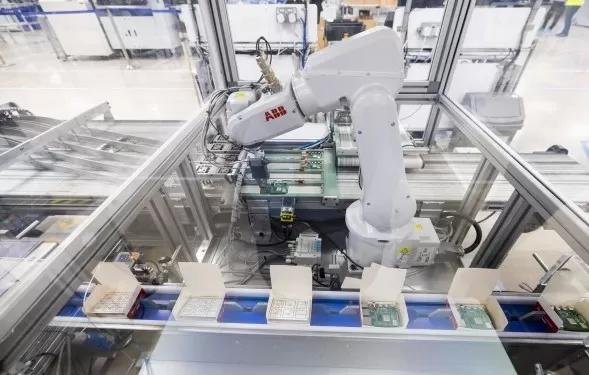 SoftBank Expands Robotics Holdings with ABB Group's Automation Division
Japanese investment conglomerate SoftBank Group is acquiring a robotics firm, as the financial giant identifies physical AI as its next major focus.SoftBank announced Wednesday that it has purchased Zurich, Switzerland-based ABB Group’s robotics divi
SoftBank Expands Robotics Holdings with ABB Group's Automation Division
Japanese investment conglomerate SoftBank Group is acquiring a robotics firm, as the financial giant identifies physical AI as its next major focus.SoftBank announced Wednesday that it has purchased Zurich, Switzerland-based ABB Group’s robotics divi

2026 Latest Best AI Visual Style Reference Tools for Character Sheets, Moodboards, and Pitch Decks are here on XIX.AI! This curated top-rated list features powerful game-changing tools that go through rigorous real-world tests. You’ll find a free vs paid comparison, detailed rankings, and must-try options to help you boost creativity and streamline your workflow. Explore now to discover your perfect tool for boosting productivity!
11 tools
xix.ai

2026 Latest Best Top-rated AI SERP Analysis Tools for Search Strategy are curated by XIX.AI through rigorous real-world tests and weekly updated rankings. These powerful tools help you unlock hidden optimization opportunities, boost content performance, and gain a competitive edge in search. Discover your perfect tool to elevate your search strategy today. Explore now!
13 tools
xix.ai

2026 Latest Best Top-rated AI Anomaly Detection Tools for KPI Monitoring in SaaS and Ecommerce teams! XIX.AI has curated a powerful, game-changing collection based on rigorous real-world tests and weekly updated rankings. You’ll find detailed free vs paid comparison insights to help you identify the must-try solution that boosts productivity and unlocks your AI edge. Explore now!
10 tools
xix.ai

2026 Latest Best Top-Rated AI Outline Generators for Long-Form SEO Articles, meticulously curated by XIX.AI. These powerful tools offer game-changing assistance in creating high-quality content quickly, boosting writing efficiency significantly. Get a free vs paid comparison along with real-world tests and detailed rankings to help you find the must-try option that suits your needs. Explore now to unlock your AI edge.
8 tools
xix.ai

2026 Latest Best AI Study Tools for Homework and Exam Prep! XIX.AI curates a top-rated list of powerful, game-changing tools that help students boost productivity, streamline homework completion, and ace exams through real-world tests. Get a free vs paid comparison, detailed rankings, and must-try options to unlock your AI edge. Explore now!
10 tools
xix.ai

2026 Latest Best AI Vocal Demo Tools for Songwriters, Hook Creators, and Multi-Language Content Teams! XIX.AI has curated a top-rated list of powerful game-changing tools that go through rigorous real-world tests. You’ll find detailed free vs paid comparison data, comprehensive rankings, and must-try options to help you boost writing efficiency and unlock your creative potential. Explore now to discover your perfect tool for all your content needs!
9 tools
xix.ai

I was totally surprised to hear SoftBank’s CEO doubt Musk’s orbital data center plan, it felt like the tide had finally turned against such wild tech ideas. Honestly, I wonder if these floating servers will even solve our current internet speed issues or just add more costs for companies.












