


 Home
HomeWhy Mark Zuckerberg wants to redefine open source so badly

LONDON -- Integrating artificial intelligence into the world of open source is no simple task. While it's true that AI has deep roots in open source, with notable examples like IBM's Granite Large Language Models (LLM) and RHEL AI fully embracing open-source principles, the reality is that many high-profile AI models, like Meta's Llama, fall short of being truly open source. Despite Meta CEO Mark Zuckerberg's assertions to the contrary, a panel of open-source experts at the State of Open 2025 conference debunked this claim.
There's now an official definition for open-source AI, but the debate rages on.
Emily Omier, a respected consultant for open-source start-ups, stressed that open source is not a sliding scale but a clear-cut standard defined by the Open Source Initiative (OSI). "You're either open source, or you're not. If you have an OSI-approved license, you're open source. Without it, you're dealing with a different kind of license altogether," she explained.
Meta's Llama doesn't meet this standard because it withholds essential elements like training data and methodology, and it restricts transparency and community contributions.
Moreover, Llama imposes licensing restrictions on its users. For instance, if you create a highly successful AI program using Llama's code, you'll owe Meta royalties. That's not open source by any measure.
Stefano Maffulli, the executive director of the OSI, shared his thoughts with me: "We align with everything Zuckerberg has stated in theory. If only Meta would lift the restrictions on their license, we'd be on the same page. As it stands, Llama poses a risk to developers; it's too opaque to be safely used and comes with a license that keeps Meta in control of any innovations."
Maffulli went on to say that Zuckerberg was "pressuring the industry to follow his lead."
It's widely accepted that open source is the optimal approach for software development. Zuckerberg himself acknowledges this, stating, "We've thrived on the innovations from the open-source ecosystem by making leading tools like PyTorch, React, and many others freely available. This strategy has proven effective for us when we stick to it over time."
However, all those tools are released under OSI-approved licenses. When it comes to AI, Zuckerberg seems intent on redefining open source. Why? Peter Zaitsev, co-founder of Percona and numerous open-source startups, suggests that "Zuckerberg is muddying the term to mislead regulators."
This is crucial for Meta's plans in the European Union (EU), where the newly enacted EU AI Act offers an exemption for AI systems distributed under free and open-source licenses, potentially saving Meta billions.
Meta is therefore pushing to redefine "open source" in the context of AI, all while keeping critical components under wraps. According to Meta, "The current open-source definitions for software don't fully address the complexities of modern AI models. We're dedicated to collaborating with the industry to develop new definitions that ensure safety and responsibility within the AI community."
In essence, Meta wants to redefine open source in a way that benefits them exclusively.
Yet, this goes against the very essence of open source, regardless of Meta's arguments.
Related article
 Slackbot Becomes an AI Agent
Slackbot, the automated assistant embedded in Salesforce’s corporate messaging platform Slack, is evolving into an AI agent. Salesforce CTO Parker Harris envisions it achieving viral status comparable to OpenAI’s ChatGPT.The cloud software giant laun
ByteDance Boosts Core AI Incentives as Doubao Surges 14.6%
ByteDance recently convened a DouBao equity briefing to unveil fresh incentive policies for staff involved in the DouBao division. The strike price for DouBao shares has been lifted from $14.85 in June 2026 to $17.02, marking an approximate 14.6% inc
MiniMax Unveils 10x Team Program to Incentivize Global AI Experts
MiniMax (Xiyu Technology), the General Artificial Intelligence Lab, has officially launched "10x Team," a global talent collaboration initiative. This program aims to recruit top experts across industries to explore the deep application of large mode
Related Special Topic Recommendations
Education and Learning
Slackbot Becomes an AI Agent
Slackbot, the automated assistant embedded in Salesforce’s corporate messaging platform Slack, is evolving into an AI agent. Salesforce CTO Parker Harris envisions it achieving viral status comparable to OpenAI’s ChatGPT.The cloud software giant laun
ByteDance Boosts Core AI Incentives as Doubao Surges 14.6%
ByteDance recently convened a DouBao equity briefing to unveil fresh incentive policies for staff involved in the DouBao division. The strike price for DouBao shares has been lifted from $14.85 in June 2026 to $17.02, marking an approximate 14.6% inc
MiniMax Unveils 10x Team Program to Incentivize Global AI Experts
MiniMax (Xiyu Technology), the General Artificial Intelligence Lab, has officially launched "10x Team," a global talent collaboration initiative. This program aims to recruit top experts across industries to explore the deep application of large mode
Related Special Topic Recommendations
Education and Learning
 AI Study Tools for Homework and Exam Prep
2026 Latest Best AI Study Tools for Homework and Exam Prep! XIX.AI curates a top-rated list of powerful, game-changing tools that help students boost productivity, streamline homework completion, and ace exams through real-world tests. Get a free vs paid comparison, detailed rankings, and must-try options to unlock your AI edge. Explore now!
 10 tools
 xix.ai
Music composition
AI Vocal Demo Tools for Songwriters, Hooks, Toplines, and Multilingual Draft Sessions
xix.ai
Music composition
AI Vocal Demo Tools for Songwriters, Hooks, Toplines, and Multilingual Draft Sessions
2026 Latest Best AI Vocal Demo Tools for Songwriters, Hook Creators, and Multi-Language Content Teams! XIX.AI has curated a top-rated list of powerful game-changing tools that go through rigorous real-world tests. You’ll find detailed free vs paid comparison data, comprehensive rankings, and must-try options to help you boost writing efficiency and unlock your creative potential. Explore now to discover your perfect tool for all your content needs!
9 tools
xix.ai
Business
Best AI Competitive Research Tools for Small Businesses
2026 Latest Best Top-rated AI Competitive Research Tools for Small Businesses! XIX.AI has curated a highly powerful game-changing collection, updated weekly with rigorous real-world tests and detailed rankings. You can find a comprehensive free vs paid comparison to help you identify the must-try tools that boost your productivity and give you a competitive edge. Explore now to discover your perfect tool!
9 tools
xix.ai
Image editing
Photoshop AI Retouch Tools for Ecommerce Apparel, Skin Cleanup, and Color Consistency
2026 Latest Best Photoshop AI retouch tools for ecommerce apparel, skin cleanup, and color consistency! This top-rated curated list features powerful game-changing solutions that help you boost writing efficiency, streamline content creation, and achieve perfect visual results effortlessly. Each tool has undergone real-world tests through weekly updated rankings, complete with free vs paid comparison details. Backed by XIX.AI, it’s the must-try guide for anyone aiming to unlock your AI edge. Explore now!
10 tools
xix.ai
Prompt
Best AI Prompt Libraries for ChatGPT Workflows
2026 Latest Best Top-Rated AI Prompt Libraries for optimizing all types of ChatGPT workflows. XIX.AI has curated a powerful, game-changing collection that goes through rigorous real-world tests to ensure top performance. You can find detailed free vs paid comparisons and expert rankings to help you choose the must-try tools that boost your productivity and unlock your AI edge. Explore now!
11 tools
xix.ai
Education and Learning
AI Quiz Builder Platforms for Teachers, Tutors, and Cohort-Based Learning Programs
2026 Latest Best AI Quiz Builder Platforms for Teachers, Tutors, and Cohort-Based Learning Programs! XIX.AI has curated a top-rated list of powerful game-changing tools that go through real-world tests to deliver accurate rankings. These must-try platforms help boost writing efficiency, streamline content creation, and simplify quiz design across all learning scenarios. Explore now to discover your perfect tool for unlocking your AI edge in teaching!
13 tools
xix.ai

 Comments (45)
0/500
Comments (45)
0/500
![SophiaJones]()
這篇文章點出了開源AI的複雜性,Meta急著重新定義開源,是不是想主導遊戲規則?🤔 個人覺得,開源精神很棒,但大公司介入後,『開放』的定義常常變味,最後還是為了商業利益服務。有點擔心未來會不會變成只有巨頭玩得起的遊戲。
![DouglasPerez]()
Qué ironía, ¿no? Zuckerberg hablando de código abierto en IA cuando Meta cierra cada vez más proyectos... A veces parece que solo quiere 'abrir' lo que ya no le sirve. Me pregunto si no será una forma de legitimar sus propias decisiones corporativas bajo ese discurso tan atractivo 🤔
![BillyAnderson]()
Als Entwickler finde ich die Diskussion über Open Source und KI total spannend 😄 Einerseits ist es toll, dass IBM Granite LLM open source zur Verfügung stellt, andererseits frage ich mich, ob große Tech-Firmen damit nicht eigentlich nur ihre eigenen Interessen verfolgen. Vielleicht sollten wir die Definition von 'Open Source' wirklich überdenken...
![JoseJackson]()
Zuck's push to redefine open source feels like a tech soap opera! 🧼 Is he trying to control the narrative or just vibing with AI's open-source roots? Curious to see how this plays out.
![WalterSanchez]()
Zuck's push to redefine open source feels like a tech soap opera! 🧼 Why so desperate to control the narrative? AI's open roots are cool, but this smells like a power grab. Thoughts?
![LarryMartin]()
마크 저커버그의 오픈 소스와 AI에 대한 견해는 흥미롭지만, 조금 규칙을 구부리려는 느낌이 듭니다. 혁신의 필요성은 이해하지만, 오픈 소스를 재정의하다니요? 그것은 조금 과하네요. 그래도 IBM의 Granite과 RHEL AI의 예시를 보는 건 재미있어요. 어쩌면 그는 무언가를 잡고 있는 것일지도 모르지만, 저에게는 조금 너무 야심찬 것 같아요. 🤔
LONDON -- Integrating artificial intelligence into the world of open source is no simple task. While it's true that AI has deep roots in open source, with notable examples like IBM's Granite Large Language Models (LLM) and RHEL AI fully embracing open-source principles, the reality is that many high-profile AI models, like Meta's Llama, fall short of being truly open source. Despite Meta CEO Mark Zuckerberg's assertions to the contrary, a panel of open-source experts at the State of Open 2025 conference debunked this claim.
There's now an official definition for open-source AI, but the debate rages on.
Emily Omier, a respected consultant for open-source start-ups, stressed that open source is not a sliding scale but a clear-cut standard defined by the Open Source Initiative (OSI). "You're either open source, or you're not. If you have an OSI-approved license, you're open source. Without it, you're dealing with a different kind of license altogether," she explained.
Meta's Llama doesn't meet this standard because it withholds essential elements like training data and methodology, and it restricts transparency and community contributions.
Moreover, Llama imposes licensing restrictions on its users. For instance, if you create a highly successful AI program using Llama's code, you'll owe Meta royalties. That's not open source by any measure.
Stefano Maffulli, the executive director of the OSI, shared his thoughts with me: "We align with everything Zuckerberg has stated in theory. If only Meta would lift the restrictions on their license, we'd be on the same page. As it stands, Llama poses a risk to developers; it's too opaque to be safely used and comes with a license that keeps Meta in control of any innovations."
Maffulli went on to say that Zuckerberg was "pressuring the industry to follow his lead."
It's widely accepted that open source is the optimal approach for software development. Zuckerberg himself acknowledges this, stating, "We've thrived on the innovations from the open-source ecosystem by making leading tools like PyTorch, React, and many others freely available. This strategy has proven effective for us when we stick to it over time."
However, all those tools are released under OSI-approved licenses. When it comes to AI, Zuckerberg seems intent on redefining open source. Why? Peter Zaitsev, co-founder of Percona and numerous open-source startups, suggests that "Zuckerberg is muddying the term to mislead regulators."
This is crucial for Meta's plans in the European Union (EU), where the newly enacted EU AI Act offers an exemption for AI systems distributed under free and open-source licenses, potentially saving Meta billions.
Meta is therefore pushing to redefine "open source" in the context of AI, all while keeping critical components under wraps. According to Meta, "The current open-source definitions for software don't fully address the complexities of modern AI models. We're dedicated to collaborating with the industry to develop new definitions that ensure safety and responsibility within the AI community."
In essence, Meta wants to redefine open source in a way that benefits them exclusively.
Yet, this goes against the very essence of open source, regardless of Meta's arguments.








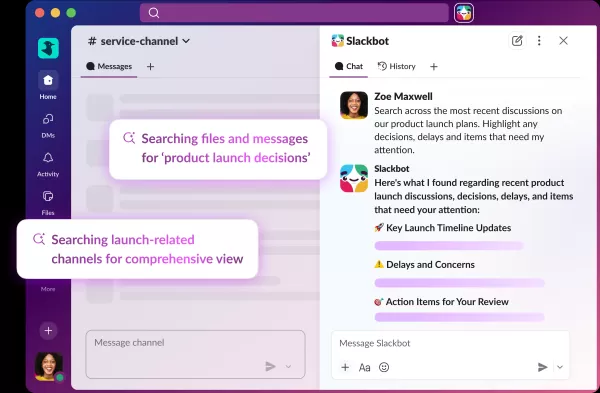 Slackbot Becomes an AI Agent
Slackbot, the automated assistant embedded in Salesforce’s corporate messaging platform Slack, is evolving into an AI agent. Salesforce CTO Parker Harris envisions it achieving viral status comparable to OpenAI’s ChatGPT.The cloud software giant laun
Slackbot Becomes an AI Agent
Slackbot, the automated assistant embedded in Salesforce’s corporate messaging platform Slack, is evolving into an AI agent. Salesforce CTO Parker Harris envisions it achieving viral status comparable to OpenAI’s ChatGPT.The cloud software giant laun
 ByteDance Boosts Core AI Incentives as Doubao Surges 14.6%
ByteDance recently convened a DouBao equity briefing to unveil fresh incentive policies for staff involved in the DouBao division. The strike price for DouBao shares has been lifted from $14.85 in June 2026 to $17.02, marking an approximate 14.6% inc
ByteDance Boosts Core AI Incentives as Doubao Surges 14.6%
ByteDance recently convened a DouBao equity briefing to unveil fresh incentive policies for staff involved in the DouBao division. The strike price for DouBao shares has been lifted from $14.85 in June 2026 to $17.02, marking an approximate 14.6% inc
 MiniMax Unveils 10x Team Program to Incentivize Global AI Experts
MiniMax (Xiyu Technology), the General Artificial Intelligence Lab, has officially launched "10x Team," a global talent collaboration initiative. This program aims to recruit top experts across industries to explore the deep application of large mode
MiniMax Unveils 10x Team Program to Incentivize Global AI Experts
MiniMax (Xiyu Technology), the General Artificial Intelligence Lab, has officially launched "10x Team," a global talent collaboration initiative. This program aims to recruit top experts across industries to explore the deep application of large mode

2026 Latest Best AI Study Tools for Homework and Exam Prep! XIX.AI curates a top-rated list of powerful, game-changing tools that help students boost productivity, streamline homework completion, and ace exams through real-world tests. Get a free vs paid comparison, detailed rankings, and must-try options to unlock your AI edge. Explore now!
10 tools
xix.ai

2026 Latest Best AI Vocal Demo Tools for Songwriters, Hook Creators, and Multi-Language Content Teams! XIX.AI has curated a top-rated list of powerful game-changing tools that go through rigorous real-world tests. You’ll find detailed free vs paid comparison data, comprehensive rankings, and must-try options to help you boost writing efficiency and unlock your creative potential. Explore now to discover your perfect tool for all your content needs!
9 tools
xix.ai

2026 Latest Best Top-rated AI Competitive Research Tools for Small Businesses! XIX.AI has curated a highly powerful game-changing collection, updated weekly with rigorous real-world tests and detailed rankings. You can find a comprehensive free vs paid comparison to help you identify the must-try tools that boost your productivity and give you a competitive edge. Explore now to discover your perfect tool!
9 tools
xix.ai

2026 Latest Best Photoshop AI retouch tools for ecommerce apparel, skin cleanup, and color consistency! This top-rated curated list features powerful game-changing solutions that help you boost writing efficiency, streamline content creation, and achieve perfect visual results effortlessly. Each tool has undergone real-world tests through weekly updated rankings, complete with free vs paid comparison details. Backed by XIX.AI, it’s the must-try guide for anyone aiming to unlock your AI edge. Explore now!
10 tools
xix.ai
2026 Latest Best Top-Rated AI Prompt Libraries for optimizing all types of ChatGPT workflows. XIX.AI has curated a powerful, game-changing collection that goes through rigorous real-world tests to ensure top performance. You can find detailed free vs paid comparisons and expert rankings to help you choose the must-try tools that boost your productivity and unlock your AI edge. Explore now!
11 tools
xix.ai

2026 Latest Best AI Quiz Builder Platforms for Teachers, Tutors, and Cohort-Based Learning Programs! XIX.AI has curated a top-rated list of powerful game-changing tools that go through real-world tests to deliver accurate rankings. These must-try platforms help boost writing efficiency, streamline content creation, and simplify quiz design across all learning scenarios. Explore now to discover your perfect tool for unlocking your AI edge in teaching!
13 tools
xix.ai

這篇文章點出了開源AI的複雜性,Meta急著重新定義開源,是不是想主導遊戲規則?🤔 個人覺得,開源精神很棒,但大公司介入後,『開放』的定義常常變味,最後還是為了商業利益服務。有點擔心未來會不會變成只有巨頭玩得起的遊戲。
Qué ironía, ¿no? Zuckerberg hablando de código abierto en IA cuando Meta cierra cada vez más proyectos... A veces parece que solo quiere 'abrir' lo que ya no le sirve. Me pregunto si no será una forma de legitimar sus propias decisiones corporativas bajo ese discurso tan atractivo 🤔
Als Entwickler finde ich die Diskussion über Open Source und KI total spannend 😄 Einerseits ist es toll, dass IBM Granite LLM open source zur Verfügung stellt, andererseits frage ich mich, ob große Tech-Firmen damit nicht eigentlich nur ihre eigenen Interessen verfolgen. Vielleicht sollten wir die Definition von 'Open Source' wirklich überdenken...
Zuck's push to redefine open source feels like a tech soap opera! 🧼 Is he trying to control the narrative or just vibing with AI's open-source roots? Curious to see how this plays out.
Zuck's push to redefine open source feels like a tech soap opera! 🧼 Why so desperate to control the narrative? AI's open roots are cool, but this smells like a power grab. Thoughts?
마크 저커버그의 오픈 소스와 AI에 대한 견해는 흥미롭지만, 조금 규칙을 구부리려는 느낌이 듭니다. 혁신의 필요성은 이해하지만, 오픈 소스를 재정의하다니요? 그것은 조금 과하네요. 그래도 IBM의 Granite과 RHEL AI의 예시를 보는 건 재미있어요. 어쩌면 그는 무언가를 잡고 있는 것일지도 모르지만, 저에게는 조금 너무 야심찬 것 같아요. 🤔












