


 Home
HomeGoogle Admits in Urgent Filing It Must Begin Opening Android in Two Weeks
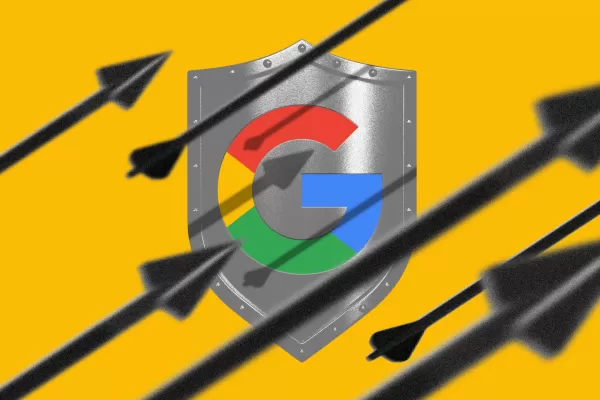
Shortly after Epic's second major antitrust win against Google, it remained unclear how quickly the tech giant would be forced to dismantle its now legally-confirmed monopoly.
Google has now revealed the timeline: a mere 14 days. The company has two weeks to implement sweeping reforms to its Google Play store and its commercial dealings with phonemakers, carriers, and developers, unless it secures an emergency pause from the Ninth Circuit Court of Appeals. The mandated changes include ending the requirement to use Google Play Billing, permitting developers to direct users to alternative platforms, and restricting incentives for app preinstallation.
However, Epic's most significant court victories are not yet in effect. The current order does not compel Google to host rival app stores within Google Play or to share its entire app catalog with them. Therefore, the immediate arrival of stores like the Epic Games Store or Microsoft Xbox Store on Google Play is not expected.
As of Friday afternoon, this entire process has likely been delayed. Shortly after our initial report, Google was granted its emergency stay, securing at least three additional weeks before any changes to Android's app store policies must occur.
Related
- Epic's second victory over Google could fundamentally reshape Android
- The Epic Games Store is preparing to bring Fortnite back to Google Play
- Microsoft reveals a built but unreleased Xbox game store for Android
- Judge rules Google must open Android to third-party app stores
When issuing the permanent injunction to open up the Android ecosystem, Judge James Donato gave Google an eight-month window to design a "narrowly tailored" security framework before being required to host rival stores. With the stays now in place, Google retains roughly seven and a half months of that timeline once the pauses are lifted, meaning competing stores likely won't appear inside Google Play until 2026 at the earliest.
Google's emergency stay request argued that several changes were required far too quickly, stating that "the remedies in 4-7, 9-10, and 13 of the District Court’s injunction will go into effect in 14 days." Google labeled this an emergency, claiming a 14-day implementation would have a "significant impact" on millions of users and over 500,000 developers, "exposing them to substantial risks" and "jeopardizing the entire Android ecosystem."
So, what do remedies 4-7, 9, 10, and 13 entail? They are the provisions that:
- Prohibit Google from forcing developers to use Google Play Billing
- Allow Android developers to inform users about alternative payment options from within the Play Store
- Permit developers to link to external download sources for their apps
- Let developers set their own pricing
- Bar financial incentives or perks to phonemakers, carriers, and developers for Play Store exclusivity or preinstallation
- Require Google to cooperate with Epic on a system for integrating rival app stores
Several of these measures echo changes Epic secured in its antitrust case against Apple. They target so-called anti-steering rules, which courts in both major cases have now agreed unfairly restrict developer access to a competitive marketplace.
The full text of the required remedies from Judge Donato's injunction is below:
4. For a period of three years ending on November 1, 2027, Google may not share revenue generated by the Google Play Store with any person or entity that distributes Android apps, or has stated that it will launch or is considering launching an Android app distribution platform or store.
5. For a period of three years ending on November 1, 2027, Google may not condition a payment, revenue share, or access to any Google product or service, on an agreement by an app developer to launch an app first or exclusively in the Google Play Store.
6. For a period of three years ending on November 1, 2027, Google may not condition a payment, revenue share, or access to any Google product or service, on an agreement by an app developer not to launch on a third-party Android app distribution platform or store a version of an app that includes features not available in, or is otherwise different from, the version of the app offered on the Google Play Store.
7. For a period of three years ending on November 1, 2027, Google may not condition a payment, revenue share, or access to any Google product or service, on an agreement with an original equipment manufacturer (OEM) or carrier to preinstall the Google Play Store on any specific location on an Android device.
9. For a period of three years ending on November 1, 2027, Google may not require the use of Google Play Billing in apps distributed on the Google Play Store, or prohibit the use of in-app payment methods other than Google Play Billing. Google may not prohibit a developer from communicating with users about the availability of a payment method other than Google Play Billing. Google may not require a developer to set a price based on whether Google Play Billing is used.
10. For a period of three years ending on November 1, 2027, Google may not prohibit a developer from communicating with users about the availability or pricing of an app outside the Google Play Store, and may not prohibit a developer from providing a link to download the app outside the Google Play Store.
13. Within thirty days of the date of this order, the parties will recommend to the Court a three-person Technical Committee. Epic and Google will each select one member of the Technical Committee, and those two members will select the third member. After appointment by the Court, the Technical Committee will review disputes or issues relating to the technology and processes required by the preceding provisions. If the Technical Committee cannot resolve a dispute or issue, a party may ask the Court for a resolution. The Technical Committee may not extend any deadline set in this order, but may recommend that the Court accept or deny a request to extend. Each party will bear the cost of compensating their respective party-designated committee member for their work on the committee. The third member’s fees will be paid by the parties in equal share.
When asked how these remedies could "expose users and developers to substantial risks," Google directed us to a document arguing that allowing external download links could increase exposure to malware, and that removing Play Billing might compromise payment security and user expectations.
Although a three-judge Ninth Circuit panel had previously denied Google's stay request and affirmed the injunction's validity, it granted this emergency pause to allow Google to argue for a longer stay as higher courts consider the case. Google has indicated potential appeals to the full Ninth Circuit and the Supreme Court.
You can read Google's full emergency stay request below:
Updated August 1st: Added that Google has been granted its emergency stay and its response to our inquiry.
Related article
 Microsoft, Azure and AI Tech Combat California Wildfire Risks
Microsoft invests in AI-driven wildfire detection, with Juan Lavista Ferres, CVP and Chief Data Scientist, discussing strategies to mitigate environmental damage.According to NASA, climate change impacts everyone on Earth, manifesting as rising tempe
Microsoft CEO Slams AI Labs Over Distillation
Satya Nadella, Microsoft’s CEO, calls out AI labs for hypocrisy regarding distillation criticism, a remark widely interpreted as targeting Anthropic. Credit: Getty ImagesMicrosoft CEO Satya Nadella challenges AI developers for limiting model distilla
Sesame, AI Startup by Oculus Founders, Debuts on iOS
On Thursday, Sesame, an AI startup founded by the creators of Oculus and other former Meta VR team members, unveiled a public preview of its conversational AI agents, which have been in development for over a year. Through its new iOS application, Se
Related Special Topic Recommendations
SEO
Microsoft, Azure and AI Tech Combat California Wildfire Risks
Microsoft invests in AI-driven wildfire detection, with Juan Lavista Ferres, CVP and Chief Data Scientist, discussing strategies to mitigate environmental damage.According to NASA, climate change impacts everyone on Earth, manifesting as rising tempe
Microsoft CEO Slams AI Labs Over Distillation
Satya Nadella, Microsoft’s CEO, calls out AI labs for hypocrisy regarding distillation criticism, a remark widely interpreted as targeting Anthropic. Credit: Getty ImagesMicrosoft CEO Satya Nadella challenges AI developers for limiting model distilla
Sesame, AI Startup by Oculus Founders, Debuts on iOS
On Thursday, Sesame, an AI startup founded by the creators of Oculus and other former Meta VR team members, unveiled a public preview of its conversational AI agents, which have been in development for over a year. Through its new iOS application, Se
Related Special Topic Recommendations
SEO
 Best AI SERP Analysis Tools for Search Strategy
2026 Latest Best Top-rated AI SERP Analysis Tools for Search Strategy are curated by XIX.AI through rigorous real-world tests and weekly updated rankings. These powerful tools help you unlock hidden optimization opportunities, boost content performance, and gain a competitive edge in search. Discover your perfect tool to elevate your search strategy today. Explore now!
 13 tools
 xix.ai
Data Analysis
Best AI Anomaly Detection Tools for KPI Monitoring across SaaS and Ecommerce Teams
xix.ai
Data Analysis
Best AI Anomaly Detection Tools for KPI Monitoring across SaaS and Ecommerce Teams
2026 Latest Best Top-rated AI Anomaly Detection Tools for KPI Monitoring in SaaS and Ecommerce teams! XIX.AI has curated a powerful, game-changing collection based on rigorous real-world tests and weekly updated rankings. You’ll find detailed free vs paid comparison insights to help you identify the must-try solution that boosts productivity and unlocks your AI edge. Explore now!
10 tools
xix.ai
writing
Best AI Outline Generators for Long-Form SEO Articles
2026 Latest Best Top-Rated AI Outline Generators for Long-Form SEO Articles, meticulously curated by XIX.AI. These powerful tools offer game-changing assistance in creating high-quality content quickly, boosting writing efficiency significantly. Get a free vs paid comparison along with real-world tests and detailed rankings to help you find the must-try option that suits your needs. Explore now to unlock your AI edge.
8 tools
xix.ai
Education and Learning
AI Study Tools for Homework and Exam Prep
2026 Latest Best AI Study Tools for Homework and Exam Prep! XIX.AI curates a top-rated list of powerful, game-changing tools that help students boost productivity, streamline homework completion, and ace exams through real-world tests. Get a free vs paid comparison, detailed rankings, and must-try options to unlock your AI edge. Explore now!
10 tools
xix.ai
Music composition
AI Vocal Demo Tools for Songwriters, Hooks, Toplines, and Multilingual Draft Sessions
2026 Latest Best AI Vocal Demo Tools for Songwriters, Hook Creators, and Multi-Language Content Teams! XIX.AI has curated a top-rated list of powerful game-changing tools that go through rigorous real-world tests. You’ll find detailed free vs paid comparison data, comprehensive rankings, and must-try options to help you boost writing efficiency and unlock your creative potential. Explore now to discover your perfect tool for all your content needs!
9 tools
xix.ai
Business
Best AI Competitive Research Tools for Small Businesses
2026 Latest Best Top-rated AI Competitive Research Tools for Small Businesses! XIX.AI has curated a highly powerful game-changing collection, updated weekly with rigorous real-world tests and detailed rankings. You can find a comprehensive free vs paid comparison to help you identify the must-try tools that boost your productivity and give you a competitive edge. Explore now to discover your perfect tool!
9 tools
xix.ai

 Comments (0)
0/500
Comments (0)
0/500
Shortly after Epic's second major antitrust win against Google, it remained unclear how quickly the tech giant would be forced to dismantle its now legally-confirmed monopoly.
Google has now revealed the timeline: a mere 14 days. The company has two weeks to implement sweeping reforms to its Google Play store and its commercial dealings with phonemakers, carriers, and developers, unless it secures an emergency pause from the Ninth Circuit Court of Appeals. The mandated changes include ending the requirement to use Google Play Billing, permitting developers to direct users to alternative platforms, and restricting incentives for app preinstallation.
However, Epic's most significant court victories are not yet in effect. The current order does not compel Google to host rival app stores within Google Play or to share its entire app catalog with them. Therefore, the immediate arrival of stores like the Epic Games Store or Microsoft Xbox Store on Google Play is not expected.
As of Friday afternoon, this entire process has likely been delayed. Shortly after our initial report, Google was granted its emergency stay, securing at least three additional weeks before any changes to Android's app store policies must occur.
Related
- Epic's second victory over Google could fundamentally reshape Android
- The Epic Games Store is preparing to bring Fortnite back to Google Play
- Microsoft reveals a built but unreleased Xbox game store for Android
- Judge rules Google must open Android to third-party app stores
When issuing the permanent injunction to open up the Android ecosystem, Judge James Donato gave Google an eight-month window to design a "narrowly tailored" security framework before being required to host rival stores. With the stays now in place, Google retains roughly seven and a half months of that timeline once the pauses are lifted, meaning competing stores likely won't appear inside Google Play until 2026 at the earliest.
Google's emergency stay request argued that several changes were required far too quickly, stating that "the remedies in 4-7, 9-10, and 13 of the District Court’s injunction will go into effect in 14 days." Google labeled this an emergency, claiming a 14-day implementation would have a "significant impact" on millions of users and over 500,000 developers, "exposing them to substantial risks" and "jeopardizing the entire Android ecosystem."
So, what do remedies 4-7, 9, 10, and 13 entail? They are the provisions that:
- Prohibit Google from forcing developers to use Google Play Billing
- Allow Android developers to inform users about alternative payment options from within the Play Store
- Permit developers to link to external download sources for their apps
- Let developers set their own pricing
- Bar financial incentives or perks to phonemakers, carriers, and developers for Play Store exclusivity or preinstallation
- Require Google to cooperate with Epic on a system for integrating rival app stores
Several of these measures echo changes Epic secured in its antitrust case against Apple. They target so-called anti-steering rules, which courts in both major cases have now agreed unfairly restrict developer access to a competitive marketplace.
The full text of the required remedies from Judge Donato's injunction is below:
4. For a period of three years ending on November 1, 2027, Google may not share revenue generated by the Google Play Store with any person or entity that distributes Android apps, or has stated that it will launch or is considering launching an Android app distribution platform or store.
5. For a period of three years ending on November 1, 2027, Google may not condition a payment, revenue share, or access to any Google product or service, on an agreement by an app developer to launch an app first or exclusively in the Google Play Store.
6. For a period of three years ending on November 1, 2027, Google may not condition a payment, revenue share, or access to any Google product or service, on an agreement by an app developer not to launch on a third-party Android app distribution platform or store a version of an app that includes features not available in, or is otherwise different from, the version of the app offered on the Google Play Store.
7. For a period of three years ending on November 1, 2027, Google may not condition a payment, revenue share, or access to any Google product or service, on an agreement with an original equipment manufacturer (OEM) or carrier to preinstall the Google Play Store on any specific location on an Android device.
9. For a period of three years ending on November 1, 2027, Google may not require the use of Google Play Billing in apps distributed on the Google Play Store, or prohibit the use of in-app payment methods other than Google Play Billing. Google may not prohibit a developer from communicating with users about the availability of a payment method other than Google Play Billing. Google may not require a developer to set a price based on whether Google Play Billing is used.
10. For a period of three years ending on November 1, 2027, Google may not prohibit a developer from communicating with users about the availability or pricing of an app outside the Google Play Store, and may not prohibit a developer from providing a link to download the app outside the Google Play Store.
13. Within thirty days of the date of this order, the parties will recommend to the Court a three-person Technical Committee. Epic and Google will each select one member of the Technical Committee, and those two members will select the third member. After appointment by the Court, the Technical Committee will review disputes or issues relating to the technology and processes required by the preceding provisions. If the Technical Committee cannot resolve a dispute or issue, a party may ask the Court for a resolution. The Technical Committee may not extend any deadline set in this order, but may recommend that the Court accept or deny a request to extend. Each party will bear the cost of compensating their respective party-designated committee member for their work on the committee. The third member’s fees will be paid by the parties in equal share.
When asked how these remedies could "expose users and developers to substantial risks," Google directed us to a document arguing that allowing external download links could increase exposure to malware, and that removing Play Billing might compromise payment security and user expectations.
Although a three-judge Ninth Circuit panel had previously denied Google's stay request and affirmed the injunction's validity, it granted this emergency pause to allow Google to argue for a longer stay as higher courts consider the case. Google has indicated potential appeals to the full Ninth Circuit and the Supreme Court.
You can read Google's full emergency stay request below:
Updated August 1st: Added that Google has been granted its emergency stay and its response to our inquiry.








 Microsoft, Azure and AI Tech Combat California Wildfire Risks
Microsoft invests in AI-driven wildfire detection, with Juan Lavista Ferres, CVP and Chief Data Scientist, discussing strategies to mitigate environmental damage.According to NASA, climate change impacts everyone on Earth, manifesting as rising tempe
Microsoft, Azure and AI Tech Combat California Wildfire Risks
Microsoft invests in AI-driven wildfire detection, with Juan Lavista Ferres, CVP and Chief Data Scientist, discussing strategies to mitigate environmental damage.According to NASA, climate change impacts everyone on Earth, manifesting as rising tempe
 Microsoft CEO Slams AI Labs Over Distillation
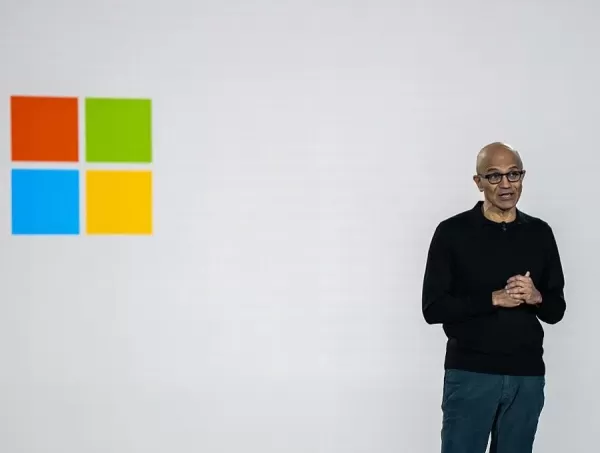
Satya Nadella, Microsoft’s CEO, calls out AI labs for hypocrisy regarding distillation criticism, a remark widely interpreted as targeting Anthropic. Credit: Getty ImagesMicrosoft CEO Satya Nadella challenges AI developers for limiting model distilla
Microsoft CEO Slams AI Labs Over Distillation
Satya Nadella, Microsoft’s CEO, calls out AI labs for hypocrisy regarding distillation criticism, a remark widely interpreted as targeting Anthropic. Credit: Getty ImagesMicrosoft CEO Satya Nadella challenges AI developers for limiting model distilla
 Sesame, AI Startup by Oculus Founders, Debuts on iOS
On Thursday, Sesame, an AI startup founded by the creators of Oculus and other former Meta VR team members, unveiled a public preview of its conversational AI agents, which have been in development for over a year. Through its new iOS application, Se
Sesame, AI Startup by Oculus Founders, Debuts on iOS
On Thursday, Sesame, an AI startup founded by the creators of Oculus and other former Meta VR team members, unveiled a public preview of its conversational AI agents, which have been in development for over a year. Through its new iOS application, Se

2026 Latest Best Top-rated AI SERP Analysis Tools for Search Strategy are curated by XIX.AI through rigorous real-world tests and weekly updated rankings. These powerful tools help you unlock hidden optimization opportunities, boost content performance, and gain a competitive edge in search. Discover your perfect tool to elevate your search strategy today. Explore now!
13 tools
xix.ai

2026 Latest Best Top-rated AI Anomaly Detection Tools for KPI Monitoring in SaaS and Ecommerce teams! XIX.AI has curated a powerful, game-changing collection based on rigorous real-world tests and weekly updated rankings. You’ll find detailed free vs paid comparison insights to help you identify the must-try solution that boosts productivity and unlocks your AI edge. Explore now!
10 tools
xix.ai

2026 Latest Best Top-Rated AI Outline Generators for Long-Form SEO Articles, meticulously curated by XIX.AI. These powerful tools offer game-changing assistance in creating high-quality content quickly, boosting writing efficiency significantly. Get a free vs paid comparison along with real-world tests and detailed rankings to help you find the must-try option that suits your needs. Explore now to unlock your AI edge.
8 tools
xix.ai

2026 Latest Best AI Study Tools for Homework and Exam Prep! XIX.AI curates a top-rated list of powerful, game-changing tools that help students boost productivity, streamline homework completion, and ace exams through real-world tests. Get a free vs paid comparison, detailed rankings, and must-try options to unlock your AI edge. Explore now!
10 tools
xix.ai

2026 Latest Best AI Vocal Demo Tools for Songwriters, Hook Creators, and Multi-Language Content Teams! XIX.AI has curated a top-rated list of powerful game-changing tools that go through rigorous real-world tests. You’ll find detailed free vs paid comparison data, comprehensive rankings, and must-try options to help you boost writing efficiency and unlock your creative potential. Explore now to discover your perfect tool for all your content needs!
9 tools
xix.ai

2026 Latest Best Top-rated AI Competitive Research Tools for Small Businesses! XIX.AI has curated a highly powerful game-changing collection, updated weekly with rigorous real-world tests and detailed rankings. You can find a comprehensive free vs paid comparison to help you identify the must-try tools that boost your productivity and give you a competitive edge. Explore now to discover your perfect tool!
9 tools
xix.ai












