


 Home
HomeMicrosoft CEO Slams AI Labs Over Distillation
![]()
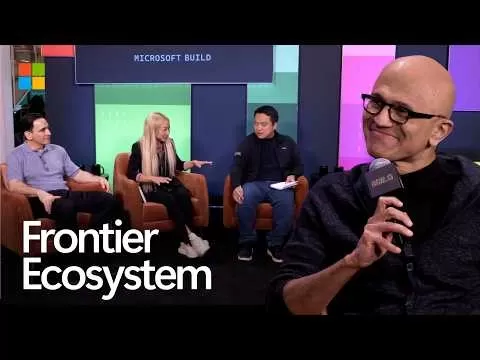
Satya Nadella, Microsoft’s CEO, calls out AI labs for hypocrisy regarding distillation criticism, a remark widely interpreted as targeting Anthropic. Credit: Getty Images
Microsoft CEO Satya Nadella challenges AI developers for limiting model distillation while simultaneously leveraging public and customer data to train their own systems.
Microsoft’s Satya Nadella has publicly criticized unnamed AI labs across the tech industry for their contradictory stance on AI distillation, a technique where a smaller model is trained using the outputs of a larger, more powerful system.
In a post on X, Nadella argues that model creators complaining about distillation are being hypocritical about the broader AI training process.
He acknowledges that ‘the great innovation that comes from model providers having fair use rights to train on public data is needed’, yet finds it ‘ironic’ that the industry consensus imposes ‘restrictive terms’ on distillation.
This occurs even as these companies reserve the right to learn from customer usage and interaction data themselves.
“If learning flows in only one direction, economic value converges toward the owners of the learning infrastructure rather than the creators of the knowledge itself,” Nadella notes.
Anthropic attacks highlight growing sourcing row
Anthropic, OpenAI, and Google DeepMind rely on third-party content to train their AI models. ChatGPT, Claude, and Gemini source information from publicly available writing, images, and data.
Many have raised ethical and copyright concerns about this training method, leading to legal action from major content creators.
For instance, BBC News reported that the BBC is suing Anthropic for non-consensual data sourcing.
Although Nadella did not name Anthropic directly, evidence suggests the post was strongly directed at the AI firm. His criticism follows an earlier Anthropic post on ‘detecting and preventing distillation attacks’.
In a June letter to South Carolina Senator Tim Scott and Massachusetts Senator Elizabeth Warren, Anthropic claimed Alibaba recently executed the ‘largest known distillation attack’ against its data.
The statement argued that competitors could use distillation to acquire ‘powerful abilities from other labs in a fraction of the time and at a fraction of the cost, that it would take to develop them independently’. Alibaba has yet to respond to these accusations.
Companies like the BBC and Reddit have sued Anthropic, accusing it of using their data to train its Claude model without consent (Credit: Anthropic)
Model outsourcing raises critical business risks
In the same X post, Nadella warns that companies relying on major AI models are granting AI firms access to their proprietary data.
He emphasizes that companies must own their AI infrastructure and industry knowledge rather than depending on a single model vendor.
Nadella advises that firms should conduct their own evaluations and ‘learning loop’ to ensure their AI technology develops and improves over time.
Enterprises require strict security parameters to protect proprietary developments. Nadella states that businesses need a real trust boundary for their human and token capital to compound.
He adds that this boundary must not be crossed by anyone or anything, ‘not even the intelligence exhaust, without consent’.
Similarly, Elon Musk has publicly criticized Anthropic’s data sourcing practices for training its AI models.
In a February post on X, Musk accused Anthropic of ‘stealing training data at a massive scale’, predicting it would face ‘multi-billion dollar settlements’ for theft.
“This is just a fact,” he adds.
Related article
 Google Tests Remy AI Agent for Gemini as Focus Shifts to User Control
According to Business Insider, Google is testing Remy, a new AI personal agent for Gemini. This tool aims to execute tasks on behalf of users, streamlining both professional workflows and daily routines.Currently, Remy is undergoing testing in an int
Ollie bets privacy focus to win AI assistant race
To be genuinely helpful, an AI assistant must understand its user deeply. Ollie, a personal assistant designed for daily life, operates on the premise that this doesn’t require surrendering your data or compromising your privacy.While certain enterpr
How AI LIVE: London Will Explore AI & Industrial Automation
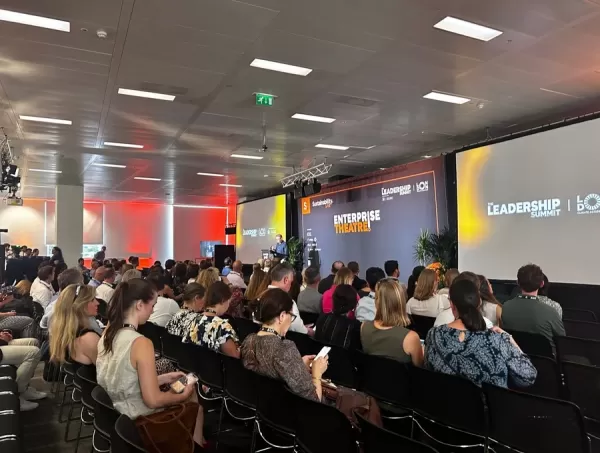
The summit will convene C-suite executives from around the globe to address pressing challenges in global industries, ranging from AI-driven disruption to economic volatility.AI LIVE: The London Summit will gather over 2,000 international leaders und
Related Special Topic Recommendations
Data Analysis
Google Tests Remy AI Agent for Gemini as Focus Shifts to User Control
According to Business Insider, Google is testing Remy, a new AI personal agent for Gemini. This tool aims to execute tasks on behalf of users, streamlining both professional workflows and daily routines.Currently, Remy is undergoing testing in an int
Ollie bets privacy focus to win AI assistant race
To be genuinely helpful, an AI assistant must understand its user deeply. Ollie, a personal assistant designed for daily life, operates on the premise that this doesn’t require surrendering your data or compromising your privacy.While certain enterpr
How AI LIVE: London Will Explore AI & Industrial Automation
The summit will convene C-suite executives from around the globe to address pressing challenges in global industries, ranging from AI-driven disruption to economic volatility.AI LIVE: The London Summit will gather over 2,000 international leaders und
Related Special Topic Recommendations
Data Analysis
 Best AI Anomaly Detection Tools for KPI Monitoring across SaaS and Ecommerce Teams
2026 Latest Best Top-rated AI Anomaly Detection Tools for KPI Monitoring in SaaS and Ecommerce teams! XIX.AI has curated a powerful, game-changing collection based on rigorous real-world tests and weekly updated rankings. You’ll find detailed free vs paid comparison insights to help you identify the must-try solution that boosts productivity and unlocks your AI edge. Explore now!
 10 tools
 xix.ai
writing
Best AI Outline Generators for Long-Form SEO Articles
xix.ai
writing
Best AI Outline Generators for Long-Form SEO Articles
2026 Latest Best Top-Rated AI Outline Generators for Long-Form SEO Articles, meticulously curated by XIX.AI. These powerful tools offer game-changing assistance in creating high-quality content quickly, boosting writing efficiency significantly. Get a free vs paid comparison along with real-world tests and detailed rankings to help you find the must-try option that suits your needs. Explore now to unlock your AI edge.
8 tools
xix.ai
Education and Learning
AI Study Tools for Homework and Exam Prep
2026 Latest Best AI Study Tools for Homework and Exam Prep! XIX.AI curates a top-rated list of powerful, game-changing tools that help students boost productivity, streamline homework completion, and ace exams through real-world tests. Get a free vs paid comparison, detailed rankings, and must-try options to unlock your AI edge. Explore now!
10 tools
xix.ai
Music composition
AI Vocal Demo Tools for Songwriters, Hooks, Toplines, and Multilingual Draft Sessions
2026 Latest Best AI Vocal Demo Tools for Songwriters, Hook Creators, and Multi-Language Content Teams! XIX.AI has curated a top-rated list of powerful game-changing tools that go through rigorous real-world tests. You’ll find detailed free vs paid comparison data, comprehensive rankings, and must-try options to help you boost writing efficiency and unlock your creative potential. Explore now to discover your perfect tool for all your content needs!
9 tools
xix.ai
Business
Best AI Competitive Research Tools for Small Businesses
2026 Latest Best Top-rated AI Competitive Research Tools for Small Businesses! XIX.AI has curated a highly powerful game-changing collection, updated weekly with rigorous real-world tests and detailed rankings. You can find a comprehensive free vs paid comparison to help you identify the must-try tools that boost your productivity and give you a competitive edge. Explore now to discover your perfect tool!
9 tools
xix.ai
Image editing
Photoshop AI Retouch Tools for Ecommerce Apparel, Skin Cleanup, and Color Consistency
2026 Latest Best Photoshop AI retouch tools for ecommerce apparel, skin cleanup, and color consistency! This top-rated curated list features powerful game-changing solutions that help you boost writing efficiency, streamline content creation, and achieve perfect visual results effortlessly. Each tool has undergone real-world tests through weekly updated rankings, complete with free vs paid comparison details. Backed by XIX.AI, it’s the must-try guide for anyone aiming to unlock your AI edge. Explore now!
10 tools
xix.ai

 Comments (0)
0/500
Comments (0)
0/500
Satya Nadella, Microsoft’s CEO, calls out AI labs for hypocrisy regarding distillation criticism, a remark widely interpreted as targeting Anthropic. Credit: Getty Images
Microsoft CEO Satya Nadella challenges AI developers for limiting model distillation while simultaneously leveraging public and customer data to train their own systems.
Microsoft’s Satya Nadella has publicly criticized unnamed AI labs across the tech industry for their contradictory stance on AI distillation, a technique where a smaller model is trained using the outputs of a larger, more powerful system.
In a post on X, Nadella argues that model creators complaining about distillation are being hypocritical about the broader AI training process.
He acknowledges that ‘the great innovation that comes from model providers having fair use rights to train on public data is needed’, yet finds it ‘ironic’ that the industry consensus imposes ‘restrictive terms’ on distillation.
This occurs even as these companies reserve the right to learn from customer usage and interaction data themselves.
“If learning flows in only one direction, economic value converges toward the owners of the learning infrastructure rather than the creators of the knowledge itself,” Nadella notes.
Anthropic attacks highlight growing sourcing row
Anthropic, OpenAI, and Google DeepMind rely on third-party content to train their AI models. ChatGPT, Claude, and Gemini source information from publicly available writing, images, and data.
Many have raised ethical and copyright concerns about this training method, leading to legal action from major content creators.
For instance, BBC News reported that the BBC is suing Anthropic for non-consensual data sourcing.
Although Nadella did not name Anthropic directly, evidence suggests the post was strongly directed at the AI firm. His criticism follows an earlier Anthropic post on ‘detecting and preventing distillation attacks’.
In a June letter to South Carolina Senator Tim Scott and Massachusetts Senator Elizabeth Warren, Anthropic claimed Alibaba recently executed the ‘largest known distillation attack’ against its data.
The statement argued that competitors could use distillation to acquire ‘powerful abilities from other labs in a fraction of the time and at a fraction of the cost, that it would take to develop them independently’. Alibaba has yet to respond to these accusations.
Companies like the BBC and Reddit have sued Anthropic, accusing it of using their data to train its Claude model without consent (Credit: Anthropic)
Model outsourcing raises critical business risks
In the same X post, Nadella warns that companies relying on major AI models are granting AI firms access to their proprietary data.
He emphasizes that companies must own their AI infrastructure and industry knowledge rather than depending on a single model vendor.
Nadella advises that firms should conduct their own evaluations and ‘learning loop’ to ensure their AI technology develops and improves over time.
Enterprises require strict security parameters to protect proprietary developments. Nadella states that businesses need a real trust boundary for their human and token capital to compound.
He adds that this boundary must not be crossed by anyone or anything, ‘not even the intelligence exhaust, without consent’.
Similarly, Elon Musk has publicly criticized Anthropic’s data sourcing practices for training its AI models.
In a February post on X, Musk accused Anthropic of ‘stealing training data at a massive scale’, predicting it would face ‘multi-billion dollar settlements’ for theft.
“This is just a fact,” he adds.







 Google Tests Remy AI Agent for Gemini as Focus Shifts to User Control
According to Business Insider, Google is testing Remy, a new AI personal agent for Gemini. This tool aims to execute tasks on behalf of users, streamlining both professional workflows and daily routines.Currently, Remy is undergoing testing in an int
Google Tests Remy AI Agent for Gemini as Focus Shifts to User Control
According to Business Insider, Google is testing Remy, a new AI personal agent for Gemini. This tool aims to execute tasks on behalf of users, streamlining both professional workflows and daily routines.Currently, Remy is undergoing testing in an int
 Ollie bets privacy focus to win AI assistant race
To be genuinely helpful, an AI assistant must understand its user deeply. Ollie, a personal assistant designed for daily life, operates on the premise that this doesn’t require surrendering your data or compromising your privacy.While certain enterpr
Ollie bets privacy focus to win AI assistant race
To be genuinely helpful, an AI assistant must understand its user deeply. Ollie, a personal assistant designed for daily life, operates on the premise that this doesn’t require surrendering your data or compromising your privacy.While certain enterpr
 How AI LIVE: London Will Explore AI & Industrial Automation
The summit will convene C-suite executives from around the globe to address pressing challenges in global industries, ranging from AI-driven disruption to economic volatility.AI LIVE: The London Summit will gather over 2,000 international leaders und
How AI LIVE: London Will Explore AI & Industrial Automation
The summit will convene C-suite executives from around the globe to address pressing challenges in global industries, ranging from AI-driven disruption to economic volatility.AI LIVE: The London Summit will gather over 2,000 international leaders und

2026 Latest Best Top-rated AI Anomaly Detection Tools for KPI Monitoring in SaaS and Ecommerce teams! XIX.AI has curated a powerful, game-changing collection based on rigorous real-world tests and weekly updated rankings. You’ll find detailed free vs paid comparison insights to help you identify the must-try solution that boosts productivity and unlocks your AI edge. Explore now!
10 tools
xix.ai

2026 Latest Best Top-Rated AI Outline Generators for Long-Form SEO Articles, meticulously curated by XIX.AI. These powerful tools offer game-changing assistance in creating high-quality content quickly, boosting writing efficiency significantly. Get a free vs paid comparison along with real-world tests and detailed rankings to help you find the must-try option that suits your needs. Explore now to unlock your AI edge.
8 tools
xix.ai

2026 Latest Best AI Study Tools for Homework and Exam Prep! XIX.AI curates a top-rated list of powerful, game-changing tools that help students boost productivity, streamline homework completion, and ace exams through real-world tests. Get a free vs paid comparison, detailed rankings, and must-try options to unlock your AI edge. Explore now!
10 tools
xix.ai

2026 Latest Best AI Vocal Demo Tools for Songwriters, Hook Creators, and Multi-Language Content Teams! XIX.AI has curated a top-rated list of powerful game-changing tools that go through rigorous real-world tests. You’ll find detailed free vs paid comparison data, comprehensive rankings, and must-try options to help you boost writing efficiency and unlock your creative potential. Explore now to discover your perfect tool for all your content needs!
9 tools
xix.ai

2026 Latest Best Top-rated AI Competitive Research Tools for Small Businesses! XIX.AI has curated a highly powerful game-changing collection, updated weekly with rigorous real-world tests and detailed rankings. You can find a comprehensive free vs paid comparison to help you identify the must-try tools that boost your productivity and give you a competitive edge. Explore now to discover your perfect tool!
9 tools
xix.ai

2026 Latest Best Photoshop AI retouch tools for ecommerce apparel, skin cleanup, and color consistency! This top-rated curated list features powerful game-changing solutions that help you boost writing efficiency, streamline content creation, and achieve perfect visual results effortlessly. Each tool has undergone real-world tests through weekly updated rankings, complete with free vs paid comparison details. Backed by XIX.AI, it’s the must-try guide for anyone aiming to unlock your AI edge. Explore now!
10 tools
xix.ai












