


 Home
HomeDOD: Anthropic's 'red lines' pose unacceptable national security risk
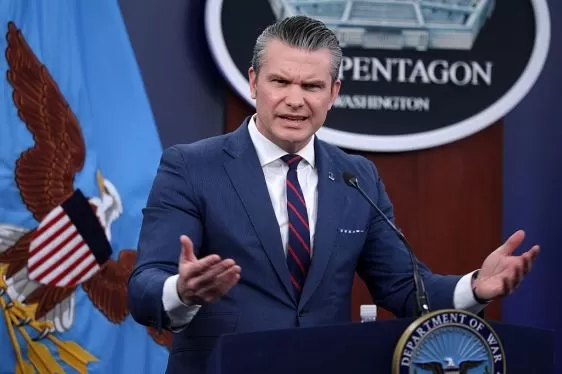
The U.S. Department of Defense stated Tuesday evening that Anthropic presents an “unacceptable risk to national security,” marking the agency’s first formal rejection of the AI lab’s lawsuits challenging Defense Secretary Pete Hegseth’s decision last month to classify the company as a supply-chain risk. As part of its legal complaints, Anthropic had requested the court temporarily block the DOD from enforcing that designation.
At the core of the DOD’s argument, laid out in a 40-page filing in a California federal court, is the concern that Anthropic might “attempt to disable its technology or preemptively alter the behavior of its model” before or during “warfighting operations” if the company “feels that its corporate ‘red lines’ are being crossed.”
Last summer, Anthropic signed a $200 million contract with the Pentagon to deploy its technology within classified systems. During later negotiations over contract terms, Anthropic stated it did not want its AI systems used for mass surveillance of Americans and that the technology was not yet ready for targeting or firing decisions involving lethal weapons. The Pentagon countered that a private company should not dictate how the military uses technology.
In response, an Anthropic spokesperson pointed to CEO Dario Amodei’s late February statement: “Anthropic understands that the Department of War, not private companies, makes military decisions. We have never raised objections to particular military operations nor attempted to limit use of our technology in an ad hoc manner.”
Chris Mattei, a lawyer specializing in First Amendment issues and a former Justice Department attorney, told TechCrunch that no investigation has been conducted to support the DOD’s concerns that Anthropic might disable or alter its AI models during warfighting operations. Without such evidence, Mattei argued, the department’s reasoning fails to adequately explain how Anthropic’s negotiating stance made it an “adversary.”
“The government is relying entirely on conjectural, speculative imaginings to justify a very, very serious legal step they’ve taken against Anthropic,” Mattei said. He added that the department failed to “articulate a credible or even comprehensible rationale for why Anthropic’s refusal to agree to an ‘all lawful use’ provision rendered it a supply chain risk as opposed to a vendor that DOD simply didn’t want to do business with.”
Many organizations have spoken out against the DOD’s treatment of Anthropic, arguing that the department could have simply ended its contract. Several tech companies and employees — including from OpenAI, Google, and Microsoft — as well as legal rights groups have filed amicus briefs in support of Anthropic.
In its lawsuits, Anthropic accused the DOD of infringing on its First Amendment rights and punishing the company based on ideological grounds.
“In many ways, the government’s nonsensical arguments are themselves the best evidence that the administration’s conduct was plainly a retaliatory punishment for Anthropic’s refusal to agree to the government’s terms, which, contrary to the government’s brief, is a form of protected expression,” Mattei told TechCrunch.
A hearing on Anthropic’s request for a preliminary injunction is scheduled for next Tuesday.
An Anthropic spokesperson told TechCrunch that the decision to seek judicial review does not change its “longstanding commitment to harnessing AI to protect our national security,” but that it is a “necessary step” to protect its business, customers, and partners.
This article has been updated to include information from Chris Mattei, a constitutional rights lawyer, and comments from Anthropic.
Related article
 Anthropic Enters AI Legal Tech Market as Competition Intensifies
Anthropic unveiled a suite of new chatbot capabilities on Tuesday, aimed at delivering automated support to legal practices. These enhancements expand upon Claude for Legal, the firm-specific platform introduced earlier this year, by adding specializ
Former Infosys Chief’s AI Startup Secures Another $53M
Hang Ten Systems, an AI startup established by former Infosys CEO Vishal Sikka just four months ago, has secured an additional $53 million in seed funding. This latest investment round was finalized merely five weeks after the initial $32 million see
OpenAI Closes Gap With Anthropic Among Business Users, New Data Shows
With OpenAI and Anthropic still distant from their anticipated IPOs and the release of detailed financial reports, we must turn to alternative indicators to gauge their business performance. Ramp, a corporate credit card and expense management platfo
Related Special Topic Recommendations
Data Analysis
Anthropic Enters AI Legal Tech Market as Competition Intensifies
Anthropic unveiled a suite of new chatbot capabilities on Tuesday, aimed at delivering automated support to legal practices. These enhancements expand upon Claude for Legal, the firm-specific platform introduced earlier this year, by adding specializ
Former Infosys Chief’s AI Startup Secures Another $53M
Hang Ten Systems, an AI startup established by former Infosys CEO Vishal Sikka just four months ago, has secured an additional $53 million in seed funding. This latest investment round was finalized merely five weeks after the initial $32 million see
OpenAI Closes Gap With Anthropic Among Business Users, New Data Shows
With OpenAI and Anthropic still distant from their anticipated IPOs and the release of detailed financial reports, we must turn to alternative indicators to gauge their business performance. Ramp, a corporate credit card and expense management platfo
Related Special Topic Recommendations
Data Analysis
 Best AI Anomaly Detection Tools for KPI Monitoring across SaaS and Ecommerce Teams
2026 Latest Best Top-rated AI Anomaly Detection Tools for KPI Monitoring in SaaS and Ecommerce teams! XIX.AI has curated a powerful, game-changing collection based on rigorous real-world tests and weekly updated rankings. You’ll find detailed free vs paid comparison insights to help you identify the must-try solution that boosts productivity and unlocks your AI edge. Explore now!
 10 tools
 xix.ai
writing
Best AI Outline Generators for Long-Form SEO Articles
xix.ai
writing
Best AI Outline Generators for Long-Form SEO Articles
2026 Latest Best Top-Rated AI Outline Generators for Long-Form SEO Articles, meticulously curated by XIX.AI. These powerful tools offer game-changing assistance in creating high-quality content quickly, boosting writing efficiency significantly. Get a free vs paid comparison along with real-world tests and detailed rankings to help you find the must-try option that suits your needs. Explore now to unlock your AI edge.
8 tools
xix.ai
Education and Learning
AI Study Tools for Homework and Exam Prep
2026 Latest Best AI Study Tools for Homework and Exam Prep! XIX.AI curates a top-rated list of powerful, game-changing tools that help students boost productivity, streamline homework completion, and ace exams through real-world tests. Get a free vs paid comparison, detailed rankings, and must-try options to unlock your AI edge. Explore now!
10 tools
xix.ai
Music composition
AI Vocal Demo Tools for Songwriters, Hooks, Toplines, and Multilingual Draft Sessions
2026 Latest Best AI Vocal Demo Tools for Songwriters, Hook Creators, and Multi-Language Content Teams! XIX.AI has curated a top-rated list of powerful game-changing tools that go through rigorous real-world tests. You’ll find detailed free vs paid comparison data, comprehensive rankings, and must-try options to help you boost writing efficiency and unlock your creative potential. Explore now to discover your perfect tool for all your content needs!
9 tools
xix.ai
Business
Best AI Competitive Research Tools for Small Businesses
2026 Latest Best Top-rated AI Competitive Research Tools for Small Businesses! XIX.AI has curated a highly powerful game-changing collection, updated weekly with rigorous real-world tests and detailed rankings. You can find a comprehensive free vs paid comparison to help you identify the must-try tools that boost your productivity and give you a competitive edge. Explore now to discover your perfect tool!
9 tools
xix.ai
Image editing
Photoshop AI Retouch Tools for Ecommerce Apparel, Skin Cleanup, and Color Consistency
2026 Latest Best Photoshop AI retouch tools for ecommerce apparel, skin cleanup, and color consistency! This top-rated curated list features powerful game-changing solutions that help you boost writing efficiency, streamline content creation, and achieve perfect visual results effortlessly. Each tool has undergone real-world tests through weekly updated rankings, complete with free vs paid comparison details. Backed by XIX.AI, it’s the must-try guide for anyone aiming to unlock your AI edge. Explore now!
10 tools
xix.ai

 Comments (0)
0/500
Comments (0)
0/500
The U.S. Department of Defense stated Tuesday evening that Anthropic presents an “unacceptable risk to national security,” marking the agency’s first formal rejection of the AI lab’s lawsuits challenging Defense Secretary Pete Hegseth’s decision last month to classify the company as a supply-chain risk. As part of its legal complaints, Anthropic had requested the court temporarily block the DOD from enforcing that designation.
At the core of the DOD’s argument, laid out in a 40-page filing in a California federal court, is the concern that Anthropic might “attempt to disable its technology or preemptively alter the behavior of its model” before or during “warfighting operations” if the company “feels that its corporate ‘red lines’ are being crossed.”
Last summer, Anthropic signed a $200 million contract with the Pentagon to deploy its technology within classified systems. During later negotiations over contract terms, Anthropic stated it did not want its AI systems used for mass surveillance of Americans and that the technology was not yet ready for targeting or firing decisions involving lethal weapons. The Pentagon countered that a private company should not dictate how the military uses technology.
In response, an Anthropic spokesperson pointed to CEO Dario Amodei’s late February statement: “Anthropic understands that the Department of War, not private companies, makes military decisions. We have never raised objections to particular military operations nor attempted to limit use of our technology in an ad hoc manner.”
Chris Mattei, a lawyer specializing in First Amendment issues and a former Justice Department attorney, told TechCrunch that no investigation has been conducted to support the DOD’s concerns that Anthropic might disable or alter its AI models during warfighting operations. Without such evidence, Mattei argued, the department’s reasoning fails to adequately explain how Anthropic’s negotiating stance made it an “adversary.”
“The government is relying entirely on conjectural, speculative imaginings to justify a very, very serious legal step they’ve taken against Anthropic,” Mattei said. He added that the department failed to “articulate a credible or even comprehensible rationale for why Anthropic’s refusal to agree to an ‘all lawful use’ provision rendered it a supply chain risk as opposed to a vendor that DOD simply didn’t want to do business with.”
Many organizations have spoken out against the DOD’s treatment of Anthropic, arguing that the department could have simply ended its contract. Several tech companies and employees — including from OpenAI, Google, and Microsoft — as well as legal rights groups have filed amicus briefs in support of Anthropic.
In its lawsuits, Anthropic accused the DOD of infringing on its First Amendment rights and punishing the company based on ideological grounds.
“In many ways, the government’s nonsensical arguments are themselves the best evidence that the administration’s conduct was plainly a retaliatory punishment for Anthropic’s refusal to agree to the government’s terms, which, contrary to the government’s brief, is a form of protected expression,” Mattei told TechCrunch.
A hearing on Anthropic’s request for a preliminary injunction is scheduled for next Tuesday.
An Anthropic spokesperson told TechCrunch that the decision to seek judicial review does not change its “longstanding commitment to harnessing AI to protect our national security,” but that it is a “necessary step” to protect its business, customers, and partners.
This article has been updated to include information from Chris Mattei, a constitutional rights lawyer, and comments from Anthropic.








 Anthropic Enters AI Legal Tech Market as Competition Intensifies
Anthropic unveiled a suite of new chatbot capabilities on Tuesday, aimed at delivering automated support to legal practices. These enhancements expand upon Claude for Legal, the firm-specific platform introduced earlier this year, by adding specializ
Anthropic Enters AI Legal Tech Market as Competition Intensifies
Anthropic unveiled a suite of new chatbot capabilities on Tuesday, aimed at delivering automated support to legal practices. These enhancements expand upon Claude for Legal, the firm-specific platform introduced earlier this year, by adding specializ
 Former Infosys Chief’s AI Startup Secures Another $53M
Hang Ten Systems, an AI startup established by former Infosys CEO Vishal Sikka just four months ago, has secured an additional $53 million in seed funding. This latest investment round was finalized merely five weeks after the initial $32 million see
Former Infosys Chief’s AI Startup Secures Another $53M
Hang Ten Systems, an AI startup established by former Infosys CEO Vishal Sikka just four months ago, has secured an additional $53 million in seed funding. This latest investment round was finalized merely five weeks after the initial $32 million see
 OpenAI Closes Gap With Anthropic Among Business Users, New Data Shows
With OpenAI and Anthropic still distant from their anticipated IPOs and the release of detailed financial reports, we must turn to alternative indicators to gauge their business performance. Ramp, a corporate credit card and expense management platfo
OpenAI Closes Gap With Anthropic Among Business Users, New Data Shows
With OpenAI and Anthropic still distant from their anticipated IPOs and the release of detailed financial reports, we must turn to alternative indicators to gauge their business performance. Ramp, a corporate credit card and expense management platfo

2026 Latest Best Top-rated AI Anomaly Detection Tools for KPI Monitoring in SaaS and Ecommerce teams! XIX.AI has curated a powerful, game-changing collection based on rigorous real-world tests and weekly updated rankings. You’ll find detailed free vs paid comparison insights to help you identify the must-try solution that boosts productivity and unlocks your AI edge. Explore now!
10 tools
xix.ai

2026 Latest Best Top-Rated AI Outline Generators for Long-Form SEO Articles, meticulously curated by XIX.AI. These powerful tools offer game-changing assistance in creating high-quality content quickly, boosting writing efficiency significantly. Get a free vs paid comparison along with real-world tests and detailed rankings to help you find the must-try option that suits your needs. Explore now to unlock your AI edge.
8 tools
xix.ai

2026 Latest Best AI Study Tools for Homework and Exam Prep! XIX.AI curates a top-rated list of powerful, game-changing tools that help students boost productivity, streamline homework completion, and ace exams through real-world tests. Get a free vs paid comparison, detailed rankings, and must-try options to unlock your AI edge. Explore now!
10 tools
xix.ai

2026 Latest Best AI Vocal Demo Tools for Songwriters, Hook Creators, and Multi-Language Content Teams! XIX.AI has curated a top-rated list of powerful game-changing tools that go through rigorous real-world tests. You’ll find detailed free vs paid comparison data, comprehensive rankings, and must-try options to help you boost writing efficiency and unlock your creative potential. Explore now to discover your perfect tool for all your content needs!
9 tools
xix.ai

2026 Latest Best Top-rated AI Competitive Research Tools for Small Businesses! XIX.AI has curated a highly powerful game-changing collection, updated weekly with rigorous real-world tests and detailed rankings. You can find a comprehensive free vs paid comparison to help you identify the must-try tools that boost your productivity and give you a competitive edge. Explore now to discover your perfect tool!
9 tools
xix.ai

2026 Latest Best Photoshop AI retouch tools for ecommerce apparel, skin cleanup, and color consistency! This top-rated curated list features powerful game-changing solutions that help you boost writing efficiency, streamline content creation, and achieve perfect visual results effortlessly. Each tool has undergone real-world tests through weekly updated rankings, complete with free vs paid comparison details. Backed by XIX.AI, it’s the must-try guide for anyone aiming to unlock your AI edge. Explore now!
10 tools
xix.ai












