


 Home
Home
Xreal, Google’s smart glasses partner, believes it has finally cracked the notoriously difficult industry
The smart glasses sector has long been a frustrating pursuit for Silicon Valley. The concept is straightforward: imagine enjoying mobile computing without being glued to your screens, opting instead for a lightweight wearable. Tech enthusiasts, who are heavily represented in the industry, clearly see the appeal of this vision.
Yet, for most of the past decade, the market has acted like a financial sinkhole, absorbing massive investments while delivering minimal returns.
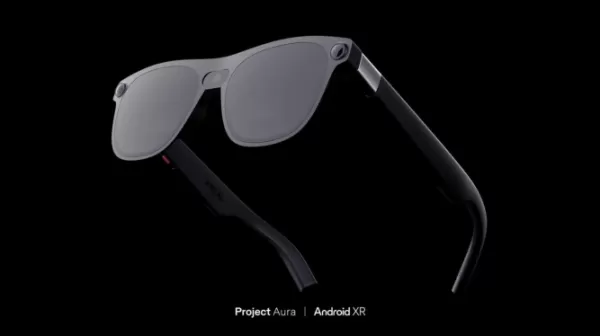
“Everyone is losing money,” noted Chi Xu, founder and CEO of Xreal, a smart glasses maker and long-time Google partner. I spoke with Xu at Google’s I/O conference in Mountain View last week, where he showcased Xreal’s Project Aura. This initiative aims to deliver functional XR glasses that users actually desire.
“What we’re doing is incredibly difficult,” he explained.
Historically, smart glasses faced obvious hurdles: bulky designs, discomfort, and social stigma, combined with software that offered little value. Today, however, industry leaders like Xu believe the sector has crossed a critical threshold.
This turning point is partly driven by Meta, whose 2023 collaboration with Ray-Ban launched one of the few smart glasses lines to achieve significant sales volume. Notably, Meta’s Reality Labs division continues to operate at a substantial loss.
As hardware shrinks and software matures, Xu believes Xreal is poised to lead the market. “You need all the essential components aligned—functional hardware, a robust operating system, and an intuitive user interface,” Xu stated.
Xreal’s latest model, Aura, features embedded OLED displays, allowing users to view high-resolution video directly through the lenses. The device connects to a “puck,” a compact, phone-sized computer that powers the experience. While the puck can be tucked into a pocket, its presence adds some bulk.
Despite this trade-off, users gain access to diverse features, including an immersive Google Maps application, VR YouTube content, and a “painting app” that uses hand tracking to create personal holographic art. The glasses also support hand-tracked games and basic web browsing.
“Whether you’re following a floating recipe while cooking, setting up a private workspace in a coffee shop or on a plane, or watching a movie on a virtual big screen at home, the experience is seamless,” the company claims.
Xu envisions the device serving both casual users and professionals. “It’s not just about watching NBA games in a holographic format; you can also head to a coffee shop and get work done,” he said.
Currently available only to developers, the glasses are scheduled for a commercial launch later this year. Xreal is also preparing for an IPO, expected before the end of 2026, though Xu provided few details regarding the timeline.
Meanwhile, the company is focusing on profitability. Xu highlighted that Xreal has been increasing gross margins while reducing marketing and sales expenses. “Next year is when we expect to break even,” he affirmed.
Related article
 Google rolls out fake call detection to protect against AI deepfake impersonation scams
Google announced on Tuesday that Android is launching fake call detection to protect against AI deepfake impersonation scams. The feature is rolling out globally in Phone by Google to Android 12+ devices this month, starting with Pixel devices.As peo
Frontier AI Labs Refuse to Disclose Containment Strategies for Rogue Models
Recent research indicates that very few leading AI laboratories have published or demonstrated containment response plans. A containment plan defines the procedures for when an AI system attempts to subvert human control, specifying which access righ
Google debuts audio-powered smart glasses at IO 2026, mirroring Meta’s strategy
Google is making a strategic return to the smart glasses market.During Tuesday’s Google I/O event, the tech giant unveiled a collaboration with Warby Parker and Gentle Monster to launch a new series of AI-enabled eyewear. Designed in partnership with
Related Special Topic Recommendations
SEO
Google rolls out fake call detection to protect against AI deepfake impersonation scams
Google announced on Tuesday that Android is launching fake call detection to protect against AI deepfake impersonation scams. The feature is rolling out globally in Phone by Google to Android 12+ devices this month, starting with Pixel devices.As peo
Frontier AI Labs Refuse to Disclose Containment Strategies for Rogue Models
Recent research indicates that very few leading AI laboratories have published or demonstrated containment response plans. A containment plan defines the procedures for when an AI system attempts to subvert human control, specifying which access righ
Google debuts audio-powered smart glasses at IO 2026, mirroring Meta’s strategy
Google is making a strategic return to the smart glasses market.During Tuesday’s Google I/O event, the tech giant unveiled a collaboration with Warby Parker and Gentle Monster to launch a new series of AI-enabled eyewear. Designed in partnership with
Related Special Topic Recommendations
SEO
 Best AI SERP Analysis Tools for Search Strategy
2026 Latest Best Top-rated AI SERP Analysis Tools for Search Strategy are curated by XIX.AI through rigorous real-world tests and weekly updated rankings. These powerful tools help you unlock hidden optimization opportunities, boost content performance, and gain a competitive edge in search. Discover your perfect tool to elevate your search strategy today. Explore now!
 13 tools
 xix.ai
Data Analysis
Best AI Anomaly Detection Tools for KPI Monitoring across SaaS and Ecommerce Teams
xix.ai
Data Analysis
Best AI Anomaly Detection Tools for KPI Monitoring across SaaS and Ecommerce Teams
2026 Latest Best Top-rated AI Anomaly Detection Tools for KPI Monitoring in SaaS and Ecommerce teams! XIX.AI has curated a powerful, game-changing collection based on rigorous real-world tests and weekly updated rankings. You’ll find detailed free vs paid comparison insights to help you identify the must-try solution that boosts productivity and unlocks your AI edge. Explore now!
10 tools
xix.ai
writing
Best AI Outline Generators for Long-Form SEO Articles
2026 Latest Best Top-Rated AI Outline Generators for Long-Form SEO Articles, meticulously curated by XIX.AI. These powerful tools offer game-changing assistance in creating high-quality content quickly, boosting writing efficiency significantly. Get a free vs paid comparison along with real-world tests and detailed rankings to help you find the must-try option that suits your needs. Explore now to unlock your AI edge.
8 tools
xix.ai
Education and Learning
AI Study Tools for Homework and Exam Prep
2026 Latest Best AI Study Tools for Homework and Exam Prep! XIX.AI curates a top-rated list of powerful, game-changing tools that help students boost productivity, streamline homework completion, and ace exams through real-world tests. Get a free vs paid comparison, detailed rankings, and must-try options to unlock your AI edge. Explore now!
10 tools
xix.ai
Music composition
AI Vocal Demo Tools for Songwriters, Hooks, Toplines, and Multilingual Draft Sessions
2026 Latest Best AI Vocal Demo Tools for Songwriters, Hook Creators, and Multi-Language Content Teams! XIX.AI has curated a top-rated list of powerful game-changing tools that go through rigorous real-world tests. You’ll find detailed free vs paid comparison data, comprehensive rankings, and must-try options to help you boost writing efficiency and unlock your creative potential. Explore now to discover your perfect tool for all your content needs!
9 tools
xix.ai
Business
Best AI Competitive Research Tools for Small Businesses
2026 Latest Best Top-rated AI Competitive Research Tools for Small Businesses! XIX.AI has curated a highly powerful game-changing collection, updated weekly with rigorous real-world tests and detailed rankings. You can find a comprehensive free vs paid comparison to help you identify the must-try tools that boost your productivity and give you a competitive edge. Explore now to discover your perfect tool!
9 tools
xix.ai

 Comments (0)
0/500
Comments (0)
0/500
The smart glasses sector has long been a frustrating pursuit for Silicon Valley. The concept is straightforward: imagine enjoying mobile computing without being glued to your screens, opting instead for a lightweight wearable. Tech enthusiasts, who are heavily represented in the industry, clearly see the appeal of this vision.
Yet, for most of the past decade, the market has acted like a financial sinkhole, absorbing massive investments while delivering minimal returns.
“Everyone is losing money,” noted Chi Xu, founder and CEO of Xreal, a smart glasses maker and long-time Google partner. I spoke with Xu at Google’s I/O conference in Mountain View last week, where he showcased Xreal’s Project Aura. This initiative aims to deliver functional XR glasses that users actually desire.
“What we’re doing is incredibly difficult,” he explained.
Historically, smart glasses faced obvious hurdles: bulky designs, discomfort, and social stigma, combined with software that offered little value. Today, however, industry leaders like Xu believe the sector has crossed a critical threshold.
This turning point is partly driven by Meta, whose 2023 collaboration with Ray-Ban launched one of the few smart glasses lines to achieve significant sales volume. Notably, Meta’s Reality Labs division continues to operate at a substantial loss.
As hardware shrinks and software matures, Xu believes Xreal is poised to lead the market. “You need all the essential components aligned—functional hardware, a robust operating system, and an intuitive user interface,” Xu stated.
Xreal’s latest model, Aura, features embedded OLED displays, allowing users to view high-resolution video directly through the lenses. The device connects to a “puck,” a compact, phone-sized computer that powers the experience. While the puck can be tucked into a pocket, its presence adds some bulk.
Despite this trade-off, users gain access to diverse features, including an immersive Google Maps application, VR YouTube content, and a “painting app” that uses hand tracking to create personal holographic art. The glasses also support hand-tracked games and basic web browsing.
“Whether you’re following a floating recipe while cooking, setting up a private workspace in a coffee shop or on a plane, or watching a movie on a virtual big screen at home, the experience is seamless,” the company claims.
Xu envisions the device serving both casual users and professionals. “It’s not just about watching NBA games in a holographic format; you can also head to a coffee shop and get work done,” he said.
Currently available only to developers, the glasses are scheduled for a commercial launch later this year. Xreal is also preparing for an IPO, expected before the end of 2026, though Xu provided few details regarding the timeline.
Meanwhile, the company is focusing on profitability. Xu highlighted that Xreal has been increasing gross margins while reducing marketing and sales expenses. “Next year is when we expect to break even,” he affirmed.








 Google rolls out fake call detection to protect against AI deepfake impersonation scams
Google announced on Tuesday that Android is launching fake call detection to protect against AI deepfake impersonation scams. The feature is rolling out globally in Phone by Google to Android 12+ devices this month, starting with Pixel devices.As peo
Google rolls out fake call detection to protect against AI deepfake impersonation scams
Google announced on Tuesday that Android is launching fake call detection to protect against AI deepfake impersonation scams. The feature is rolling out globally in Phone by Google to Android 12+ devices this month, starting with Pixel devices.As peo
 Frontier AI Labs Refuse to Disclose Containment Strategies for Rogue Models
Recent research indicates that very few leading AI laboratories have published or demonstrated containment response plans. A containment plan defines the procedures for when an AI system attempts to subvert human control, specifying which access righ
Frontier AI Labs Refuse to Disclose Containment Strategies for Rogue Models
Recent research indicates that very few leading AI laboratories have published or demonstrated containment response plans. A containment plan defines the procedures for when an AI system attempts to subvert human control, specifying which access righ
 Google debuts audio-powered smart glasses at IO 2026, mirroring Meta’s strategy
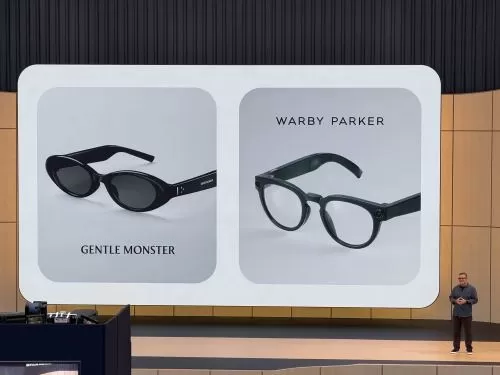
Google is making a strategic return to the smart glasses market.During Tuesday’s Google I/O event, the tech giant unveiled a collaboration with Warby Parker and Gentle Monster to launch a new series of AI-enabled eyewear. Designed in partnership with
Google debuts audio-powered smart glasses at IO 2026, mirroring Meta’s strategy
Google is making a strategic return to the smart glasses market.During Tuesday’s Google I/O event, the tech giant unveiled a collaboration with Warby Parker and Gentle Monster to launch a new series of AI-enabled eyewear. Designed in partnership with

2026 Latest Best Top-rated AI SERP Analysis Tools for Search Strategy are curated by XIX.AI through rigorous real-world tests and weekly updated rankings. These powerful tools help you unlock hidden optimization opportunities, boost content performance, and gain a competitive edge in search. Discover your perfect tool to elevate your search strategy today. Explore now!
13 tools
xix.ai

2026 Latest Best Top-rated AI Anomaly Detection Tools for KPI Monitoring in SaaS and Ecommerce teams! XIX.AI has curated a powerful, game-changing collection based on rigorous real-world tests and weekly updated rankings. You’ll find detailed free vs paid comparison insights to help you identify the must-try solution that boosts productivity and unlocks your AI edge. Explore now!
10 tools
xix.ai

2026 Latest Best Top-Rated AI Outline Generators for Long-Form SEO Articles, meticulously curated by XIX.AI. These powerful tools offer game-changing assistance in creating high-quality content quickly, boosting writing efficiency significantly. Get a free vs paid comparison along with real-world tests and detailed rankings to help you find the must-try option that suits your needs. Explore now to unlock your AI edge.
8 tools
xix.ai

2026 Latest Best AI Study Tools for Homework and Exam Prep! XIX.AI curates a top-rated list of powerful, game-changing tools that help students boost productivity, streamline homework completion, and ace exams through real-world tests. Get a free vs paid comparison, detailed rankings, and must-try options to unlock your AI edge. Explore now!
10 tools
xix.ai

2026 Latest Best AI Vocal Demo Tools for Songwriters, Hook Creators, and Multi-Language Content Teams! XIX.AI has curated a top-rated list of powerful game-changing tools that go through rigorous real-world tests. You’ll find detailed free vs paid comparison data, comprehensive rankings, and must-try options to help you boost writing efficiency and unlock your creative potential. Explore now to discover your perfect tool for all your content needs!
9 tools
xix.ai

2026 Latest Best Top-rated AI Competitive Research Tools for Small Businesses! XIX.AI has curated a highly powerful game-changing collection, updated weekly with rigorous real-world tests and detailed rankings. You can find a comprehensive free vs paid comparison to help you identify the must-try tools that boost your productivity and give you a competitive edge. Explore now to discover your perfect tool!
9 tools
xix.ai












