


 Home
HomeEurope Seizes on US Immigration Uncertainty to Recruit Tech Talent
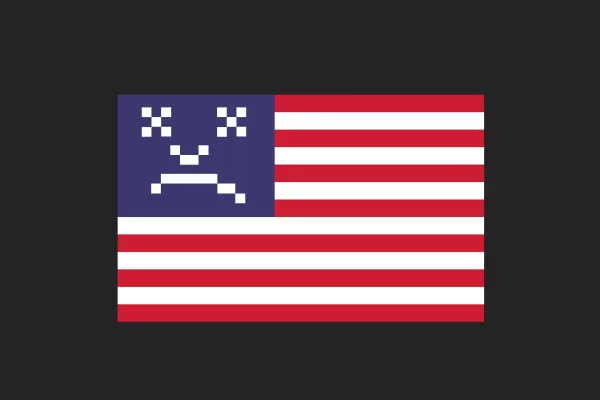
As the US tech industry scrambles to address the fallout from Donald Trump's latest immigration policies, European competitors see a clear opening. Last week, Trump blindsided American businesses by announcing a new annual fee of $100,000 for all H-1B visas, which are essential for bringing tens of thousands of skilled workers into the country's tech sector. Major companies like Amazon, Google, and Microsoft spent the weekend urgently bringing current H-1B visa holders back to the US and advising them to cancel any upcoming international travel. Meanwhile, rivals in Europe launched a charm offensive to attract these disheartened foreign professionals.
“The new $100k H-1B fee has left incredible talent in a state of uncertainty,” wrote Barney Hussey-Yeo, founder of the British fintech unicorn Cleo, on LinkedIn. “If that describes your situation, we are here to help.”
“We understand that relocating your life wasn't part of your original plan. However, sometimes the most promising opportunities arise from unexpected shifts,” added Hussey-Yeo, promoting over 100 available positions at the company's London office.
Victor Riparbelli, cofounder and CEO of the London-based AI video startup Synthesia, shared a similar message on the platform. “The H-1B situation is creating significant instability right now,” he noted. “The good news is, you don't need one to land a job with Silicon Valley-level impact.”
It's not just unicorn companies trying to redirect disgruntled talent to the UK. “If your H-1B status feels unstable, we provide visa sponsorship for engineers interested in working in the UK!” stated Ross McNairn, CEO of the Scottish legal AI firm Wordsmith. LinkedIn and X are filled with posts from leaders at smaller tech firms like Definely, Exo Labs, and Verto, all specifically mentioning H-1B visas in their pitches to recruit talent. Many are offering competitive pay, covering visa and relocation expenses, and, crucially, a more stable environment than what workers currently face in the US.
Even the British government senses an opportunity, with reports suggesting the H-1B chaos is strengthening ongoing efforts to eliminate visa fees for top international talent.
US officials have attempted to calm concerns about the new fee. They have assured employers that the $100,000 charge will not affect visa renewals or current holders, stating that workers already in the program can travel normally without fear of a re-entry fee.
The administration has also begun hinting at exemptions for specific sectors. H-1B visas are crucial not only for technology but also for research universities and the healthcare industry—with the White House indicating that doctors might be among the first to receive a fee waiver.
For reasons that remain unclear, companies appear reluctant to trust these assurances. They raced to repatriate workers before the administration's September 21st deadline and continue to advise staff to cancel travel plans and remain in the country. This administration has spent months alienating foreign workers and diminishing the US's appeal—by revoking thousands of student visas, detaining hundreds of South Koreans at an LG battery plant, and imposing broad travel bans on citizens from several nations.
US companies are fully aware of the potential damage from Trump's policy. “Large tech corporations may be resilient enough to withstand this, but startups will suffer significantly,” said Garry Tan, CEO and President of the tech incubator Y Combinator. He criticized the decision, stating, “Early-stage companies cannot absorb such a tax,” and calling it a directive for “innovators to take their talents elsewhere... in the midst of a global AI race.” Tan described the visa changes as a “tremendous gift to every competing tech hub overseas.”
However, Trump and the tech industry have seldom been in alignment. It is unlikely that sector complaints will sway him, especially when the policy provides a useful tool—or incentive, depending on one's perspective—to pressure Big Tech into compliance. Perhaps corporate leaders will make further concessions to remain in his favor.
Related article
 Google Tests Remy AI Agent for Gemini as Focus Shifts to User Control
According to Business Insider, Google is testing Remy, a new AI personal agent for Gemini. This tool aims to execute tasks on behalf of users, streamlining both professional workflows and daily routines.Currently, Remy is undergoing testing in an int
Ollie bets privacy focus to win AI assistant race
To be genuinely helpful, an AI assistant must understand its user deeply. Ollie, a personal assistant designed for daily life, operates on the premise that this doesn’t require surrendering your data or compromising your privacy.While certain enterpr
How AI LIVE: London Will Explore AI & Industrial Automation
The summit will convene C-suite executives from around the globe to address pressing challenges in global industries, ranging from AI-driven disruption to economic volatility.AI LIVE: The London Summit will gather over 2,000 international leaders und
Related Special Topic Recommendations
Data Analysis
Google Tests Remy AI Agent for Gemini as Focus Shifts to User Control
According to Business Insider, Google is testing Remy, a new AI personal agent for Gemini. This tool aims to execute tasks on behalf of users, streamlining both professional workflows and daily routines.Currently, Remy is undergoing testing in an int
Ollie bets privacy focus to win AI assistant race
To be genuinely helpful, an AI assistant must understand its user deeply. Ollie, a personal assistant designed for daily life, operates on the premise that this doesn’t require surrendering your data or compromising your privacy.While certain enterpr
How AI LIVE: London Will Explore AI & Industrial Automation
The summit will convene C-suite executives from around the globe to address pressing challenges in global industries, ranging from AI-driven disruption to economic volatility.AI LIVE: The London Summit will gather over 2,000 international leaders und
Related Special Topic Recommendations
Data Analysis
 Best AI Anomaly Detection Tools for KPI Monitoring across SaaS and Ecommerce Teams
2026 Latest Best Top-rated AI Anomaly Detection Tools for KPI Monitoring in SaaS and Ecommerce teams! XIX.AI has curated a powerful, game-changing collection based on rigorous real-world tests and weekly updated rankings. You’ll find detailed free vs paid comparison insights to help you identify the must-try solution that boosts productivity and unlocks your AI edge. Explore now!
 10 tools
 xix.ai
writing
Best AI Outline Generators for Long-Form SEO Articles
xix.ai
writing
Best AI Outline Generators for Long-Form SEO Articles
2026 Latest Best Top-Rated AI Outline Generators for Long-Form SEO Articles, meticulously curated by XIX.AI. These powerful tools offer game-changing assistance in creating high-quality content quickly, boosting writing efficiency significantly. Get a free vs paid comparison along with real-world tests and detailed rankings to help you find the must-try option that suits your needs. Explore now to unlock your AI edge.
8 tools
xix.ai
Education and Learning
AI Study Tools for Homework and Exam Prep
2026 Latest Best AI Study Tools for Homework and Exam Prep! XIX.AI curates a top-rated list of powerful, game-changing tools that help students boost productivity, streamline homework completion, and ace exams through real-world tests. Get a free vs paid comparison, detailed rankings, and must-try options to unlock your AI edge. Explore now!
10 tools
xix.ai
Music composition
AI Vocal Demo Tools for Songwriters, Hooks, Toplines, and Multilingual Draft Sessions
2026 Latest Best AI Vocal Demo Tools for Songwriters, Hook Creators, and Multi-Language Content Teams! XIX.AI has curated a top-rated list of powerful game-changing tools that go through rigorous real-world tests. You’ll find detailed free vs paid comparison data, comprehensive rankings, and must-try options to help you boost writing efficiency and unlock your creative potential. Explore now to discover your perfect tool for all your content needs!
9 tools
xix.ai
Business
Best AI Competitive Research Tools for Small Businesses
2026 Latest Best Top-rated AI Competitive Research Tools for Small Businesses! XIX.AI has curated a highly powerful game-changing collection, updated weekly with rigorous real-world tests and detailed rankings. You can find a comprehensive free vs paid comparison to help you identify the must-try tools that boost your productivity and give you a competitive edge. Explore now to discover your perfect tool!
9 tools
xix.ai
Image editing
Photoshop AI Retouch Tools for Ecommerce Apparel, Skin Cleanup, and Color Consistency
2026 Latest Best Photoshop AI retouch tools for ecommerce apparel, skin cleanup, and color consistency! This top-rated curated list features powerful game-changing solutions that help you boost writing efficiency, streamline content creation, and achieve perfect visual results effortlessly. Each tool has undergone real-world tests through weekly updated rankings, complete with free vs paid comparison details. Backed by XIX.AI, it’s the must-try guide for anyone aiming to unlock your AI edge. Explore now!
10 tools
xix.ai

 Comments (3)
0/500
Comments (3)
0/500
![JosephEvans]()
這篇文章點出了美國移民政策緊張下的有趣現象。歐洲國家趁機挖角科技人才,對不少工程師來說可能是個新機會吧?我身邊有朋友就已經在考慮搬到柏林了。不過這波人才流動會對矽谷生態造成多大影響倒是值得觀察,說不定會加速歐洲科技圈的發展呢😏
![CharlesRoberts]()
En tant que développeur étranger en France, cette opportunité est intrigante ! L'Europe pourrait enfin devenir une alternative sérieuse à la Silicon Valley pour les talents tech. Reste à voir si les politiques d'immigration seront vraiment plus accueillantes ici. L'idée d'une 'fuite des cerveaux' inversée vers l'Europe me fait sourire 😄
![MatthewHill]()
As a tech worker currently on H1B, this definitely has me considering my options. European work-life balance sounds appealing, though I wonder if the salaries can compete with Silicon Valley's packages. Maybe time to brush up on my German? 💼✈️
As the US tech industry scrambles to address the fallout from Donald Trump's latest immigration policies, European competitors see a clear opening. Last week, Trump blindsided American businesses by announcing a new annual fee of $100,000 for all H-1B visas, which are essential for bringing tens of thousands of skilled workers into the country's tech sector. Major companies like Amazon, Google, and Microsoft spent the weekend urgently bringing current H-1B visa holders back to the US and advising them to cancel any upcoming international travel. Meanwhile, rivals in Europe launched a charm offensive to attract these disheartened foreign professionals.
“The new $100k H-1B fee has left incredible talent in a state of uncertainty,” wrote Barney Hussey-Yeo, founder of the British fintech unicorn Cleo, on LinkedIn. “If that describes your situation, we are here to help.”
“We understand that relocating your life wasn't part of your original plan. However, sometimes the most promising opportunities arise from unexpected shifts,” added Hussey-Yeo, promoting over 100 available positions at the company's London office.
Victor Riparbelli, cofounder and CEO of the London-based AI video startup Synthesia, shared a similar message on the platform. “The H-1B situation is creating significant instability right now,” he noted. “The good news is, you don't need one to land a job with Silicon Valley-level impact.”
It's not just unicorn companies trying to redirect disgruntled talent to the UK. “If your H-1B status feels unstable, we provide visa sponsorship for engineers interested in working in the UK!” stated Ross McNairn, CEO of the Scottish legal AI firm Wordsmith. LinkedIn and X are filled with posts from leaders at smaller tech firms like Definely, Exo Labs, and Verto, all specifically mentioning H-1B visas in their pitches to recruit talent. Many are offering competitive pay, covering visa and relocation expenses, and, crucially, a more stable environment than what workers currently face in the US.
Even the British government senses an opportunity, with reports suggesting the H-1B chaos is strengthening ongoing efforts to eliminate visa fees for top international talent.
US officials have attempted to calm concerns about the new fee. They have assured employers that the $100,000 charge will not affect visa renewals or current holders, stating that workers already in the program can travel normally without fear of a re-entry fee.
The administration has also begun hinting at exemptions for specific sectors. H-1B visas are crucial not only for technology but also for research universities and the healthcare industry—with the White House indicating that doctors might be among the first to receive a fee waiver.
For reasons that remain unclear, companies appear reluctant to trust these assurances. They raced to repatriate workers before the administration's September 21st deadline and continue to advise staff to cancel travel plans and remain in the country. This administration has spent months alienating foreign workers and diminishing the US's appeal—by revoking thousands of student visas, detaining hundreds of South Koreans at an LG battery plant, and imposing broad travel bans on citizens from several nations.
US companies are fully aware of the potential damage from Trump's policy. “Large tech corporations may be resilient enough to withstand this, but startups will suffer significantly,” said Garry Tan, CEO and President of the tech incubator Y Combinator. He criticized the decision, stating, “Early-stage companies cannot absorb such a tax,” and calling it a directive for “innovators to take their talents elsewhere... in the midst of a global AI race.” Tan described the visa changes as a “tremendous gift to every competing tech hub overseas.”
However, Trump and the tech industry have seldom been in alignment. It is unlikely that sector complaints will sway him, especially when the policy provides a useful tool—or incentive, depending on one's perspective—to pressure Big Tech into compliance. Perhaps corporate leaders will make further concessions to remain in his favor.







 Google Tests Remy AI Agent for Gemini as Focus Shifts to User Control
According to Business Insider, Google is testing Remy, a new AI personal agent for Gemini. This tool aims to execute tasks on behalf of users, streamlining both professional workflows and daily routines.Currently, Remy is undergoing testing in an int
Google Tests Remy AI Agent for Gemini as Focus Shifts to User Control
According to Business Insider, Google is testing Remy, a new AI personal agent for Gemini. This tool aims to execute tasks on behalf of users, streamlining both professional workflows and daily routines.Currently, Remy is undergoing testing in an int
 Ollie bets privacy focus to win AI assistant race
To be genuinely helpful, an AI assistant must understand its user deeply. Ollie, a personal assistant designed for daily life, operates on the premise that this doesn’t require surrendering your data or compromising your privacy.While certain enterpr
Ollie bets privacy focus to win AI assistant race
To be genuinely helpful, an AI assistant must understand its user deeply. Ollie, a personal assistant designed for daily life, operates on the premise that this doesn’t require surrendering your data or compromising your privacy.While certain enterpr
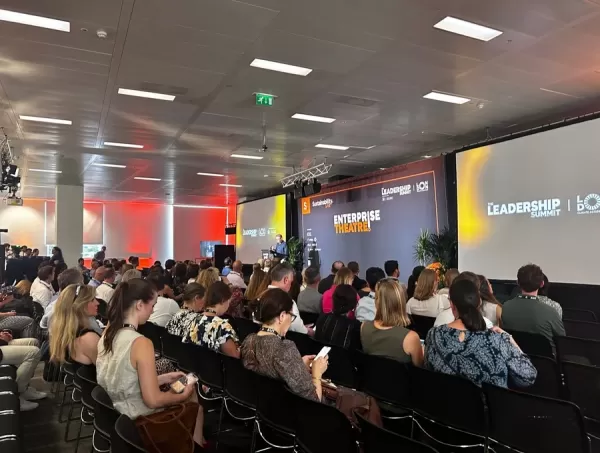 How AI LIVE: London Will Explore AI & Industrial Automation
The summit will convene C-suite executives from around the globe to address pressing challenges in global industries, ranging from AI-driven disruption to economic volatility.AI LIVE: The London Summit will gather over 2,000 international leaders und
How AI LIVE: London Will Explore AI & Industrial Automation
The summit will convene C-suite executives from around the globe to address pressing challenges in global industries, ranging from AI-driven disruption to economic volatility.AI LIVE: The London Summit will gather over 2,000 international leaders und

2026 Latest Best Top-rated AI Anomaly Detection Tools for KPI Monitoring in SaaS and Ecommerce teams! XIX.AI has curated a powerful, game-changing collection based on rigorous real-world tests and weekly updated rankings. You’ll find detailed free vs paid comparison insights to help you identify the must-try solution that boosts productivity and unlocks your AI edge. Explore now!
10 tools
xix.ai

2026 Latest Best Top-Rated AI Outline Generators for Long-Form SEO Articles, meticulously curated by XIX.AI. These powerful tools offer game-changing assistance in creating high-quality content quickly, boosting writing efficiency significantly. Get a free vs paid comparison along with real-world tests and detailed rankings to help you find the must-try option that suits your needs. Explore now to unlock your AI edge.
8 tools
xix.ai

2026 Latest Best AI Study Tools for Homework and Exam Prep! XIX.AI curates a top-rated list of powerful, game-changing tools that help students boost productivity, streamline homework completion, and ace exams through real-world tests. Get a free vs paid comparison, detailed rankings, and must-try options to unlock your AI edge. Explore now!
10 tools
xix.ai

2026 Latest Best AI Vocal Demo Tools for Songwriters, Hook Creators, and Multi-Language Content Teams! XIX.AI has curated a top-rated list of powerful game-changing tools that go through rigorous real-world tests. You’ll find detailed free vs paid comparison data, comprehensive rankings, and must-try options to help you boost writing efficiency and unlock your creative potential. Explore now to discover your perfect tool for all your content needs!
9 tools
xix.ai

2026 Latest Best Top-rated AI Competitive Research Tools for Small Businesses! XIX.AI has curated a highly powerful game-changing collection, updated weekly with rigorous real-world tests and detailed rankings. You can find a comprehensive free vs paid comparison to help you identify the must-try tools that boost your productivity and give you a competitive edge. Explore now to discover your perfect tool!
9 tools
xix.ai

2026 Latest Best Photoshop AI retouch tools for ecommerce apparel, skin cleanup, and color consistency! This top-rated curated list features powerful game-changing solutions that help you boost writing efficiency, streamline content creation, and achieve perfect visual results effortlessly. Each tool has undergone real-world tests through weekly updated rankings, complete with free vs paid comparison details. Backed by XIX.AI, it’s the must-try guide for anyone aiming to unlock your AI edge. Explore now!
10 tools
xix.ai

這篇文章點出了美國移民政策緊張下的有趣現象。歐洲國家趁機挖角科技人才,對不少工程師來說可能是個新機會吧?我身邊有朋友就已經在考慮搬到柏林了。不過這波人才流動會對矽谷生態造成多大影響倒是值得觀察,說不定會加速歐洲科技圈的發展呢😏
En tant que développeur étranger en France, cette opportunité est intrigante ! L'Europe pourrait enfin devenir une alternative sérieuse à la Silicon Valley pour les talents tech. Reste à voir si les politiques d'immigration seront vraiment plus accueillantes ici. L'idée d'une 'fuite des cerveaux' inversée vers l'Europe me fait sourire 😄
As a tech worker currently on H1B, this definitely has me considering my options. European work-life balance sounds appealing, though I wonder if the salaries can compete with Silicon Valley's packages. Maybe time to brush up on my German? 💼✈️












