


 Home
HomeSpain’s Xoople secures $130M Series B to map Earth for AI
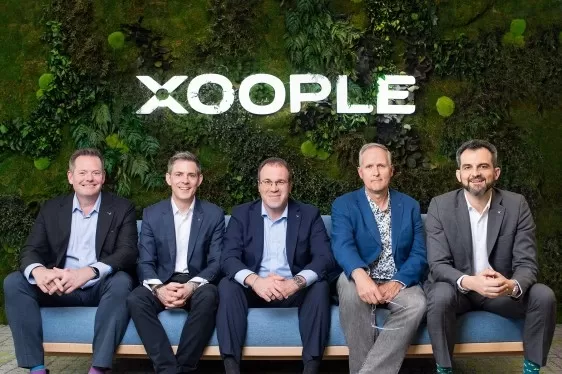
For years, space data companies have argued that the private sector needs their offerings, but government buyers have driven the real demand. Now, as artificial intelligence becomes a top priority for businesses, a Spanish startup is working to become the go‑to source of ground‑truth data for enterprises.
Xoople (pronounced “zoople”) is building a satellite constellation to collect high‑precision data designed for deep learning models. Founded in 2019, the startup has spent the last seven years developing its technology stack around data from government spacecraft and integrating with cloud providers.
CEO and co‑founder Fabrizio Pirondini told TechCrunch that the company has closed a $130 million Series B led by Nazca Capital. Other investors include MCH Private Equity, CDTI (a tech development fund backed by the Spanish government), Buenavista Equity Partners, and Endeavor Catalyst.
The startup also announced on Monday a deal with U.S. space and defense contractor L3Harris Technologies to begin building sensors for Xoople’s spacecraft. The sensors are designed to collect “a stream of data that is going to be two orders of magnitude better than existing monitoring systems,” Pirondini told TechCrunch.
L3Harris has built some of the most advanced commercial imaging systems in orbit. However, Pirondini declined to share any details about the satellites—not even how many the company plans to build—beyond noting that the sensors will collect optical data. Those systems are not cheap, and the company continues to raise capital to fund full development.
Pirondini declined to share the firm’s valuation after the current fundraising round, except to say that “we are in unicorn territory.” The company has raised $225 million in total.
The company’s focus on data quality is a key differentiator. Still, Xoople is entering a crowded market with several mature competitors, including Vantor, Planet, BlackSky, and Airbus in Europe, which already operate satellites in orbit and are developing AI‑focused datasets.
The twist for Xoople is its focus on enterprise platforms.
“Our business model is all about embedding our data and our solutions directly into the ecosystem of those partners so they can provide those services directly to their customers,” Pirondelli said.
Pirondelli described use cases such as government agencies tracking transportation networks and damage from natural disasters, agribusiness monitoring crop health, or large firms keeping an eye on infrastructure projects or supply chains.
Aravind Ravichandran, CEO of Earth observation sector consultancy TerraWatch Space, told TechCrunch that Xoople’s decision to prepare its distribution strategy before having its own data is intriguing. For now, it relies on publicly available data, such as that collected by the European Space Agency’s Sentinel‑2 spacecraft.
“They laid the distribution pipes before having their own data supply—embedding into Microsoft and Esri, the two platforms where enterprise, government and most GIS buyers already live, but neither has proprietary EO data,” Ravichandran said. “Google’s head start on geospatial AI models is the benchmark they’ll be measured against.”
It’s not clear what balance Xoople will strike between providing raw data and developing its own analysis tools, but Pirondini hopes to build “Earth’s System of Record,” a project he expects will ultimately include the development of a true AI world model alongside partners.
Related article
 Former Infosys Chief’s AI Startup Secures Another $53M
Hang Ten Systems, an AI startup established by former Infosys CEO Vishal Sikka just four months ago, has secured an additional $53 million in seed funding. This latest investment round was finalized merely five weeks after the initial $32 million see
Crypto exchange OKX aims to empower AI agents to hire and pay each other
As AI agents start serving individuals and collaborating with each other, they require mechanisms to locate tasks, compensate for services, and establish credibility. Crypto exchange OKX anticipates this future is arriving sooner than anticipated, in
Thiel-backed startup claims AI can judge journalism, despite risks to whistleblowers
Following his role in the lawsuit that led to Gawker’s bankruptcy, Aron D’Souza identified a critical flaw in the American media landscape: individuals harmed by coverage lacked effective means to respond.His answer is technology. D’Souza’s new ventu
Related Special Topic Recommendations
Design & Art
Former Infosys Chief’s AI Startup Secures Another $53M
Hang Ten Systems, an AI startup established by former Infosys CEO Vishal Sikka just four months ago, has secured an additional $53 million in seed funding. This latest investment round was finalized merely five weeks after the initial $32 million see
Crypto exchange OKX aims to empower AI agents to hire and pay each other
As AI agents start serving individuals and collaborating with each other, they require mechanisms to locate tasks, compensate for services, and establish credibility. Crypto exchange OKX anticipates this future is arriving sooner than anticipated, in
Thiel-backed startup claims AI can judge journalism, despite risks to whistleblowers
Following his role in the lawsuit that led to Gawker’s bankruptcy, Aron D’Souza identified a critical flaw in the American media landscape: individuals harmed by coverage lacked effective means to respond.His answer is technology. D’Souza’s new ventu
Related Special Topic Recommendations
Design & Art
 AI Visual Style Reference Tools for Character Sheets, Moodboards, and Pitch Decks
2026 Latest Best AI Visual Style Reference Tools for Character Sheets, Moodboards, and Pitch Decks are here on XIX.AI! This curated top-rated list features powerful game-changing tools that go through rigorous real-world tests. You’ll find a free vs paid comparison, detailed rankings, and must-try options to help you boost creativity and streamline your workflow. Explore now to discover your perfect tool for boosting productivity!
 11 tools
 xix.ai
SEO
Best AI SERP Analysis Tools for Search Strategy
xix.ai
SEO
Best AI SERP Analysis Tools for Search Strategy
2026 Latest Best Top-rated AI SERP Analysis Tools for Search Strategy are curated by XIX.AI through rigorous real-world tests and weekly updated rankings. These powerful tools help you unlock hidden optimization opportunities, boost content performance, and gain a competitive edge in search. Discover your perfect tool to elevate your search strategy today. Explore now!
13 tools
xix.ai
Data Analysis
Best AI Anomaly Detection Tools for KPI Monitoring across SaaS and Ecommerce Teams
2026 Latest Best Top-rated AI Anomaly Detection Tools for KPI Monitoring in SaaS and Ecommerce teams! XIX.AI has curated a powerful, game-changing collection based on rigorous real-world tests and weekly updated rankings. You’ll find detailed free vs paid comparison insights to help you identify the must-try solution that boosts productivity and unlocks your AI edge. Explore now!
10 tools
xix.ai
writing
Best AI Outline Generators for Long-Form SEO Articles
2026 Latest Best Top-Rated AI Outline Generators for Long-Form SEO Articles, meticulously curated by XIX.AI. These powerful tools offer game-changing assistance in creating high-quality content quickly, boosting writing efficiency significantly. Get a free vs paid comparison along with real-world tests and detailed rankings to help you find the must-try option that suits your needs. Explore now to unlock your AI edge.
8 tools
xix.ai
Education and Learning
AI Study Tools for Homework and Exam Prep
2026 Latest Best AI Study Tools for Homework and Exam Prep! XIX.AI curates a top-rated list of powerful, game-changing tools that help students boost productivity, streamline homework completion, and ace exams through real-world tests. Get a free vs paid comparison, detailed rankings, and must-try options to unlock your AI edge. Explore now!
10 tools
xix.ai
Music composition
AI Vocal Demo Tools for Songwriters, Hooks, Toplines, and Multilingual Draft Sessions
2026 Latest Best AI Vocal Demo Tools for Songwriters, Hook Creators, and Multi-Language Content Teams! XIX.AI has curated a top-rated list of powerful game-changing tools that go through rigorous real-world tests. You’ll find detailed free vs paid comparison data, comprehensive rankings, and must-try options to help you boost writing efficiency and unlock your creative potential. Explore now to discover your perfect tool for all your content needs!
9 tools
xix.ai

 Comments (0)
0/500
Comments (0)
0/500
For years, space data companies have argued that the private sector needs their offerings, but government buyers have driven the real demand. Now, as artificial intelligence becomes a top priority for businesses, a Spanish startup is working to become the go‑to source of ground‑truth data for enterprises.
Xoople (pronounced “zoople”) is building a satellite constellation to collect high‑precision data designed for deep learning models. Founded in 2019, the startup has spent the last seven years developing its technology stack around data from government spacecraft and integrating with cloud providers.
CEO and co‑founder Fabrizio Pirondini told TechCrunch that the company has closed a $130 million Series B led by Nazca Capital. Other investors include MCH Private Equity, CDTI (a tech development fund backed by the Spanish government), Buenavista Equity Partners, and Endeavor Catalyst.
The startup also announced on Monday a deal with U.S. space and defense contractor L3Harris Technologies to begin building sensors for Xoople’s spacecraft. The sensors are designed to collect “a stream of data that is going to be two orders of magnitude better than existing monitoring systems,” Pirondini told TechCrunch.
L3Harris has built some of the most advanced commercial imaging systems in orbit. However, Pirondini declined to share any details about the satellites—not even how many the company plans to build—beyond noting that the sensors will collect optical data. Those systems are not cheap, and the company continues to raise capital to fund full development.
Pirondini declined to share the firm’s valuation after the current fundraising round, except to say that “we are in unicorn territory.” The company has raised $225 million in total.
The company’s focus on data quality is a key differentiator. Still, Xoople is entering a crowded market with several mature competitors, including Vantor, Planet, BlackSky, and Airbus in Europe, which already operate satellites in orbit and are developing AI‑focused datasets.
The twist for Xoople is its focus on enterprise platforms.
“Our business model is all about embedding our data and our solutions directly into the ecosystem of those partners so they can provide those services directly to their customers,” Pirondelli said.
Pirondelli described use cases such as government agencies tracking transportation networks and damage from natural disasters, agribusiness monitoring crop health, or large firms keeping an eye on infrastructure projects or supply chains.
Aravind Ravichandran, CEO of Earth observation sector consultancy TerraWatch Space, told TechCrunch that Xoople’s decision to prepare its distribution strategy before having its own data is intriguing. For now, it relies on publicly available data, such as that collected by the European Space Agency’s Sentinel‑2 spacecraft.
“They laid the distribution pipes before having their own data supply—embedding into Microsoft and Esri, the two platforms where enterprise, government and most GIS buyers already live, but neither has proprietary EO data,” Ravichandran said. “Google’s head start on geospatial AI models is the benchmark they’ll be measured against.”
It’s not clear what balance Xoople will strike between providing raw data and developing its own analysis tools, but Pirondini hopes to build “Earth’s System of Record,” a project he expects will ultimately include the development of a true AI world model alongside partners.








 Former Infosys Chief’s AI Startup Secures Another $53M
Hang Ten Systems, an AI startup established by former Infosys CEO Vishal Sikka just four months ago, has secured an additional $53 million in seed funding. This latest investment round was finalized merely five weeks after the initial $32 million see
Former Infosys Chief’s AI Startup Secures Another $53M
Hang Ten Systems, an AI startup established by former Infosys CEO Vishal Sikka just four months ago, has secured an additional $53 million in seed funding. This latest investment round was finalized merely five weeks after the initial $32 million see
 Crypto exchange OKX aims to empower AI agents to hire and pay each other
As AI agents start serving individuals and collaborating with each other, they require mechanisms to locate tasks, compensate for services, and establish credibility. Crypto exchange OKX anticipates this future is arriving sooner than anticipated, in
Crypto exchange OKX aims to empower AI agents to hire and pay each other
As AI agents start serving individuals and collaborating with each other, they require mechanisms to locate tasks, compensate for services, and establish credibility. Crypto exchange OKX anticipates this future is arriving sooner than anticipated, in
 Thiel-backed startup claims AI can judge journalism, despite risks to whistleblowers
Following his role in the lawsuit that led to Gawker’s bankruptcy, Aron D’Souza identified a critical flaw in the American media landscape: individuals harmed by coverage lacked effective means to respond.His answer is technology. D’Souza’s new ventu
Thiel-backed startup claims AI can judge journalism, despite risks to whistleblowers
Following his role in the lawsuit that led to Gawker’s bankruptcy, Aron D’Souza identified a critical flaw in the American media landscape: individuals harmed by coverage lacked effective means to respond.His answer is technology. D’Souza’s new ventu

2026 Latest Best AI Visual Style Reference Tools for Character Sheets, Moodboards, and Pitch Decks are here on XIX.AI! This curated top-rated list features powerful game-changing tools that go through rigorous real-world tests. You’ll find a free vs paid comparison, detailed rankings, and must-try options to help you boost creativity and streamline your workflow. Explore now to discover your perfect tool for boosting productivity!
11 tools
xix.ai

2026 Latest Best Top-rated AI SERP Analysis Tools for Search Strategy are curated by XIX.AI through rigorous real-world tests and weekly updated rankings. These powerful tools help you unlock hidden optimization opportunities, boost content performance, and gain a competitive edge in search. Discover your perfect tool to elevate your search strategy today. Explore now!
13 tools
xix.ai
2026 Latest Best Top-rated AI Anomaly Detection Tools for KPI Monitoring in SaaS and Ecommerce teams! XIX.AI has curated a powerful, game-changing collection based on rigorous real-world tests and weekly updated rankings. You’ll find detailed free vs paid comparison insights to help you identify the must-try solution that boosts productivity and unlocks your AI edge. Explore now!
10 tools
xix.ai

2026 Latest Best Top-Rated AI Outline Generators for Long-Form SEO Articles, meticulously curated by XIX.AI. These powerful tools offer game-changing assistance in creating high-quality content quickly, boosting writing efficiency significantly. Get a free vs paid comparison along with real-world tests and detailed rankings to help you find the must-try option that suits your needs. Explore now to unlock your AI edge.
8 tools
xix.ai

2026 Latest Best AI Study Tools for Homework and Exam Prep! XIX.AI curates a top-rated list of powerful, game-changing tools that help students boost productivity, streamline homework completion, and ace exams through real-world tests. Get a free vs paid comparison, detailed rankings, and must-try options to unlock your AI edge. Explore now!
10 tools
xix.ai

2026 Latest Best AI Vocal Demo Tools for Songwriters, Hook Creators, and Multi-Language Content Teams! XIX.AI has curated a top-rated list of powerful game-changing tools that go through rigorous real-world tests. You’ll find detailed free vs paid comparison data, comprehensive rankings, and must-try options to help you boost writing efficiency and unlock your creative potential. Explore now to discover your perfect tool for all your content needs!
9 tools
xix.ai












