


 Home
HomeSouth Korea's LetinAR crafts optics powering AI glasses
Picture yourself on a motorcycle traveling at 160 km/h when an arrow materializes on the road ahead, guiding your next turn. No phone, no dashboard—just your helmet and a thumbnail-sized lens.
This isn't a concept video. It's hitting European roads as early as this year—and it offers an early preview of the trajectory for smart glasses.
In recent years, major tech companies have been making strategic moves—both subtle and overt. Meta has been selling AI-powered Ray-Ban glasses since 2023, Google is developing Android XR, and Apple is anticipated to join the race. Last week, reports emerged that Samsung plans to debut its first AI-capable smart glasses, co-designed with Gentle Monster, at a Galaxy Unpacked event in London this July. Chinese players like Huawei, Alibaba, Xiaomi, and others are also advancing.
The data underscores the momentum. Global shipments of AI glasses jumped to 8.7 million units in 2025—a more than 300% increase year-over-year—and Omdia analysts project the number will exceed 15 million this year.
Suppliers and component manufacturers for AI-powered smart glasses are also preparing for the next phase. One such company, South Korean startup LetinAR, has spent the past decade developing optical technology that could make these devices truly wearable.
The startup, backed by LG Electronics, has just raised $18.5 million from Korea Development Bank and Lotte Ventures (the venture arm of the South Korean retail giant), among others, ahead of its planned 2027 IPO in South Korea.
According to a local media report, LG Electronics—a prior investor—has since started developing its own AI smart glasses, signaling how seriously South Korea's largest consumer electronics company views this category.
CEO Jaehyeok Kim and CTO Jeonghun Ha, high school friends, co-founded LetinAR in 2016.
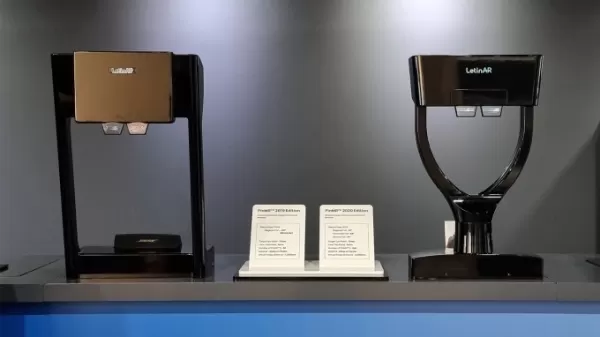
Image Credits: LetinAR /
The Lens That Makes Smart Glasses Wearable
LetinAR doesn't manufacture the entire glasses—it produces the critical component that makes them functional. The optical module, a tiny lens that projects images into the user's field of vision, determines whether a pair of smart glasses feels like a sci-fi gadget or something you'd actually wear to work, Ha told TechCrunch. It must be lightweight, thin, and power-efficient while delivering a sharp, clear image. Engineering all of that into a single component small enough to fit inside a normal-looking frame is the central challenge of the entire industry—and that's precisely what LetinAR is building.
Kim said, "We view AI glasses as the next platform. The optical module is the most difficult component to perfect because AI glasses makers need a lens that is thinner, lighter, and more power-efficient than anything currently available."
The co-founders said LetinAR aims to be the company that these glasses manufacturers turn to. Their technology, called PinTILT, arranges tiny optical elements inside a lens so that light is directed precisely into the user's eye rather than scattering in every direction.
Think of a TV: it broadcasts light across the entire room, but only the light that reaches your eyes matters. Most existing smart lens technologies—especially the dominant waveguide approach—work similarly, splitting and spreading light across the full lens to create a wide image. The result is a thin lens, but an inefficient one. Much of the light is wasted before it reaches the eye, leading to dimmer images and, critically, faster battery drain, Ha explained.
The alternative mirror-based approach, known as birdbath, delivers light more directly to the eye but results in a bulky structure that is nearly impossible to fit inside a normal-looking pair of glasses.
PinTILT avoids that tradeoff, Ha said. By focusing only on the light that can actually enter the eye and precisely engineering the angle of each tiny element inside the lens, LetinAR claims to produce a brighter image in a thinner, lighter form factor while consuming less power. In a category where every gram and every hour of battery life counts, this is the problem the entire industry has been trying to solve.
In this space, competitors include WaveOptics, DigiLens, and Lumus.
Customers
LetinAR's modules are already in production. Its customers include Japan's NTT QONOQ Devices and Dynabook (formerly Toshiba Client Solutions), providing the company with real-world manufacturing experience at scale. The startup is also in discussions with major tech companies regarding R&D for next-generation AI glasses, though it declined to name them.
One of LetinAR's most demanding clients is Aegis Rider, a Swiss deep-tech company spun out of ETH Zurich's Computer Vision Lab. Aegis Rider is developing an AI-powered AR helmet that projects navigation, speed, and safety alerts directly into a motorcyclist's field of view—not as overlays on the visor, but anchored to the road ahead, as if the information were physically painted onto the world.
LetinAR's module is integrated into the helmet. Aegis Rider plans to target the EU and Swiss markets in 2026.
This latest funding brings the total raised to $41.7 million and will be used for scaling up as the AI glasses market transitions from early adopters to mass production, Kim said. He added that hardware devices like AI glasses represent the next layer that will integrate AI into everyday life.
Related article
 Google debuts audio-powered smart glasses at IO 2026, mirroring Meta’s strategy
Google is making a strategic return to the smart glasses market.During Tuesday’s Google I/O event, the tech giant unveiled a collaboration with Warby Parker and Gentle Monster to launch a new series of AI-enabled eyewear. Designed in partnership with
Xreal, Google’s smart glasses partner, believes it has finally cracked the notoriously difficult industry
The smart glasses sector has long been a frustrating pursuit for Silicon Valley. The concept is straightforward: imagine enjoying mobile computing without being glued to your screens, opting instead for a lightweight wearable. Tech enthusiasts, who a
Google follows Meta's lead with new audio smart glasses.
Google is re-entering the smart glasses arena.At Tuesday's Google I/O event, the company revealed a new partnership with Warby Parker and Gentle Monster to create a line of AI-powered glasses. Designed to work with both Android and iOS devices and de
Related Special Topic Recommendations
writing
Google debuts audio-powered smart glasses at IO 2026, mirroring Meta’s strategy
Google is making a strategic return to the smart glasses market.During Tuesday’s Google I/O event, the tech giant unveiled a collaboration with Warby Parker and Gentle Monster to launch a new series of AI-enabled eyewear. Designed in partnership with
Xreal, Google’s smart glasses partner, believes it has finally cracked the notoriously difficult industry
The smart glasses sector has long been a frustrating pursuit for Silicon Valley. The concept is straightforward: imagine enjoying mobile computing without being glued to your screens, opting instead for a lightweight wearable. Tech enthusiasts, who a
Google follows Meta's lead with new audio smart glasses.
Google is re-entering the smart glasses arena.At Tuesday's Google I/O event, the company revealed a new partnership with Warby Parker and Gentle Monster to create a line of AI-powered glasses. Designed to work with both Android and iOS devices and de
Related Special Topic Recommendations
writing
 Best AI Outline Generators for Long-Form SEO Articles
2026 Latest Best Top-Rated AI Outline Generators for Long-Form SEO Articles, meticulously curated by XIX.AI. These powerful tools offer game-changing assistance in creating high-quality content quickly, boosting writing efficiency significantly. Get a free vs paid comparison along with real-world tests and detailed rankings to help you find the must-try option that suits your needs. Explore now to unlock your AI edge.
 8 tools
 xix.ai
Education and Learning
AI Study Tools for Homework and Exam Prep
xix.ai
Education and Learning
AI Study Tools for Homework and Exam Prep
2026 Latest Best AI Study Tools for Homework and Exam Prep! XIX.AI curates a top-rated list of powerful, game-changing tools that help students boost productivity, streamline homework completion, and ace exams through real-world tests. Get a free vs paid comparison, detailed rankings, and must-try options to unlock your AI edge. Explore now!
10 tools
xix.ai
Music composition
AI Vocal Demo Tools for Songwriters, Hooks, Toplines, and Multilingual Draft Sessions
2026 Latest Best AI Vocal Demo Tools for Songwriters, Hook Creators, and Multi-Language Content Teams! XIX.AI has curated a top-rated list of powerful game-changing tools that go through rigorous real-world tests. You’ll find detailed free vs paid comparison data, comprehensive rankings, and must-try options to help you boost writing efficiency and unlock your creative potential. Explore now to discover your perfect tool for all your content needs!
9 tools
xix.ai
Business
Best AI Competitive Research Tools for Small Businesses
2026 Latest Best Top-rated AI Competitive Research Tools for Small Businesses! XIX.AI has curated a highly powerful game-changing collection, updated weekly with rigorous real-world tests and detailed rankings. You can find a comprehensive free vs paid comparison to help you identify the must-try tools that boost your productivity and give you a competitive edge. Explore now to discover your perfect tool!
9 tools
xix.ai
Image editing
Photoshop AI Retouch Tools for Ecommerce Apparel, Skin Cleanup, and Color Consistency
2026 Latest Best Photoshop AI retouch tools for ecommerce apparel, skin cleanup, and color consistency! This top-rated curated list features powerful game-changing solutions that help you boost writing efficiency, streamline content creation, and achieve perfect visual results effortlessly. Each tool has undergone real-world tests through weekly updated rankings, complete with free vs paid comparison details. Backed by XIX.AI, it’s the must-try guide for anyone aiming to unlock your AI edge. Explore now!
10 tools
xix.ai
Prompt
Best AI Prompt Libraries for ChatGPT Workflows
2026 Latest Best Top-Rated AI Prompt Libraries for optimizing all types of ChatGPT workflows. XIX.AI has curated a powerful, game-changing collection that goes through rigorous real-world tests to ensure top performance. You can find detailed free vs paid comparisons and expert rankings to help you choose the must-try tools that boost your productivity and unlock your AI edge. Explore now!
11 tools
xix.ai

 Comments (1)
0/500
Comments (1)
0/500
![HenryJackson]()
160km/hで走行中に矢印が浮かぶなんて、SFの世界みたい!🏍️✨ 安全面での懸念はあるけど、スマホ不要で直感的なナビは本当に便利そうだ。欧州での実証実験、結果が楽しみだ。
Picture yourself on a motorcycle traveling at 160 km/h when an arrow materializes on the road ahead, guiding your next turn. No phone, no dashboard—just your helmet and a thumbnail-sized lens.
This isn't a concept video. It's hitting European roads as early as this year—and it offers an early preview of the trajectory for smart glasses.
In recent years, major tech companies have been making strategic moves—both subtle and overt. Meta has been selling AI-powered Ray-Ban glasses since 2023, Google is developing Android XR, and Apple is anticipated to join the race. Last week, reports emerged that Samsung plans to debut its first AI-capable smart glasses, co-designed with Gentle Monster, at a Galaxy Unpacked event in London this July. Chinese players like Huawei, Alibaba, Xiaomi, and others are also advancing.
The data underscores the momentum. Global shipments of AI glasses jumped to 8.7 million units in 2025—a more than 300% increase year-over-year—and Omdia analysts project the number will exceed 15 million this year.
Suppliers and component manufacturers for AI-powered smart glasses are also preparing for the next phase. One such company, South Korean startup LetinAR, has spent the past decade developing optical technology that could make these devices truly wearable.
The startup, backed by LG Electronics, has just raised $18.5 million from Korea Development Bank and Lotte Ventures (the venture arm of the South Korean retail giant), among others, ahead of its planned 2027 IPO in South Korea.
According to a local media report, LG Electronics—a prior investor—has since started developing its own AI smart glasses, signaling how seriously South Korea's largest consumer electronics company views this category.
CEO Jaehyeok Kim and CTO Jeonghun Ha, high school friends, co-founded LetinAR in 2016.
Image Credits: LetinAR /
The Lens That Makes Smart Glasses Wearable
LetinAR doesn't manufacture the entire glasses—it produces the critical component that makes them functional. The optical module, a tiny lens that projects images into the user's field of vision, determines whether a pair of smart glasses feels like a sci-fi gadget or something you'd actually wear to work, Ha told TechCrunch. It must be lightweight, thin, and power-efficient while delivering a sharp, clear image. Engineering all of that into a single component small enough to fit inside a normal-looking frame is the central challenge of the entire industry—and that's precisely what LetinAR is building.
Kim said, "We view AI glasses as the next platform. The optical module is the most difficult component to perfect because AI glasses makers need a lens that is thinner, lighter, and more power-efficient than anything currently available."
The co-founders said LetinAR aims to be the company that these glasses manufacturers turn to. Their technology, called PinTILT, arranges tiny optical elements inside a lens so that light is directed precisely into the user's eye rather than scattering in every direction.
Think of a TV: it broadcasts light across the entire room, but only the light that reaches your eyes matters. Most existing smart lens technologies—especially the dominant waveguide approach—work similarly, splitting and spreading light across the full lens to create a wide image. The result is a thin lens, but an inefficient one. Much of the light is wasted before it reaches the eye, leading to dimmer images and, critically, faster battery drain, Ha explained.
The alternative mirror-based approach, known as birdbath, delivers light more directly to the eye but results in a bulky structure that is nearly impossible to fit inside a normal-looking pair of glasses.
PinTILT avoids that tradeoff, Ha said. By focusing only on the light that can actually enter the eye and precisely engineering the angle of each tiny element inside the lens, LetinAR claims to produce a brighter image in a thinner, lighter form factor while consuming less power. In a category where every gram and every hour of battery life counts, this is the problem the entire industry has been trying to solve.
In this space, competitors include WaveOptics, DigiLens, and Lumus.
Customers
LetinAR's modules are already in production. Its customers include Japan's NTT QONOQ Devices and Dynabook (formerly Toshiba Client Solutions), providing the company with real-world manufacturing experience at scale. The startup is also in discussions with major tech companies regarding R&D for next-generation AI glasses, though it declined to name them.
One of LetinAR's most demanding clients is Aegis Rider, a Swiss deep-tech company spun out of ETH Zurich's Computer Vision Lab. Aegis Rider is developing an AI-powered AR helmet that projects navigation, speed, and safety alerts directly into a motorcyclist's field of view—not as overlays on the visor, but anchored to the road ahead, as if the information were physically painted onto the world.
LetinAR's module is integrated into the helmet. Aegis Rider plans to target the EU and Swiss markets in 2026.
This latest funding brings the total raised to $41.7 million and will be used for scaling up as the AI glasses market transitions from early adopters to mass production, Kim said. He added that hardware devices like AI glasses represent the next layer that will integrate AI into everyday life.








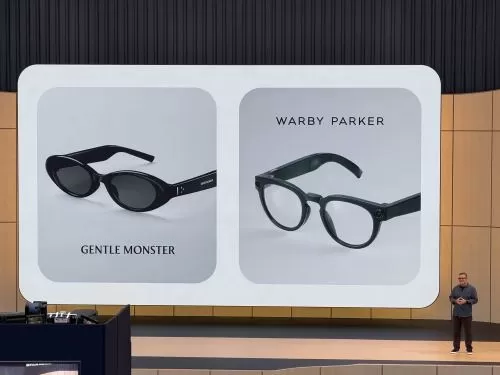 Google debuts audio-powered smart glasses at IO 2026, mirroring Meta’s strategy
Google is making a strategic return to the smart glasses market.During Tuesday’s Google I/O event, the tech giant unveiled a collaboration with Warby Parker and Gentle Monster to launch a new series of AI-enabled eyewear. Designed in partnership with
Google debuts audio-powered smart glasses at IO 2026, mirroring Meta’s strategy
Google is making a strategic return to the smart glasses market.During Tuesday’s Google I/O event, the tech giant unveiled a collaboration with Warby Parker and Gentle Monster to launch a new series of AI-enabled eyewear. Designed in partnership with
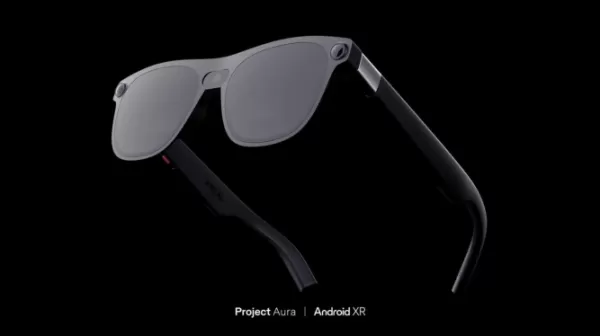 Xreal, Google’s smart glasses partner, believes it has finally cracked the notoriously difficult industry
The smart glasses sector has long been a frustrating pursuit for Silicon Valley. The concept is straightforward: imagine enjoying mobile computing without being glued to your screens, opting instead for a lightweight wearable. Tech enthusiasts, who a
Xreal, Google’s smart glasses partner, believes it has finally cracked the notoriously difficult industry
The smart glasses sector has long been a frustrating pursuit for Silicon Valley. The concept is straightforward: imagine enjoying mobile computing without being glued to your screens, opting instead for a lightweight wearable. Tech enthusiasts, who a
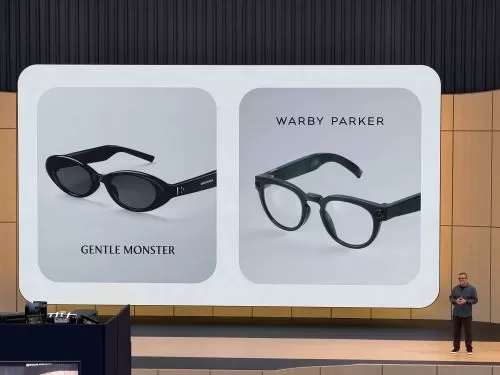 Google follows Meta's lead with new audio smart glasses.
Google is re-entering the smart glasses arena.At Tuesday's Google I/O event, the company revealed a new partnership with Warby Parker and Gentle Monster to create a line of AI-powered glasses. Designed to work with both Android and iOS devices and de
Google follows Meta's lead with new audio smart glasses.
Google is re-entering the smart glasses arena.At Tuesday's Google I/O event, the company revealed a new partnership with Warby Parker and Gentle Monster to create a line of AI-powered glasses. Designed to work with both Android and iOS devices and de

2026 Latest Best Top-Rated AI Outline Generators for Long-Form SEO Articles, meticulously curated by XIX.AI. These powerful tools offer game-changing assistance in creating high-quality content quickly, boosting writing efficiency significantly. Get a free vs paid comparison along with real-world tests and detailed rankings to help you find the must-try option that suits your needs. Explore now to unlock your AI edge.
8 tools
xix.ai

2026 Latest Best AI Study Tools for Homework and Exam Prep! XIX.AI curates a top-rated list of powerful, game-changing tools that help students boost productivity, streamline homework completion, and ace exams through real-world tests. Get a free vs paid comparison, detailed rankings, and must-try options to unlock your AI edge. Explore now!
10 tools
xix.ai

2026 Latest Best AI Vocal Demo Tools for Songwriters, Hook Creators, and Multi-Language Content Teams! XIX.AI has curated a top-rated list of powerful game-changing tools that go through rigorous real-world tests. You’ll find detailed free vs paid comparison data, comprehensive rankings, and must-try options to help you boost writing efficiency and unlock your creative potential. Explore now to discover your perfect tool for all your content needs!
9 tools
xix.ai

2026 Latest Best Top-rated AI Competitive Research Tools for Small Businesses! XIX.AI has curated a highly powerful game-changing collection, updated weekly with rigorous real-world tests and detailed rankings. You can find a comprehensive free vs paid comparison to help you identify the must-try tools that boost your productivity and give you a competitive edge. Explore now to discover your perfect tool!
9 tools
xix.ai

2026 Latest Best Photoshop AI retouch tools for ecommerce apparel, skin cleanup, and color consistency! This top-rated curated list features powerful game-changing solutions that help you boost writing efficiency, streamline content creation, and achieve perfect visual results effortlessly. Each tool has undergone real-world tests through weekly updated rankings, complete with free vs paid comparison details. Backed by XIX.AI, it’s the must-try guide for anyone aiming to unlock your AI edge. Explore now!
10 tools
xix.ai

2026 Latest Best Top-Rated AI Prompt Libraries for optimizing all types of ChatGPT workflows. XIX.AI has curated a powerful, game-changing collection that goes through rigorous real-world tests to ensure top performance. You can find detailed free vs paid comparisons and expert rankings to help you choose the must-try tools that boost your productivity and unlock your AI edge. Explore now!
11 tools
xix.ai

160km/hで走行中に矢印が浮かぶなんて、SFの世界みたい!🏍️✨ 安全面での懸念はあるけど、スマホ不要で直感的なナビは本当に便利そうだ。欧州での実証実験、結果が楽しみだ。












