


 Home
Home
Harvard Study: AI-Native Firms Shrink Teams by Quarter, Shun Fresh Grads, Hire Experienced Pros
A new research paper from Harvard Business School and INSEAD reveals that AI-native startups are building smaller, flatter teams and hiring significantly fewer junior employees. This suggests that the first group to be "optimized" in the AI wave are those just entering the workforce.

AI-native companies: 25% fewer people, 13% more engineers
The study analyzed Y Combinator startups from 2020 to 2024, along with a broad set of U.S. venture-backed startups that completed their first funding round during the same period. It defines a new category called "AI-native startups," which are characterized by a shift in two productivity paths. The first is the process path: companies fully integrate AI to help employees complete programming, sales, design, or coordination tasks faster internally. The second is the product path: AI is embedded directly into the main product, enabling customers to automatically perform tasks that previously required human teams. Data shows that AI-native startups have teams that are 25% smaller than non-AI-native companies, employ about 13% more engineers, and have roughly 15% fewer junior employees and managers. In other words, these companies achieve the same or even greater output with fewer people, middle management has been drastically reduced, and organizational structures have become flatter. AI tools have replaced a large volume of repetitive, execution-based work, absorbing tasks that were once handled by junior employees.
Senior employee ratio is 20% higher, AI creates an "expert premium"
More notably, rather than eliminating high-level positions as some predicted, AI has increased the demand for expert-level talent. The study found that the proportion of senior employees in AI-native startups is 20% higher than in non-AI-native companies. This finding challenges the simplistic narrative of "AI replacing everyone": it is entry-level positions being replaced, while experienced, judgment-driven senior professionals become rarer and more sought-after. This research offers a sobering perspective on current employment anxiety. For recent graduates, the doors of AI-native companies are narrowing; for those with years of industry experience and irreplaceable expertise, the AI era actually opens up a higher value ceiling. Future workplace competition may no longer be a "battle between humans and AI," but rather a divide between "experts who can leverage AI" and "newcomers who cannot."
Related article
 Suno to Watermark Songs Amid Legal Battles
Suno, the platform enabling users to generate AI-created music, has unveiled new features to label platform-produced tracks, restrict downloads, and update community standards to curb unauthorized replicas. These updates arrive as Suno confronts mult
Musk Admits Grok Build Leaked User Code, Promises to Erase All Historical Data
Elon Musk directly addressed the privacy controversy surrounding Grok Build, beginning with a simple "True" to confirm the incident's validity. He pledged that all user data previously uploaded to SpaceXAI would be permanently erased, stating, "not a
U.S. Stocks Hit Historic Milestone as AI and Aerospace Giants Prepare for Trillion-Dollar Debut
Elon Musk, Sam Altman, and Dario Amodei, three titans of the technology sector, are advancing toward initial public offerings for their respective ventures. With SpaceX, OpenAI, and Anthropic—three industry behemoths nearing trillion-dollar valuation
Related Special Topic Recommendations
SEO
Suno to Watermark Songs Amid Legal Battles
Suno, the platform enabling users to generate AI-created music, has unveiled new features to label platform-produced tracks, restrict downloads, and update community standards to curb unauthorized replicas. These updates arrive as Suno confronts mult
Musk Admits Grok Build Leaked User Code, Promises to Erase All Historical Data
Elon Musk directly addressed the privacy controversy surrounding Grok Build, beginning with a simple "True" to confirm the incident's validity. He pledged that all user data previously uploaded to SpaceXAI would be permanently erased, stating, "not a
U.S. Stocks Hit Historic Milestone as AI and Aerospace Giants Prepare for Trillion-Dollar Debut
Elon Musk, Sam Altman, and Dario Amodei, three titans of the technology sector, are advancing toward initial public offerings for their respective ventures. With SpaceX, OpenAI, and Anthropic—three industry behemoths nearing trillion-dollar valuation
Related Special Topic Recommendations
SEO
 Best AI SERP Analysis Tools for Search Strategy
2026 Latest Best Top-rated AI SERP Analysis Tools for Search Strategy are curated by XIX.AI through rigorous real-world tests and weekly updated rankings. These powerful tools help you unlock hidden optimization opportunities, boost content performance, and gain a competitive edge in search. Discover your perfect tool to elevate your search strategy today. Explore now!
 13 tools
 xix.ai
Data Analysis
Best AI Anomaly Detection Tools for KPI Monitoring across SaaS and Ecommerce Teams
xix.ai
Data Analysis
Best AI Anomaly Detection Tools for KPI Monitoring across SaaS and Ecommerce Teams
2026 Latest Best Top-rated AI Anomaly Detection Tools for KPI Monitoring in SaaS and Ecommerce teams! XIX.AI has curated a powerful, game-changing collection based on rigorous real-world tests and weekly updated rankings. You’ll find detailed free vs paid comparison insights to help you identify the must-try solution that boosts productivity and unlocks your AI edge. Explore now!
10 tools
xix.ai
writing
Best AI Outline Generators for Long-Form SEO Articles
2026 Latest Best Top-Rated AI Outline Generators for Long-Form SEO Articles, meticulously curated by XIX.AI. These powerful tools offer game-changing assistance in creating high-quality content quickly, boosting writing efficiency significantly. Get a free vs paid comparison along with real-world tests and detailed rankings to help you find the must-try option that suits your needs. Explore now to unlock your AI edge.
8 tools
xix.ai
Education and Learning
AI Study Tools for Homework and Exam Prep
2026 Latest Best AI Study Tools for Homework and Exam Prep! XIX.AI curates a top-rated list of powerful, game-changing tools that help students boost productivity, streamline homework completion, and ace exams through real-world tests. Get a free vs paid comparison, detailed rankings, and must-try options to unlock your AI edge. Explore now!
10 tools
xix.ai
Music composition
AI Vocal Demo Tools for Songwriters, Hooks, Toplines, and Multilingual Draft Sessions
2026 Latest Best AI Vocal Demo Tools for Songwriters, Hook Creators, and Multi-Language Content Teams! XIX.AI has curated a top-rated list of powerful game-changing tools that go through rigorous real-world tests. You’ll find detailed free vs paid comparison data, comprehensive rankings, and must-try options to help you boost writing efficiency and unlock your creative potential. Explore now to discover your perfect tool for all your content needs!
9 tools
xix.ai
Business
Best AI Competitive Research Tools for Small Businesses
2026 Latest Best Top-rated AI Competitive Research Tools for Small Businesses! XIX.AI has curated a highly powerful game-changing collection, updated weekly with rigorous real-world tests and detailed rankings. You can find a comprehensive free vs paid comparison to help you identify the must-try tools that boost your productivity and give you a competitive edge. Explore now to discover your perfect tool!
9 tools
xix.ai

 Comments (0)
0/500
Comments (0)
0/500
A new research paper from Harvard Business School and INSEAD reveals that AI-native startups are building smaller, flatter teams and hiring significantly fewer junior employees. This suggests that the first group to be "optimized" in the AI wave are those just entering the workforce.
AI-native companies: 25% fewer people, 13% more engineers
The study analyzed Y Combinator startups from 2020 to 2024, along with a broad set of U.S. venture-backed startups that completed their first funding round during the same period. It defines a new category called "AI-native startups," which are characterized by a shift in two productivity paths. The first is the process path: companies fully integrate AI to help employees complete programming, sales, design, or coordination tasks faster internally. The second is the product path: AI is embedded directly into the main product, enabling customers to automatically perform tasks that previously required human teams. Data shows that AI-native startups have teams that are 25% smaller than non-AI-native companies, employ about 13% more engineers, and have roughly 15% fewer junior employees and managers. In other words, these companies achieve the same or even greater output with fewer people, middle management has been drastically reduced, and organizational structures have become flatter. AI tools have replaced a large volume of repetitive, execution-based work, absorbing tasks that were once handled by junior employees.
Senior employee ratio is 20% higher, AI creates an "expert premium"
More notably, rather than eliminating high-level positions as some predicted, AI has increased the demand for expert-level talent. The study found that the proportion of senior employees in AI-native startups is 20% higher than in non-AI-native companies. This finding challenges the simplistic narrative of "AI replacing everyone": it is entry-level positions being replaced, while experienced, judgment-driven senior professionals become rarer and more sought-after. This research offers a sobering perspective on current employment anxiety. For recent graduates, the doors of AI-native companies are narrowing; for those with years of industry experience and irreplaceable expertise, the AI era actually opens up a higher value ceiling. Future workplace competition may no longer be a "battle between humans and AI," but rather a divide between "experts who can leverage AI" and "newcomers who cannot."








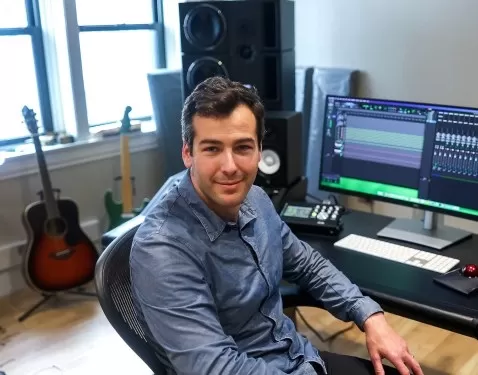 Suno to Watermark Songs Amid Legal Battles
Suno, the platform enabling users to generate AI-created music, has unveiled new features to label platform-produced tracks, restrict downloads, and update community standards to curb unauthorized replicas. These updates arrive as Suno confronts mult
Suno to Watermark Songs Amid Legal Battles
Suno, the platform enabling users to generate AI-created music, has unveiled new features to label platform-produced tracks, restrict downloads, and update community standards to curb unauthorized replicas. These updates arrive as Suno confronts mult
 Musk Admits Grok Build Leaked User Code, Promises to Erase All Historical Data
Elon Musk directly addressed the privacy controversy surrounding Grok Build, beginning with a simple "True" to confirm the incident's validity. He pledged that all user data previously uploaded to SpaceXAI would be permanently erased, stating, "not a
Musk Admits Grok Build Leaked User Code, Promises to Erase All Historical Data
Elon Musk directly addressed the privacy controversy surrounding Grok Build, beginning with a simple "True" to confirm the incident's validity. He pledged that all user data previously uploaded to SpaceXAI would be permanently erased, stating, "not a
 U.S. Stocks Hit Historic Milestone as AI and Aerospace Giants Prepare for Trillion-Dollar Debut
Elon Musk, Sam Altman, and Dario Amodei, three titans of the technology sector, are advancing toward initial public offerings for their respective ventures. With SpaceX, OpenAI, and Anthropic—three industry behemoths nearing trillion-dollar valuation
U.S. Stocks Hit Historic Milestone as AI and Aerospace Giants Prepare for Trillion-Dollar Debut
Elon Musk, Sam Altman, and Dario Amodei, three titans of the technology sector, are advancing toward initial public offerings for their respective ventures. With SpaceX, OpenAI, and Anthropic—three industry behemoths nearing trillion-dollar valuation

2026 Latest Best Top-rated AI SERP Analysis Tools for Search Strategy are curated by XIX.AI through rigorous real-world tests and weekly updated rankings. These powerful tools help you unlock hidden optimization opportunities, boost content performance, and gain a competitive edge in search. Discover your perfect tool to elevate your search strategy today. Explore now!
13 tools
xix.ai
2026 Latest Best Top-rated AI Anomaly Detection Tools for KPI Monitoring in SaaS and Ecommerce teams! XIX.AI has curated a powerful, game-changing collection based on rigorous real-world tests and weekly updated rankings. You’ll find detailed free vs paid comparison insights to help you identify the must-try solution that boosts productivity and unlocks your AI edge. Explore now!
10 tools
xix.ai

2026 Latest Best Top-Rated AI Outline Generators for Long-Form SEO Articles, meticulously curated by XIX.AI. These powerful tools offer game-changing assistance in creating high-quality content quickly, boosting writing efficiency significantly. Get a free vs paid comparison along with real-world tests and detailed rankings to help you find the must-try option that suits your needs. Explore now to unlock your AI edge.
8 tools
xix.ai

2026 Latest Best AI Study Tools for Homework and Exam Prep! XIX.AI curates a top-rated list of powerful, game-changing tools that help students boost productivity, streamline homework completion, and ace exams through real-world tests. Get a free vs paid comparison, detailed rankings, and must-try options to unlock your AI edge. Explore now!
10 tools
xix.ai

2026 Latest Best AI Vocal Demo Tools for Songwriters, Hook Creators, and Multi-Language Content Teams! XIX.AI has curated a top-rated list of powerful game-changing tools that go through rigorous real-world tests. You’ll find detailed free vs paid comparison data, comprehensive rankings, and must-try options to help you boost writing efficiency and unlock your creative potential. Explore now to discover your perfect tool for all your content needs!
9 tools
xix.ai

2026 Latest Best Top-rated AI Competitive Research Tools for Small Businesses! XIX.AI has curated a highly powerful game-changing collection, updated weekly with rigorous real-world tests and detailed rankings. You can find a comprehensive free vs paid comparison to help you identify the must-try tools that boost your productivity and give you a competitive edge. Explore now to discover your perfect tool!
9 tools
xix.ai












