


 Home
HomeAtos AI Maps Out the Premier League Football Season
![]()
Atos has served as the Premier League's fixture scheduling partner since 1992. Picture: Getty Images
Atos combines AI-driven modeling with human expertise to create the Premier League's 2026/27 fixture list, balancing fairness, player fitness, and fan travel.
Scheduling a Premier League season is one of the greatest logistical challenges in sports. With 380 matches played by 20 clubs, organizers must fit a single competition into a calendar already packed with cup ties, European fixtures, and international call-ups.
Every match has ripple effects. Shifting one game can require adjustments to dozens of others due to shared stadiums, policing demands, and broadcaster requirements.
Player welfare adds another layer of complexity. Congested fixture lists increase injury risk, so scheduling must allow adequate recovery time between matches — especially during busy festive periods and European weeks.
Arsenal were crowned 2025/26 Premier League champions. Picture: Getty Images
Moreover, the domestic season must work around international breaks, with clubs losing players to national teams at set points in the calendar.
Atos, the Premier League's fixture scheduling partner since 1992, tackles this challenge by combining sophisticated technology with decades of human expertise. The result is a six-month process that produces a calendar meeting sporting, commercial, and logistical demands.
Atos and the Premier League
- 380 – matches played in a Premier League season
- 1992 – the year Atos became the Premier League's fixture scheduling partner
- 13,166 – matches overseen by Atos since 1992
Millions of scenarios, one schedule
The process, orchestrated by Atos, begins early in the year and runs for about six months before the schedule is released.

Sophisticated systems generate an initial schedule, which is then refined manually. Atos specialists review the draft against the league's strict sporting and operational requirements, known internally as the 'Golden Rules,' which govern the rhythm of each club's season.
Across any five matches, there must be a three-two split between home and away games. No team can play more than two consecutive home or away matches. Clubs are also kept at home and away around FA Cup ties whenever possible, and never start or finish a season with two consecutive home or away games.
Beyond these rules lie additional layers of complexity. Atos must prevent local rivals from playing at home on the same day, while also considering policing capacity across the country.
Travel demands receive special attention during peak periods. Boxing Day and New Year's Day fixtures, for example, are arranged to minimize the distance fans need to travel.
A process built on compromise
Glenn Thompson, Technical Architect and fixture list compiler at Atos UK & Ireland, describes the pressures that arise as the schedule nears completion.
Glenn Thompson, Technical Architect and fixture list compiler at Atos UK & Ireland
He says: "There are pinch points in the process where it can become stressful, culminating in several days in a room manually checking for any issues that may have arisen. The whole process is complex, involving many different data points."
Glenn is clear that no club gets everything it wants: "Ultimately, you can't satisfy everyone — it's a compromise across all clubs, without favoring any one club."
The balancing act has only become more difficult over time. Across 34 seasons, Atos has overseen 13,166 matches involving 51 different clubs, refining its approach with each cycle.
"The whole process is complex, involving many different data points." Glenn Thompson, Technical Architect at Atos UK & Ireland
Even a minor change can ripple outward unpredictably. A single swapped fixture could require Atos to revisit several other matches to maintain balance elsewhere in the schedule.
This is where institutional experience proves decisive. Long-standing familiarity with the league's data and constraints enables Atos to spot conflicts that a purely automated system might miss.
Coventry City will return to the Premier League in 2026/27. Picture: Getty Images
Player welfare shapes the 2026/27 calendar
This year's fixture list — kicking off with Premier League champions Arsenal hosting newly promoted Coventry City — reflects an increasingly demanding global football calendar.
Player welfare, recovery time, and alignment with international competitions have all influenced the final schedule.
Michael Herron, Head of Atos UK & Ireland, explains what the annual fixture release day means to fans: "For millions of fans, the release of the Premier League fixture list is when a new season truly comes to life.
"We're proud to support the Premier League and look forward to another exciting season ahead."
Michael Herron, Head of Atos UK & Ireland
That sense of occasion is paired with a quieter operational reality. Behind every fixture date lies a calculation involving rivalries, stadium availability, travel patterns, and recovery windows.
Atos's involvement in football scheduling is part of a broader sports portfolio. The company has run a dedicated Sports and Major Events division for more than three decades, supporting events from local tournaments to major global showcases.
That experience extends well beyond English football. Atos has served as UEFA's Official IT Partner for National Team Football since late 2022 and recently became CONMEBOL's Official Innovation Partner for South American club competitions.
"For millions of fans, the release of the Premier League fixture list is when a new season truly comes to life." Michael Herron, Head of Atos UK & Ireland
Technology with human oversight
The Premier League's fixture release each summer marks the end of months of unseen work. What appears instantaneous to fans is actually the product of sustained collaboration between algorithms and analysts.
As football's calendar grows more congested, that combination is set to become even more important. Balancing competitive fairness with player health will remain central to how the Premier League's seasons continue to take shape.
For now, the 2026/27 fixture list stands as the latest example of how data-driven scheduling can serve a sport built on tradition. Atos's continued role suggests that this mix of old and new will define fixture planning for seasons to come.
Related article
 Japan Launches World’s First National AI Infrastructure with NVIDIA
Japan's Ministry of Economy, Trade and Industry plans to deploy approximately 10 million AI-powered robots across 18 industries by 2040, addressing the country's growing labor shortage, according to NHK. Credit: NVIDIAThe Japanese government, along w
IBM, Google, NVIDIA Lead This Week's Top Five AI Stories
The AELTC partnered with IBM to update its website and mobile app ahead of this year's Wimbledon Championships. Image: Getty Images.AI Magazine highlights the biggest stories from the past week, including IBM, Google, Haleon, Palo Alto Networks, and
Musk Admits Grok Build Leaked User Code, Promises to Erase All Historical Data
Elon Musk directly addressed the privacy controversy surrounding Grok Build, beginning with a simple "True" to confirm the incident's validity. He pledged that all user data previously uploaded to SpaceXAI would be permanently erased, stating, "not a
Related Special Topic Recommendations
SEO
Japan Launches World’s First National AI Infrastructure with NVIDIA
Japan's Ministry of Economy, Trade and Industry plans to deploy approximately 10 million AI-powered robots across 18 industries by 2040, addressing the country's growing labor shortage, according to NHK. Credit: NVIDIAThe Japanese government, along w
IBM, Google, NVIDIA Lead This Week's Top Five AI Stories
The AELTC partnered with IBM to update its website and mobile app ahead of this year's Wimbledon Championships. Image: Getty Images.AI Magazine highlights the biggest stories from the past week, including IBM, Google, Haleon, Palo Alto Networks, and
Musk Admits Grok Build Leaked User Code, Promises to Erase All Historical Data
Elon Musk directly addressed the privacy controversy surrounding Grok Build, beginning with a simple "True" to confirm the incident's validity. He pledged that all user data previously uploaded to SpaceXAI would be permanently erased, stating, "not a
Related Special Topic Recommendations
SEO
 Best AI SERP Analysis Tools for Search Strategy
2026 Latest Best Top-rated AI SERP Analysis Tools for Search Strategy are curated by XIX.AI through rigorous real-world tests and weekly updated rankings. These powerful tools help you unlock hidden optimization opportunities, boost content performance, and gain a competitive edge in search. Discover your perfect tool to elevate your search strategy today. Explore now!
 13 tools
 xix.ai
Data Analysis
Best AI Anomaly Detection Tools for KPI Monitoring across SaaS and Ecommerce Teams
xix.ai
Data Analysis
Best AI Anomaly Detection Tools for KPI Monitoring across SaaS and Ecommerce Teams
2026 Latest Best Top-rated AI Anomaly Detection Tools for KPI Monitoring in SaaS and Ecommerce teams! XIX.AI has curated a powerful, game-changing collection based on rigorous real-world tests and weekly updated rankings. You’ll find detailed free vs paid comparison insights to help you identify the must-try solution that boosts productivity and unlocks your AI edge. Explore now!
10 tools
xix.ai
writing
Best AI Outline Generators for Long-Form SEO Articles
2026 Latest Best Top-Rated AI Outline Generators for Long-Form SEO Articles, meticulously curated by XIX.AI. These powerful tools offer game-changing assistance in creating high-quality content quickly, boosting writing efficiency significantly. Get a free vs paid comparison along with real-world tests and detailed rankings to help you find the must-try option that suits your needs. Explore now to unlock your AI edge.
8 tools
xix.ai
Education and Learning
AI Study Tools for Homework and Exam Prep
2026 Latest Best AI Study Tools for Homework and Exam Prep! XIX.AI curates a top-rated list of powerful, game-changing tools that help students boost productivity, streamline homework completion, and ace exams through real-world tests. Get a free vs paid comparison, detailed rankings, and must-try options to unlock your AI edge. Explore now!
10 tools
xix.ai
Music composition
AI Vocal Demo Tools for Songwriters, Hooks, Toplines, and Multilingual Draft Sessions
2026 Latest Best AI Vocal Demo Tools for Songwriters, Hook Creators, and Multi-Language Content Teams! XIX.AI has curated a top-rated list of powerful game-changing tools that go through rigorous real-world tests. You’ll find detailed free vs paid comparison data, comprehensive rankings, and must-try options to help you boost writing efficiency and unlock your creative potential. Explore now to discover your perfect tool for all your content needs!
9 tools
xix.ai
Business
Best AI Competitive Research Tools for Small Businesses
2026 Latest Best Top-rated AI Competitive Research Tools for Small Businesses! XIX.AI has curated a highly powerful game-changing collection, updated weekly with rigorous real-world tests and detailed rankings. You can find a comprehensive free vs paid comparison to help you identify the must-try tools that boost your productivity and give you a competitive edge. Explore now to discover your perfect tool!
9 tools
xix.ai

 Comments (0)
0/500
Comments (0)
0/500
Atos has served as the Premier League's fixture scheduling partner since 1992. Picture: Getty Images
Atos combines AI-driven modeling with human expertise to create the Premier League's 2026/27 fixture list, balancing fairness, player fitness, and fan travel.
Scheduling a Premier League season is one of the greatest logistical challenges in sports. With 380 matches played by 20 clubs, organizers must fit a single competition into a calendar already packed with cup ties, European fixtures, and international call-ups.
Every match has ripple effects. Shifting one game can require adjustments to dozens of others due to shared stadiums, policing demands, and broadcaster requirements.
Player welfare adds another layer of complexity. Congested fixture lists increase injury risk, so scheduling must allow adequate recovery time between matches — especially during busy festive periods and European weeks.
Arsenal were crowned 2025/26 Premier League champions. Picture: Getty Images
Moreover, the domestic season must work around international breaks, with clubs losing players to national teams at set points in the calendar.
Atos, the Premier League's fixture scheduling partner since 1992, tackles this challenge by combining sophisticated technology with decades of human expertise. The result is a six-month process that produces a calendar meeting sporting, commercial, and logistical demands.
Atos and the Premier League
- 380 – matches played in a Premier League season
- 1992 – the year Atos became the Premier League's fixture scheduling partner
- 13,166 – matches overseen by Atos since 1992
Millions of scenarios, one schedule
The process, orchestrated by Atos, begins early in the year and runs for about six months before the schedule is released.
Sophisticated systems generate an initial schedule, which is then refined manually. Atos specialists review the draft against the league's strict sporting and operational requirements, known internally as the 'Golden Rules,' which govern the rhythm of each club's season.
Across any five matches, there must be a three-two split between home and away games. No team can play more than two consecutive home or away matches. Clubs are also kept at home and away around FA Cup ties whenever possible, and never start or finish a season with two consecutive home or away games.
Beyond these rules lie additional layers of complexity. Atos must prevent local rivals from playing at home on the same day, while also considering policing capacity across the country.
Travel demands receive special attention during peak periods. Boxing Day and New Year's Day fixtures, for example, are arranged to minimize the distance fans need to travel.
A process built on compromise
Glenn Thompson, Technical Architect and fixture list compiler at Atos UK & Ireland, describes the pressures that arise as the schedule nears completion.
Glenn Thompson, Technical Architect and fixture list compiler at Atos UK & Ireland
He says: "There are pinch points in the process where it can become stressful, culminating in several days in a room manually checking for any issues that may have arisen. The whole process is complex, involving many different data points."
Glenn is clear that no club gets everything it wants: "Ultimately, you can't satisfy everyone — it's a compromise across all clubs, without favoring any one club."
The balancing act has only become more difficult over time. Across 34 seasons, Atos has overseen 13,166 matches involving 51 different clubs, refining its approach with each cycle.
"The whole process is complex, involving many different data points." Glenn Thompson, Technical Architect at Atos UK & Ireland
Even a minor change can ripple outward unpredictably. A single swapped fixture could require Atos to revisit several other matches to maintain balance elsewhere in the schedule.
This is where institutional experience proves decisive. Long-standing familiarity with the league's data and constraints enables Atos to spot conflicts that a purely automated system might miss.
Coventry City will return to the Premier League in 2026/27. Picture: Getty Images
Player welfare shapes the 2026/27 calendar
This year's fixture list — kicking off with Premier League champions Arsenal hosting newly promoted Coventry City — reflects an increasingly demanding global football calendar.
Player welfare, recovery time, and alignment with international competitions have all influenced the final schedule.
Michael Herron, Head of Atos UK & Ireland, explains what the annual fixture release day means to fans: "For millions of fans, the release of the Premier League fixture list is when a new season truly comes to life.
"We're proud to support the Premier League and look forward to another exciting season ahead."
Michael Herron, Head of Atos UK & Ireland
That sense of occasion is paired with a quieter operational reality. Behind every fixture date lies a calculation involving rivalries, stadium availability, travel patterns, and recovery windows.
Atos's involvement in football scheduling is part of a broader sports portfolio. The company has run a dedicated Sports and Major Events division for more than three decades, supporting events from local tournaments to major global showcases.
That experience extends well beyond English football. Atos has served as UEFA's Official IT Partner for National Team Football since late 2022 and recently became CONMEBOL's Official Innovation Partner for South American club competitions.
"For millions of fans, the release of the Premier League fixture list is when a new season truly comes to life." Michael Herron, Head of Atos UK & Ireland
Technology with human oversight
The Premier League's fixture release each summer marks the end of months of unseen work. What appears instantaneous to fans is actually the product of sustained collaboration between algorithms and analysts.
As football's calendar grows more congested, that combination is set to become even more important. Balancing competitive fairness with player health will remain central to how the Premier League's seasons continue to take shape.
For now, the 2026/27 fixture list stands as the latest example of how data-driven scheduling can serve a sport built on tradition. Atos's continued role suggests that this mix of old and new will define fixture planning for seasons to come.








 Japan Launches World’s First National AI Infrastructure with NVIDIA
Japan's Ministry of Economy, Trade and Industry plans to deploy approximately 10 million AI-powered robots across 18 industries by 2040, addressing the country's growing labor shortage, according to NHK. Credit: NVIDIAThe Japanese government, along w
Japan Launches World’s First National AI Infrastructure with NVIDIA
Japan's Ministry of Economy, Trade and Industry plans to deploy approximately 10 million AI-powered robots across 18 industries by 2040, addressing the country's growing labor shortage, according to NHK. Credit: NVIDIAThe Japanese government, along w
 IBM, Google, NVIDIA Lead This Week's Top Five AI Stories
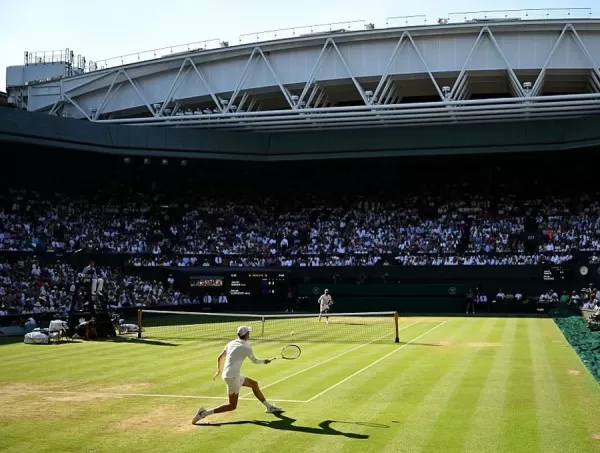
The AELTC partnered with IBM to update its website and mobile app ahead of this year's Wimbledon Championships. Image: Getty Images.AI Magazine highlights the biggest stories from the past week, including IBM, Google, Haleon, Palo Alto Networks, and
IBM, Google, NVIDIA Lead This Week's Top Five AI Stories
The AELTC partnered with IBM to update its website and mobile app ahead of this year's Wimbledon Championships. Image: Getty Images.AI Magazine highlights the biggest stories from the past week, including IBM, Google, Haleon, Palo Alto Networks, and
 Musk Admits Grok Build Leaked User Code, Promises to Erase All Historical Data
Elon Musk directly addressed the privacy controversy surrounding Grok Build, beginning with a simple "True" to confirm the incident's validity. He pledged that all user data previously uploaded to SpaceXAI would be permanently erased, stating, "not a
Musk Admits Grok Build Leaked User Code, Promises to Erase All Historical Data
Elon Musk directly addressed the privacy controversy surrounding Grok Build, beginning with a simple "True" to confirm the incident's validity. He pledged that all user data previously uploaded to SpaceXAI would be permanently erased, stating, "not a

2026 Latest Best Top-rated AI SERP Analysis Tools for Search Strategy are curated by XIX.AI through rigorous real-world tests and weekly updated rankings. These powerful tools help you unlock hidden optimization opportunities, boost content performance, and gain a competitive edge in search. Discover your perfect tool to elevate your search strategy today. Explore now!
13 tools
xix.ai

2026 Latest Best Top-rated AI Anomaly Detection Tools for KPI Monitoring in SaaS and Ecommerce teams! XIX.AI has curated a powerful, game-changing collection based on rigorous real-world tests and weekly updated rankings. You’ll find detailed free vs paid comparison insights to help you identify the must-try solution that boosts productivity and unlocks your AI edge. Explore now!
10 tools
xix.ai

2026 Latest Best Top-Rated AI Outline Generators for Long-Form SEO Articles, meticulously curated by XIX.AI. These powerful tools offer game-changing assistance in creating high-quality content quickly, boosting writing efficiency significantly. Get a free vs paid comparison along with real-world tests and detailed rankings to help you find the must-try option that suits your needs. Explore now to unlock your AI edge.
8 tools
xix.ai

2026 Latest Best AI Study Tools for Homework and Exam Prep! XIX.AI curates a top-rated list of powerful, game-changing tools that help students boost productivity, streamline homework completion, and ace exams through real-world tests. Get a free vs paid comparison, detailed rankings, and must-try options to unlock your AI edge. Explore now!
10 tools
xix.ai

2026 Latest Best AI Vocal Demo Tools for Songwriters, Hook Creators, and Multi-Language Content Teams! XIX.AI has curated a top-rated list of powerful game-changing tools that go through rigorous real-world tests. You’ll find detailed free vs paid comparison data, comprehensive rankings, and must-try options to help you boost writing efficiency and unlock your creative potential. Explore now to discover your perfect tool for all your content needs!
9 tools
xix.ai

2026 Latest Best Top-rated AI Competitive Research Tools for Small Businesses! XIX.AI has curated a highly powerful game-changing collection, updated weekly with rigorous real-world tests and detailed rankings. You can find a comprehensive free vs paid comparison to help you identify the must-try tools that boost your productivity and give you a competitive edge. Explore now to discover your perfect tool!
9 tools
xix.ai












