


 Home
HomeIBM, Google, NVIDIA Lead This Week's Top Five AI Stories
![]()
The AELTC partnered with IBM to update its website and mobile app ahead of this year's Wimbledon Championships. Image: Getty Images.
AI Magazine highlights the biggest stories from the past week, including IBM, Google, Haleon, Palo Alto Networks, and Microsoft.
Court 19: Wimbledon's Tech Hub, Powered by IBM's AI
The historic grounds at Wimbledon attract about 500,000 fans each year, with hundreds of millions more watching digitally worldwide.
As the 2026 tournament begins today, IBM and the All England Lawn Tennis Club (AELTC) have revealed how AI-powered technology is transforming fan engagement at Wimbledon while preserving the tournament's 150-year heritage and traditions.
The AELTC partnered with IBM to update its website and mobile app ahead of this year's championships. The partnership between the two organizations spans 39 years, making it one of the longest-running technology collaborations in professional sports.
The updates are part of a five-year digital development roadmap, now in its second year. According to AELTC and IBM representatives, the changes demonstrate how generative AI can integrate with traditional sporting events while respecting their unique character and heritage.
Search engine giant Google is imposing strict limits on Meta's use of its Gemini AI models. Image: Getty Images.
Why Google Is Limiting Meta's Use of Gemini AI as Demand Soars
As the world grows increasingly reliant on AI, even the companies driving the revolution are facing compute shortages.
Search engine giant Google is imposing strict limits on Meta's use of its Gemini AI models, exposing severe infrastructure bottlenecks that are now disrupting Meta's internal projects.
The move follows the social media giant's request for more computing capacity than the rival technology group could deliver in March 2026, according to three people familiar with the matter who spoke to the Financial Times.
Several other Google clients have also been affected by the infrastructure restrictions, though to a lesser extent. However, Meta has been particularly impacted due to its exceptionally high demand for Google's models.
Peggy Johnson, CEO of Agility Robotics.
Halos for Robotics: NVIDIA's Full-Stack Robot Safety System
NVIDIA has revealed a first-of-its-kind, full-stack safety architecture for robotics and physical AI systems called Halos for Robotics.
The technology applies autonomous vehicle safety principles to humanoid robots operating in industrial settings.
NVIDIA's announcement marks the first application of Halos beyond automotive use cases. Agility has integrated NVIDIA Halos for Robotics into its humanoid systems deployed at Amazon, GXO, Schaeffler, and Toyota Motor Manufacturing Canada.
Peggy Johnson, CEO of Agility, says: "For humanoids to deliver value at scale, safety must be built into the robot and validated across the entire system.
"Partnering with NVIDIA to implement and optimize the Halos for Robotics system extends our leadership in responsible automation, which is a non-negotiable requirement for bringing humanoids safely into industrial workflows."
Inside the Haleon and Microsoft Deal to Automate Global Health
UK consumer health company Haleon, which owns brands such as Sensodyne toothpaste, Panadol and Advil painkillers, and Centrum vitamins, plans to scale its digital, data, and AI capabilities through a new five-year collaboration with Microsoft.
Haleon operates in 170 markets across six categories, and its trusted brands reach an estimated 1.4 billion consumers worldwide.
Building on Haleon's existing use of Microsoft 365 Copilot, this agreement accelerates company-wide AI adoption by empowering employees to automate administrative tasks, streamline collaboration, and focus on high-value priorities.
The companies will co-create high-impact AI use cases that deliver value across multiple critical functions, from consumer insights and innovation to supply chain and commercial execution.
To better serve consumers' daily health needs, Haleon is focusing on accelerating scientific breakthroughs and clinical content production. The initiative will also enhance its marketing with highly personalized content while enabling smarter, data-driven decisions across the entire organization.
Nikesh Arora, Chairman and CEO of Palo Alto Networks.
Palo Alto CEO on AI: The 'Darwinian Moment' Is Here
Palo Alto Networks operates with a 21,000-person workforce that faces a growing skills challenge.
According to Nikesh Arora, CEO of Palo Alto Networks, 90% of enterprise employees "are not AI savvy."
Nikesh made the remarks during an appearance on the 20VC podcast, which interviews the world's greatest venture capitalists. He attributes the gap between available technology and employee skills to insufficient training courses.
Under Nikesh's leadership model, the Palo Alto Networks workforce manages its own development. He describes the current business environment as a "Darwinian moment" where companies must "figure out who's really good."
Related article
 Gemini Spark now manages Google Photos library
Google is expanding its AI integration by enabling Gemini Spark to manage Google Photos libraries. Users can now instruct the agent to edit images, organize albums, generate shared collections from favorite shots, convert concert flyers into calendar
Khosla-backed Genesis AI Unveils Full-Stack Robotics Solution
Genesis AI, a startup that secured a $105 million seed round to develop foundational AI for robotics, has launched its inaugural model, GENE-26.5, featuring unexpectedly dexterous hands. In a demonstration video, the company highlighted various advan
Gemini offers free personalized AI image generation to U.S. users
On Monday, Google revealed that the Gemini app is extending its personalized image generation capabilities, powered by Nano Banana, to a wider audience. As of today, all eligible users in the United States can use this feature at no cost, removing th
Related Special Topic Recommendations
Data Analysis
Gemini Spark now manages Google Photos library
Google is expanding its AI integration by enabling Gemini Spark to manage Google Photos libraries. Users can now instruct the agent to edit images, organize albums, generate shared collections from favorite shots, convert concert flyers into calendar
Khosla-backed Genesis AI Unveils Full-Stack Robotics Solution
Genesis AI, a startup that secured a $105 million seed round to develop foundational AI for robotics, has launched its inaugural model, GENE-26.5, featuring unexpectedly dexterous hands. In a demonstration video, the company highlighted various advan
Gemini offers free personalized AI image generation to U.S. users
On Monday, Google revealed that the Gemini app is extending its personalized image generation capabilities, powered by Nano Banana, to a wider audience. As of today, all eligible users in the United States can use this feature at no cost, removing th
Related Special Topic Recommendations
Data Analysis
 Best AI Anomaly Detection Tools for KPI Monitoring across SaaS and Ecommerce Teams
2026 Latest Best Top-rated AI Anomaly Detection Tools for KPI Monitoring in SaaS and Ecommerce teams! XIX.AI has curated a powerful, game-changing collection based on rigorous real-world tests and weekly updated rankings. You’ll find detailed free vs paid comparison insights to help you identify the must-try solution that boosts productivity and unlocks your AI edge. Explore now!
 10 tools
 xix.ai
writing
Best AI Outline Generators for Long-Form SEO Articles
xix.ai
writing
Best AI Outline Generators for Long-Form SEO Articles
2026 Latest Best Top-Rated AI Outline Generators for Long-Form SEO Articles, meticulously curated by XIX.AI. These powerful tools offer game-changing assistance in creating high-quality content quickly, boosting writing efficiency significantly. Get a free vs paid comparison along with real-world tests and detailed rankings to help you find the must-try option that suits your needs. Explore now to unlock your AI edge.
8 tools
xix.ai
Education and Learning
AI Study Tools for Homework and Exam Prep
2026 Latest Best AI Study Tools for Homework and Exam Prep! XIX.AI curates a top-rated list of powerful, game-changing tools that help students boost productivity, streamline homework completion, and ace exams through real-world tests. Get a free vs paid comparison, detailed rankings, and must-try options to unlock your AI edge. Explore now!
10 tools
xix.ai
Music composition
AI Vocal Demo Tools for Songwriters, Hooks, Toplines, and Multilingual Draft Sessions
2026 Latest Best AI Vocal Demo Tools for Songwriters, Hook Creators, and Multi-Language Content Teams! XIX.AI has curated a top-rated list of powerful game-changing tools that go through rigorous real-world tests. You’ll find detailed free vs paid comparison data, comprehensive rankings, and must-try options to help you boost writing efficiency and unlock your creative potential. Explore now to discover your perfect tool for all your content needs!
9 tools
xix.ai
Business
Best AI Competitive Research Tools for Small Businesses
2026 Latest Best Top-rated AI Competitive Research Tools for Small Businesses! XIX.AI has curated a highly powerful game-changing collection, updated weekly with rigorous real-world tests and detailed rankings. You can find a comprehensive free vs paid comparison to help you identify the must-try tools that boost your productivity and give you a competitive edge. Explore now to discover your perfect tool!
9 tools
xix.ai
Image editing
Photoshop AI Retouch Tools for Ecommerce Apparel, Skin Cleanup, and Color Consistency
2026 Latest Best Photoshop AI retouch tools for ecommerce apparel, skin cleanup, and color consistency! This top-rated curated list features powerful game-changing solutions that help you boost writing efficiency, streamline content creation, and achieve perfect visual results effortlessly. Each tool has undergone real-world tests through weekly updated rankings, complete with free vs paid comparison details. Backed by XIX.AI, it’s the must-try guide for anyone aiming to unlock your AI edge. Explore now!
10 tools
xix.ai

 Comments (0)
0/500
Comments (0)
0/500
The AELTC partnered with IBM to update its website and mobile app ahead of this year's Wimbledon Championships. Image: Getty Images.
AI Magazine highlights the biggest stories from the past week, including IBM, Google, Haleon, Palo Alto Networks, and Microsoft.
Court 19: Wimbledon's Tech Hub, Powered by IBM's AI
The historic grounds at Wimbledon attract about 500,000 fans each year, with hundreds of millions more watching digitally worldwide.
As the 2026 tournament begins today, IBM and the All England Lawn Tennis Club (AELTC) have revealed how AI-powered technology is transforming fan engagement at Wimbledon while preserving the tournament's 150-year heritage and traditions.
The AELTC partnered with IBM to update its website and mobile app ahead of this year's championships. The partnership between the two organizations spans 39 years, making it one of the longest-running technology collaborations in professional sports.
The updates are part of a five-year digital development roadmap, now in its second year. According to AELTC and IBM representatives, the changes demonstrate how generative AI can integrate with traditional sporting events while respecting their unique character and heritage.
Search engine giant Google is imposing strict limits on Meta's use of its Gemini AI models. Image: Getty Images.
Why Google Is Limiting Meta's Use of Gemini AI as Demand Soars
As the world grows increasingly reliant on AI, even the companies driving the revolution are facing compute shortages.
Search engine giant Google is imposing strict limits on Meta's use of its Gemini AI models, exposing severe infrastructure bottlenecks that are now disrupting Meta's internal projects.
The move follows the social media giant's request for more computing capacity than the rival technology group could deliver in March 2026, according to three people familiar with the matter who spoke to the Financial Times.
Several other Google clients have also been affected by the infrastructure restrictions, though to a lesser extent. However, Meta has been particularly impacted due to its exceptionally high demand for Google's models.
Peggy Johnson, CEO of Agility Robotics.
Halos for Robotics: NVIDIA's Full-Stack Robot Safety System
NVIDIA has revealed a first-of-its-kind, full-stack safety architecture for robotics and physical AI systems called Halos for Robotics.
The technology applies autonomous vehicle safety principles to humanoid robots operating in industrial settings.
NVIDIA's announcement marks the first application of Halos beyond automotive use cases. Agility has integrated NVIDIA Halos for Robotics into its humanoid systems deployed at Amazon, GXO, Schaeffler, and Toyota Motor Manufacturing Canada.
Peggy Johnson, CEO of Agility, says: "For humanoids to deliver value at scale, safety must be built into the robot and validated across the entire system.
"Partnering with NVIDIA to implement and optimize the Halos for Robotics system extends our leadership in responsible automation, which is a non-negotiable requirement for bringing humanoids safely into industrial workflows."
Inside the Haleon and Microsoft Deal to Automate Global Health
UK consumer health company Haleon, which owns brands such as Sensodyne toothpaste, Panadol and Advil painkillers, and Centrum vitamins, plans to scale its digital, data, and AI capabilities through a new five-year collaboration with Microsoft.
Haleon operates in 170 markets across six categories, and its trusted brands reach an estimated 1.4 billion consumers worldwide.
Building on Haleon's existing use of Microsoft 365 Copilot, this agreement accelerates company-wide AI adoption by empowering employees to automate administrative tasks, streamline collaboration, and focus on high-value priorities.
The companies will co-create high-impact AI use cases that deliver value across multiple critical functions, from consumer insights and innovation to supply chain and commercial execution.
To better serve consumers' daily health needs, Haleon is focusing on accelerating scientific breakthroughs and clinical content production. The initiative will also enhance its marketing with highly personalized content while enabling smarter, data-driven decisions across the entire organization.
Nikesh Arora, Chairman and CEO of Palo Alto Networks.
Palo Alto CEO on AI: The 'Darwinian Moment' Is Here
Palo Alto Networks operates with a 21,000-person workforce that faces a growing skills challenge.
According to Nikesh Arora, CEO of Palo Alto Networks, 90% of enterprise employees "are not AI savvy."
Nikesh made the remarks during an appearance on the 20VC podcast, which interviews the world's greatest venture capitalists. He attributes the gap between available technology and employee skills to insufficient training courses.
Under Nikesh's leadership model, the Palo Alto Networks workforce manages its own development. He describes the current business environment as a "Darwinian moment" where companies must "figure out who's really good."








 Gemini Spark now manages Google Photos library
Google is expanding its AI integration by enabling Gemini Spark to manage Google Photos libraries. Users can now instruct the agent to edit images, organize albums, generate shared collections from favorite shots, convert concert flyers into calendar
Gemini Spark now manages Google Photos library
Google is expanding its AI integration by enabling Gemini Spark to manage Google Photos libraries. Users can now instruct the agent to edit images, organize albums, generate shared collections from favorite shots, convert concert flyers into calendar
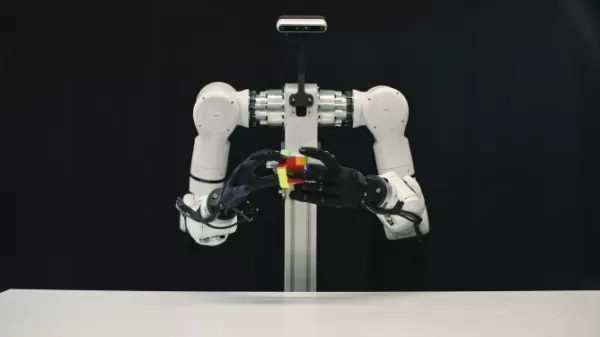 Khosla-backed Genesis AI Unveils Full-Stack Robotics Solution
Genesis AI, a startup that secured a $105 million seed round to develop foundational AI for robotics, has launched its inaugural model, GENE-26.5, featuring unexpectedly dexterous hands. In a demonstration video, the company highlighted various advan
Khosla-backed Genesis AI Unveils Full-Stack Robotics Solution
Genesis AI, a startup that secured a $105 million seed round to develop foundational AI for robotics, has launched its inaugural model, GENE-26.5, featuring unexpectedly dexterous hands. In a demonstration video, the company highlighted various advan
 Gemini offers free personalized AI image generation to U.S. users
On Monday, Google revealed that the Gemini app is extending its personalized image generation capabilities, powered by Nano Banana, to a wider audience. As of today, all eligible users in the United States can use this feature at no cost, removing th
Gemini offers free personalized AI image generation to U.S. users
On Monday, Google revealed that the Gemini app is extending its personalized image generation capabilities, powered by Nano Banana, to a wider audience. As of today, all eligible users in the United States can use this feature at no cost, removing th

2026 Latest Best Top-rated AI Anomaly Detection Tools for KPI Monitoring in SaaS and Ecommerce teams! XIX.AI has curated a powerful, game-changing collection based on rigorous real-world tests and weekly updated rankings. You’ll find detailed free vs paid comparison insights to help you identify the must-try solution that boosts productivity and unlocks your AI edge. Explore now!
10 tools
xix.ai

2026 Latest Best Top-Rated AI Outline Generators for Long-Form SEO Articles, meticulously curated by XIX.AI. These powerful tools offer game-changing assistance in creating high-quality content quickly, boosting writing efficiency significantly. Get a free vs paid comparison along with real-world tests and detailed rankings to help you find the must-try option that suits your needs. Explore now to unlock your AI edge.
8 tools
xix.ai

2026 Latest Best AI Study Tools for Homework and Exam Prep! XIX.AI curates a top-rated list of powerful, game-changing tools that help students boost productivity, streamline homework completion, and ace exams through real-world tests. Get a free vs paid comparison, detailed rankings, and must-try options to unlock your AI edge. Explore now!
10 tools
xix.ai

2026 Latest Best AI Vocal Demo Tools for Songwriters, Hook Creators, and Multi-Language Content Teams! XIX.AI has curated a top-rated list of powerful game-changing tools that go through rigorous real-world tests. You’ll find detailed free vs paid comparison data, comprehensive rankings, and must-try options to help you boost writing efficiency and unlock your creative potential. Explore now to discover your perfect tool for all your content needs!
9 tools
xix.ai

2026 Latest Best Top-rated AI Competitive Research Tools for Small Businesses! XIX.AI has curated a highly powerful game-changing collection, updated weekly with rigorous real-world tests and detailed rankings. You can find a comprehensive free vs paid comparison to help you identify the must-try tools that boost your productivity and give you a competitive edge. Explore now to discover your perfect tool!
9 tools
xix.ai

2026 Latest Best Photoshop AI retouch tools for ecommerce apparel, skin cleanup, and color consistency! This top-rated curated list features powerful game-changing solutions that help you boost writing efficiency, streamline content creation, and achieve perfect visual results effortlessly. Each tool has undergone real-world tests through weekly updated rankings, complete with free vs paid comparison details. Backed by XIX.AI, it’s the must-try guide for anyone aiming to unlock your AI edge. Explore now!
10 tools
xix.ai












