


 Home
HomeA&K Robotics Secures $8M for Autonomous Terminal Mobility
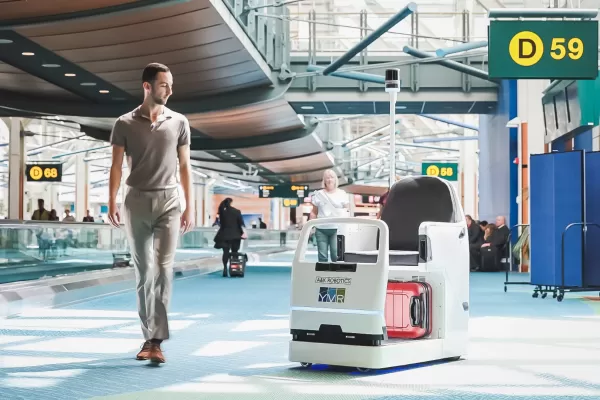
A&K Robotics' Cruz: an autonomous robot providing safe, accessible passenger transport in busy airport terminals. | Credit: A&K Robotics
A&K Robotics has raised $8 million in Series A funding to expand the deployment of its autonomous passenger pods, tackling a growing accessibility challenge in global air travel. Led by BDC Capital and Vantage Futures, this investment will speed up the rollout of Cruz, a self-driving robot engineered to navigate crowded airport terminals and offer independent mobility for the millions of travelers with physical limitations.
Airport navigation is stressful for many, but it poses a particular hurdle for individuals with mobility issues. Approximately 17% of the global population experiences mobility challenges, and requests for airport assistance are rising 10–15% annually—outpacing overall passenger growth.
A&K aims to establish a new category of autonomous passenger mobility infrastructure to meet this need. The funding round was led by BDC's Industrial Innovation Venture Fund, part of BDC Capital—one of Canada's largest and most active venture capital investors—and Vantage Futures, the corporate venture arm of airport and transportation leader Vantage Group.
Shaping the future of airport mobility
A&K Robotics is developing autonomous mobility solutions for airports—self-driving vehicles built to transport passengers through complex indoor spaces. With airports confronting rising passenger numbers, labor shortages, and stricter accessibility standards, the company collaborates closely with major operators to integrate autonomous mobility into daily operations.
Cruz is a self-driving mobility robot that transports passengers through high-traffic, dynamic settings like airport terminals. Functioning as an indoor-specific autonomous vehicle, it allows riders to select a destination; Cruz then navigates independently using onboard sensors and advanced AI. It adjusts its route in real time to move safely among pedestrians and arrive accurately at the chosen spot. Operating continuously, Cruz enables airports to provide reliable, scalable, and accessible passenger mobility.
“Air travel is chaotic enough—reaching your gate shouldn’t add to the stress,” said Matthew Anderson, CEO of A&K Robotics. “We’re building the infrastructure that helps airports move more people, more safely, and with greater independence, all while integrating seamlessly into existing workflows.”
Cruz is already operating in complex, live airport environments, partnering with leading airport operators across North America and Europe, including Vancouver International Airport (YVR). YVR has been named Best Airport in North America 15 times and ranks among the world’s Top 10 airports by aviation research firm Skytrax. Another key partner is Madrid-Barajas Airport (MAD), operated by Aena—the world’s largest airport operator by passenger volume, serving over 380 million travelers each year.
Related article
 China Academy of Information and Communication Technology Launches Trusted AI Document Writing Evaluation to Tackle Formalism
As AI-assisted writing gains traction in government and enterprise sectors, ensuring the compliance and rigor of generated official documents has emerged as a critical industry concern. The China Academy of Information and Communications Technology (
TechCrunch Disrupt 2026 kicks off tomorrow: Final chance to save up to $100 on tickets
Tomorrow at 8 a.m. PT, the countdown ends. Over 10,000 founders, investors, and tech leaders will converge at San Francisco’s Moscone West for TechCrunch Disrupt 2026, a three-day immersion in the ideas, connections, and startups defining our future.
SK Hynix in talks with Intel to build memory chips in US
SK Hynix, a leading South Korean memory chip manufacturer, is in talks with Intel about producing RAM chips in the United States for the first time, according to a Reuters report citing anonymous sources.Reports suggest the two companies have explore
Related Special Topic Recommendations
Design & Art
China Academy of Information and Communication Technology Launches Trusted AI Document Writing Evaluation to Tackle Formalism
As AI-assisted writing gains traction in government and enterprise sectors, ensuring the compliance and rigor of generated official documents has emerged as a critical industry concern. The China Academy of Information and Communications Technology (
TechCrunch Disrupt 2026 kicks off tomorrow: Final chance to save up to $100 on tickets
Tomorrow at 8 a.m. PT, the countdown ends. Over 10,000 founders, investors, and tech leaders will converge at San Francisco’s Moscone West for TechCrunch Disrupt 2026, a three-day immersion in the ideas, connections, and startups defining our future.
SK Hynix in talks with Intel to build memory chips in US
SK Hynix, a leading South Korean memory chip manufacturer, is in talks with Intel about producing RAM chips in the United States for the first time, according to a Reuters report citing anonymous sources.Reports suggest the two companies have explore
Related Special Topic Recommendations
Design & Art
 Top AI Illustration Tools: Create Editorial Scenes and Cover Art Faster
2026 Latest Top-rated AI Illustration Tools: Our curated list features the best powerfully designed tools for creating stunning editorial scenes and eye-catching cover art quickly. Each option has gone through rigorous real-world tests, offering a free vs paid comparison to help you find the perfect match for your workflow. Try these must-try solutions today to unlock your AI edge and boost your creative productivity. Explore now at XIX.AI.
 10 tools
 xix.ai
Education and Learning
Top AI Tutors for Exam Prep: Practice Math, Science, and English
xix.ai
Education and Learning
Top AI Tutors for Exam Prep: Practice Math, Science, and English
2026 Latest Top-Rated Best AI Tutors for Exam Prep are here on XIX.AI! Our curated list features powerful game-changing tools that offer free vs paid comparison, real-world tests, and weekly updated rankings. They help boost your writing efficiency, simplify complex topic learning, and unlock your academic potential. Explore now to Discover your perfect exam prep tool and Start creating today to Unlock your AI edge!
10 tools
xix.ai
Finance
AI Budget Planning Tools for Personal Money Management
2026 Latest Best Top-Rated AI Budget Planning Tools for Personal Money Management are here on XIX.AI! This curated collection features powerful, game-changing solutions that help you conduct real-world tests, understand spending habits, and create personalized plans to boost productivity. Enjoy a free vs paid comparison along with detailed rankings. Must-try tools designed to simplify money management and unlock your AI edge. Explore now!
11 tools
xix.ai
Health & Wellness
AI Sleep Tracking Assistants: Improve Recovery with Better Bedtime Habits
2026 Latest Best Top-Rated AI Sleep Tracking Assistants curated for ultimate recovery. This fully updated weekly guide features powerful tools that deliver real-world tests, free vs paid comparison, and detailed rankings to help you find the must-try solution that boosts sleep quality and supports better bedtime habits. Explore now at XIX.AI to Unlock your AI edge.
10 tools
xix.ai
Data Analysis
AI SQL Copilots for Product and Revenue Analytics
2026 Latest Best Top-Rated AI SQL Copilots for Product and Revenue Analytics! XIX.AI has curated a powerful, game-changing collection of must-try tools that undergo real-world tests through weekly updated rankings. These tools help users boost productivity significantly by accelerating data analysis, streamlining complex queries, and generating accurate insights to drive smarter business decisions. Explore now to Discover your perfect tool for unlocking your AI edge!
14 tools
xix.ai
Education and Learning
Best AI Homework Helpers That Teach: Learn Concepts, Not Just Answers
2026 Latest Best Top-Rated AI Homework Helpers That Teach Core Concepts Not Just Answers Powerful Tools for Students Must-Try Curated List Weekly Updated Free vs Paid Comparison Real-World Tests Accurate Rankings to Help You Unlock Your Full Learning Potential Explore now to Discover your perfect tool for smarter studying.
10 tools
xix.ai

 Comments (0)
0/500
Comments (0)
0/500
A&K Robotics' Cruz: an autonomous robot providing safe, accessible passenger transport in busy airport terminals. | Credit: A&K Robotics
A&K Robotics has raised $8 million in Series A funding to expand the deployment of its autonomous passenger pods, tackling a growing accessibility challenge in global air travel. Led by BDC Capital and Vantage Futures, this investment will speed up the rollout of Cruz, a self-driving robot engineered to navigate crowded airport terminals and offer independent mobility for the millions of travelers with physical limitations.
Airport navigation is stressful for many, but it poses a particular hurdle for individuals with mobility issues. Approximately 17% of the global population experiences mobility challenges, and requests for airport assistance are rising 10–15% annually—outpacing overall passenger growth.
A&K aims to establish a new category of autonomous passenger mobility infrastructure to meet this need. The funding round was led by BDC's Industrial Innovation Venture Fund, part of BDC Capital—one of Canada's largest and most active venture capital investors—and Vantage Futures, the corporate venture arm of airport and transportation leader Vantage Group.
Shaping the future of airport mobility
A&K Robotics is developing autonomous mobility solutions for airports—self-driving vehicles built to transport passengers through complex indoor spaces. With airports confronting rising passenger numbers, labor shortages, and stricter accessibility standards, the company collaborates closely with major operators to integrate autonomous mobility into daily operations.
Cruz is a self-driving mobility robot that transports passengers through high-traffic, dynamic settings like airport terminals. Functioning as an indoor-specific autonomous vehicle, it allows riders to select a destination; Cruz then navigates independently using onboard sensors and advanced AI. It adjusts its route in real time to move safely among pedestrians and arrive accurately at the chosen spot. Operating continuously, Cruz enables airports to provide reliable, scalable, and accessible passenger mobility.
“Air travel is chaotic enough—reaching your gate shouldn’t add to the stress,” said Matthew Anderson, CEO of A&K Robotics. “We’re building the infrastructure that helps airports move more people, more safely, and with greater independence, all while integrating seamlessly into existing workflows.”
Cruz is already operating in complex, live airport environments, partnering with leading airport operators across North America and Europe, including Vancouver International Airport (YVR). YVR has been named Best Airport in North America 15 times and ranks among the world’s Top 10 airports by aviation research firm Skytrax. Another key partner is Madrid-Barajas Airport (MAD), operated by Aena—the world’s largest airport operator by passenger volume, serving over 380 million travelers each year.








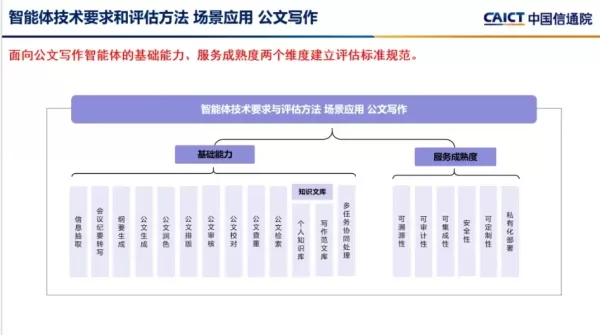 China Academy of Information and Communication Technology Launches Trusted AI Document Writing Evaluation to Tackle Formalism
As AI-assisted writing gains traction in government and enterprise sectors, ensuring the compliance and rigor of generated official documents has emerged as a critical industry concern. The China Academy of Information and Communications Technology (
China Academy of Information and Communication Technology Launches Trusted AI Document Writing Evaluation to Tackle Formalism
As AI-assisted writing gains traction in government and enterprise sectors, ensuring the compliance and rigor of generated official documents has emerged as a critical industry concern. The China Academy of Information and Communications Technology (
 TechCrunch Disrupt 2026 kicks off tomorrow: Final chance to save up to $100 on tickets
Tomorrow at 8 a.m. PT, the countdown ends. Over 10,000 founders, investors, and tech leaders will converge at San Francisco’s Moscone West for TechCrunch Disrupt 2026, a three-day immersion in the ideas, connections, and startups defining our future.
TechCrunch Disrupt 2026 kicks off tomorrow: Final chance to save up to $100 on tickets
Tomorrow at 8 a.m. PT, the countdown ends. Over 10,000 founders, investors, and tech leaders will converge at San Francisco’s Moscone West for TechCrunch Disrupt 2026, a three-day immersion in the ideas, connections, and startups defining our future.
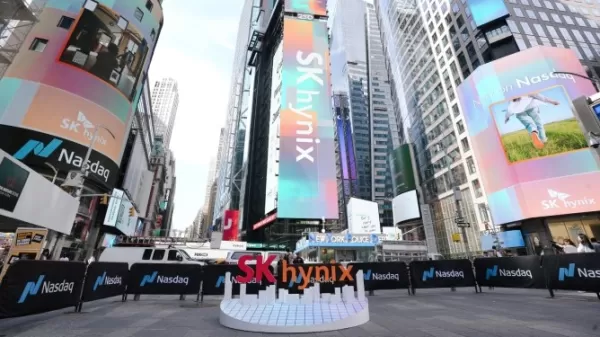 SK Hynix in talks with Intel to build memory chips in US
SK Hynix, a leading South Korean memory chip manufacturer, is in talks with Intel about producing RAM chips in the United States for the first time, according to a Reuters report citing anonymous sources.Reports suggest the two companies have explore
SK Hynix in talks with Intel to build memory chips in US
SK Hynix, a leading South Korean memory chip manufacturer, is in talks with Intel about producing RAM chips in the United States for the first time, according to a Reuters report citing anonymous sources.Reports suggest the two companies have explore

2026 Latest Top-rated AI Illustration Tools: Our curated list features the best powerfully designed tools for creating stunning editorial scenes and eye-catching cover art quickly. Each option has gone through rigorous real-world tests, offering a free vs paid comparison to help you find the perfect match for your workflow. Try these must-try solutions today to unlock your AI edge and boost your creative productivity. Explore now at XIX.AI.
10 tools
xix.ai

2026 Latest Top-Rated Best AI Tutors for Exam Prep are here on XIX.AI! Our curated list features powerful game-changing tools that offer free vs paid comparison, real-world tests, and weekly updated rankings. They help boost your writing efficiency, simplify complex topic learning, and unlock your academic potential. Explore now to Discover your perfect exam prep tool and Start creating today to Unlock your AI edge!
10 tools
xix.ai

2026 Latest Best Top-Rated AI Budget Planning Tools for Personal Money Management are here on XIX.AI! This curated collection features powerful, game-changing solutions that help you conduct real-world tests, understand spending habits, and create personalized plans to boost productivity. Enjoy a free vs paid comparison along with detailed rankings. Must-try tools designed to simplify money management and unlock your AI edge. Explore now!
11 tools
xix.ai

2026 Latest Best Top-Rated AI Sleep Tracking Assistants curated for ultimate recovery. This fully updated weekly guide features powerful tools that deliver real-world tests, free vs paid comparison, and detailed rankings to help you find the must-try solution that boosts sleep quality and supports better bedtime habits. Explore now at XIX.AI to Unlock your AI edge.
10 tools
xix.ai

2026 Latest Best Top-Rated AI SQL Copilots for Product and Revenue Analytics! XIX.AI has curated a powerful, game-changing collection of must-try tools that undergo real-world tests through weekly updated rankings. These tools help users boost productivity significantly by accelerating data analysis, streamlining complex queries, and generating accurate insights to drive smarter business decisions. Explore now to Discover your perfect tool for unlocking your AI edge!
14 tools
xix.ai

2026 Latest Best Top-Rated AI Homework Helpers That Teach Core Concepts Not Just Answers Powerful Tools for Students Must-Try Curated List Weekly Updated Free vs Paid Comparison Real-World Tests Accurate Rankings to Help You Unlock Your Full Learning Potential Explore now to Discover your perfect tool for smarter studying.
10 tools
xix.ai












