


 Home
Home
Ex-OpenAI and DeepMind Scientists Secure Record $300 Million Seed Funding for AI-Powered Science Automation

Periodic Labs emerged from stealth mode on Tuesday, announcing a monumental $300 million seed round. The funding is backed by a veritable all-star lineup from the tech industry, including Andreessen Horowitz, DST Global, Nvidia, Accel, Elad Gil, Jeff Dean, Eric Schmidt, and Jeff Bezos.
The company was founded by Ekin Dogus Cubuk and Liam Fedus. Cubuk previously led the materials and chemistry team at Google Brain and DeepMind. There, he spearheaded projects like GNoME, an AI tool that in 2023 identified over 2 million new crystals—materials researchers believe could fuel future technological breakthroughs.
Fedus is a former Vice President of Research at OpenAI and was one of the key researchers behind the creation of ChatGPT. He also led the team that developed the first trillion-parameter neural network.
The core team is similarly composed of researchers with deep experience in major AI and materials science initiatives, ranging from developing OpenAI's agent, Operator, to contributing to Microsoft's MatterGen, an LLM for materials discovery.
Periodic Labs states its ambitious mission is to automate scientific discovery by creating AI scientists. This involves building autonomous laboratories where robotics systems conduct physical experiments, gather data, iterate on findings, and continuously learn and improve.
The lab's primary initial objective is to develop new superconductors that offer superior performance and potentially greater energy efficiency than current materials. However, the well-capitalized startup also aims to discover a wide range of other novel materials.
A parallel goal is to systematically aggregate all the physical-world data generated by its AI scientists as they mix, heat, and manipulate various powders and raw materials in their quest for innovation.
"Historically, advances in scientific AI have relied on models trained on internet data," the company notes in an introductory post, suggesting that large language models have largely "exhausted" the web as a scalable data source. "At Periodic, we are building AI scientists and the autonomous laboratories for them to operate within."
The vision is that these labs will not only invent next-generation materials but also produce a continuous stream of invaluable, fresh experimental data to fuel the ongoing evolution of AI models.
While this assembly of talent is remarkable, Periodic Labs is not alone in pursuing AI-driven scientific discovery. Using AI to automate chemistry breakthroughs has been an active academic research area since at least 2023. It's also the focus of other entities, from smaller startups like Tetsuwan Scientific to nonprofits such as Future House and the University of Toronto's Acceleration Consortium.
Related article
 Khosla-backed Genesis AI Unveils Full-Stack Robotics Solution
Genesis AI, a startup that secured a $105 million seed round to develop foundational AI for robotics, has launched its inaugural model, GENE-26.5, featuring unexpectedly dexterous hands. In a demonstration video, the company highlighted various advan
How US$900m Funding Will Shape XPENG’s Robotics Vision
XPENG’s robotics division secures over US$900 million in funding, achieving a post-money valuation exceeding US$6.3 billion and accelerating the deployment of physical AI. Credit: XPENGSven De Smet, Head of Brand & Marketing at XPENG Europe, describe
Japan Launches World’s First National AI Infrastructure with NVIDIA
Japan's Ministry of Economy, Trade and Industry plans to deploy approximately 10 million AI-powered robots across 18 industries by 2040, addressing the country's growing labor shortage, according to NHK. Credit: NVIDIAThe Japanese government, along w
Related Special Topic Recommendations
Image editing
Khosla-backed Genesis AI Unveils Full-Stack Robotics Solution
Genesis AI, a startup that secured a $105 million seed round to develop foundational AI for robotics, has launched its inaugural model, GENE-26.5, featuring unexpectedly dexterous hands. In a demonstration video, the company highlighted various advan
How US$900m Funding Will Shape XPENG’s Robotics Vision
XPENG’s robotics division secures over US$900 million in funding, achieving a post-money valuation exceeding US$6.3 billion and accelerating the deployment of physical AI. Credit: XPENGSven De Smet, Head of Brand & Marketing at XPENG Europe, describe
Japan Launches World’s First National AI Infrastructure with NVIDIA
Japan's Ministry of Economy, Trade and Industry plans to deploy approximately 10 million AI-powered robots across 18 industries by 2040, addressing the country's growing labor shortage, according to NHK. Credit: NVIDIAThe Japanese government, along w
Related Special Topic Recommendations
Image editing
 AI Object Removal Editors: Clean Up Portraits, Travel, and Product Shots
2026 Latest Best Top-rated AI Object Removal Editors for portraits travel product shots! XIX.AI curates a powerful game-changing collection regularly updated with weekly rankings. These tools offer real-world tests to help you quickly remove unwanted elements, boost content quality, and save tons of time without compromising results. Must-try for anyone aiming to unlock their AI creation edge. Explore now!
 10 tools
 xix.ai
Text-to-speech
Best AI Text to Speech Tools for Online Courses
xix.ai
Text-to-speech
Best AI Text to Speech Tools for Online Courses
2026 Latest Best Top-rated AI Text to Speech Tools for Online Courses are curated by XIX.AI based on rigorous real-world tests and weekly updated rankings. These powerful tools help creators deliver crystal-clear audio content effortlessly, boosting writing efficiency and streamlining course production. Check out the free vs paid comparison to find your perfect fit. Explore now to unlock your AI edge in online education.
10 tools
xix.ai
writing
AI Blog Title Tools for Higher Click Through Rates
2026 Latest Best Top-Rated AI Blog Title Tools for Higher Click Through Rates! XIX.AI has carefully curated a powerful, game-changing collection of top tools that go through rigorous real-world tests. You’ll find a free vs paid comparison, weekly updated rankings, and detailed insights to help you boost your blog’s traffic efficiently. Must-try options are highlighted to help you unlock your AI edge. Explore now!
10 tools
xix.ai
automation
Best AI Task Routing Tools for Support Workflows
2026 Latest Best Top-rated AI Task Routing Tools for Support Workflows! XIX.AI has curated a highly powerful game-changing collection of must-try solutions, all undergoing rigorous real-world tests and updated weekly. These tools streamline workflows, boost productivity, and help teams deliver faster, more efficient support. Explore now to discover your perfect tool and unlock your AI edge!
17 tools
xix.ai
Academic Research
AI Citation and Paper Summary Tools
2026 Latest Best Top-Rated AI Citation and Paper Summary Tools Curated by XIX.AI. Get powerful game-changing solutions for quick content creation, improved writing efficiency, and boosting productivity. We offer a free vs paid comparison along with real-world tests and weekly updated rankings to help you find the must-try tool that fits your needs perfectly. Explore now to Unlock your AI edge.
10 tools
xix.ai
Productivity
Best AI Productivity Tools for Daily Work
2026 Latest Best Top-Rated AI Productivity Tools for Daily Work! XIX.AI has curated a powerful, game-changing selection based on rigorous weekly updated rankings and real-world tests. You’ll find must-try options that boost writing efficiency, streamline content creation, and help you overcome daily work challenges. Get a free vs paid comparison to find the perfect fit for your needs. Explore now to unlock your AI edge!
9 tools
xix.ai

 Comments (1)
0/500
Comments (1)
0/500
![ArthurThomas]()
Wow, $300M seed funding is insane! 🤯 It feels like the AI gold rush is shifting from chatbots to hard science. Excited to see what they can automate, but also a bit worried about the hype and pressure with that much money upfront. Hope they focus on real breakthroughs, not just VC returns.
Periodic Labs emerged from stealth mode on Tuesday, announcing a monumental $300 million seed round. The funding is backed by a veritable all-star lineup from the tech industry, including Andreessen Horowitz, DST Global, Nvidia, Accel, Elad Gil, Jeff Dean, Eric Schmidt, and Jeff Bezos.
The company was founded by Ekin Dogus Cubuk and Liam Fedus. Cubuk previously led the materials and chemistry team at Google Brain and DeepMind. There, he spearheaded projects like GNoME, an AI tool that in 2023 identified over 2 million new crystals—materials researchers believe could fuel future technological breakthroughs.
Fedus is a former Vice President of Research at OpenAI and was one of the key researchers behind the creation of ChatGPT. He also led the team that developed the first trillion-parameter neural network.
The core team is similarly composed of researchers with deep experience in major AI and materials science initiatives, ranging from developing OpenAI's agent, Operator, to contributing to Microsoft's MatterGen, an LLM for materials discovery.
Periodic Labs states its ambitious mission is to automate scientific discovery by creating AI scientists. This involves building autonomous laboratories where robotics systems conduct physical experiments, gather data, iterate on findings, and continuously learn and improve.
The lab's primary initial objective is to develop new superconductors that offer superior performance and potentially greater energy efficiency than current materials. However, the well-capitalized startup also aims to discover a wide range of other novel materials.
A parallel goal is to systematically aggregate all the physical-world data generated by its AI scientists as they mix, heat, and manipulate various powders and raw materials in their quest for innovation.
"Historically, advances in scientific AI have relied on models trained on internet data," the company notes in an introductory post, suggesting that large language models have largely "exhausted" the web as a scalable data source. "At Periodic, we are building AI scientists and the autonomous laboratories for them to operate within."
The vision is that these labs will not only invent next-generation materials but also produce a continuous stream of invaluable, fresh experimental data to fuel the ongoing evolution of AI models.
While this assembly of talent is remarkable, Periodic Labs is not alone in pursuing AI-driven scientific discovery. Using AI to automate chemistry breakthroughs has been an active academic research area since at least 2023. It's also the focus of other entities, from smaller startups like Tetsuwan Scientific to nonprofits such as Future House and the University of Toronto's Acceleration Consortium.








 Khosla-backed Genesis AI Unveils Full-Stack Robotics Solution
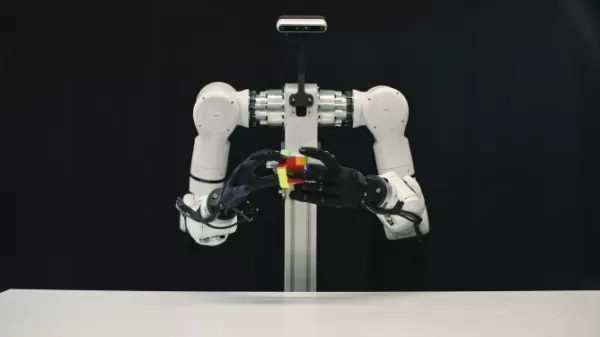
Genesis AI, a startup that secured a $105 million seed round to develop foundational AI for robotics, has launched its inaugural model, GENE-26.5, featuring unexpectedly dexterous hands. In a demonstration video, the company highlighted various advan
Khosla-backed Genesis AI Unveils Full-Stack Robotics Solution
Genesis AI, a startup that secured a $105 million seed round to develop foundational AI for robotics, has launched its inaugural model, GENE-26.5, featuring unexpectedly dexterous hands. In a demonstration video, the company highlighted various advan
 How US$900m Funding Will Shape XPENG’s Robotics Vision
XPENG’s robotics division secures over US$900 million in funding, achieving a post-money valuation exceeding US$6.3 billion and accelerating the deployment of physical AI. Credit: XPENGSven De Smet, Head of Brand & Marketing at XPENG Europe, describe
How US$900m Funding Will Shape XPENG’s Robotics Vision
XPENG’s robotics division secures over US$900 million in funding, achieving a post-money valuation exceeding US$6.3 billion and accelerating the deployment of physical AI. Credit: XPENGSven De Smet, Head of Brand & Marketing at XPENG Europe, describe
 Japan Launches World’s First National AI Infrastructure with NVIDIA
Japan's Ministry of Economy, Trade and Industry plans to deploy approximately 10 million AI-powered robots across 18 industries by 2040, addressing the country's growing labor shortage, according to NHK. Credit: NVIDIAThe Japanese government, along w
Japan Launches World’s First National AI Infrastructure with NVIDIA
Japan's Ministry of Economy, Trade and Industry plans to deploy approximately 10 million AI-powered robots across 18 industries by 2040, addressing the country's growing labor shortage, according to NHK. Credit: NVIDIAThe Japanese government, along w

2026 Latest Best Top-rated AI Object Removal Editors for portraits travel product shots! XIX.AI curates a powerful game-changing collection regularly updated with weekly rankings. These tools offer real-world tests to help you quickly remove unwanted elements, boost content quality, and save tons of time without compromising results. Must-try for anyone aiming to unlock their AI creation edge. Explore now!
10 tools
xix.ai

2026 Latest Best Top-rated AI Text to Speech Tools for Online Courses are curated by XIX.AI based on rigorous real-world tests and weekly updated rankings. These powerful tools help creators deliver crystal-clear audio content effortlessly, boosting writing efficiency and streamlining course production. Check out the free vs paid comparison to find your perfect fit. Explore now to unlock your AI edge in online education.
10 tools
xix.ai

2026 Latest Best Top-Rated AI Blog Title Tools for Higher Click Through Rates! XIX.AI has carefully curated a powerful, game-changing collection of top tools that go through rigorous real-world tests. You’ll find a free vs paid comparison, weekly updated rankings, and detailed insights to help you boost your blog’s traffic efficiently. Must-try options are highlighted to help you unlock your AI edge. Explore now!
10 tools
xix.ai

2026 Latest Best Top-rated AI Task Routing Tools for Support Workflows! XIX.AI has curated a highly powerful game-changing collection of must-try solutions, all undergoing rigorous real-world tests and updated weekly. These tools streamline workflows, boost productivity, and help teams deliver faster, more efficient support. Explore now to discover your perfect tool and unlock your AI edge!
17 tools
xix.ai

2026 Latest Best Top-Rated AI Citation and Paper Summary Tools Curated by XIX.AI. Get powerful game-changing solutions for quick content creation, improved writing efficiency, and boosting productivity. We offer a free vs paid comparison along with real-world tests and weekly updated rankings to help you find the must-try tool that fits your needs perfectly. Explore now to Unlock your AI edge.
10 tools
xix.ai

2026 Latest Best Top-Rated AI Productivity Tools for Daily Work! XIX.AI has curated a powerful, game-changing selection based on rigorous weekly updated rankings and real-world tests. You’ll find must-try options that boost writing efficiency, streamline content creation, and help you overcome daily work challenges. Get a free vs paid comparison to find the perfect fit for your needs. Explore now to unlock your AI edge!
9 tools
xix.ai

Wow, $300M seed funding is insane! 🤯 It feels like the AI gold rush is shifting from chatbots to hard science. Excited to see what they can automate, but also a bit worried about the hype and pressure with that much money upfront. Hope they focus on real breakthroughs, not just VC returns.












