


 Home
HomeSK Hynix in talks with Intel to build memory chips in US

SK Hynix, a leading South Korean memory chip manufacturer, is in talks with Intel about producing RAM chips in the United States for the first time, according to a Reuters report citing anonymous sources.
Reports suggest the two companies have explored several options, including SK Hynix leasing space at Intel’s proposed Ohio facility to manufacture the chips. They are also reportedly considering a joint venture that might involve cloud-service providers.
SK Hynix confirmed to TechCrunch on Wednesday that no agreements have been finalized. “SK Hynix is exploring various options to strengthen its global competitiveness, but no specific plans or arrangements have been finalized at this time,” the semiconductor company stated. “No decisions have been made regarding the two scenarios mentioned in the article.”
Already benefiting from surging demand for high-bandwidth memory (HBM) chips used in AI data centers, the Korean tech giant is constructing a $3.8 billion advanced packaging and research facility for AI chips in West Lafayette, Indiana. Mass production is scheduled to start in 2029, using DRAM wafers manufactured in South Korea and packaging them into HBM chips.
It is currently unclear which types of memory chips SK Hynix would produce in Ohio if the deal proceeds.
As global chip shortages intensify, the Trump administration aims to boost domestic production. In January, the White House announced it could impose broader tariffs on semiconductor imports while offering tariff relief to companies investing in U.S. manufacturing.
SK Group Chairman Chey Tae-won expressed support for U.S. chip production in July, stating that the company should build factories in the U.S. if feasible, alongside those in South Korea’s Honam region. That same month, the chipmaker listed its American depository receipts on the Nasdaq, expanding its access to U.S. investors.
The potential partnership with Intel may face domestic scrutiny. While Seoul maintains that the decision rests with SK Hynix, any plan involving strategically important chip technology could trigger a government review under laws designed to prevent the transfer of sensitive technology abroad, Reuters reported.
Intel and SK Hynix have a prior business relationship: In 2020, Intel sold its NAND flash-memory business to SK Hynix for $9 billion.
Intel did not immediately respond to TechCrunch’s request for comment outside of regular business hours.
Related article
 US investors to gain access to SK Hynix, another memory maker riding the AI boom
SK Hynix, a leading South Korean memory chip manufacturer and key competitor to Samsung and Micron, announced plans to offer approximately 17.8 million shares in a U.S. initial public offering on Monday. If investor demand meets expectations, the com
South Korean tech giants pledge over $550B to ease RAMageddon
The two largest memory chip companies in the world are planning to invest $518 billion (approximately 800 trillion won) to build four new memory fabrication plants in southwestern South Korea, a region that has historically seen very little semicondu
Chip startup raises $135M betting memory, not compute, is AI's biggest bottleneck
Every time you ask ChatGPT a question, your request sets off a data relay race. Information moves out of memory, passes through the CPU for preprocessing, travels to the GPU for intensive computation, and then returns — and that entire loop repeats f
Related Special Topic Recommendations
Design & Art
US investors to gain access to SK Hynix, another memory maker riding the AI boom
SK Hynix, a leading South Korean memory chip manufacturer and key competitor to Samsung and Micron, announced plans to offer approximately 17.8 million shares in a U.S. initial public offering on Monday. If investor demand meets expectations, the com
South Korean tech giants pledge over $550B to ease RAMageddon
The two largest memory chip companies in the world are planning to invest $518 billion (approximately 800 trillion won) to build four new memory fabrication plants in southwestern South Korea, a region that has historically seen very little semicondu
Chip startup raises $135M betting memory, not compute, is AI's biggest bottleneck
Every time you ask ChatGPT a question, your request sets off a data relay race. Information moves out of memory, passes through the CPU for preprocessing, travels to the GPU for intensive computation, and then returns — and that entire loop repeats f
Related Special Topic Recommendations
Design & Art
 Top AI Illustration Tools: Create Editorial Scenes and Cover Art Faster
2026 Latest Top-rated AI Illustration Tools: Our curated list features the best powerfully designed tools for creating stunning editorial scenes and eye-catching cover art quickly. Each option has gone through rigorous real-world tests, offering a free vs paid comparison to help you find the perfect match for your workflow. Try these must-try solutions today to unlock your AI edge and boost your creative productivity. Explore now at XIX.AI.
 10 tools
 xix.ai
Education and Learning
Top AI Tutors for Exam Prep: Practice Math, Science, and English
xix.ai
Education and Learning
Top AI Tutors for Exam Prep: Practice Math, Science, and English
2026 Latest Top-Rated Best AI Tutors for Exam Prep are here on XIX.AI! Our curated list features powerful game-changing tools that offer free vs paid comparison, real-world tests, and weekly updated rankings. They help boost your writing efficiency, simplify complex topic learning, and unlock your academic potential. Explore now to Discover your perfect exam prep tool and Start creating today to Unlock your AI edge!
10 tools
xix.ai
Finance
AI Budget Planning Tools for Personal Money Management
2026 Latest Best Top-Rated AI Budget Planning Tools for Personal Money Management are here on XIX.AI! This curated collection features powerful, game-changing solutions that help you conduct real-world tests, understand spending habits, and create personalized plans to boost productivity. Enjoy a free vs paid comparison along with detailed rankings. Must-try tools designed to simplify money management and unlock your AI edge. Explore now!
11 tools
xix.ai
Health & Wellness
AI Sleep Tracking Assistants: Improve Recovery with Better Bedtime Habits
2026 Latest Best Top-Rated AI Sleep Tracking Assistants curated for ultimate recovery. This fully updated weekly guide features powerful tools that deliver real-world tests, free vs paid comparison, and detailed rankings to help you find the must-try solution that boosts sleep quality and supports better bedtime habits. Explore now at XIX.AI to Unlock your AI edge.
10 tools
xix.ai
Data Analysis
AI SQL Copilots for Product and Revenue Analytics
2026 Latest Best Top-Rated AI SQL Copilots for Product and Revenue Analytics! XIX.AI has curated a powerful, game-changing collection of must-try tools that undergo real-world tests through weekly updated rankings. These tools help users boost productivity significantly by accelerating data analysis, streamlining complex queries, and generating accurate insights to drive smarter business decisions. Explore now to Discover your perfect tool for unlocking your AI edge!
14 tools
xix.ai
Education and Learning
Best AI Homework Helpers That Teach: Learn Concepts, Not Just Answers
2026 Latest Best Top-Rated AI Homework Helpers That Teach Core Concepts Not Just Answers Powerful Tools for Students Must-Try Curated List Weekly Updated Free vs Paid Comparison Real-World Tests Accurate Rankings to Help You Unlock Your Full Learning Potential Explore now to Discover your perfect tool for smarter studying.
10 tools
xix.ai

 Comments (0)
0/500
Comments (0)
0/500
SK Hynix, a leading South Korean memory chip manufacturer, is in talks with Intel about producing RAM chips in the United States for the first time, according to a Reuters report citing anonymous sources.
Reports suggest the two companies have explored several options, including SK Hynix leasing space at Intel’s proposed Ohio facility to manufacture the chips. They are also reportedly considering a joint venture that might involve cloud-service providers.
SK Hynix confirmed to TechCrunch on Wednesday that no agreements have been finalized. “SK Hynix is exploring various options to strengthen its global competitiveness, but no specific plans or arrangements have been finalized at this time,” the semiconductor company stated. “No decisions have been made regarding the two scenarios mentioned in the article.”
Already benefiting from surging demand for high-bandwidth memory (HBM) chips used in AI data centers, the Korean tech giant is constructing a $3.8 billion advanced packaging and research facility for AI chips in West Lafayette, Indiana. Mass production is scheduled to start in 2029, using DRAM wafers manufactured in South Korea and packaging them into HBM chips.
It is currently unclear which types of memory chips SK Hynix would produce in Ohio if the deal proceeds.
As global chip shortages intensify, the Trump administration aims to boost domestic production. In January, the White House announced it could impose broader tariffs on semiconductor imports while offering tariff relief to companies investing in U.S. manufacturing.
SK Group Chairman Chey Tae-won expressed support for U.S. chip production in July, stating that the company should build factories in the U.S. if feasible, alongside those in South Korea’s Honam region. That same month, the chipmaker listed its American depository receipts on the Nasdaq, expanding its access to U.S. investors.
The potential partnership with Intel may face domestic scrutiny. While Seoul maintains that the decision rests with SK Hynix, any plan involving strategically important chip technology could trigger a government review under laws designed to prevent the transfer of sensitive technology abroad, Reuters reported.
Intel and SK Hynix have a prior business relationship: In 2020, Intel sold its NAND flash-memory business to SK Hynix for $9 billion.
Intel did not immediately respond to TechCrunch’s request for comment outside of regular business hours.








 US investors to gain access to SK Hynix, another memory maker riding the AI boom
SK Hynix, a leading South Korean memory chip manufacturer and key competitor to Samsung and Micron, announced plans to offer approximately 17.8 million shares in a U.S. initial public offering on Monday. If investor demand meets expectations, the com
US investors to gain access to SK Hynix, another memory maker riding the AI boom
SK Hynix, a leading South Korean memory chip manufacturer and key competitor to Samsung and Micron, announced plans to offer approximately 17.8 million shares in a U.S. initial public offering on Monday. If investor demand meets expectations, the com
 South Korean tech giants pledge over $550B to ease RAMageddon
The two largest memory chip companies in the world are planning to invest $518 billion (approximately 800 trillion won) to build four new memory fabrication plants in southwestern South Korea, a region that has historically seen very little semicondu
South Korean tech giants pledge over $550B to ease RAMageddon
The two largest memory chip companies in the world are planning to invest $518 billion (approximately 800 trillion won) to build four new memory fabrication plants in southwestern South Korea, a region that has historically seen very little semicondu
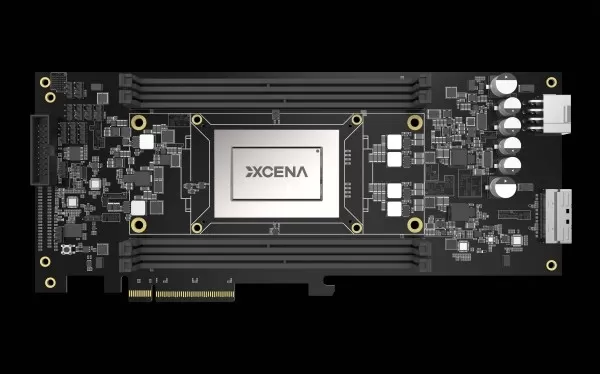 Chip startup raises $135M betting memory, not compute, is AI's biggest bottleneck
Every time you ask ChatGPT a question, your request sets off a data relay race. Information moves out of memory, passes through the CPU for preprocessing, travels to the GPU for intensive computation, and then returns — and that entire loop repeats f
Chip startup raises $135M betting memory, not compute, is AI's biggest bottleneck
Every time you ask ChatGPT a question, your request sets off a data relay race. Information moves out of memory, passes through the CPU for preprocessing, travels to the GPU for intensive computation, and then returns — and that entire loop repeats f

2026 Latest Top-rated AI Illustration Tools: Our curated list features the best powerfully designed tools for creating stunning editorial scenes and eye-catching cover art quickly. Each option has gone through rigorous real-world tests, offering a free vs paid comparison to help you find the perfect match for your workflow. Try these must-try solutions today to unlock your AI edge and boost your creative productivity. Explore now at XIX.AI.
10 tools
xix.ai

2026 Latest Top-Rated Best AI Tutors for Exam Prep are here on XIX.AI! Our curated list features powerful game-changing tools that offer free vs paid comparison, real-world tests, and weekly updated rankings. They help boost your writing efficiency, simplify complex topic learning, and unlock your academic potential. Explore now to Discover your perfect exam prep tool and Start creating today to Unlock your AI edge!
10 tools
xix.ai

2026 Latest Best Top-Rated AI Budget Planning Tools for Personal Money Management are here on XIX.AI! This curated collection features powerful, game-changing solutions that help you conduct real-world tests, understand spending habits, and create personalized plans to boost productivity. Enjoy a free vs paid comparison along with detailed rankings. Must-try tools designed to simplify money management and unlock your AI edge. Explore now!
11 tools
xix.ai

2026 Latest Best Top-Rated AI Sleep Tracking Assistants curated for ultimate recovery. This fully updated weekly guide features powerful tools that deliver real-world tests, free vs paid comparison, and detailed rankings to help you find the must-try solution that boosts sleep quality and supports better bedtime habits. Explore now at XIX.AI to Unlock your AI edge.
10 tools
xix.ai

2026 Latest Best Top-Rated AI SQL Copilots for Product and Revenue Analytics! XIX.AI has curated a powerful, game-changing collection of must-try tools that undergo real-world tests through weekly updated rankings. These tools help users boost productivity significantly by accelerating data analysis, streamlining complex queries, and generating accurate insights to drive smarter business decisions. Explore now to Discover your perfect tool for unlocking your AI edge!
14 tools
xix.ai

2026 Latest Best Top-Rated AI Homework Helpers That Teach Core Concepts Not Just Answers Powerful Tools for Students Must-Try Curated List Weekly Updated Free vs Paid Comparison Real-World Tests Accurate Rankings to Help You Unlock Your Full Learning Potential Explore now to Discover your perfect tool for smarter studying.
10 tools
xix.ai












