


 Home
HomeTesollo Launches IPO Drive Amid Humanoid Hand Development
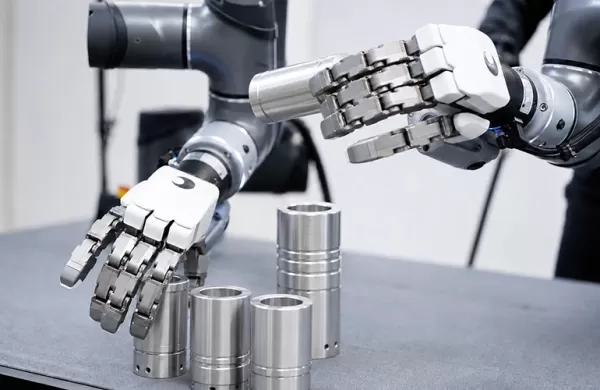
Tesollo is engineering high degree-of-freedom robotic hands compatible with any humanoid platform. | Credit: Tesollo
Robotic hand innovator Tesollo Inc. has officially launched preparations for an initial public offering (IPO) scheduled for next year, following the successful closure of its Series B funding round to support global expansion.
Headquartered in Incheon, South Korea, the company focuses on manufacturing core robotic components, advanced end effectors, and systems engineered to boost robot autonomy and seamless human-robot collaboration.
“Through our IPO, we aim to establish a corporate foundation that global customers can trust and accelerate our expansion into overseas markets,” stated Young-Jin Kim, CEO of Tesollo. “By strengthening our mass-production capabilities and advancing our core technology development, we will continue to grow into a global leader in the robotic hand sector.”
Tesollo noted that existing shareholders, including POSCO Technology Investment, KB Investment, and Enlight Ventures, participated in its Series B round as follow-on investors. Strategic investors from the industrial sector, including Daesung Hi-Tech and HL Mando, also joined the round. The company claimed that the investment demonstrates recognition of its technological capabilities and growth potential.
Founded in 2019, Tesollo added that it is securing customers in major markets, including the U.S., China, and Japan. To date, the company has exported its products to 19 countries, and its overseas sales recently surpassed its domestic sales, marking its transition into a global company.
Tesollo commits to robotic hand development
In March this year, Tesollo demonstrated the DG-3 three-fingered gripper and other products at AW 2026. The company’s product line ranges from the DG-2F parallel grippers to the five-fingered DG-5F.
Tesollo said it developed the DG-5F-S using proprietary in-house actuators to weigh less than 1 kg (2.2 lb.). This model offers high precision and stability at about 60% of the cost of its predecessor and helps accelerate the commercialization of humanoid robots, it asserted.
The company was an exhibitor at the recent Robotics Summit & Expo in Boston. Tesollo also demonstrated the DG-5F-M and DG-5F-S robotic hands, including teleoperation, bin picking, in-hand manipulation, and its humanoid vision-language-action model (VLA) at the ICRA show in Vienna.
All of this exposure comes as the company has matured its product line with a pragmatic strategy to become a specialist in multi-jointed robotic hands for humanoids.
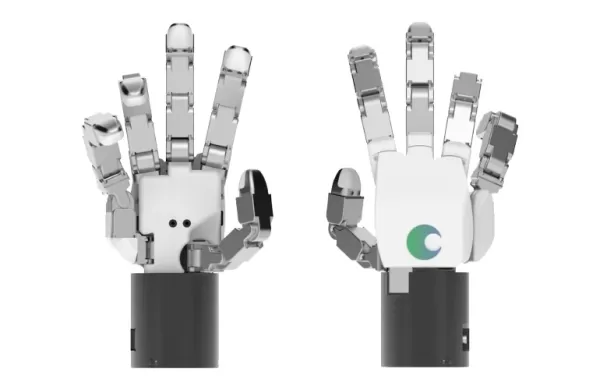
The DG-5F is a robotic hand similar in size to an adult male’s hand and features 20 independently driven joints for advanced functionality. | Credit: TESOLLO
Spotlight on MTBR
Humanoid manipulation is a difficult application to master, as the hands are nearly as complicated as the rest of the humanoid body and limbs. Such end-of-arm tooling (EOAT) is subjected to stress and wear that is higher than that of any other component on the robot.
Mean time between repair (MTBR) and mean time to repair (MTTR) are two key performance indicators (KPIs) for humanoid robotic grippers.
Many users of humanoids complain of frequent breakage and time spent fixing broken fingers and joints. According to an analysis by ENGtechnica on the humanoid hand bottleneck, this structural complexity creates a disproportionate “failure density” where dozens of micro-actuators, sensors, and tendon-driven cables act as single points of failure.
Tesollo said it recognized this issue early in development. It designed its DG series to be easy to repair and replace the fingers and joints as the hands fail during normal operations. The diverse use cases for humanoid hands, combined with the need for component longevity, remain challenging for every humanoid hand manufacturer.
Currently, no manufacturer is close to a certified 10,000-hour MTBR, and this metric is the key measure by which these compact machines will be measured if they are going to survive industrial and even commercial deployment.
Related article
 GLM-5.3 Released by Zhipu: 740 Billion Parameters Unchanged, Performance Boosted 50% via Post-Training Programming Ability Approaches
Zhipu officially launched GLM-5.3 on August 14, maintaining the 74-billion parameter count of its predecessor, GLM-5.2, while skipping the rumored trillion-parameter upgrade, which may be saved for GLM-5.5. Through advanced post-training techniques,
Prentis, New AI Lab Co-Founded by Reid Hoffman and Mark Pincus, in Talks to Raise $100M
Prentis, an emerging AI research lab specializing in computer-use models and co-founded by serial entrepreneur Ritankar Das alongside tech industry veterans Reid Hoffman and Mark Pincus, is currently negotiating to secure $100 million in funding at a
AIR Raises $50M to Help Companies Vet Skills and Add-Ons Used by AI Agents
As organizations increasingly grant AI agents access to their internal systems, a new software supply chain is emerging around the tools these agents rely on: skills, plugins, MCP servers, and add-ons that enable internet interaction.AI security star
Related Special Topic Recommendations
Business
GLM-5.3 Released by Zhipu: 740 Billion Parameters Unchanged, Performance Boosted 50% via Post-Training Programming Ability Approaches
Zhipu officially launched GLM-5.3 on August 14, maintaining the 74-billion parameter count of its predecessor, GLM-5.2, while skipping the rumored trillion-parameter upgrade, which may be saved for GLM-5.5. Through advanced post-training techniques,
Prentis, New AI Lab Co-Founded by Reid Hoffman and Mark Pincus, in Talks to Raise $100M
Prentis, an emerging AI research lab specializing in computer-use models and co-founded by serial entrepreneur Ritankar Das alongside tech industry veterans Reid Hoffman and Mark Pincus, is currently negotiating to secure $100 million in funding at a
AIR Raises $50M to Help Companies Vet Skills and Add-Ons Used by AI Agents
As organizations increasingly grant AI agents access to their internal systems, a new software supply chain is emerging around the tools these agents rely on: skills, plugins, MCP servers, and add-ons that enable internet interaction.AI security star
Related Special Topic Recommendations
Business
 AI RFP Response Software for Enterprise Proposal Workflows
2026 Latest Best AI RFP Response Software for Enterprise Proposal Workflows! XIX.AI curates a top-rated list of powerful tools that pass rigorous real-world tests, offering must-try features to boost productivity and streamline your proposal processes. Get a free vs paid comparison, see detailed rankings, and discover how these game-changing solutions can help you create high-quality responses faster. Explore now to unlock your AI edge!
 9 tools
 xix.ai
Video creation
AI Subtitle and Dubbing Tools: Localize Video for Global Audiences
xix.ai
Video creation
AI Subtitle and Dubbing Tools: Localize Video for Global Audiences
2026 Latest Best Top-rated AI Subtitle and Dubbing Tools Curated for Localizing Video for Global Audiences Powerfully boost content reach across language barriers with game-changing accuracy Real-world tests prove these must-try solutions offer free vs paid comparison and reliable rankings to maximize productivity Explore now to Discover your perfect tool for global content delivery
10 tools
xix.ai
automation
AI Invoice Processing Tools for AP Automation, Approval Routing, and ERP Sync Workflows
2026 Latest Best AI Invoice Processing Tools for AP Automation, Approval Routing, and ERP Sync Workflows! XIX.AI curates top-rated, powerful solutions that pass rigorous real-world tests to boost productivity dramatically. Get a free vs paid comparison, see detailed rankings, and discover must-try options to streamline your finance operations. Explore now to unlock your AI edge!
9 tools
xix.ai
writing
AI Technical Documentation Tools for Developer Teams
2026 Latest Best Top-rated AI Technical Documentation Tools for Developer Teams! XIX.AI has curated a powerful, game-changing collection of must-try tools that go through rigorous real-world tests and weekly updated rankings. These top-rated solutions help teams boost productivity dramatically by streamlining content creation, fixing documentation errors, and accelerating coding workflows across all projects. Explore now to Discover your perfect tool for unlocking your AI edge!
13 tools
xix.ai
Software Development
AI Bug Triage Assistants: Rank Issues by Severity and User Impact
2026 Latest Best Top-rated AI Bug Triage Assistants Ranked! This curated collection showcases powerful game-changing tools that help teams quickly sort bugs by severity and user impact, saving valuable time. XIX.AI offers a free vs paid comparison along with real-world tests to help you find the must-try solution that boosts productivity significantly. Explore now to Discover your perfect tool for streamlining development workflows!
10 tools
xix.ai
code
Best AI Coding Tools for Python and JavaScript
2026 Latest Best Top-Rated AI Coding Tools for Python and JavaScript are here on XIX.AI’s curated list. These powerful game-changing tools have undergone rigorous real-world tests to deliver exceptional results for writing efficient code, fixing bugs, and boosting productivity. Get a free vs paid comparison and see which options suit your needs. Explore now to Discover your perfect coding tool and Unlock your AI edge.
10 tools
xix.ai

 Comments (0)
0/500
Comments (0)
0/500
Tesollo is engineering high degree-of-freedom robotic hands compatible with any humanoid platform. | Credit: Tesollo
Robotic hand innovator Tesollo Inc. has officially launched preparations for an initial public offering (IPO) scheduled for next year, following the successful closure of its Series B funding round to support global expansion.
Headquartered in Incheon, South Korea, the company focuses on manufacturing core robotic components, advanced end effectors, and systems engineered to boost robot autonomy and seamless human-robot collaboration.
“Through our IPO, we aim to establish a corporate foundation that global customers can trust and accelerate our expansion into overseas markets,” stated Young-Jin Kim, CEO of Tesollo. “By strengthening our mass-production capabilities and advancing our core technology development, we will continue to grow into a global leader in the robotic hand sector.”
Tesollo noted that existing shareholders, including POSCO Technology Investment, KB Investment, and Enlight Ventures, participated in its Series B round as follow-on investors. Strategic investors from the industrial sector, including Daesung Hi-Tech and HL Mando, also joined the round. The company claimed that the investment demonstrates recognition of its technological capabilities and growth potential.
Founded in 2019, Tesollo added that it is securing customers in major markets, including the U.S., China, and Japan. To date, the company has exported its products to 19 countries, and its overseas sales recently surpassed its domestic sales, marking its transition into a global company.
Tesollo commits to robotic hand development
In March this year, Tesollo demonstrated the DG-3 three-fingered gripper and other products at AW 2026. The company’s product line ranges from the DG-2F parallel grippers to the five-fingered DG-5F.
Tesollo said it developed the DG-5F-S using proprietary in-house actuators to weigh less than 1 kg (2.2 lb.). This model offers high precision and stability at about 60% of the cost of its predecessor and helps accelerate the commercialization of humanoid robots, it asserted.
The company was an exhibitor at the recent Robotics Summit & Expo in Boston. Tesollo also demonstrated the DG-5F-M and DG-5F-S robotic hands, including teleoperation, bin picking, in-hand manipulation, and its humanoid vision-language-action model (VLA) at the ICRA show in Vienna.
All of this exposure comes as the company has matured its product line with a pragmatic strategy to become a specialist in multi-jointed robotic hands for humanoids.
The DG-5F is a robotic hand similar in size to an adult male’s hand and features 20 independently driven joints for advanced functionality. | Credit: TESOLLO
Spotlight on MTBR
Humanoid manipulation is a difficult application to master, as the hands are nearly as complicated as the rest of the humanoid body and limbs. Such end-of-arm tooling (EOAT) is subjected to stress and wear that is higher than that of any other component on the robot.
Mean time between repair (MTBR) and mean time to repair (MTTR) are two key performance indicators (KPIs) for humanoid robotic grippers.
Many users of humanoids complain of frequent breakage and time spent fixing broken fingers and joints. According to an analysis by ENGtechnica on the humanoid hand bottleneck, this structural complexity creates a disproportionate “failure density” where dozens of micro-actuators, sensors, and tendon-driven cables act as single points of failure.
Tesollo said it recognized this issue early in development. It designed its DG series to be easy to repair and replace the fingers and joints as the hands fail during normal operations. The diverse use cases for humanoid hands, combined with the need for component longevity, remain challenging for every humanoid hand manufacturer.
Currently, no manufacturer is close to a certified 10,000-hour MTBR, and this metric is the key measure by which these compact machines will be measured if they are going to survive industrial and even commercial deployment.








 GLM-5.3 Released by Zhipu: 740 Billion Parameters Unchanged, Performance Boosted 50% via Post-Training Programming Ability Approaches
Zhipu officially launched GLM-5.3 on August 14, maintaining the 74-billion parameter count of its predecessor, GLM-5.2, while skipping the rumored trillion-parameter upgrade, which may be saved for GLM-5.5. Through advanced post-training techniques,
GLM-5.3 Released by Zhipu: 740 Billion Parameters Unchanged, Performance Boosted 50% via Post-Training Programming Ability Approaches
Zhipu officially launched GLM-5.3 on August 14, maintaining the 74-billion parameter count of its predecessor, GLM-5.2, while skipping the rumored trillion-parameter upgrade, which may be saved for GLM-5.5. Through advanced post-training techniques,
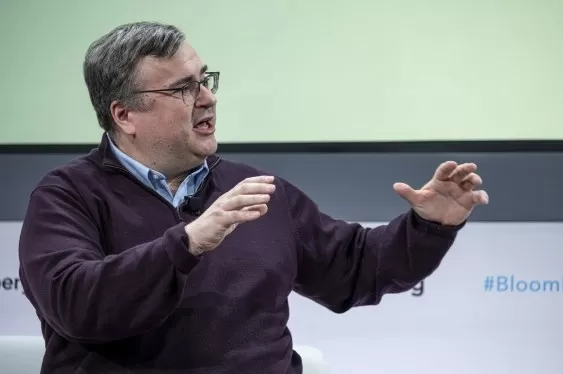 Prentis, New AI Lab Co-Founded by Reid Hoffman and Mark Pincus, in Talks to Raise $100M
Prentis, an emerging AI research lab specializing in computer-use models and co-founded by serial entrepreneur Ritankar Das alongside tech industry veterans Reid Hoffman and Mark Pincus, is currently negotiating to secure $100 million in funding at a
Prentis, New AI Lab Co-Founded by Reid Hoffman and Mark Pincus, in Talks to Raise $100M
Prentis, an emerging AI research lab specializing in computer-use models and co-founded by serial entrepreneur Ritankar Das alongside tech industry veterans Reid Hoffman and Mark Pincus, is currently negotiating to secure $100 million in funding at a
 AIR Raises $50M to Help Companies Vet Skills and Add-Ons Used by AI Agents
As organizations increasingly grant AI agents access to their internal systems, a new software supply chain is emerging around the tools these agents rely on: skills, plugins, MCP servers, and add-ons that enable internet interaction.AI security star
AIR Raises $50M to Help Companies Vet Skills and Add-Ons Used by AI Agents
As organizations increasingly grant AI agents access to their internal systems, a new software supply chain is emerging around the tools these agents rely on: skills, plugins, MCP servers, and add-ons that enable internet interaction.AI security star

2026 Latest Best AI RFP Response Software for Enterprise Proposal Workflows! XIX.AI curates a top-rated list of powerful tools that pass rigorous real-world tests, offering must-try features to boost productivity and streamline your proposal processes. Get a free vs paid comparison, see detailed rankings, and discover how these game-changing solutions can help you create high-quality responses faster. Explore now to unlock your AI edge!
9 tools
xix.ai

2026 Latest Best Top-rated AI Subtitle and Dubbing Tools Curated for Localizing Video for Global Audiences Powerfully boost content reach across language barriers with game-changing accuracy Real-world tests prove these must-try solutions offer free vs paid comparison and reliable rankings to maximize productivity Explore now to Discover your perfect tool for global content delivery
10 tools
xix.ai

2026 Latest Best AI Invoice Processing Tools for AP Automation, Approval Routing, and ERP Sync Workflows! XIX.AI curates top-rated, powerful solutions that pass rigorous real-world tests to boost productivity dramatically. Get a free vs paid comparison, see detailed rankings, and discover must-try options to streamline your finance operations. Explore now to unlock your AI edge!
9 tools
xix.ai
2026 Latest Best Top-rated AI Technical Documentation Tools for Developer Teams! XIX.AI has curated a powerful, game-changing collection of must-try tools that go through rigorous real-world tests and weekly updated rankings. These top-rated solutions help teams boost productivity dramatically by streamlining content creation, fixing documentation errors, and accelerating coding workflows across all projects. Explore now to Discover your perfect tool for unlocking your AI edge!
13 tools
xix.ai

2026 Latest Best Top-rated AI Bug Triage Assistants Ranked! This curated collection showcases powerful game-changing tools that help teams quickly sort bugs by severity and user impact, saving valuable time. XIX.AI offers a free vs paid comparison along with real-world tests to help you find the must-try solution that boosts productivity significantly. Explore now to Discover your perfect tool for streamlining development workflows!
10 tools
xix.ai

2026 Latest Best Top-Rated AI Coding Tools for Python and JavaScript are here on XIX.AI’s curated list. These powerful game-changing tools have undergone rigorous real-world tests to deliver exceptional results for writing efficient code, fixing bugs, and boosting productivity. Get a free vs paid comparison and see which options suit your needs. Explore now to Discover your perfect coding tool and Unlock your AI edge.
10 tools
xix.ai












