


 Home
HomeStartup Prepares Enterprises for Quantum Computing Era

Eighteen months after selling his startup to chipmaker AMD for $665 million, Finnish entrepreneur Peter Sarlin has stepped down as CEO of the unit, now known as AMD Silo AI. He now serves as chairman for two new ventures: the physical AI lab NestAI, and QuTwo, an AI startup focused on helping businesses prepare for the quantum computing era.
Currently funded entirely by Sarlin's family office, PostScriptum, QuTwo describes itself as "an AI lab for the quantum era." Rather than waiting for quantum computing to mature, it is already collaborating with enterprise clients—including European fashion retailer Zalando. Together, they are developing what the companies call "lifestyle agents": AI tools designed to go beyond simple product search and proactively recommend products and experiences.
QuTwo operates on the premise that AI is approaching an efficiency barrier that quantum computing may eventually help overcome. However, the company isn't betting on when that will happen, Sarlin told TechCrunch. Instead, the startup is building QuTwo OS as an orchestration layer that enables companies to transition from classical to quantum computing, utilizing hybrid computing solutions along the way.
Sarlin has invested in Finnish quantum firms IQM and QMill through PostScriptum. He is among a growing number of investors who believe quantum computing will eventually outperform classical computers across a wide range of industrial applications while reducing AI's energy consumption. Yet he also believes initial use cases will require mixed hardware environments, and that enterprises would prefer to focus on their core business challenges while QuTwo OS handles the technical routing.
In this context, the potential advantage of so-called "quantum-inspired" computing is its immediate viability. It uses classical hardware to simulate quantum behavior, bypassing the current limitations of quantum hardware. Meanwhile, QuTwo OS is designed for flexibility, supporting both quantum and non-quantum algorithms and chips.
QuTwo's team brings expertise from both sides of the quantum-AI divide. On the quantum side, it includes IQM co-founder Kuan Yen Tan and board member Antti Vasara, who also chairs SemiQon, a Finnish semiconductor startup focused on quantum chips. The enterprise side is represented by Sarlin himself and Kaj-Mikael Björk, a former co-founder at Silo AI. Pekka Lundmark, the former CEO of Finnish telecom giant Nokia, has also joined QuTwo's board.
Across both domains, the team comprises over 30 quantum and AI scientists. Sarlin is clear about the company's position: "We're building for the quantum world, but QuTwo is an AI company." This means QuTwo is focused on "transitioning AI workloads from classical to quantum computing."
Consequently, its potential customer base is broad. Beyond Zalando, QuTwo has launched a joint quantum AI research initiative with OP Pohjola, a major Finnish financial services provider.
From the start, QuTwo has been commercially driven and already has "large design partnerships valued in the tens of millions," Sarlin said. These partnerships—where the vendor co-develops its product alongside enterprise customers—allow QuTwo to learn client expectations while building its platform. They also represent a strategic bet by enterprises seeking an early advantage for when quantum computing becomes mainstream.
Related article
 Microsoft’s Majorana 2 quantum chip serves as agentic AI case study in R&D
Microsoft’s Majorana 2 quantum chip debuted this week, bringing with it numbers that are genuinely hard to put in context: qubits that are 1,000 times more reliable than the first generation, an average qubit lifetime of 20 seconds compared to the in
QuTwo Hits $380M Valuation in Angel Round Led by Peter Sarlin
QuTwo, a Finnish AI lab founded by former AMD Silo AI CEO Peter Sarlin, has reached a valuation of €325 million (around $380 million) after raising a €25 million angel round ($29 million). This underscores the lasting tailwinds for AI, quantum comput
South Korea Breaks Ground on National AI Computing Center, Investing 2.5 Trillion Won with 2028 Target
South Korean outlet EtNews reports that groundbreaking for the Korea AI Computing Center (KOACC) took place on August 3 at the Solar City data center park in Sunan, Jeollanam-do. Backed by a total investment of 2.5 trillion KRW (roughly 11.838 billio
Related Special Topic Recommendations
Music composition
Microsoft’s Majorana 2 quantum chip serves as agentic AI case study in R&D
Microsoft’s Majorana 2 quantum chip debuted this week, bringing with it numbers that are genuinely hard to put in context: qubits that are 1,000 times more reliable than the first generation, an average qubit lifetime of 20 seconds compared to the in
QuTwo Hits $380M Valuation in Angel Round Led by Peter Sarlin
QuTwo, a Finnish AI lab founded by former AMD Silo AI CEO Peter Sarlin, has reached a valuation of €325 million (around $380 million) after raising a €25 million angel round ($29 million). This underscores the lasting tailwinds for AI, quantum comput
South Korea Breaks Ground on National AI Computing Center, Investing 2.5 Trillion Won with 2028 Target
South Korean outlet EtNews reports that groundbreaking for the Korea AI Computing Center (KOACC) took place on August 3 at the Solar City data center park in Sunan, Jeollanam-do. Backed by a total investment of 2.5 trillion KRW (roughly 11.838 billio
Related Special Topic Recommendations
Music composition
 AI Vocal Demo Tools for Songwriters, Hooks, Toplines, and Multilingual Draft Sessions
2026 Latest Best AI Vocal Demo Tools for Songwriters, Hook Creators, and Multi-Language Content Teams! XIX.AI has curated a top-rated list of powerful game-changing tools that go through rigorous real-world tests. You’ll find detailed free vs paid comparison data, comprehensive rankings, and must-try options to help you boost writing efficiency and unlock your creative potential. Explore now to discover your perfect tool for all your content needs!
 9 tools
 xix.ai
Business
Best AI Competitive Research Tools for Small Businesses
xix.ai
Business
Best AI Competitive Research Tools for Small Businesses
2026 Latest Best Top-rated AI Competitive Research Tools for Small Businesses! XIX.AI has curated a highly powerful game-changing collection, updated weekly with rigorous real-world tests and detailed rankings. You can find a comprehensive free vs paid comparison to help you identify the must-try tools that boost your productivity and give you a competitive edge. Explore now to discover your perfect tool!
9 tools
xix.ai
Image editing
Photoshop AI Retouch Tools for Ecommerce Apparel, Skin Cleanup, and Color Consistency
2026 Latest Best Photoshop AI retouch tools for ecommerce apparel, skin cleanup, and color consistency! This top-rated curated list features powerful game-changing solutions that help you boost writing efficiency, streamline content creation, and achieve perfect visual results effortlessly. Each tool has undergone real-world tests through weekly updated rankings, complete with free vs paid comparison details. Backed by XIX.AI, it’s the must-try guide for anyone aiming to unlock your AI edge. Explore now!
10 tools
xix.ai
Prompt
Best AI Prompt Libraries for ChatGPT Workflows
2026 Latest Best Top-Rated AI Prompt Libraries for optimizing all types of ChatGPT workflows. XIX.AI has curated a powerful, game-changing collection that goes through rigorous real-world tests to ensure top performance. You can find detailed free vs paid comparisons and expert rankings to help you choose the must-try tools that boost your productivity and unlock your AI edge. Explore now!
11 tools
xix.ai
Education and Learning
AI Quiz Builder Platforms for Teachers, Tutors, and Cohort-Based Learning Programs
2026 Latest Best AI Quiz Builder Platforms for Teachers, Tutors, and Cohort-Based Learning Programs! XIX.AI has curated a top-rated list of powerful game-changing tools that go through real-world tests to deliver accurate rankings. These must-try platforms help boost writing efficiency, streamline content creation, and simplify quiz design across all learning scenarios. Explore now to discover your perfect tool for unlocking your AI edge in teaching!
13 tools
xix.ai
code
AI Pull Request Review Tools for GitHub Teams Handling Refactors, Bugs, and Security Gaps
2026 Latest Best AI Pull Request Review Tools for GitHub Teams are here on XIX.AI! This top-rated curated list showcases powerful game-changing solutions that streamline refactoring, bug fixing, and security gap detection across all team workflows. Enjoy a free vs paid comparison along with real-world tests and detailed rankings to help you find the perfect tool that boosts productivity significantly. Explore now to unlock your AI edge!
12 tools
xix.ai

 Comments (0)
0/500
Comments (0)
0/500
Eighteen months after selling his startup to chipmaker AMD for $665 million, Finnish entrepreneur Peter Sarlin has stepped down as CEO of the unit, now known as AMD Silo AI. He now serves as chairman for two new ventures: the physical AI lab NestAI, and QuTwo, an AI startup focused on helping businesses prepare for the quantum computing era.
Currently funded entirely by Sarlin's family office, PostScriptum, QuTwo describes itself as "an AI lab for the quantum era." Rather than waiting for quantum computing to mature, it is already collaborating with enterprise clients—including European fashion retailer Zalando. Together, they are developing what the companies call "lifestyle agents": AI tools designed to go beyond simple product search and proactively recommend products and experiences.
QuTwo operates on the premise that AI is approaching an efficiency barrier that quantum computing may eventually help overcome. However, the company isn't betting on when that will happen, Sarlin told TechCrunch. Instead, the startup is building QuTwo OS as an orchestration layer that enables companies to transition from classical to quantum computing, utilizing hybrid computing solutions along the way.
Sarlin has invested in Finnish quantum firms IQM and QMill through PostScriptum. He is among a growing number of investors who believe quantum computing will eventually outperform classical computers across a wide range of industrial applications while reducing AI's energy consumption. Yet he also believes initial use cases will require mixed hardware environments, and that enterprises would prefer to focus on their core business challenges while QuTwo OS handles the technical routing.
In this context, the potential advantage of so-called "quantum-inspired" computing is its immediate viability. It uses classical hardware to simulate quantum behavior, bypassing the current limitations of quantum hardware. Meanwhile, QuTwo OS is designed for flexibility, supporting both quantum and non-quantum algorithms and chips.
QuTwo's team brings expertise from both sides of the quantum-AI divide. On the quantum side, it includes IQM co-founder Kuan Yen Tan and board member Antti Vasara, who also chairs SemiQon, a Finnish semiconductor startup focused on quantum chips. The enterprise side is represented by Sarlin himself and Kaj-Mikael Björk, a former co-founder at Silo AI. Pekka Lundmark, the former CEO of Finnish telecom giant Nokia, has also joined QuTwo's board.
Across both domains, the team comprises over 30 quantum and AI scientists. Sarlin is clear about the company's position: "We're building for the quantum world, but QuTwo is an AI company." This means QuTwo is focused on "transitioning AI workloads from classical to quantum computing."
Consequently, its potential customer base is broad. Beyond Zalando, QuTwo has launched a joint quantum AI research initiative with OP Pohjola, a major Finnish financial services provider.
From the start, QuTwo has been commercially driven and already has "large design partnerships valued in the tens of millions," Sarlin said. These partnerships—where the vendor co-develops its product alongside enterprise customers—allow QuTwo to learn client expectations while building its platform. They also represent a strategic bet by enterprises seeking an early advantage for when quantum computing becomes mainstream.








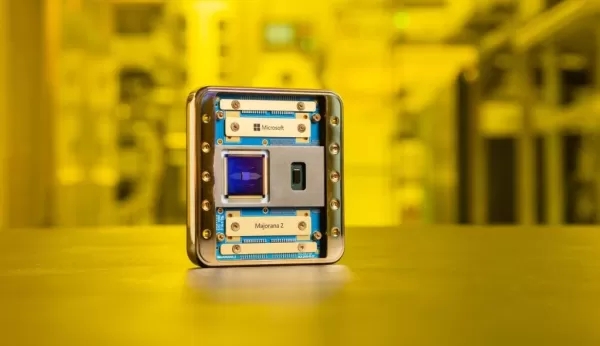 Microsoft’s Majorana 2 quantum chip serves as agentic AI case study in R&D
Microsoft’s Majorana 2 quantum chip debuted this week, bringing with it numbers that are genuinely hard to put in context: qubits that are 1,000 times more reliable than the first generation, an average qubit lifetime of 20 seconds compared to the in
Microsoft’s Majorana 2 quantum chip serves as agentic AI case study in R&D
Microsoft’s Majorana 2 quantum chip debuted this week, bringing with it numbers that are genuinely hard to put in context: qubits that are 1,000 times more reliable than the first generation, an average qubit lifetime of 20 seconds compared to the in
 QuTwo Hits $380M Valuation in Angel Round Led by Peter Sarlin
QuTwo, a Finnish AI lab founded by former AMD Silo AI CEO Peter Sarlin, has reached a valuation of €325 million (around $380 million) after raising a €25 million angel round ($29 million). This underscores the lasting tailwinds for AI, quantum comput
QuTwo Hits $380M Valuation in Angel Round Led by Peter Sarlin
QuTwo, a Finnish AI lab founded by former AMD Silo AI CEO Peter Sarlin, has reached a valuation of €325 million (around $380 million) after raising a €25 million angel round ($29 million). This underscores the lasting tailwinds for AI, quantum comput
 South Korea Breaks Ground on National AI Computing Center, Investing 2.5 Trillion Won with 2028 Target
South Korean outlet EtNews reports that groundbreaking for the Korea AI Computing Center (KOACC) took place on August 3 at the Solar City data center park in Sunan, Jeollanam-do. Backed by a total investment of 2.5 trillion KRW (roughly 11.838 billio
South Korea Breaks Ground on National AI Computing Center, Investing 2.5 Trillion Won with 2028 Target
South Korean outlet EtNews reports that groundbreaking for the Korea AI Computing Center (KOACC) took place on August 3 at the Solar City data center park in Sunan, Jeollanam-do. Backed by a total investment of 2.5 trillion KRW (roughly 11.838 billio

2026 Latest Best AI Vocal Demo Tools for Songwriters, Hook Creators, and Multi-Language Content Teams! XIX.AI has curated a top-rated list of powerful game-changing tools that go through rigorous real-world tests. You’ll find detailed free vs paid comparison data, comprehensive rankings, and must-try options to help you boost writing efficiency and unlock your creative potential. Explore now to discover your perfect tool for all your content needs!
9 tools
xix.ai

2026 Latest Best Top-rated AI Competitive Research Tools for Small Businesses! XIX.AI has curated a highly powerful game-changing collection, updated weekly with rigorous real-world tests and detailed rankings. You can find a comprehensive free vs paid comparison to help you identify the must-try tools that boost your productivity and give you a competitive edge. Explore now to discover your perfect tool!
9 tools
xix.ai

2026 Latest Best Photoshop AI retouch tools for ecommerce apparel, skin cleanup, and color consistency! This top-rated curated list features powerful game-changing solutions that help you boost writing efficiency, streamline content creation, and achieve perfect visual results effortlessly. Each tool has undergone real-world tests through weekly updated rankings, complete with free vs paid comparison details. Backed by XIX.AI, it’s the must-try guide for anyone aiming to unlock your AI edge. Explore now!
10 tools
xix.ai

2026 Latest Best Top-Rated AI Prompt Libraries for optimizing all types of ChatGPT workflows. XIX.AI has curated a powerful, game-changing collection that goes through rigorous real-world tests to ensure top performance. You can find detailed free vs paid comparisons and expert rankings to help you choose the must-try tools that boost your productivity and unlock your AI edge. Explore now!
11 tools
xix.ai

2026 Latest Best AI Quiz Builder Platforms for Teachers, Tutors, and Cohort-Based Learning Programs! XIX.AI has curated a top-rated list of powerful game-changing tools that go through real-world tests to deliver accurate rankings. These must-try platforms help boost writing efficiency, streamline content creation, and simplify quiz design across all learning scenarios. Explore now to discover your perfect tool for unlocking your AI edge in teaching!
13 tools
xix.ai

2026 Latest Best AI Pull Request Review Tools for GitHub Teams are here on XIX.AI! This top-rated curated list showcases powerful game-changing solutions that streamline refactoring, bug fixing, and security gap detection across all team workflows. Enjoy a free vs paid comparison along with real-world tests and detailed rankings to help you find the perfect tool that boosts productivity significantly. Explore now to unlock your AI edge!
12 tools
xix.ai












