


 Home
HomeQuTwo Hits $380M Valuation in Angel Round Led by Peter Sarlin
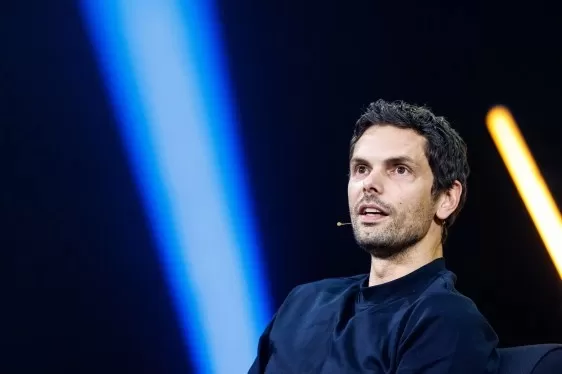
QuTwo, a Finnish AI lab founded by former AMD Silo AI CEO Peter Sarlin, has reached a valuation of €325 million (around $380 million) after raising a €25 million angel round ($29 million). This underscores the lasting tailwinds for AI, quantum computing, and sovereign technology, particularly for European companies.
While QuTwo's name hints at quantum computing, the company hasn't fully committed to it. Its flagship product, QuTwo OS, functions as an orchestration layer that routes tasks to classical, quantum, or hybrid architectures. The concept is that enterprise use cases often benefit most from "quantum-inspired" computing, which uses classical chips to simulate quantum behavior on more dependable hardware.
Enterprise AI will be QuTwo's core business. The company has already secured around $23 million in committed revenue through design partnerships with major retailers like Zalando, where it helped develop AI assistants. "AI is the North Star we will keep aiming for. Quantum is simply a new form of compute," said Sarlin, who emphasizes that QuTwo is an AI company.
Momentum is growing for AI labs based in Europe, with several achieving unicorn status seemingly overnight. Just last week, former DeepMind researcher David Silver raised $1.1 billion for his new venture, Ineffable Intelligence. QuTwo's valuation and funding round are comparatively modest, but that allows it to pursue its roadmap with less pressure.
According to Sarlin, who serves as QuTwo's executive chairman, this mirrors a decision he made for his previous company, Silo AI, which AMD acquired for $665 million in 2024. "I had many investors eager to pour substantial funds into turning Silo into Europe's OpenAI, but I didn't believe in that strategy," he told TechCrunch.
The key difference is that QuTwo aims for the freedom to think long-term, with a five- to ten-year horizon. "We are on a mission to build the world's leading AI company for the next paradigm, since Europe failed to build the AI company for this era," Sarlin said.
This doesn't mean Sarlin is bearish on European AI—he is a prolific supporter. Nor is he necessarily critical of huge funding rounds; he volunteered that he is also an investor in Yann LeCun's Ami Labs (which raised $1.03 billion) and the British-American venture Recursive Superintelligence, reportedly following a similar path. However, he didn't see a billion-dollar round—or VC money, at least for now—as the right fit for QuTwo.
Until recently, QuTwo was funded exclusively through Sarlin's family office, PostScriptum, which also incubated NestAI—the other company where he serves as executive chairman. However, while NestAI raised about $115 million in a round led by Finland's sovereign fund and Nokia, QuTwo wasn't seeking external funding.
However, when the lab's soft launch drew considerable interest earlier this year, Sarlin decided to decline checks from VCs and strategic investors, but accept an angel round—partly due to the geopolitical climate Europe is currently navigating.
As Europe increasingly favors local alternatives to U.S. tech providers, there are tailwinds for Finnish AI. But investors also show appetite for a company that promises to enable more ambitious R&D initiatives in sectors where the region already boasts strong players, such as automotive, life sciences, and gaming.
Conversely, Sarlin expects that QuTwo's angel investors could open doors across Europe. There are certainly many introductions he could request from this group, which includes Yuri Milner, Xavier Niel, Nico Rosberg, Dieter Schwarz, and Niklas Zennström, as well as numerous startup founders from Hugging Space, Legora, Miro, Skype, Supercell, Wolt, and others.
This will also fuel QuTwo's growth. The company recently expanded into Sweden and has been hiring. According to Sarlin, approximately 50 quantum and AI scientists have joined the team, which includes two other second-time entrepreneurs: his former Silo cofounder, Kaj-Mikael Björk, and Kuan Yen Tan, a cofounder at IQM, the Finnish quantum company that is preparing to go public.
QuTwo's connection with IQM also underscores the company's belief that we are on the verge of the quantum era—it simply can't wait. "The question for repeat founders like us is how we can have an even larger impact. In the long term, it's important for Europe that we build the AI company for the next paradigm out of Europe. But in the short term, we can have a significant impact by driving ambitious R&D moonshots in Europe," Sarlin said.
Related article
 Microsoft’s Majorana 2 quantum chip serves as agentic AI case study in R&D
Microsoft’s Majorana 2 quantum chip debuted this week, bringing with it numbers that are genuinely hard to put in context: qubits that are 1,000 times more reliable than the first generation, an average qubit lifetime of 20 seconds compared to the in
Startup Prepares Enterprises for Quantum Computing Era
Eighteen months after selling his startup to chipmaker AMD for $665 million, Finnish entrepreneur Peter Sarlin has stepped down as CEO of the unit, now known as AMD Silo AI. He now serves as chairman for two new ventures: the physical AI lab NestAI,
ByteDance’s Seed launches global campus drive, offering virtual shares to win top large model talent
In the competitive landscape of large language models, securing top-tier talent remains the most critical strategic asset.On April 1st, ByteDance announced the launch of its Seed global campus recruitment initiative, part of its large model talent de
Related Special Topic Recommendations
Design & Art
Microsoft’s Majorana 2 quantum chip serves as agentic AI case study in R&D
Microsoft’s Majorana 2 quantum chip debuted this week, bringing with it numbers that are genuinely hard to put in context: qubits that are 1,000 times more reliable than the first generation, an average qubit lifetime of 20 seconds compared to the in
Startup Prepares Enterprises for Quantum Computing Era
Eighteen months after selling his startup to chipmaker AMD for $665 million, Finnish entrepreneur Peter Sarlin has stepped down as CEO of the unit, now known as AMD Silo AI. He now serves as chairman for two new ventures: the physical AI lab NestAI,
ByteDance’s Seed launches global campus drive, offering virtual shares to win top large model talent
In the competitive landscape of large language models, securing top-tier talent remains the most critical strategic asset.On April 1st, ByteDance announced the launch of its Seed global campus recruitment initiative, part of its large model talent de
Related Special Topic Recommendations
Design & Art
 AI Visual Style Reference Tools for Character Sheets, Moodboards, and Pitch Decks
2026 Latest Best AI Visual Style Reference Tools for Character Sheets, Moodboards, and Pitch Decks are here on XIX.AI! This curated top-rated list features powerful game-changing tools that go through rigorous real-world tests. You’ll find a free vs paid comparison, detailed rankings, and must-try options to help you boost creativity and streamline your workflow. Explore now to discover your perfect tool for boosting productivity!
 11 tools
 xix.ai
SEO
Best AI SERP Analysis Tools for Search Strategy
xix.ai
SEO
Best AI SERP Analysis Tools for Search Strategy
2026 Latest Best Top-rated AI SERP Analysis Tools for Search Strategy are curated by XIX.AI through rigorous real-world tests and weekly updated rankings. These powerful tools help you unlock hidden optimization opportunities, boost content performance, and gain a competitive edge in search. Discover your perfect tool to elevate your search strategy today. Explore now!
13 tools
xix.ai
Data Analysis
Best AI Anomaly Detection Tools for KPI Monitoring across SaaS and Ecommerce Teams
2026 Latest Best Top-rated AI Anomaly Detection Tools for KPI Monitoring in SaaS and Ecommerce teams! XIX.AI has curated a powerful, game-changing collection based on rigorous real-world tests and weekly updated rankings. You’ll find detailed free vs paid comparison insights to help you identify the must-try solution that boosts productivity and unlocks your AI edge. Explore now!
10 tools
xix.ai
writing
Best AI Outline Generators for Long-Form SEO Articles
2026 Latest Best Top-Rated AI Outline Generators for Long-Form SEO Articles, meticulously curated by XIX.AI. These powerful tools offer game-changing assistance in creating high-quality content quickly, boosting writing efficiency significantly. Get a free vs paid comparison along with real-world tests and detailed rankings to help you find the must-try option that suits your needs. Explore now to unlock your AI edge.
8 tools
xix.ai
Education and Learning
AI Study Tools for Homework and Exam Prep
2026 Latest Best AI Study Tools for Homework and Exam Prep! XIX.AI curates a top-rated list of powerful, game-changing tools that help students boost productivity, streamline homework completion, and ace exams through real-world tests. Get a free vs paid comparison, detailed rankings, and must-try options to unlock your AI edge. Explore now!
10 tools
xix.ai
Music composition
AI Vocal Demo Tools for Songwriters, Hooks, Toplines, and Multilingual Draft Sessions
2026 Latest Best AI Vocal Demo Tools for Songwriters, Hook Creators, and Multi-Language Content Teams! XIX.AI has curated a top-rated list of powerful game-changing tools that go through rigorous real-world tests. You’ll find detailed free vs paid comparison data, comprehensive rankings, and must-try options to help you boost writing efficiency and unlock your creative potential. Explore now to discover your perfect tool for all your content needs!
9 tools
xix.ai

 Comments (0)
0/500
Comments (0)
0/500
QuTwo, a Finnish AI lab founded by former AMD Silo AI CEO Peter Sarlin, has reached a valuation of €325 million (around $380 million) after raising a €25 million angel round ($29 million). This underscores the lasting tailwinds for AI, quantum computing, and sovereign technology, particularly for European companies.
While QuTwo's name hints at quantum computing, the company hasn't fully committed to it. Its flagship product, QuTwo OS, functions as an orchestration layer that routes tasks to classical, quantum, or hybrid architectures. The concept is that enterprise use cases often benefit most from "quantum-inspired" computing, which uses classical chips to simulate quantum behavior on more dependable hardware.
Enterprise AI will be QuTwo's core business. The company has already secured around $23 million in committed revenue through design partnerships with major retailers like Zalando, where it helped develop AI assistants. "AI is the North Star we will keep aiming for. Quantum is simply a new form of compute," said Sarlin, who emphasizes that QuTwo is an AI company.
Momentum is growing for AI labs based in Europe, with several achieving unicorn status seemingly overnight. Just last week, former DeepMind researcher David Silver raised $1.1 billion for his new venture, Ineffable Intelligence. QuTwo's valuation and funding round are comparatively modest, but that allows it to pursue its roadmap with less pressure.
According to Sarlin, who serves as QuTwo's executive chairman, this mirrors a decision he made for his previous company, Silo AI, which AMD acquired for $665 million in 2024. "I had many investors eager to pour substantial funds into turning Silo into Europe's OpenAI, but I didn't believe in that strategy," he told TechCrunch.
The key difference is that QuTwo aims for the freedom to think long-term, with a five- to ten-year horizon. "We are on a mission to build the world's leading AI company for the next paradigm, since Europe failed to build the AI company for this era," Sarlin said.
This doesn't mean Sarlin is bearish on European AI—he is a prolific supporter. Nor is he necessarily critical of huge funding rounds; he volunteered that he is also an investor in Yann LeCun's Ami Labs (which raised $1.03 billion) and the British-American venture Recursive Superintelligence, reportedly following a similar path. However, he didn't see a billion-dollar round—or VC money, at least for now—as the right fit for QuTwo.
Until recently, QuTwo was funded exclusively through Sarlin's family office, PostScriptum, which also incubated NestAI—the other company where he serves as executive chairman. However, while NestAI raised about $115 million in a round led by Finland's sovereign fund and Nokia, QuTwo wasn't seeking external funding.
However, when the lab's soft launch drew considerable interest earlier this year, Sarlin decided to decline checks from VCs and strategic investors, but accept an angel round—partly due to the geopolitical climate Europe is currently navigating.
As Europe increasingly favors local alternatives to U.S. tech providers, there are tailwinds for Finnish AI. But investors also show appetite for a company that promises to enable more ambitious R&D initiatives in sectors where the region already boasts strong players, such as automotive, life sciences, and gaming.
Conversely, Sarlin expects that QuTwo's angel investors could open doors across Europe. There are certainly many introductions he could request from this group, which includes Yuri Milner, Xavier Niel, Nico Rosberg, Dieter Schwarz, and Niklas Zennström, as well as numerous startup founders from Hugging Space, Legora, Miro, Skype, Supercell, Wolt, and others.
This will also fuel QuTwo's growth. The company recently expanded into Sweden and has been hiring. According to Sarlin, approximately 50 quantum and AI scientists have joined the team, which includes two other second-time entrepreneurs: his former Silo cofounder, Kaj-Mikael Björk, and Kuan Yen Tan, a cofounder at IQM, the Finnish quantum company that is preparing to go public.
QuTwo's connection with IQM also underscores the company's belief that we are on the verge of the quantum era—it simply can't wait. "The question for repeat founders like us is how we can have an even larger impact. In the long term, it's important for Europe that we build the AI company for the next paradigm out of Europe. But in the short term, we can have a significant impact by driving ambitious R&D moonshots in Europe," Sarlin said.








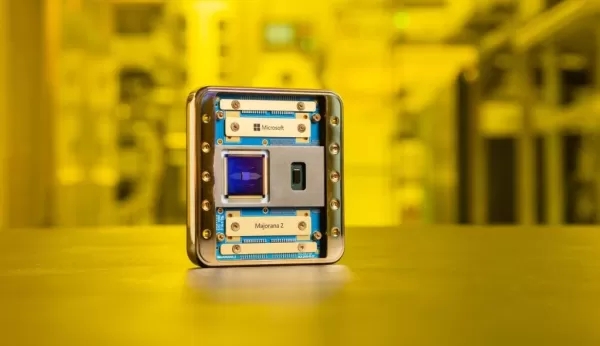 Microsoft’s Majorana 2 quantum chip serves as agentic AI case study in R&D
Microsoft’s Majorana 2 quantum chip debuted this week, bringing with it numbers that are genuinely hard to put in context: qubits that are 1,000 times more reliable than the first generation, an average qubit lifetime of 20 seconds compared to the in
Microsoft’s Majorana 2 quantum chip serves as agentic AI case study in R&D
Microsoft’s Majorana 2 quantum chip debuted this week, bringing with it numbers that are genuinely hard to put in context: qubits that are 1,000 times more reliable than the first generation, an average qubit lifetime of 20 seconds compared to the in
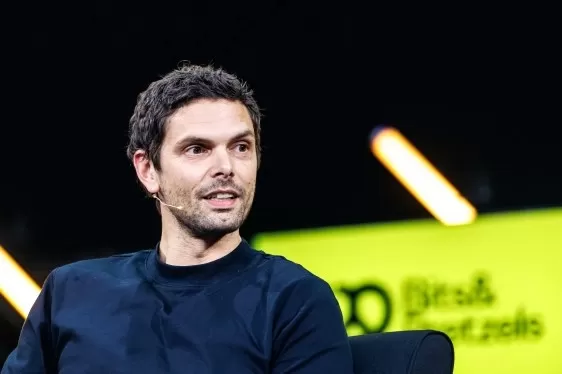 Startup Prepares Enterprises for Quantum Computing Era
Eighteen months after selling his startup to chipmaker AMD for $665 million, Finnish entrepreneur Peter Sarlin has stepped down as CEO of the unit, now known as AMD Silo AI. He now serves as chairman for two new ventures: the physical AI lab NestAI,
Startup Prepares Enterprises for Quantum Computing Era
Eighteen months after selling his startup to chipmaker AMD for $665 million, Finnish entrepreneur Peter Sarlin has stepped down as CEO of the unit, now known as AMD Silo AI. He now serves as chairman for two new ventures: the physical AI lab NestAI,
 ByteDance’s Seed launches global campus drive, offering virtual shares to win top large model talent
In the competitive landscape of large language models, securing top-tier talent remains the most critical strategic asset.On April 1st, ByteDance announced the launch of its Seed global campus recruitment initiative, part of its large model talent de
ByteDance’s Seed launches global campus drive, offering virtual shares to win top large model talent
In the competitive landscape of large language models, securing top-tier talent remains the most critical strategic asset.On April 1st, ByteDance announced the launch of its Seed global campus recruitment initiative, part of its large model talent de

2026 Latest Best AI Visual Style Reference Tools for Character Sheets, Moodboards, and Pitch Decks are here on XIX.AI! This curated top-rated list features powerful game-changing tools that go through rigorous real-world tests. You’ll find a free vs paid comparison, detailed rankings, and must-try options to help you boost creativity and streamline your workflow. Explore now to discover your perfect tool for boosting productivity!
11 tools
xix.ai

2026 Latest Best Top-rated AI SERP Analysis Tools for Search Strategy are curated by XIX.AI through rigorous real-world tests and weekly updated rankings. These powerful tools help you unlock hidden optimization opportunities, boost content performance, and gain a competitive edge in search. Discover your perfect tool to elevate your search strategy today. Explore now!
13 tools
xix.ai

2026 Latest Best Top-rated AI Anomaly Detection Tools for KPI Monitoring in SaaS and Ecommerce teams! XIX.AI has curated a powerful, game-changing collection based on rigorous real-world tests and weekly updated rankings. You’ll find detailed free vs paid comparison insights to help you identify the must-try solution that boosts productivity and unlocks your AI edge. Explore now!
10 tools
xix.ai

2026 Latest Best Top-Rated AI Outline Generators for Long-Form SEO Articles, meticulously curated by XIX.AI. These powerful tools offer game-changing assistance in creating high-quality content quickly, boosting writing efficiency significantly. Get a free vs paid comparison along with real-world tests and detailed rankings to help you find the must-try option that suits your needs. Explore now to unlock your AI edge.
8 tools
xix.ai

2026 Latest Best AI Study Tools for Homework and Exam Prep! XIX.AI curates a top-rated list of powerful, game-changing tools that help students boost productivity, streamline homework completion, and ace exams through real-world tests. Get a free vs paid comparison, detailed rankings, and must-try options to unlock your AI edge. Explore now!
10 tools
xix.ai

2026 Latest Best AI Vocal Demo Tools for Songwriters, Hook Creators, and Multi-Language Content Teams! XIX.AI has curated a top-rated list of powerful game-changing tools that go through rigorous real-world tests. You’ll find detailed free vs paid comparison data, comprehensive rankings, and must-try options to help you boost writing efficiency and unlock your creative potential. Explore now to discover your perfect tool for all your content needs!
9 tools
xix.ai












