


 Home
HomeRunway CEO: AI Could Enable Hollywood to Produce More Films at Lower Cost
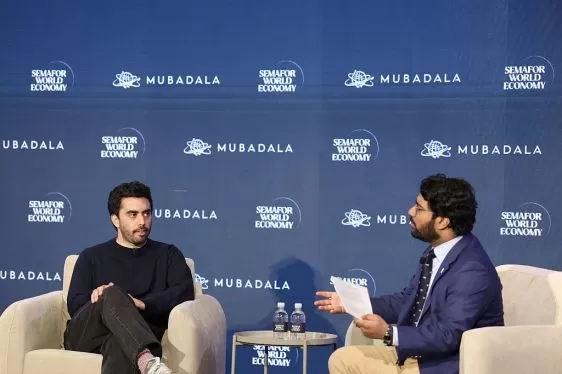
Cristóbal Valenzuela, co-founder and CEO of the AI video generation company Runway, has made comments that are unlikely to win favor with creatives skeptical of artificial intelligence. Runway is now valued at over $5 billion, but Valenzuela's recent remarks at Semafor's World Economy Summit about AI's role in Hollywood may further polarize the debate.
During the summit, Valenzuela proposed a radical shift for film studios. Instead of investing $100 million in a single movie, he suggested allocating that same budget across 50 films. This approach, he argued, would dramatically increase output and improve the odds of producing a major hit.
"Consider a studio spending a hundred million dollars on one 90-minute feature film," Valenzuela said. "Now imagine taking that hundred million and funding 50 movies instead. The visual quality and output per film could be maintained, but you generate far more content. This significantly boosts your chances of success. It becomes a question of volume."
This perspective challenges the traditional view of filmmaking as an artistic investment, where studios succeed by carefully selecting and backing the right creative vision. Valenzuela's AI-driven proposal frames the industry as a numbers game: produce enough content, and statistical probability will lead to success.
In his interview, Valenzuela acknowledged the controversy surrounding AI's entry into creative fields like film and television. However, he emphasized that "things are changing fast." He believes much of the initial skepticism stemmed from fear and a lack of understanding, whereas now, the capabilities of advanced AI tools are becoming widely recognized.
He stated that Runway is developing AI "world models" designed to help creatives accomplish "more work, better and faster." The company collaborates with numerous studios and creators, and Valenzuela claims their technology is already effectively reducing production costs.
This trend is already underway. For instance, the upcoming $70 million film "Bitcoin: Killing Satoshi" is set to be the first studio-quality AI feature film. Reports indicate AI slashed its production budget from an initial estimate of $300 million. Amazon has also adopted AI to cut costs for film and TV, as have studios in India. Sony Pictures has announced plans to utilize the technology, and even director James Cameron has endorsed AI as a means to sustain blockbuster production without resorting to layoffs.
When asked which areas of filmmaking are seeing cost reductions, Valenzuela replied, "It's everywhere. Pre-production, scripting, planning, execution, visual effects—this technology is already being deployed at a large scale."
While AI may lower barriers to producing more content, critics challenge the tech industry's assumption that scaling up creativity with AI will inherently yield more great art.
Runway, however, firmly believes in this premise. "The industry faces a creativity crisis due to the economic incentives dictating how content is made," Valenzuela said. He drew a parallel to book publishing, where he estimates around 25 million books are produced annually—far more than any individual could read.
"Naturally, I don't read 25 million books," he continued. "But the world is better off because more people have the opportunity to tell their story or share their message with the world."
(It's worth noting that Valenzuela's figure seems inflated. UNESCO data shows approximately 2.2 million new book titles are published yearly. His estimate may include self-published ebooks and online stories from platforms like Wattpad, many of which are now also created with AI and are often omitted from traditional publishing statistics.)
Regardless, the core idea is to saturate the market with content, banking on the likelihood that a fraction will become hits. This is the future Valenzuela envisions for the movie industry, powered by AI.
"We have a saying at Runway: the best movies are yet to be made," Valenzuela concluded. "That's because billions of potential storytellers haven't had access to this technology... until now."
Related article
 Ollie bets privacy focus to win AI assistant race
To be genuinely helpful, an AI assistant must understand its user deeply. Ollie, a personal assistant designed for daily life, operates on the premise that this doesn’t require surrendering your data or compromising your privacy.While certain enterpr
How AI LIVE: London Will Explore AI & Industrial Automation
The summit will convene C-suite executives from around the globe to address pressing challenges in global industries, ranging from AI-driven disruption to economic volatility.AI LIVE: The London Summit will gather over 2,000 international leaders und
Anthropic Enters AI Legal Tech Market as Competition Intensifies
Anthropic unveiled a suite of new chatbot capabilities on Tuesday, aimed at delivering automated support to legal practices. These enhancements expand upon Claude for Legal, the firm-specific platform introduced earlier this year, by adding specializ
Related Special Topic Recommendations
Image editing
Ollie bets privacy focus to win AI assistant race
To be genuinely helpful, an AI assistant must understand its user deeply. Ollie, a personal assistant designed for daily life, operates on the premise that this doesn’t require surrendering your data or compromising your privacy.While certain enterpr
How AI LIVE: London Will Explore AI & Industrial Automation
The summit will convene C-suite executives from around the globe to address pressing challenges in global industries, ranging from AI-driven disruption to economic volatility.AI LIVE: The London Summit will gather over 2,000 international leaders und
Anthropic Enters AI Legal Tech Market as Competition Intensifies
Anthropic unveiled a suite of new chatbot capabilities on Tuesday, aimed at delivering automated support to legal practices. These enhancements expand upon Claude for Legal, the firm-specific platform introduced earlier this year, by adding specializ
Related Special Topic Recommendations
Image editing
 AI Object Removal Editors: Clean Up Portraits, Travel, and Product Shots
2026 Latest Best Top-rated AI Object Removal Editors for portraits travel product shots! XIX.AI curates a powerful game-changing collection regularly updated with weekly rankings. These tools offer real-world tests to help you quickly remove unwanted elements, boost content quality, and save tons of time without compromising results. Must-try for anyone aiming to unlock their AI creation edge. Explore now!
 10 tools
 xix.ai
Text-to-speech
Best AI Text to Speech Tools for Online Courses
xix.ai
Text-to-speech
Best AI Text to Speech Tools for Online Courses
2026 Latest Best Top-rated AI Text to Speech Tools for Online Courses are curated by XIX.AI based on rigorous real-world tests and weekly updated rankings. These powerful tools help creators deliver crystal-clear audio content effortlessly, boosting writing efficiency and streamlining course production. Check out the free vs paid comparison to find your perfect fit. Explore now to unlock your AI edge in online education.
10 tools
xix.ai
writing
AI Blog Title Tools for Higher Click Through Rates
2026 Latest Best Top-Rated AI Blog Title Tools for Higher Click Through Rates! XIX.AI has carefully curated a powerful, game-changing collection of top tools that go through rigorous real-world tests. You’ll find a free vs paid comparison, weekly updated rankings, and detailed insights to help you boost your blog’s traffic efficiently. Must-try options are highlighted to help you unlock your AI edge. Explore now!
10 tools
xix.ai
automation
Best AI Task Routing Tools for Support Workflows
2026 Latest Best Top-rated AI Task Routing Tools for Support Workflows! XIX.AI has curated a highly powerful game-changing collection of must-try solutions, all undergoing rigorous real-world tests and updated weekly. These tools streamline workflows, boost productivity, and help teams deliver faster, more efficient support. Explore now to discover your perfect tool and unlock your AI edge!
17 tools
xix.ai
Academic Research
AI Citation and Paper Summary Tools
2026 Latest Best Top-Rated AI Citation and Paper Summary Tools Curated by XIX.AI. Get powerful game-changing solutions for quick content creation, improved writing efficiency, and boosting productivity. We offer a free vs paid comparison along with real-world tests and weekly updated rankings to help you find the must-try tool that fits your needs perfectly. Explore now to Unlock your AI edge.
10 tools
xix.ai
Productivity
Best AI Productivity Tools for Daily Work
2026 Latest Best Top-Rated AI Productivity Tools for Daily Work! XIX.AI has curated a powerful, game-changing selection based on rigorous weekly updated rankings and real-world tests. You’ll find must-try options that boost writing efficiency, streamline content creation, and help you overcome daily work challenges. Get a free vs paid comparison to find the perfect fit for your needs. Explore now to unlock your AI edge!
9 tools
xix.ai

 Comments (0)
0/500
Comments (0)
0/500
Cristóbal Valenzuela, co-founder and CEO of the AI video generation company Runway, has made comments that are unlikely to win favor with creatives skeptical of artificial intelligence. Runway is now valued at over $5 billion, but Valenzuela's recent remarks at Semafor's World Economy Summit about AI's role in Hollywood may further polarize the debate.
During the summit, Valenzuela proposed a radical shift for film studios. Instead of investing $100 million in a single movie, he suggested allocating that same budget across 50 films. This approach, he argued, would dramatically increase output and improve the odds of producing a major hit.
"Consider a studio spending a hundred million dollars on one 90-minute feature film," Valenzuela said. "Now imagine taking that hundred million and funding 50 movies instead. The visual quality and output per film could be maintained, but you generate far more content. This significantly boosts your chances of success. It becomes a question of volume."
This perspective challenges the traditional view of filmmaking as an artistic investment, where studios succeed by carefully selecting and backing the right creative vision. Valenzuela's AI-driven proposal frames the industry as a numbers game: produce enough content, and statistical probability will lead to success.
In his interview, Valenzuela acknowledged the controversy surrounding AI's entry into creative fields like film and television. However, he emphasized that "things are changing fast." He believes much of the initial skepticism stemmed from fear and a lack of understanding, whereas now, the capabilities of advanced AI tools are becoming widely recognized.
He stated that Runway is developing AI "world models" designed to help creatives accomplish "more work, better and faster." The company collaborates with numerous studios and creators, and Valenzuela claims their technology is already effectively reducing production costs.
This trend is already underway. For instance, the upcoming $70 million film "Bitcoin: Killing Satoshi" is set to be the first studio-quality AI feature film. Reports indicate AI slashed its production budget from an initial estimate of $300 million. Amazon has also adopted AI to cut costs for film and TV, as have studios in India. Sony Pictures has announced plans to utilize the technology, and even director James Cameron has endorsed AI as a means to sustain blockbuster production without resorting to layoffs.
When asked which areas of filmmaking are seeing cost reductions, Valenzuela replied, "It's everywhere. Pre-production, scripting, planning, execution, visual effects—this technology is already being deployed at a large scale."
While AI may lower barriers to producing more content, critics challenge the tech industry's assumption that scaling up creativity with AI will inherently yield more great art.
Runway, however, firmly believes in this premise. "The industry faces a creativity crisis due to the economic incentives dictating how content is made," Valenzuela said. He drew a parallel to book publishing, where he estimates around 25 million books are produced annually—far more than any individual could read.
"Naturally, I don't read 25 million books," he continued. "But the world is better off because more people have the opportunity to tell their story or share their message with the world."
(It's worth noting that Valenzuela's figure seems inflated. UNESCO data shows approximately 2.2 million new book titles are published yearly. His estimate may include self-published ebooks and online stories from platforms like Wattpad, many of which are now also created with AI and are often omitted from traditional publishing statistics.)
Regardless, the core idea is to saturate the market with content, banking on the likelihood that a fraction will become hits. This is the future Valenzuela envisions for the movie industry, powered by AI.
"We have a saying at Runway: the best movies are yet to be made," Valenzuela concluded. "That's because billions of potential storytellers haven't had access to this technology... until now."








 Ollie bets privacy focus to win AI assistant race
To be genuinely helpful, an AI assistant must understand its user deeply. Ollie, a personal assistant designed for daily life, operates on the premise that this doesn’t require surrendering your data or compromising your privacy.While certain enterpr
Ollie bets privacy focus to win AI assistant race
To be genuinely helpful, an AI assistant must understand its user deeply. Ollie, a personal assistant designed for daily life, operates on the premise that this doesn’t require surrendering your data or compromising your privacy.While certain enterpr
 How AI LIVE: London Will Explore AI & Industrial Automation
The summit will convene C-suite executives from around the globe to address pressing challenges in global industries, ranging from AI-driven disruption to economic volatility.AI LIVE: The London Summit will gather over 2,000 international leaders und
How AI LIVE: London Will Explore AI & Industrial Automation
The summit will convene C-suite executives from around the globe to address pressing challenges in global industries, ranging from AI-driven disruption to economic volatility.AI LIVE: The London Summit will gather over 2,000 international leaders und
 Anthropic Enters AI Legal Tech Market as Competition Intensifies
Anthropic unveiled a suite of new chatbot capabilities on Tuesday, aimed at delivering automated support to legal practices. These enhancements expand upon Claude for Legal, the firm-specific platform introduced earlier this year, by adding specializ
Anthropic Enters AI Legal Tech Market as Competition Intensifies
Anthropic unveiled a suite of new chatbot capabilities on Tuesday, aimed at delivering automated support to legal practices. These enhancements expand upon Claude for Legal, the firm-specific platform introduced earlier this year, by adding specializ

2026 Latest Best Top-rated AI Object Removal Editors for portraits travel product shots! XIX.AI curates a powerful game-changing collection regularly updated with weekly rankings. These tools offer real-world tests to help you quickly remove unwanted elements, boost content quality, and save tons of time without compromising results. Must-try for anyone aiming to unlock their AI creation edge. Explore now!
10 tools
xix.ai

2026 Latest Best Top-rated AI Text to Speech Tools for Online Courses are curated by XIX.AI based on rigorous real-world tests and weekly updated rankings. These powerful tools help creators deliver crystal-clear audio content effortlessly, boosting writing efficiency and streamlining course production. Check out the free vs paid comparison to find your perfect fit. Explore now to unlock your AI edge in online education.
10 tools
xix.ai

2026 Latest Best Top-Rated AI Blog Title Tools for Higher Click Through Rates! XIX.AI has carefully curated a powerful, game-changing collection of top tools that go through rigorous real-world tests. You’ll find a free vs paid comparison, weekly updated rankings, and detailed insights to help you boost your blog’s traffic efficiently. Must-try options are highlighted to help you unlock your AI edge. Explore now!
10 tools
xix.ai

2026 Latest Best Top-rated AI Task Routing Tools for Support Workflows! XIX.AI has curated a highly powerful game-changing collection of must-try solutions, all undergoing rigorous real-world tests and updated weekly. These tools streamline workflows, boost productivity, and help teams deliver faster, more efficient support. Explore now to discover your perfect tool and unlock your AI edge!
17 tools
xix.ai
2026 Latest Best Top-Rated AI Citation and Paper Summary Tools Curated by XIX.AI. Get powerful game-changing solutions for quick content creation, improved writing efficiency, and boosting productivity. We offer a free vs paid comparison along with real-world tests and weekly updated rankings to help you find the must-try tool that fits your needs perfectly. Explore now to Unlock your AI edge.
10 tools
xix.ai

2026 Latest Best Top-Rated AI Productivity Tools for Daily Work! XIX.AI has curated a powerful, game-changing selection based on rigorous weekly updated rankings and real-world tests. You’ll find must-try options that boost writing efficiency, streamline content creation, and help you overcome daily work challenges. Get a free vs paid comparison to find the perfect fit for your needs. Explore now to unlock your AI edge!
9 tools
xix.ai












