


 Home
HomeRunning AI Models Becomes a Memory Challenge
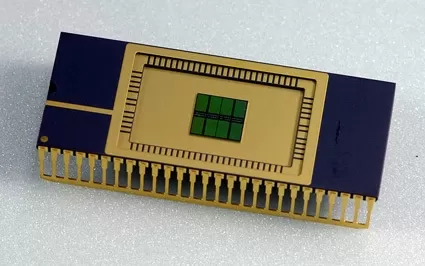
Discussions about AI infrastructure costs often center on Nvidia and GPUs, but memory is becoming a critical piece of the puzzle. With hyperscalers investing billions in new data centers, DRAM chip prices have surged roughly sevenfold in the past year.
Simultaneously, a growing discipline focuses on orchestrating this memory to ensure the right data reaches the right AI agent at the right time. Companies that excel at this can execute the same queries using fewer tokens—a difference that can determine survival in a competitive market.
Semiconductor analyst Dan O’Laughlin offers a compelling perspective on the importance of memory chips in his Substack, featuring a conversation with Val Bercovici, Chief AI Officer at Weka. Both experts come from a semiconductor background, so their discussion leans toward the hardware, though the implications for AI software are equally significant.
One passage stood out, where Bercovici comments on the increasing complexity of Anthropic's prompt-caching documentation:
The clue is on Anthropic's prompt caching pricing page. It began as a simple page six or seven months ago, especially around the launch of Claude Code, essentially saying, "Use caching, it's cheaper." Now, it reads like an encyclopedia of advice on how many cache writes to pre-purchase. You see common industry tiers like 5-minute and 1-hour windows—but nothing longer. That's a telling detail. Then, of course, there are various arbitrage opportunities around cache read pricing based on how many cache writes you've bought in advance.
The core question is how long Claude retains your prompt in cached memory. You can pay for a 5-minute window or a more expensive hour-long window. Accessing data still in the cache is far cheaper, so effective management can lead to substantial savings. However, there's a catch: each new piece of data added to a query might displace something else from the cache.
While the details are complex, the conclusion is straightforward: Memory management within AI models will be a major factor in the future of AI. Companies that master it will gain a significant competitive edge.
There's considerable room for progress in this emerging field. Last October, I wrote about a startup called TensorMesh, which is working on a layer of the stack known as cache optimization.
Techcrunch eventTechCrunch Founder Summit 2026: Tickets Live
On June 23 in Boston, more than 1,100 founders come together at TechCrunch Founder Summit 2026 for a full day focused on growth, execution, and real-world scaling. Learn from founders and investors who have shaped the industry. Connect with peers navigating similar growth stages. Walk away with tactics you can apply immediately
Save up to $300 on your pass or save up to 30% with group tickets for teams of four or more.
TechCrunch Founder Summit: Tickets Live
On June 23 in Boston, more than 1,100 founders come together at TechCrunch Founder Summit 2026 for a full day focused on growth, execution, and real-world scaling. Learn from founders and investors who have shaped the industry. Connect with peers navigating similar growth stages. Walk away with tactics you can apply immediately
Save up to $300 on your pass or save up to 30% with group tickets for teams of four or more.
Boston, MA|June 23, 2026REGISTER NOWOpportunities also exist elsewhere in the stack. Further down, for instance, lies the question of how data centers utilize their different types of memory. (The interview includes an insightful discussion on when to use DRAM chips versus HBM, though it gets quite technical.) Higher up the stack, end-users are learning to structure their model swarms to leverage shared caches effectively.
As companies improve at memory orchestration, they will consume fewer tokens, making inference cheaper. At the same time, models are becoming more efficient at processing each token, driving costs down even further. As server expenses decline, many applications currently deemed unviable will begin to approach profitability.
Related article
 Former Infosys Chief’s AI Startup Secures Another $53M
Hang Ten Systems, an AI startup established by former Infosys CEO Vishal Sikka just four months ago, has secured an additional $53 million in seed funding. This latest investment round was finalized merely five weeks after the initial $32 million see
Crypto exchange OKX aims to empower AI agents to hire and pay each other
As AI agents start serving individuals and collaborating with each other, they require mechanisms to locate tasks, compensate for services, and establish credibility. Crypto exchange OKX anticipates this future is arriving sooner than anticipated, in
Thiel-backed startup claims AI can judge journalism, despite risks to whistleblowers
Following his role in the lawsuit that led to Gawker’s bankruptcy, Aron D’Souza identified a critical flaw in the American media landscape: individuals harmed by coverage lacked effective means to respond.His answer is technology. D’Souza’s new ventu
Related Special Topic Recommendations
Business
Former Infosys Chief’s AI Startup Secures Another $53M
Hang Ten Systems, an AI startup established by former Infosys CEO Vishal Sikka just four months ago, has secured an additional $53 million in seed funding. This latest investment round was finalized merely five weeks after the initial $32 million see
Crypto exchange OKX aims to empower AI agents to hire and pay each other
As AI agents start serving individuals and collaborating with each other, they require mechanisms to locate tasks, compensate for services, and establish credibility. Crypto exchange OKX anticipates this future is arriving sooner than anticipated, in
Thiel-backed startup claims AI can judge journalism, despite risks to whistleblowers
Following his role in the lawsuit that led to Gawker’s bankruptcy, Aron D’Souza identified a critical flaw in the American media landscape: individuals harmed by coverage lacked effective means to respond.His answer is technology. D’Souza’s new ventu
Related Special Topic Recommendations
Business
 Best AI Competitive Research Tools for Small Businesses
2026 Latest Best Top-rated AI Competitive Research Tools for Small Businesses! XIX.AI has curated a highly powerful game-changing collection, updated weekly with rigorous real-world tests and detailed rankings. You can find a comprehensive free vs paid comparison to help you identify the must-try tools that boost your productivity and give you a competitive edge. Explore now to discover your perfect tool!
 9 tools
 xix.ai
Image editing
Photoshop AI Retouch Tools for Ecommerce Apparel, Skin Cleanup, and Color Consistency
xix.ai
Image editing
Photoshop AI Retouch Tools for Ecommerce Apparel, Skin Cleanup, and Color Consistency
2026 Latest Best Photoshop AI retouch tools for ecommerce apparel, skin cleanup, and color consistency! This top-rated curated list features powerful game-changing solutions that help you boost writing efficiency, streamline content creation, and achieve perfect visual results effortlessly. Each tool has undergone real-world tests through weekly updated rankings, complete with free vs paid comparison details. Backed by XIX.AI, it’s the must-try guide for anyone aiming to unlock your AI edge. Explore now!
10 tools
xix.ai
Prompt
Best AI Prompt Libraries for ChatGPT Workflows
2026 Latest Best Top-Rated AI Prompt Libraries for optimizing all types of ChatGPT workflows. XIX.AI has curated a powerful, game-changing collection that goes through rigorous real-world tests to ensure top performance. You can find detailed free vs paid comparisons and expert rankings to help you choose the must-try tools that boost your productivity and unlock your AI edge. Explore now!
11 tools
xix.ai
Education and Learning
AI Quiz Builder Platforms for Teachers, Tutors, and Cohort-Based Learning Programs
2026 Latest Best AI Quiz Builder Platforms for Teachers, Tutors, and Cohort-Based Learning Programs! XIX.AI has curated a top-rated list of powerful game-changing tools that go through real-world tests to deliver accurate rankings. These must-try platforms help boost writing efficiency, streamline content creation, and simplify quiz design across all learning scenarios. Explore now to discover your perfect tool for unlocking your AI edge in teaching!
13 tools
xix.ai
code
AI Pull Request Review Tools for GitHub Teams Handling Refactors, Bugs, and Security Gaps
2026 Latest Best AI Pull Request Review Tools for GitHub Teams are here on XIX.AI! This top-rated curated list showcases powerful game-changing solutions that streamline refactoring, bug fixing, and security gap detection across all team workflows. Enjoy a free vs paid comparison along with real-world tests and detailed rankings to help you find the perfect tool that boosts productivity significantly. Explore now to unlock your AI edge!
12 tools
xix.ai
Text-to-speech
Best AI Text to Speech Tools for Natural Voiceovers
2026 Latest Best Top-rated AI Text to Speech Tools for Natural Voiceovers are here on XIX.AI! This curated list features powerful, game-changing options that deliver crystal-clear voices for every use case, backed by real-world tests and weekly updated rankings. Get a free vs paid comparison to find the must-try solution that boosts your productivity instantly. Explore now to Unlock your AI edge!
11 tools
xix.ai

 Comments (1)
0/500
Comments (1)
0/500
![NicholasNelson]()
這篇文章點出了AI發展中常被忽略的記憶體瓶頸,挺有意思的。大家都在搶GPU,但DRAM價格一年漲七倍也太誇張了吧!這會不會讓小公司更難玩得起AI啊?🤔
Discussions about AI infrastructure costs often center on Nvidia and GPUs, but memory is becoming a critical piece of the puzzle. With hyperscalers investing billions in new data centers, DRAM chip prices have surged roughly sevenfold in the past year.
Simultaneously, a growing discipline focuses on orchestrating this memory to ensure the right data reaches the right AI agent at the right time. Companies that excel at this can execute the same queries using fewer tokens—a difference that can determine survival in a competitive market.
Semiconductor analyst Dan O’Laughlin offers a compelling perspective on the importance of memory chips in his Substack, featuring a conversation with Val Bercovici, Chief AI Officer at Weka. Both experts come from a semiconductor background, so their discussion leans toward the hardware, though the implications for AI software are equally significant.
One passage stood out, where Bercovici comments on the increasing complexity of Anthropic's prompt-caching documentation:
The clue is on Anthropic's prompt caching pricing page. It began as a simple page six or seven months ago, especially around the launch of Claude Code, essentially saying, "Use caching, it's cheaper." Now, it reads like an encyclopedia of advice on how many cache writes to pre-purchase. You see common industry tiers like 5-minute and 1-hour windows—but nothing longer. That's a telling detail. Then, of course, there are various arbitrage opportunities around cache read pricing based on how many cache writes you've bought in advance.
The core question is how long Claude retains your prompt in cached memory. You can pay for a 5-minute window or a more expensive hour-long window. Accessing data still in the cache is far cheaper, so effective management can lead to substantial savings. However, there's a catch: each new piece of data added to a query might displace something else from the cache.
While the details are complex, the conclusion is straightforward: Memory management within AI models will be a major factor in the future of AI. Companies that master it will gain a significant competitive edge.
There's considerable room for progress in this emerging field. Last October, I wrote about a startup called TensorMesh, which is working on a layer of the stack known as cache optimization.
Techcrunch eventTechCrunch Founder Summit 2026: Tickets Live
On June 23 in Boston, more than 1,100 founders come together at TechCrunch Founder Summit 2026 for a full day focused on growth, execution, and real-world scaling. Learn from founders and investors who have shaped the industry. Connect with peers navigating similar growth stages. Walk away with tactics you can apply immediately
Save up to $300 on your pass or save up to 30% with group tickets for teams of four or more.
TechCrunch Founder Summit: Tickets Live
On June 23 in Boston, more than 1,100 founders come together at TechCrunch Founder Summit 2026 for a full day focused on growth, execution, and real-world scaling. Learn from founders and investors who have shaped the industry. Connect with peers navigating similar growth stages. Walk away with tactics you can apply immediately
Save up to $300 on your pass or save up to 30% with group tickets for teams of four or more.
Boston, MA|June 23, 2026REGISTER NOWOpportunities also exist elsewhere in the stack. Further down, for instance, lies the question of how data centers utilize their different types of memory. (The interview includes an insightful discussion on when to use DRAM chips versus HBM, though it gets quite technical.) Higher up the stack, end-users are learning to structure their model swarms to leverage shared caches effectively.
As companies improve at memory orchestration, they will consume fewer tokens, making inference cheaper. At the same time, models are becoming more efficient at processing each token, driving costs down even further. As server expenses decline, many applications currently deemed unviable will begin to approach profitability.








 Former Infosys Chief’s AI Startup Secures Another $53M
Hang Ten Systems, an AI startup established by former Infosys CEO Vishal Sikka just four months ago, has secured an additional $53 million in seed funding. This latest investment round was finalized merely five weeks after the initial $32 million see
Former Infosys Chief’s AI Startup Secures Another $53M
Hang Ten Systems, an AI startup established by former Infosys CEO Vishal Sikka just four months ago, has secured an additional $53 million in seed funding. This latest investment round was finalized merely five weeks after the initial $32 million see
 Crypto exchange OKX aims to empower AI agents to hire and pay each other
As AI agents start serving individuals and collaborating with each other, they require mechanisms to locate tasks, compensate for services, and establish credibility. Crypto exchange OKX anticipates this future is arriving sooner than anticipated, in
Crypto exchange OKX aims to empower AI agents to hire and pay each other
As AI agents start serving individuals and collaborating with each other, they require mechanisms to locate tasks, compensate for services, and establish credibility. Crypto exchange OKX anticipates this future is arriving sooner than anticipated, in
 Thiel-backed startup claims AI can judge journalism, despite risks to whistleblowers
Following his role in the lawsuit that led to Gawker’s bankruptcy, Aron D’Souza identified a critical flaw in the American media landscape: individuals harmed by coverage lacked effective means to respond.His answer is technology. D’Souza’s new ventu
Thiel-backed startup claims AI can judge journalism, despite risks to whistleblowers
Following his role in the lawsuit that led to Gawker’s bankruptcy, Aron D’Souza identified a critical flaw in the American media landscape: individuals harmed by coverage lacked effective means to respond.His answer is technology. D’Souza’s new ventu

2026 Latest Best Top-rated AI Competitive Research Tools for Small Businesses! XIX.AI has curated a highly powerful game-changing collection, updated weekly with rigorous real-world tests and detailed rankings. You can find a comprehensive free vs paid comparison to help you identify the must-try tools that boost your productivity and give you a competitive edge. Explore now to discover your perfect tool!
9 tools
xix.ai

2026 Latest Best Photoshop AI retouch tools for ecommerce apparel, skin cleanup, and color consistency! This top-rated curated list features powerful game-changing solutions that help you boost writing efficiency, streamline content creation, and achieve perfect visual results effortlessly. Each tool has undergone real-world tests through weekly updated rankings, complete with free vs paid comparison details. Backed by XIX.AI, it’s the must-try guide for anyone aiming to unlock your AI edge. Explore now!
10 tools
xix.ai

2026 Latest Best Top-Rated AI Prompt Libraries for optimizing all types of ChatGPT workflows. XIX.AI has curated a powerful, game-changing collection that goes through rigorous real-world tests to ensure top performance. You can find detailed free vs paid comparisons and expert rankings to help you choose the must-try tools that boost your productivity and unlock your AI edge. Explore now!
11 tools
xix.ai

2026 Latest Best AI Quiz Builder Platforms for Teachers, Tutors, and Cohort-Based Learning Programs! XIX.AI has curated a top-rated list of powerful game-changing tools that go through real-world tests to deliver accurate rankings. These must-try platforms help boost writing efficiency, streamline content creation, and simplify quiz design across all learning scenarios. Explore now to discover your perfect tool for unlocking your AI edge in teaching!
13 tools
xix.ai

2026 Latest Best AI Pull Request Review Tools for GitHub Teams are here on XIX.AI! This top-rated curated list showcases powerful game-changing solutions that streamline refactoring, bug fixing, and security gap detection across all team workflows. Enjoy a free vs paid comparison along with real-world tests and detailed rankings to help you find the perfect tool that boosts productivity significantly. Explore now to unlock your AI edge!
12 tools
xix.ai

2026 Latest Best Top-rated AI Text to Speech Tools for Natural Voiceovers are here on XIX.AI! This curated list features powerful, game-changing options that deliver crystal-clear voices for every use case, backed by real-world tests and weekly updated rankings. Get a free vs paid comparison to find the must-try solution that boosts your productivity instantly. Explore now to Unlock your AI edge!
11 tools
xix.ai

這篇文章點出了AI發展中常被忽略的記憶體瓶頸,挺有意思的。大家都在搶GPU,但DRAM價格一年漲七倍也太誇張了吧!這會不會讓小公司更難玩得起AI啊?🤔












