


 Home
HomeRocket engine startup Impulse raises $500M to hire people over AI
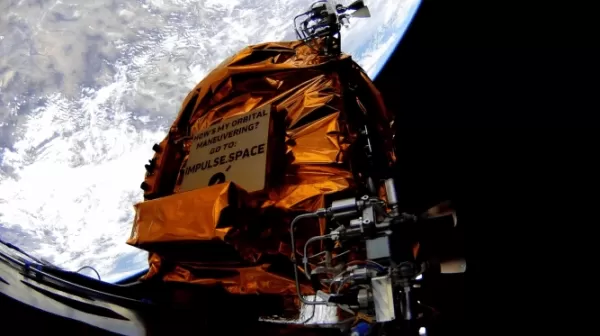
Impulse Space, a company founded by former SpaceX propulsion expert Tom Mueller to develop highly maneuverable spacecraft, announced a $500 million Series D round this week, which it plans to use to hire up to 200 new employees.
The round was led by 137 Ventures and BANNER VC, with participation from Founders Fund, Lux Capital, and Linse Capital. It reflects growing investor interest in space and defense technology as the U.S. government pours funding into national security priorities and SpaceX prepares for its IPO.
Impulse focuses on in-space mobility. The company has built a highly agile platform called Mira, targeting U.S. Space Force buyers. It is also developing Helios, a vehicle designed to carry satellites rapidly to high orbits after they are released in space closer to Earth.
President and COO Eric Romo told TechCrunch the new funding will help the company build and test more spacecraft, and he highlighted the firm’s hiring plans at a time when aerospace talent is in high demand.
While the company’s software teams are adopting AI coding tools, Romo noted that deep learning models are not yet ready for prime time when it comes to solving real-world engineering problems. As the 13th employee at SpaceX back in 2003, Romo’s role was creating computer simulations of the company’s engine designs to evaluate their performance.
“I considered it success if I got within 20% of the right answer, because the simulations were just not that good,” Romo said. “They’ve improved, but they’ve not improved that much, and so there’s not really any substitute for designing the thing, analyzing the thing, building it, and then getting it on the test stand.”
Romo suspects that AI tools for hardware design may take longer to emerge because finding suitable training data is harder than the vast amounts of text and code available online for LLMs. “If you want to go, say, find the best designs for a turbo pump seal package in the world, you’re not going to find those online,” he points out.
Impulse initially focused on propulsion and then evolved into building full spacecraft, requiring the company to bring in more expertise from engineers who design vehicle structures and flight computers. One reason the company recently opened an office in Colorado is that aerospace talent now has more options — instead of moving to Los Angeles, engineers can find work in Seattle, Denver, or Texas.
Next up for the company is another launch of its Mira spacecraft, which completed its third flight late last year. That flight was not without incident — a navigation system problem caused the craft to use up much of its propellant early on. Romo said the company is preparing a new Mira mission expected to launch before the end of the year.
Related article
 Swedish AI Startup Lovable Eyes $13.2 Billion Valuation After Major Funding Round
As AI-driven coding tools gain traction, Swedish startup Lovable has secured a major funding round. The company aims to raise $3 billion, potentially boosting its valuation to $13.2 billion—double the $6.6 billion recorded last December. Menlo Ventur
Google Tests Remy AI Agent for Gemini as Focus Shifts to User Control
According to Business Insider, Google is testing Remy, a new AI personal agent for Gemini. This tool aims to execute tasks on behalf of users, streamlining both professional workflows and daily routines.Currently, Remy is undergoing testing in an int
How to fix Core Web Vitals for better SEO rankings
Streamline Report Card Comments with AI ToolsIntroductionAI Tools for Generating Report Card CommentsMagic SchoolAlmanac AIChat GPTUsing Magic School to Generate Report Card CommentsLogging into Magic SchoolSelecting the Report Card Comments ToolCust
Related Special Topic Recommendations
writing
Swedish AI Startup Lovable Eyes $13.2 Billion Valuation After Major Funding Round
As AI-driven coding tools gain traction, Swedish startup Lovable has secured a major funding round. The company aims to raise $3 billion, potentially boosting its valuation to $13.2 billion—double the $6.6 billion recorded last December. Menlo Ventur
Google Tests Remy AI Agent for Gemini as Focus Shifts to User Control
According to Business Insider, Google is testing Remy, a new AI personal agent for Gemini. This tool aims to execute tasks on behalf of users, streamlining both professional workflows and daily routines.Currently, Remy is undergoing testing in an int
How to fix Core Web Vitals for better SEO rankings
Streamline Report Card Comments with AI ToolsIntroductionAI Tools for Generating Report Card CommentsMagic SchoolAlmanac AIChat GPTUsing Magic School to Generate Report Card CommentsLogging into Magic SchoolSelecting the Report Card Comments ToolCust
Related Special Topic Recommendations
writing
 Best AI Outline Generators for Long-Form SEO Articles
2026 Latest Best Top-Rated AI Outline Generators for Long-Form SEO Articles, meticulously curated by XIX.AI. These powerful tools offer game-changing assistance in creating high-quality content quickly, boosting writing efficiency significantly. Get a free vs paid comparison along with real-world tests and detailed rankings to help you find the must-try option that suits your needs. Explore now to unlock your AI edge.
 8 tools
 xix.ai
Education and Learning
AI Study Tools for Homework and Exam Prep
xix.ai
Education and Learning
AI Study Tools for Homework and Exam Prep
2026 Latest Best AI Study Tools for Homework and Exam Prep! XIX.AI curates a top-rated list of powerful, game-changing tools that help students boost productivity, streamline homework completion, and ace exams through real-world tests. Get a free vs paid comparison, detailed rankings, and must-try options to unlock your AI edge. Explore now!
10 tools
xix.ai
Music composition
AI Vocal Demo Tools for Songwriters, Hooks, Toplines, and Multilingual Draft Sessions
2026 Latest Best AI Vocal Demo Tools for Songwriters, Hook Creators, and Multi-Language Content Teams! XIX.AI has curated a top-rated list of powerful game-changing tools that go through rigorous real-world tests. You’ll find detailed free vs paid comparison data, comprehensive rankings, and must-try options to help you boost writing efficiency and unlock your creative potential. Explore now to discover your perfect tool for all your content needs!
9 tools
xix.ai
Business
Best AI Competitive Research Tools for Small Businesses
2026 Latest Best Top-rated AI Competitive Research Tools for Small Businesses! XIX.AI has curated a highly powerful game-changing collection, updated weekly with rigorous real-world tests and detailed rankings. You can find a comprehensive free vs paid comparison to help you identify the must-try tools that boost your productivity and give you a competitive edge. Explore now to discover your perfect tool!
9 tools
xix.ai
Image editing
Photoshop AI Retouch Tools for Ecommerce Apparel, Skin Cleanup, and Color Consistency
2026 Latest Best Photoshop AI retouch tools for ecommerce apparel, skin cleanup, and color consistency! This top-rated curated list features powerful game-changing solutions that help you boost writing efficiency, streamline content creation, and achieve perfect visual results effortlessly. Each tool has undergone real-world tests through weekly updated rankings, complete with free vs paid comparison details. Backed by XIX.AI, it’s the must-try guide for anyone aiming to unlock your AI edge. Explore now!
10 tools
xix.ai
Prompt
Best AI Prompt Libraries for ChatGPT Workflows
2026 Latest Best Top-Rated AI Prompt Libraries for optimizing all types of ChatGPT workflows. XIX.AI has curated a powerful, game-changing collection that goes through rigorous real-world tests to ensure top performance. You can find detailed free vs paid comparisons and expert rankings to help you choose the must-try tools that boost your productivity and unlock your AI edge. Explore now!
11 tools
xix.ai

 Comments (0)
0/500
Comments (0)
0/500
Impulse Space, a company founded by former SpaceX propulsion expert Tom Mueller to develop highly maneuverable spacecraft, announced a $500 million Series D round this week, which it plans to use to hire up to 200 new employees.
The round was led by 137 Ventures and BANNER VC, with participation from Founders Fund, Lux Capital, and Linse Capital. It reflects growing investor interest in space and defense technology as the U.S. government pours funding into national security priorities and SpaceX prepares for its IPO.
Impulse focuses on in-space mobility. The company has built a highly agile platform called Mira, targeting U.S. Space Force buyers. It is also developing Helios, a vehicle designed to carry satellites rapidly to high orbits after they are released in space closer to Earth.
President and COO Eric Romo told TechCrunch the new funding will help the company build and test more spacecraft, and he highlighted the firm’s hiring plans at a time when aerospace talent is in high demand.
While the company’s software teams are adopting AI coding tools, Romo noted that deep learning models are not yet ready for prime time when it comes to solving real-world engineering problems. As the 13th employee at SpaceX back in 2003, Romo’s role was creating computer simulations of the company’s engine designs to evaluate their performance.
“I considered it success if I got within 20% of the right answer, because the simulations were just not that good,” Romo said. “They’ve improved, but they’ve not improved that much, and so there’s not really any substitute for designing the thing, analyzing the thing, building it, and then getting it on the test stand.”
Romo suspects that AI tools for hardware design may take longer to emerge because finding suitable training data is harder than the vast amounts of text and code available online for LLMs. “If you want to go, say, find the best designs for a turbo pump seal package in the world, you’re not going to find those online,” he points out.
Impulse initially focused on propulsion and then evolved into building full spacecraft, requiring the company to bring in more expertise from engineers who design vehicle structures and flight computers. One reason the company recently opened an office in Colorado is that aerospace talent now has more options — instead of moving to Los Angeles, engineers can find work in Seattle, Denver, or Texas.
Next up for the company is another launch of its Mira spacecraft, which completed its third flight late last year. That flight was not without incident — a navigation system problem caused the craft to use up much of its propellant early on. Romo said the company is preparing a new Mira mission expected to launch before the end of the year.








 Swedish AI Startup Lovable Eyes $13.2 Billion Valuation After Major Funding Round
As AI-driven coding tools gain traction, Swedish startup Lovable has secured a major funding round. The company aims to raise $3 billion, potentially boosting its valuation to $13.2 billion—double the $6.6 billion recorded last December. Menlo Ventur
Google Tests Remy AI Agent for Gemini as Focus Shifts to User Control
According to Business Insider, Google is testing Remy, a new AI personal agent for Gemini. This tool aims to execute tasks on behalf of users, streamlining both professional workflows and daily routines.Currently, Remy is undergoing testing in an int
Swedish AI Startup Lovable Eyes $13.2 Billion Valuation After Major Funding Round
As AI-driven coding tools gain traction, Swedish startup Lovable has secured a major funding round. The company aims to raise $3 billion, potentially boosting its valuation to $13.2 billion—double the $6.6 billion recorded last December. Menlo Ventur
Google Tests Remy AI Agent for Gemini as Focus Shifts to User Control
According to Business Insider, Google is testing Remy, a new AI personal agent for Gemini. This tool aims to execute tasks on behalf of users, streamlining both professional workflows and daily routines.Currently, Remy is undergoing testing in an int
 How to fix Core Web Vitals for better SEO rankings
Streamline Report Card Comments with AI ToolsIntroductionAI Tools for Generating Report Card CommentsMagic SchoolAlmanac AIChat GPTUsing Magic School to Generate Report Card CommentsLogging into Magic SchoolSelecting the Report Card Comments ToolCust
How to fix Core Web Vitals for better SEO rankings
Streamline Report Card Comments with AI ToolsIntroductionAI Tools for Generating Report Card CommentsMagic SchoolAlmanac AIChat GPTUsing Magic School to Generate Report Card CommentsLogging into Magic SchoolSelecting the Report Card Comments ToolCust

2026 Latest Best Top-Rated AI Outline Generators for Long-Form SEO Articles, meticulously curated by XIX.AI. These powerful tools offer game-changing assistance in creating high-quality content quickly, boosting writing efficiency significantly. Get a free vs paid comparison along with real-world tests and detailed rankings to help you find the must-try option that suits your needs. Explore now to unlock your AI edge.
8 tools
xix.ai

2026 Latest Best AI Study Tools for Homework and Exam Prep! XIX.AI curates a top-rated list of powerful, game-changing tools that help students boost productivity, streamline homework completion, and ace exams through real-world tests. Get a free vs paid comparison, detailed rankings, and must-try options to unlock your AI edge. Explore now!
10 tools
xix.ai

2026 Latest Best AI Vocal Demo Tools for Songwriters, Hook Creators, and Multi-Language Content Teams! XIX.AI has curated a top-rated list of powerful game-changing tools that go through rigorous real-world tests. You’ll find detailed free vs paid comparison data, comprehensive rankings, and must-try options to help you boost writing efficiency and unlock your creative potential. Explore now to discover your perfect tool for all your content needs!
9 tools
xix.ai

2026 Latest Best Top-rated AI Competitive Research Tools for Small Businesses! XIX.AI has curated a highly powerful game-changing collection, updated weekly with rigorous real-world tests and detailed rankings. You can find a comprehensive free vs paid comparison to help you identify the must-try tools that boost your productivity and give you a competitive edge. Explore now to discover your perfect tool!
9 tools
xix.ai

2026 Latest Best Photoshop AI retouch tools for ecommerce apparel, skin cleanup, and color consistency! This top-rated curated list features powerful game-changing solutions that help you boost writing efficiency, streamline content creation, and achieve perfect visual results effortlessly. Each tool has undergone real-world tests through weekly updated rankings, complete with free vs paid comparison details. Backed by XIX.AI, it’s the must-try guide for anyone aiming to unlock your AI edge. Explore now!
10 tools
xix.ai

2026 Latest Best Top-Rated AI Prompt Libraries for optimizing all types of ChatGPT workflows. XIX.AI has curated a powerful, game-changing collection that goes through rigorous real-world tests to ensure top performance. You can find detailed free vs paid comparisons and expert rankings to help you choose the must-try tools that boost your productivity and unlock your AI edge. Explore now!
11 tools
xix.ai












