


 Home
HomeRepublicans Propose 10-Year Ban on State-Level AI Regulations
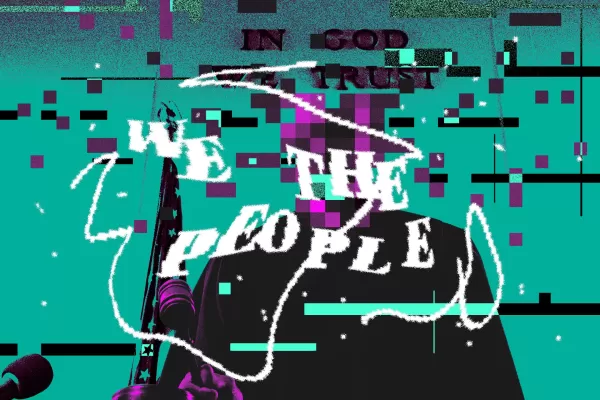
Republicans are seeking to prevent states from regulating artificial intelligence. On Sunday, a Republican-controlled House committee introduced a budget reconciliation bill that would prohibit states from enforcing laws or regulations targeting a wide range of automated computing systems for ten years after federal enactment. This move could halt regulatory efforts across areas as varied as AI chatbots and online search results.
Democrats have labeled the new provision a "massive gift" to Big Tech, and advocacy groups such as Americans for Responsible Innovation (ARI) warn it may have "catastrophic consequences" for the public. Companies like OpenAI have been lobbying for such preemption in Washington, hoping to sidestep a growing number of pending and active state laws. The budget reconciliation process enables lawmakers to expedite spending-related bills by requiring only a Senate majority rather than 60 votes.
The bill, put forward by House Energy and Commerce Committee Chairman Brett Guthrie (R-KY), would bar states from imposing "legal impediments"—including restrictions related to system design, performance, civil liability, or documentation—on AI models and "automated decision" systems. The legislation defines the latter as any computational process using machine learning, statistical modeling, data analytics, or artificial intelligence that generates simplified outputs such as scores, classifications, or recommendations intended to materially influence or replace human decision-making.
As a result, the ten-year freeze could apply far beyond AI. Travis Hall, Director of State Engagement at the Center for Democracy & Technology, told The Verge that the automated decision systems covered by the bill "are embedded throughout digital services, including search results, mapping directions, health diagnoses, and risk analyses used in sentencing decisions."
In the 2025 legislative session alone, states proposed over 500 bills that Hall believes the federal bill could "clearly preempt." These proposals cover a broad spectrum—from chatbot safety protections for minors to restrictions on deepfakes and disclosure rules for AI in political advertising. If enacted, the measure could undermine laws already passed in several states.
"This push to eliminate AI safeguards is a giveaway to Big Tech that will eventually harm the public."
Last year, California Governor Gavin Newsom signed legislation barring companies from using an actor's AI-generated likeness without consent. Tennessee adopted similar protections, and Utah now requires certain businesses to notify customers when they are interacting with AI. Colorado’s AI law, scheduled to take effect next year, will mandate that firms developing "high-risk" AI systems protect consumers from "algorithmic discrimination."
California also considered the landmark AI safety bill SB 1047, which would have imposed security requirements and legal liability on in-state AI companies such as OpenAI, Anthropic, Google, and Meta. OpenAI opposed the bill, arguing that AI regulation should be federal rather than a "patchwork" of state laws that complicates compliance. Governor Newsom vetoed the bill last September, and OpenAI has since emphasized its goal to avoid state regulations that "stifle innovation."
With minimal federal AI regulation in place, states have taken the lead in determining how to manage AI. Even before the emergence of generative AI, state lawmakers were working to address algorithmic discrimination—including race or gender bias in machine learning systems affecting housing and criminal justice. These efforts would likely be hindered by the Republican proposal.
Democrats have criticized the inclusion of the measure in the reconciliation bill. Representative Jan Schakowsky (D-IL) stated that the ten-year preemption would "enable AI companies to bypass consumer privacy protections, permit the spread of deepfakes, and allow firms to profile and deceive consumers using AI." In a post on X, Senator Ed Markey (D-MA) called the proposal "a step toward a Dark Age for our environment, children, and marginalized communities."
Related
- What are OpenAI’s real intentions regarding Trump?
- OpenAI and Google seek government approval to train AI on content without ownership
The nonprofit Americans for Responsible Innovation (ARI) likened the potential ban to the government’s past failure to regulate social media effectively. "Lawmakers delayed social media safeguards for ten years, and we are still facing the consequences," ARI president Brad Carson said in a statement. "Now imagine those same harms amplified by the rapid evolution of AI... In the end, banning AI safeguards is a handout to Big Tech that will backfire on society."
The provision could face challenges in the Senate; ARI notes that the Byrd Rule limits reconciliation bills to fiscal matters. Nevertheless, it is concerning to see Republican lawmakers working to block oversight of a technology that is increasingly integrated into every aspect of life.
Related article
 Google Tests Remy AI Agent for Gemini as Focus Shifts to User Control
According to Business Insider, Google is testing Remy, a new AI personal agent for Gemini. This tool aims to execute tasks on behalf of users, streamlining both professional workflows and daily routines.Currently, Remy is undergoing testing in an int
Ollie bets privacy focus to win AI assistant race
To be genuinely helpful, an AI assistant must understand its user deeply. Ollie, a personal assistant designed for daily life, operates on the premise that this doesn’t require surrendering your data or compromising your privacy.While certain enterpr
How AI LIVE: London Will Explore AI & Industrial Automation
The summit will convene C-suite executives from around the globe to address pressing challenges in global industries, ranging from AI-driven disruption to economic volatility.AI LIVE: The London Summit will gather over 2,000 international leaders und
Related Special Topic Recommendations
Data Analysis
Google Tests Remy AI Agent for Gemini as Focus Shifts to User Control
According to Business Insider, Google is testing Remy, a new AI personal agent for Gemini. This tool aims to execute tasks on behalf of users, streamlining both professional workflows and daily routines.Currently, Remy is undergoing testing in an int
Ollie bets privacy focus to win AI assistant race
To be genuinely helpful, an AI assistant must understand its user deeply. Ollie, a personal assistant designed for daily life, operates on the premise that this doesn’t require surrendering your data or compromising your privacy.While certain enterpr
How AI LIVE: London Will Explore AI & Industrial Automation
The summit will convene C-suite executives from around the globe to address pressing challenges in global industries, ranging from AI-driven disruption to economic volatility.AI LIVE: The London Summit will gather over 2,000 international leaders und
Related Special Topic Recommendations
Data Analysis
 Best AI Anomaly Detection Tools for KPI Monitoring across SaaS and Ecommerce Teams
2026 Latest Best Top-rated AI Anomaly Detection Tools for KPI Monitoring in SaaS and Ecommerce teams! XIX.AI has curated a powerful, game-changing collection based on rigorous real-world tests and weekly updated rankings. You’ll find detailed free vs paid comparison insights to help you identify the must-try solution that boosts productivity and unlocks your AI edge. Explore now!
 10 tools
 xix.ai
writing
Best AI Outline Generators for Long-Form SEO Articles
xix.ai
writing
Best AI Outline Generators for Long-Form SEO Articles
2026 Latest Best Top-Rated AI Outline Generators for Long-Form SEO Articles, meticulously curated by XIX.AI. These powerful tools offer game-changing assistance in creating high-quality content quickly, boosting writing efficiency significantly. Get a free vs paid comparison along with real-world tests and detailed rankings to help you find the must-try option that suits your needs. Explore now to unlock your AI edge.
8 tools
xix.ai
Education and Learning
AI Study Tools for Homework and Exam Prep
2026 Latest Best AI Study Tools for Homework and Exam Prep! XIX.AI curates a top-rated list of powerful, game-changing tools that help students boost productivity, streamline homework completion, and ace exams through real-world tests. Get a free vs paid comparison, detailed rankings, and must-try options to unlock your AI edge. Explore now!
10 tools
xix.ai
Music composition
AI Vocal Demo Tools for Songwriters, Hooks, Toplines, and Multilingual Draft Sessions
2026 Latest Best AI Vocal Demo Tools for Songwriters, Hook Creators, and Multi-Language Content Teams! XIX.AI has curated a top-rated list of powerful game-changing tools that go through rigorous real-world tests. You’ll find detailed free vs paid comparison data, comprehensive rankings, and must-try options to help you boost writing efficiency and unlock your creative potential. Explore now to discover your perfect tool for all your content needs!
9 tools
xix.ai
Business
Best AI Competitive Research Tools for Small Businesses
2026 Latest Best Top-rated AI Competitive Research Tools for Small Businesses! XIX.AI has curated a highly powerful game-changing collection, updated weekly with rigorous real-world tests and detailed rankings. You can find a comprehensive free vs paid comparison to help you identify the must-try tools that boost your productivity and give you a competitive edge. Explore now to discover your perfect tool!
9 tools
xix.ai
Image editing
Photoshop AI Retouch Tools for Ecommerce Apparel, Skin Cleanup, and Color Consistency
2026 Latest Best Photoshop AI retouch tools for ecommerce apparel, skin cleanup, and color consistency! This top-rated curated list features powerful game-changing solutions that help you boost writing efficiency, streamline content creation, and achieve perfect visual results effortlessly. Each tool has undergone real-world tests through weekly updated rankings, complete with free vs paid comparison details. Backed by XIX.AI, it’s the must-try guide for anyone aiming to unlock your AI edge. Explore now!
10 tools
xix.ai

 Comments (2)
0/500
Comments (2)
0/500
![DouglasMartínez]()
Wait, so we get one AI law for the whole country, but states can't make their own? Sounds like a recipe for chaos. 🤔 I get wanting to keep things simple for tech companies, but what about privacy? If California can't regulate facial recognition anymore, who protects us? Just hoping this doesn't turn into a free-for-all where big tech does whatever they want. 🚩
![WillieMartinez]()
Wait, so the feds want to block states from making their own AI rules for a decade? That's a massive power grab. Sure, patchwork regulations are messy, but a total ban seems extreme. What if a state faces a unique AI issue that the federal government is slow to address? This feels more about control than innovation. 🤔
Republicans are seeking to prevent states from regulating artificial intelligence. On Sunday, a Republican-controlled House committee introduced a budget reconciliation bill that would prohibit states from enforcing laws or regulations targeting a wide range of automated computing systems for ten years after federal enactment. This move could halt regulatory efforts across areas as varied as AI chatbots and online search results.
Democrats have labeled the new provision a "massive gift" to Big Tech, and advocacy groups such as Americans for Responsible Innovation (ARI) warn it may have "catastrophic consequences" for the public. Companies like OpenAI have been lobbying for such preemption in Washington, hoping to sidestep a growing number of pending and active state laws. The budget reconciliation process enables lawmakers to expedite spending-related bills by requiring only a Senate majority rather than 60 votes.
The bill, put forward by House Energy and Commerce Committee Chairman Brett Guthrie (R-KY), would bar states from imposing "legal impediments"—including restrictions related to system design, performance, civil liability, or documentation—on AI models and "automated decision" systems. The legislation defines the latter as any computational process using machine learning, statistical modeling, data analytics, or artificial intelligence that generates simplified outputs such as scores, classifications, or recommendations intended to materially influence or replace human decision-making.
As a result, the ten-year freeze could apply far beyond AI. Travis Hall, Director of State Engagement at the Center for Democracy & Technology, told The Verge that the automated decision systems covered by the bill "are embedded throughout digital services, including search results, mapping directions, health diagnoses, and risk analyses used in sentencing decisions."
In the 2025 legislative session alone, states proposed over 500 bills that Hall believes the federal bill could "clearly preempt." These proposals cover a broad spectrum—from chatbot safety protections for minors to restrictions on deepfakes and disclosure rules for AI in political advertising. If enacted, the measure could undermine laws already passed in several states.
"This push to eliminate AI safeguards is a giveaway to Big Tech that will eventually harm the public."
Last year, California Governor Gavin Newsom signed legislation barring companies from using an actor's AI-generated likeness without consent. Tennessee adopted similar protections, and Utah now requires certain businesses to notify customers when they are interacting with AI. Colorado’s AI law, scheduled to take effect next year, will mandate that firms developing "high-risk" AI systems protect consumers from "algorithmic discrimination."
California also considered the landmark AI safety bill SB 1047, which would have imposed security requirements and legal liability on in-state AI companies such as OpenAI, Anthropic, Google, and Meta. OpenAI opposed the bill, arguing that AI regulation should be federal rather than a "patchwork" of state laws that complicates compliance. Governor Newsom vetoed the bill last September, and OpenAI has since emphasized its goal to avoid state regulations that "stifle innovation."
With minimal federal AI regulation in place, states have taken the lead in determining how to manage AI. Even before the emergence of generative AI, state lawmakers were working to address algorithmic discrimination—including race or gender bias in machine learning systems affecting housing and criminal justice. These efforts would likely be hindered by the Republican proposal.
Democrats have criticized the inclusion of the measure in the reconciliation bill. Representative Jan Schakowsky (D-IL) stated that the ten-year preemption would "enable AI companies to bypass consumer privacy protections, permit the spread of deepfakes, and allow firms to profile and deceive consumers using AI." In a post on X, Senator Ed Markey (D-MA) called the proposal "a step toward a Dark Age for our environment, children, and marginalized communities."
Related
- What are OpenAI’s real intentions regarding Trump?
- OpenAI and Google seek government approval to train AI on content without ownership
The nonprofit Americans for Responsible Innovation (ARI) likened the potential ban to the government’s past failure to regulate social media effectively. "Lawmakers delayed social media safeguards for ten years, and we are still facing the consequences," ARI president Brad Carson said in a statement. "Now imagine those same harms amplified by the rapid evolution of AI... In the end, banning AI safeguards is a handout to Big Tech that will backfire on society."
The provision could face challenges in the Senate; ARI notes that the Byrd Rule limits reconciliation bills to fiscal matters. Nevertheless, it is concerning to see Republican lawmakers working to block oversight of a technology that is increasingly integrated into every aspect of life.







 Google Tests Remy AI Agent for Gemini as Focus Shifts to User Control
According to Business Insider, Google is testing Remy, a new AI personal agent for Gemini. This tool aims to execute tasks on behalf of users, streamlining both professional workflows and daily routines.Currently, Remy is undergoing testing in an int
Google Tests Remy AI Agent for Gemini as Focus Shifts to User Control
According to Business Insider, Google is testing Remy, a new AI personal agent for Gemini. This tool aims to execute tasks on behalf of users, streamlining both professional workflows and daily routines.Currently, Remy is undergoing testing in an int
 Ollie bets privacy focus to win AI assistant race
To be genuinely helpful, an AI assistant must understand its user deeply. Ollie, a personal assistant designed for daily life, operates on the premise that this doesn’t require surrendering your data or compromising your privacy.While certain enterpr
Ollie bets privacy focus to win AI assistant race
To be genuinely helpful, an AI assistant must understand its user deeply. Ollie, a personal assistant designed for daily life, operates on the premise that this doesn’t require surrendering your data or compromising your privacy.While certain enterpr
 How AI LIVE: London Will Explore AI & Industrial Automation
The summit will convene C-suite executives from around the globe to address pressing challenges in global industries, ranging from AI-driven disruption to economic volatility.AI LIVE: The London Summit will gather over 2,000 international leaders und
How AI LIVE: London Will Explore AI & Industrial Automation
The summit will convene C-suite executives from around the globe to address pressing challenges in global industries, ranging from AI-driven disruption to economic volatility.AI LIVE: The London Summit will gather over 2,000 international leaders und

2026 Latest Best Top-rated AI Anomaly Detection Tools for KPI Monitoring in SaaS and Ecommerce teams! XIX.AI has curated a powerful, game-changing collection based on rigorous real-world tests and weekly updated rankings. You’ll find detailed free vs paid comparison insights to help you identify the must-try solution that boosts productivity and unlocks your AI edge. Explore now!
10 tools
xix.ai

2026 Latest Best Top-Rated AI Outline Generators for Long-Form SEO Articles, meticulously curated by XIX.AI. These powerful tools offer game-changing assistance in creating high-quality content quickly, boosting writing efficiency significantly. Get a free vs paid comparison along with real-world tests and detailed rankings to help you find the must-try option that suits your needs. Explore now to unlock your AI edge.
8 tools
xix.ai

2026 Latest Best AI Study Tools for Homework and Exam Prep! XIX.AI curates a top-rated list of powerful, game-changing tools that help students boost productivity, streamline homework completion, and ace exams through real-world tests. Get a free vs paid comparison, detailed rankings, and must-try options to unlock your AI edge. Explore now!
10 tools
xix.ai
2026 Latest Best AI Vocal Demo Tools for Songwriters, Hook Creators, and Multi-Language Content Teams! XIX.AI has curated a top-rated list of powerful game-changing tools that go through rigorous real-world tests. You’ll find detailed free vs paid comparison data, comprehensive rankings, and must-try options to help you boost writing efficiency and unlock your creative potential. Explore now to discover your perfect tool for all your content needs!
9 tools
xix.ai

2026 Latest Best Top-rated AI Competitive Research Tools for Small Businesses! XIX.AI has curated a highly powerful game-changing collection, updated weekly with rigorous real-world tests and detailed rankings. You can find a comprehensive free vs paid comparison to help you identify the must-try tools that boost your productivity and give you a competitive edge. Explore now to discover your perfect tool!
9 tools
xix.ai

2026 Latest Best Photoshop AI retouch tools for ecommerce apparel, skin cleanup, and color consistency! This top-rated curated list features powerful game-changing solutions that help you boost writing efficiency, streamline content creation, and achieve perfect visual results effortlessly. Each tool has undergone real-world tests through weekly updated rankings, complete with free vs paid comparison details. Backed by XIX.AI, it’s the must-try guide for anyone aiming to unlock your AI edge. Explore now!
10 tools
xix.ai

Wait, so we get one AI law for the whole country, but states can't make their own? Sounds like a recipe for chaos. 🤔 I get wanting to keep things simple for tech companies, but what about privacy? If California can't regulate facial recognition anymore, who protects us? Just hoping this doesn't turn into a free-for-all where big tech does whatever they want. 🚩
Wait, so the feds want to block states from making their own AI rules for a decade? That's a massive power grab. Sure, patchwork regulations are messy, but a total ban seems extreme. What if a state faces a unique AI issue that the federal government is slow to address? This feels more about control than innovation. 🤔












