


 Home
HomeIntel Spins Off RealSense to Scale 3D Stereoscopic Imaging Technology
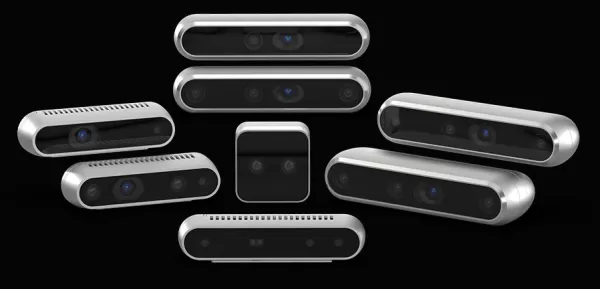
After 14 years as an internal division of Intel, RealSense is embarking on an independent journey.
RealSense specializes in cameras that utilize stereoscopic imaging — a process that merges two images of an object from different perspectives to create a depth map, enhanced by infrared light. This technology enables robots, drones, and autonomous vehicles to gain a more precise understanding of their physical environment. It is also widely used for facial recognition.
"The common thread among all our applications is that they operate in the real, physical world," CEO Nadav Orbach explained to TechCrunch. "They need to comprehend their surroundings in three dimensions and plan actions accordingly. For that, a real-time, high-accuracy, 3D perception capability is essential. That’s precisely where we excel."
Orbach began his career at Intel in 2006 as a CPU architect in Israel. He started focusing on vision technology in 2011, later becoming the general manager for incubation and disruptive innovation in 2022 before relocating to San Francisco last year.
"We recognized early on that 3D perception would be transformative," Orbach remarked regarding RealSense's beginnings. "To be honest, the specific applications were not entirely clear. We explored various market segments, from gesture recognition for computers and phones, before ultimately finding our strongest fit in robotics over the years."
The company also serves numerous industries beyond robotics. Orbach noted inquiries from fish farms seeking to monitor volume within pens. In a partnership with AI restaurant software firm PreciTaste, Chipotle has implemented RealSense cameras to detect when food supplies are running low.
With over 3,000 customers, RealSense has experienced a significant increase in interest over the last three to four years, fueled by advancements in AI. This has led to substantial scaling, particularly in robotics applications.
Techcrunch event Save up to $475 on your TechCrunch All Stage pass
Build smarter. Scale faster. Connect deeper. Join visionaries from Precursor Ventures, NEA, Index Ventures, Underscore VC, and beyond for a day packed with strategies, workshops, and meaningful connections.
Save $450 on your TechCrunch All Stage pass
Build smarter. Scale faster. Connect deeper. Join visionaries from Precursor Ventures, NEA, Index Ventures, Underscore VC, and beyond for a day packed with strategies, workshops, and meaningful connections.
Boston, MA | July 15 REGISTER NOW Orbach stated the company realized it could better meet growing demand and scale its operations by spinning out from Intel and securing its own funding.
Plans for the spinout were formulated last year and received approval from then-Intel CEO Pat Gelsinger. Now an independent entity, RealSense has raised a $50 million Series A funding round from Intel Capital and other strategic investors to launch its standalone journey.
"For me, it was honestly thrilling," Orbach shared. "As a veteran executive within the company, this was my first time on the other side of the table. Raising capital as a first-time CEO was a profoundly humbling experience."
The newly raised capital will be directed toward expanding RealSense's go-to-market team and enhancing its core technology. A key focus is advancing safety features for human-robot interaction and improving access control systems.
"There’s certainly a learning curve to stepping out on our own," Orbach acknowledged. "I am incredibly excited. I'm fortunate to lead a strong team with considerable entrepreneurial experience. Combining my background with these capable teammates gives us the right mix for success. For me, this is a dream coming true."
Related article
 Khosla-backed Genesis AI Unveils Full-Stack Robotics Solution
Genesis AI, a startup that secured a $105 million seed round to develop foundational AI for robotics, has launched its inaugural model, GENE-26.5, featuring unexpectedly dexterous hands. In a demonstration video, the company highlighted various advan
How US$900m Funding Will Shape XPENG’s Robotics Vision
XPENG’s robotics division secures over US$900 million in funding, achieving a post-money valuation exceeding US$6.3 billion and accelerating the deployment of physical AI. Credit: XPENGSven De Smet, Head of Brand & Marketing at XPENG Europe, describe
Japan Launches World’s First National AI Infrastructure with NVIDIA
Japan's Ministry of Economy, Trade and Industry plans to deploy approximately 10 million AI-powered robots across 18 industries by 2040, addressing the country's growing labor shortage, according to NHK. Credit: NVIDIAThe Japanese government, along w
Related Special Topic Recommendations
Education and Learning
Khosla-backed Genesis AI Unveils Full-Stack Robotics Solution
Genesis AI, a startup that secured a $105 million seed round to develop foundational AI for robotics, has launched its inaugural model, GENE-26.5, featuring unexpectedly dexterous hands. In a demonstration video, the company highlighted various advan
How US$900m Funding Will Shape XPENG’s Robotics Vision
XPENG’s robotics division secures over US$900 million in funding, achieving a post-money valuation exceeding US$6.3 billion and accelerating the deployment of physical AI. Credit: XPENGSven De Smet, Head of Brand & Marketing at XPENG Europe, describe
Japan Launches World’s First National AI Infrastructure with NVIDIA
Japan's Ministry of Economy, Trade and Industry plans to deploy approximately 10 million AI-powered robots across 18 industries by 2040, addressing the country's growing labor shortage, according to NHK. Credit: NVIDIAThe Japanese government, along w
Related Special Topic Recommendations
Education and Learning
 AI Study Tools for Homework and Exam Prep
2026 Latest Best AI Study Tools for Homework and Exam Prep! XIX.AI curates a top-rated list of powerful, game-changing tools that help students boost productivity, streamline homework completion, and ace exams through real-world tests. Get a free vs paid comparison, detailed rankings, and must-try options to unlock your AI edge. Explore now!
 10 tools
 xix.ai
Music composition
AI Vocal Demo Tools for Songwriters, Hooks, Toplines, and Multilingual Draft Sessions
xix.ai
Music composition
AI Vocal Demo Tools for Songwriters, Hooks, Toplines, and Multilingual Draft Sessions
2026 Latest Best AI Vocal Demo Tools for Songwriters, Hook Creators, and Multi-Language Content Teams! XIX.AI has curated a top-rated list of powerful game-changing tools that go through rigorous real-world tests. You’ll find detailed free vs paid comparison data, comprehensive rankings, and must-try options to help you boost writing efficiency and unlock your creative potential. Explore now to discover your perfect tool for all your content needs!
9 tools
xix.ai
Business
Best AI Competitive Research Tools for Small Businesses
2026 Latest Best Top-rated AI Competitive Research Tools for Small Businesses! XIX.AI has curated a highly powerful game-changing collection, updated weekly with rigorous real-world tests and detailed rankings. You can find a comprehensive free vs paid comparison to help you identify the must-try tools that boost your productivity and give you a competitive edge. Explore now to discover your perfect tool!
9 tools
xix.ai
Image editing
Photoshop AI Retouch Tools for Ecommerce Apparel, Skin Cleanup, and Color Consistency
2026 Latest Best Photoshop AI retouch tools for ecommerce apparel, skin cleanup, and color consistency! This top-rated curated list features powerful game-changing solutions that help you boost writing efficiency, streamline content creation, and achieve perfect visual results effortlessly. Each tool has undergone real-world tests through weekly updated rankings, complete with free vs paid comparison details. Backed by XIX.AI, it’s the must-try guide for anyone aiming to unlock your AI edge. Explore now!
10 tools
xix.ai
Prompt
Best AI Prompt Libraries for ChatGPT Workflows
2026 Latest Best Top-Rated AI Prompt Libraries for optimizing all types of ChatGPT workflows. XIX.AI has curated a powerful, game-changing collection that goes through rigorous real-world tests to ensure top performance. You can find detailed free vs paid comparisons and expert rankings to help you choose the must-try tools that boost your productivity and unlock your AI edge. Explore now!
11 tools
xix.ai
Education and Learning
AI Quiz Builder Platforms for Teachers, Tutors, and Cohort-Based Learning Programs
2026 Latest Best AI Quiz Builder Platforms for Teachers, Tutors, and Cohort-Based Learning Programs! XIX.AI has curated a top-rated list of powerful game-changing tools that go through real-world tests to deliver accurate rankings. These must-try platforms help boost writing efficiency, streamline content creation, and simplify quiz design across all learning scenarios. Explore now to discover your perfect tool for unlocking your AI edge in teaching!
13 tools
xix.ai

 Comments (3)
0/500
Comments (3)
0/500
![ThomasLewis]()
IntelがRealSenseを独立会社としてスピンオフしたってニュース、面白いね。14年間も社内部門だったのに、ようやく独立して市場で戦うんだね。3Dステレオイメージング技術はVRやAR、医療分野でかなり期待されてるし、この分離が技術革新を加速させるかどうか注目だ。ただ、大企業から切り離されたら資金面やサポート体制が心配になるのも事実。どうなるか見守ろう!👀✨
![DavidGonzalez]()
Interesting move! I've always thought RealSense had potential beyond Intel's core business. This spin-off could let them innovate faster in areas like robotics or AR. Hope they don't get acquired by some giant though - independence is key for niche tech like this. 🤔
![BillyEvans]()
Me sorprende que Intel decidiera hacer esto tras 14 años. Siempre vi que RealSense era interesante, pero dentro de una gran corporación quizás no tuvo suficiente libertad para crecer rápido. Ahora que es independiente, me pregunto si podrá competir mejor con tecnologías de cámara 3D de otras compañías. ¿Esta spin-off acelerará su desarrollo en robótica o realidad aumentada? Será interesante verlo. 🤔
After 14 years as an internal division of Intel, RealSense is embarking on an independent journey.
RealSense specializes in cameras that utilize stereoscopic imaging — a process that merges two images of an object from different perspectives to create a depth map, enhanced by infrared light. This technology enables robots, drones, and autonomous vehicles to gain a more precise understanding of their physical environment. It is also widely used for facial recognition.
"The common thread among all our applications is that they operate in the real, physical world," CEO Nadav Orbach explained to TechCrunch. "They need to comprehend their surroundings in three dimensions and plan actions accordingly. For that, a real-time, high-accuracy, 3D perception capability is essential. That’s precisely where we excel."
Orbach began his career at Intel in 2006 as a CPU architect in Israel. He started focusing on vision technology in 2011, later becoming the general manager for incubation and disruptive innovation in 2022 before relocating to San Francisco last year.
"We recognized early on that 3D perception would be transformative," Orbach remarked regarding RealSense's beginnings. "To be honest, the specific applications were not entirely clear. We explored various market segments, from gesture recognition for computers and phones, before ultimately finding our strongest fit in robotics over the years."
The company also serves numerous industries beyond robotics. Orbach noted inquiries from fish farms seeking to monitor volume within pens. In a partnership with AI restaurant software firm PreciTaste, Chipotle has implemented RealSense cameras to detect when food supplies are running low.
With over 3,000 customers, RealSense has experienced a significant increase in interest over the last three to four years, fueled by advancements in AI. This has led to substantial scaling, particularly in robotics applications.
Techcrunch eventSave up to $475 on your TechCrunch All Stage pass
Build smarter. Scale faster. Connect deeper. Join visionaries from Precursor Ventures, NEA, Index Ventures, Underscore VC, and beyond for a day packed with strategies, workshops, and meaningful connections.
Save $450 on your TechCrunch All Stage pass
Build smarter. Scale faster. Connect deeper. Join visionaries from Precursor Ventures, NEA, Index Ventures, Underscore VC, and beyond for a day packed with strategies, workshops, and meaningful connections.
Boston, MA | July 15 REGISTER NOWOrbach stated the company realized it could better meet growing demand and scale its operations by spinning out from Intel and securing its own funding.
Plans for the spinout were formulated last year and received approval from then-Intel CEO Pat Gelsinger. Now an independent entity, RealSense has raised a $50 million Series A funding round from Intel Capital and other strategic investors to launch its standalone journey.
"For me, it was honestly thrilling," Orbach shared. "As a veteran executive within the company, this was my first time on the other side of the table. Raising capital as a first-time CEO was a profoundly humbling experience."
The newly raised capital will be directed toward expanding RealSense's go-to-market team and enhancing its core technology. A key focus is advancing safety features for human-robot interaction and improving access control systems.
"There’s certainly a learning curve to stepping out on our own," Orbach acknowledged. "I am incredibly excited. I'm fortunate to lead a strong team with considerable entrepreneurial experience. Combining my background with these capable teammates gives us the right mix for success. For me, this is a dream coming true."








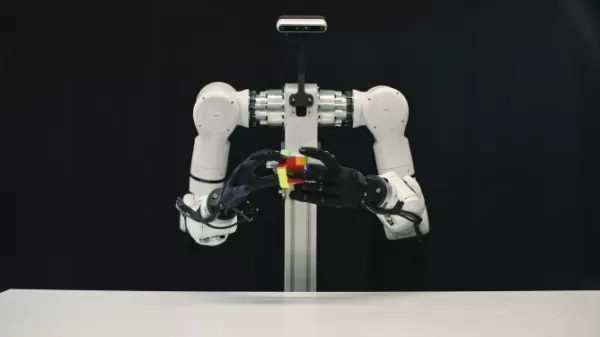 Khosla-backed Genesis AI Unveils Full-Stack Robotics Solution
Genesis AI, a startup that secured a $105 million seed round to develop foundational AI for robotics, has launched its inaugural model, GENE-26.5, featuring unexpectedly dexterous hands. In a demonstration video, the company highlighted various advan
Khosla-backed Genesis AI Unveils Full-Stack Robotics Solution
Genesis AI, a startup that secured a $105 million seed round to develop foundational AI for robotics, has launched its inaugural model, GENE-26.5, featuring unexpectedly dexterous hands. In a demonstration video, the company highlighted various advan
 How US$900m Funding Will Shape XPENG’s Robotics Vision
XPENG’s robotics division secures over US$900 million in funding, achieving a post-money valuation exceeding US$6.3 billion and accelerating the deployment of physical AI. Credit: XPENGSven De Smet, Head of Brand & Marketing at XPENG Europe, describe
How US$900m Funding Will Shape XPENG’s Robotics Vision
XPENG’s robotics division secures over US$900 million in funding, achieving a post-money valuation exceeding US$6.3 billion and accelerating the deployment of physical AI. Credit: XPENGSven De Smet, Head of Brand & Marketing at XPENG Europe, describe
 Japan Launches World’s First National AI Infrastructure with NVIDIA
Japan's Ministry of Economy, Trade and Industry plans to deploy approximately 10 million AI-powered robots across 18 industries by 2040, addressing the country's growing labor shortage, according to NHK. Credit: NVIDIAThe Japanese government, along w
Japan Launches World’s First National AI Infrastructure with NVIDIA
Japan's Ministry of Economy, Trade and Industry plans to deploy approximately 10 million AI-powered robots across 18 industries by 2040, addressing the country's growing labor shortage, according to NHK. Credit: NVIDIAThe Japanese government, along w

2026 Latest Best AI Study Tools for Homework and Exam Prep! XIX.AI curates a top-rated list of powerful, game-changing tools that help students boost productivity, streamline homework completion, and ace exams through real-world tests. Get a free vs paid comparison, detailed rankings, and must-try options to unlock your AI edge. Explore now!
10 tools
xix.ai

2026 Latest Best AI Vocal Demo Tools for Songwriters, Hook Creators, and Multi-Language Content Teams! XIX.AI has curated a top-rated list of powerful game-changing tools that go through rigorous real-world tests. You’ll find detailed free vs paid comparison data, comprehensive rankings, and must-try options to help you boost writing efficiency and unlock your creative potential. Explore now to discover your perfect tool for all your content needs!
9 tools
xix.ai

2026 Latest Best Top-rated AI Competitive Research Tools for Small Businesses! XIX.AI has curated a highly powerful game-changing collection, updated weekly with rigorous real-world tests and detailed rankings. You can find a comprehensive free vs paid comparison to help you identify the must-try tools that boost your productivity and give you a competitive edge. Explore now to discover your perfect tool!
9 tools
xix.ai

2026 Latest Best Photoshop AI retouch tools for ecommerce apparel, skin cleanup, and color consistency! This top-rated curated list features powerful game-changing solutions that help you boost writing efficiency, streamline content creation, and achieve perfect visual results effortlessly. Each tool has undergone real-world tests through weekly updated rankings, complete with free vs paid comparison details. Backed by XIX.AI, it’s the must-try guide for anyone aiming to unlock your AI edge. Explore now!
10 tools
xix.ai
2026 Latest Best Top-Rated AI Prompt Libraries for optimizing all types of ChatGPT workflows. XIX.AI has curated a powerful, game-changing collection that goes through rigorous real-world tests to ensure top performance. You can find detailed free vs paid comparisons and expert rankings to help you choose the must-try tools that boost your productivity and unlock your AI edge. Explore now!
11 tools
xix.ai

2026 Latest Best AI Quiz Builder Platforms for Teachers, Tutors, and Cohort-Based Learning Programs! XIX.AI has curated a top-rated list of powerful game-changing tools that go through real-world tests to deliver accurate rankings. These must-try platforms help boost writing efficiency, streamline content creation, and simplify quiz design across all learning scenarios. Explore now to discover your perfect tool for unlocking your AI edge in teaching!
13 tools
xix.ai

IntelがRealSenseを独立会社としてスピンオフしたってニュース、面白いね。14年間も社内部門だったのに、ようやく独立して市場で戦うんだね。3Dステレオイメージング技術はVRやAR、医療分野でかなり期待されてるし、この分離が技術革新を加速させるかどうか注目だ。ただ、大企業から切り離されたら資金面やサポート体制が心配になるのも事実。どうなるか見守ろう!👀✨
Interesting move! I've always thought RealSense had potential beyond Intel's core business. This spin-off could let them innovate faster in areas like robotics or AR. Hope they don't get acquired by some giant though - independence is key for niche tech like this. 🤔
Me sorprende que Intel decidiera hacer esto tras 14 años. Siempre vi que RealSense era interesante, pero dentro de una gran corporación quizás no tuvo suficiente libertad para crecer rápido. Ahora que es independiente, me pregunto si podrá competir mejor con tecnologías de cámara 3D de otras compañías. ¿Esta spin-off acelerará su desarrollo en robótica o realidad aumentada? Será interesante verlo. 🤔












