


 Home
HomeRamp Unveils Proprietary AI Model Router

Following Stripe’s lead, corporate expense management platform Ramp is establishing its own infrastructure for AI inference.
On Wednesday evening, Ramp introduced Router, an AI model routing service that enables users and businesses to access and switch between multiple large language models via an API. The company notes that it has utilized this internally developed router for its own AI requirements for the past three years.
Currently, the service is restricted to users in the United States. It is available at no cost through the end of 2026 (though standard AI model inference fees still apply), accompanied by a $26 launch credit. Ramp has not disclosed pricing details for the upcoming year.
While Router operates similarly to OpenRouter, it currently supports fewer AI model options than its competitor.
Router provides access to models from OpenAI, Anthropic, DeepSeek, Moonshot, Minimax, Nvidia, xAI, and Z.ai. It also offers several routing strategies to direct AI requests according to user preferences. For instance, users can prioritize specific provider tiers, or allow Router to select models based on up to three predefined benchmarks. Additionally, users can configure the system to route only complex queries to premium models or test new models without switching configurations.
A dedicated dashboard allows users to monitor key metrics, including token expenditure, costs, latency, and fallback attempts.
Router includes an opt-out data retention policy by default, storing model inputs, outputs, and tool calls for one year. However, Ramp states that it removes personally identifiable information before utilizing this data to enhance its products.
For Ramp, entering the model routing sector presents a dual advantage: it allows the company to capitalize on the growing AI inference market while offering existing clients a seamless routing service that integrates with its current tools, such as AI token usage monitoring and spend management.
If Router gains traction comparable to OpenRouter, Ramp could establish long-term partnerships with AI labs and inference providers globally. This strategy may help Ramp, which recently raised $750 million at a $44 billion valuation in June, acquire new customers and create additional entry points for its expense management solutions.
Related article
 Anthropic’s latest feud with the Trump admin may actually help it, sales data suggests
Anthropic is experiencing a remarkable month.According to Ramp, the AI company surpassed OpenAI in business spending market share for the first time, closing out May with a $65 billion raise at a $965 billion valuation. Shortly after, Anthropic filed
Amazon launches new $1 billion FDE org following OpenAI and Anthropic
As businesses grapple with AI integration, they are turning to external experts, prompting service providers to establish specialized teams to ensure successful implementation.On Tuesday, Amazon Web Services (AWS) announced a new internal unit dedica
White House Ditches AI Label for ‘Super Intelligence’
Loading the player…This week, the White House gathered nearly every major tech CEO in one room — including Zuckerberg, Bezos, Musk, and Anthropic’s Dario Amodei — to sign an AI safety pledge that President Donald Trump described as “morally binding.”
Related Special Topic Recommendations
Music composition
Anthropic’s latest feud with the Trump admin may actually help it, sales data suggests
Anthropic is experiencing a remarkable month.According to Ramp, the AI company surpassed OpenAI in business spending market share for the first time, closing out May with a $65 billion raise at a $965 billion valuation. Shortly after, Anthropic filed
Amazon launches new $1 billion FDE org following OpenAI and Anthropic
As businesses grapple with AI integration, they are turning to external experts, prompting service providers to establish specialized teams to ensure successful implementation.On Tuesday, Amazon Web Services (AWS) announced a new internal unit dedica
White House Ditches AI Label for ‘Super Intelligence’
Loading the player…This week, the White House gathered nearly every major tech CEO in one room — including Zuckerberg, Bezos, Musk, and Anthropic’s Dario Amodei — to sign an AI safety pledge that President Donald Trump described as “morally binding.”
Related Special Topic Recommendations
Music composition
 AI Lyric Idea Tools for Music Composition
2026 Latest Best Top-rated AI Lyric Idea Tools for Music Composition are here on XIX.AI! This curated collection features powerful game-changing options that go through real-world tests to deliver high-quality lyric concepts fast, helping users boost creativity and streamline their music creation process. Get a free vs paid comparison overview too. Explore now to Discover your perfect tool!
 16 tools
 xix.ai
Comic Creation
AI Character Sheet Tools for Comic Worldbuilding
xix.ai
Comic Creation
AI Character Sheet Tools for Comic Worldbuilding
2026 Latest Best Top-Rated AI Character Sheet Tools for Comic Worldbuilding are here on XIX.AI! This curated list features powerful, game-changing options that have undergone rigorous real-world tests. You’ll find a free vs paid comparison along with weekly updated rankings to help you discover the must-try tools that boost your creativity and streamline worldbuilding tasks. Explore now to Unlock your AI edge!
13 tools
xix.ai
automation
n8n AI Automation Tools for Internal Ops, Data Sync, and Multi-Step Agent Flows
2026 Latest Best n8n AI Automation Tools for Internal Ops, Data Sync, and Multi-Step Agent Flows are here! XIX.AI has curated a top-rated list of powerful game-changing tools that boost productivity across all work tasks. Each entry goes through rigorous real-world tests to ensure reliability, with detailed free vs paid comparison and weekly updated rankings. Must-try options help you unlock your AI edge and streamline workflows effortlessly. Explore now to discover your perfect tool!
11 tools
xix.ai
Prompt
Best Prompt Management Tools for Multi Model Teams
2026 Latest Best Top-Rated Prompt Management Tools for Multi Model Teams! XIX.AI has curated a powerful, game-changing collection of must-try tools that offer free vs paid comparison, real-world tests, and detailed rankings. These top-rated solutions help boost productivity significantly by streamlining workflows, eliminating repetition, and unlocking creativity across all team projects. Explore now to Discover your perfect tool and Start creating today!
9 tools
xix.ai
Meeting Assistant
AI Meeting Summary Tools for Remote Teams
2026 Latest Best Top-Rated AI Meeting Summary Tools for Remote Teams! XIX.AI has curated a powerful, game-changing collection of must-try tools that go through real-world tests to deliver accurate transcripts and actionable insights. You’ll find free vs paid comparison data and detailed rankings to help you pick the perfect option that boosts productivity and streamlines team communication. Explore now to Unlock your AI edge!
13 tools
xix.ai
Software Development
Best AI DevOps Helpers: Monitor Deployments, Logs, and Incidents
2026 Latest Best Top-Rated AI DevOps Helpers Curated for Monitoring Deployments, Logs, and Incidents. XIX.AI delivers powerful game-changing tools that boost productivity significantly through real-world tests and rigorous rankings. Get a free vs paid comparison to find the must-try solution perfect for your workflow. Explore now to unlock your AI edge.
7 tools
xix.ai

 Comments (0)
0/500
Comments (0)
0/500
Following Stripe’s lead, corporate expense management platform Ramp is establishing its own infrastructure for AI inference.
On Wednesday evening, Ramp introduced Router, an AI model routing service that enables users and businesses to access and switch between multiple large language models via an API. The company notes that it has utilized this internally developed router for its own AI requirements for the past three years.
Currently, the service is restricted to users in the United States. It is available at no cost through the end of 2026 (though standard AI model inference fees still apply), accompanied by a $26 launch credit. Ramp has not disclosed pricing details for the upcoming year.
While Router operates similarly to OpenRouter, it currently supports fewer AI model options than its competitor.
Router provides access to models from OpenAI, Anthropic, DeepSeek, Moonshot, Minimax, Nvidia, xAI, and Z.ai. It also offers several routing strategies to direct AI requests according to user preferences. For instance, users can prioritize specific provider tiers, or allow Router to select models based on up to three predefined benchmarks. Additionally, users can configure the system to route only complex queries to premium models or test new models without switching configurations.
A dedicated dashboard allows users to monitor key metrics, including token expenditure, costs, latency, and fallback attempts.
Router includes an opt-out data retention policy by default, storing model inputs, outputs, and tool calls for one year. However, Ramp states that it removes personally identifiable information before utilizing this data to enhance its products.
For Ramp, entering the model routing sector presents a dual advantage: it allows the company to capitalize on the growing AI inference market while offering existing clients a seamless routing service that integrates with its current tools, such as AI token usage monitoring and spend management.
If Router gains traction comparable to OpenRouter, Ramp could establish long-term partnerships with AI labs and inference providers globally. This strategy may help Ramp, which recently raised $750 million at a $44 billion valuation in June, acquire new customers and create additional entry points for its expense management solutions.








 Anthropic’s latest feud with the Trump admin may actually help it, sales data suggests
Anthropic is experiencing a remarkable month.According to Ramp, the AI company surpassed OpenAI in business spending market share for the first time, closing out May with a $65 billion raise at a $965 billion valuation. Shortly after, Anthropic filed
Anthropic’s latest feud with the Trump admin may actually help it, sales data suggests
Anthropic is experiencing a remarkable month.According to Ramp, the AI company surpassed OpenAI in business spending market share for the first time, closing out May with a $65 billion raise at a $965 billion valuation. Shortly after, Anthropic filed
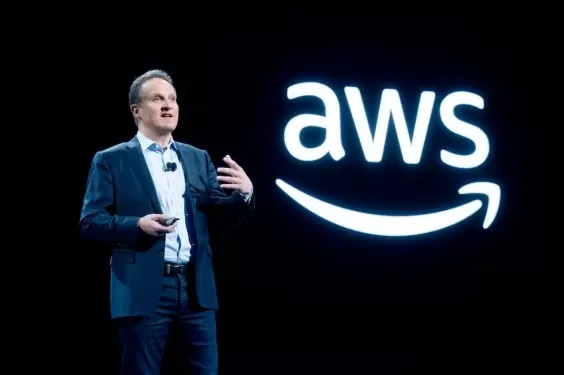 Amazon launches new $1 billion FDE org following OpenAI and Anthropic
As businesses grapple with AI integration, they are turning to external experts, prompting service providers to establish specialized teams to ensure successful implementation.On Tuesday, Amazon Web Services (AWS) announced a new internal unit dedica
Amazon launches new $1 billion FDE org following OpenAI and Anthropic
As businesses grapple with AI integration, they are turning to external experts, prompting service providers to establish specialized teams to ensure successful implementation.On Tuesday, Amazon Web Services (AWS) announced a new internal unit dedica
 White House Ditches AI Label for ‘Super Intelligence’
Loading the player…This week, the White House gathered nearly every major tech CEO in one room — including Zuckerberg, Bezos, Musk, and Anthropic’s Dario Amodei — to sign an AI safety pledge that President Donald Trump described as “morally binding.”
White House Ditches AI Label for ‘Super Intelligence’
Loading the player…This week, the White House gathered nearly every major tech CEO in one room — including Zuckerberg, Bezos, Musk, and Anthropic’s Dario Amodei — to sign an AI safety pledge that President Donald Trump described as “morally binding.”

2026 Latest Best Top-rated AI Lyric Idea Tools for Music Composition are here on XIX.AI! This curated collection features powerful game-changing options that go through real-world tests to deliver high-quality lyric concepts fast, helping users boost creativity and streamline their music creation process. Get a free vs paid comparison overview too. Explore now to Discover your perfect tool!
16 tools
xix.ai

2026 Latest Best Top-Rated AI Character Sheet Tools for Comic Worldbuilding are here on XIX.AI! This curated list features powerful, game-changing options that have undergone rigorous real-world tests. You’ll find a free vs paid comparison along with weekly updated rankings to help you discover the must-try tools that boost your creativity and streamline worldbuilding tasks. Explore now to Unlock your AI edge!
13 tools
xix.ai

2026 Latest Best n8n AI Automation Tools for Internal Ops, Data Sync, and Multi-Step Agent Flows are here! XIX.AI has curated a top-rated list of powerful game-changing tools that boost productivity across all work tasks. Each entry goes through rigorous real-world tests to ensure reliability, with detailed free vs paid comparison and weekly updated rankings. Must-try options help you unlock your AI edge and streamline workflows effortlessly. Explore now to discover your perfect tool!
11 tools
xix.ai
2026 Latest Best Top-Rated Prompt Management Tools for Multi Model Teams! XIX.AI has curated a powerful, game-changing collection of must-try tools that offer free vs paid comparison, real-world tests, and detailed rankings. These top-rated solutions help boost productivity significantly by streamlining workflows, eliminating repetition, and unlocking creativity across all team projects. Explore now to Discover your perfect tool and Start creating today!
9 tools
xix.ai

2026 Latest Best Top-Rated AI Meeting Summary Tools for Remote Teams! XIX.AI has curated a powerful, game-changing collection of must-try tools that go through real-world tests to deliver accurate transcripts and actionable insights. You’ll find free vs paid comparison data and detailed rankings to help you pick the perfect option that boosts productivity and streamlines team communication. Explore now to Unlock your AI edge!
13 tools
xix.ai
2026 Latest Best Top-Rated AI DevOps Helpers Curated for Monitoring Deployments, Logs, and Incidents. XIX.AI delivers powerful game-changing tools that boost productivity significantly through real-world tests and rigorous rankings. Get a free vs paid comparison to find the must-try solution perfect for your workflow. Explore now to unlock your AI edge.
7 tools
xix.ai












