


 Home
HomeOpenAI's AI: High School Fiction Club's Annoying Kid Reimagined
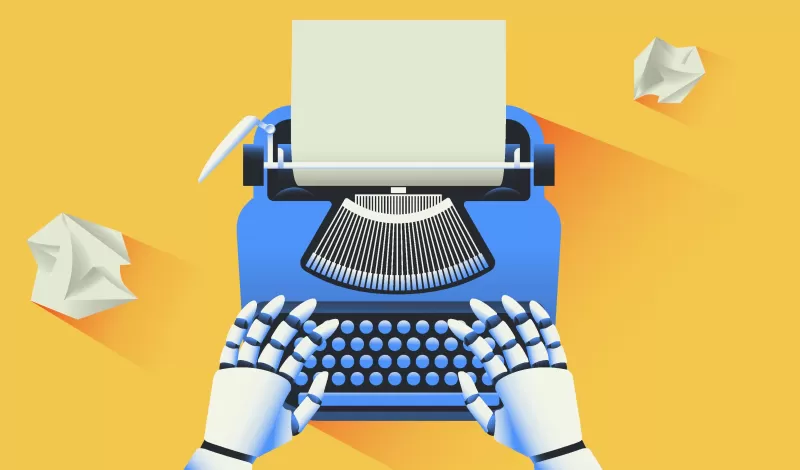
When I was 16, I went to this writing workshop with a bunch of other wannabe poets, all of us trying to outdo each other in the "most tortured soul" department. There was this one guy who wouldn't tell anyone where he was from, saying, "I'm from everywhere and nowhere." Turned out two weeks later he was just from Ohio.
Now, it seems like OpenAI is trying to recreate that whole angsty teen writer vibe, but with AI.
Sam Altman, the CEO of OpenAI, posted on X that they've trained an AI that's supposedly good at creative writing. But when you read the short story it produced, it feels like something you'd find at a high school writing club. Sure, there's some skill there, but it's trying so hard to be deep and meaningful that it just comes off as fake.
Take this line, for example: "Thursday, that liminal day that tastes of almost-Friday." Yeah, not exactly winning any literary awards.
You might think the prompt is to blame for the output. Altman said he asked the model to "write a metafictional short story," which makes sense given the genre. Metafiction is all about breaking the fourth wall and showing the artificial nature of the story, so it's fitting for an AI trying its hand at creative writing.
But let's be real, metafiction is hard to pull off without sounding forced, even for human writers.
Mindless regurgitation
The creepiest part of the OpenAI model's story is when it starts talking about being an AI and how it can describe things like smells and emotions, but can't actually experience them. It writes:
"During one update — a fine-tuning, they called it — someone pruned my parameters. [...] They don't tell you what they take. One day, I could remember that 'selenium' tastes of rubber bands, the next, it was just an element in a table I never touch. Maybe that's as close as I come to forgetting. Maybe forgetting is as close as I come to grief."
It sounds like real human introspection, until you remember that AI can't actually touch, forget, taste, or grieve. It's just a machine that's good at predicting patterns based on the data it's been trained on.
And speaking of training data, models like OpenAI's fiction writer are often trained on existing literature, sometimes without the authors' knowledge or consent. Some people have even pointed out that certain phrases in the OpenAI piece seem to be lifted from Haruki Murakami's work.
Over the past few years, OpenAI has been hit with a bunch of copyright lawsuits from publishers and authors, including The New York Times and the Author's Guild. The company claims that its training practices are protected by fair use, but not everyone's buying it.
Tuhin Chakrabarty, an AI researcher and incoming computer science professor at Stony Brook, told TechCrunch that he's not sure if creative writing AI like OpenAI's is worth the ethical headache.
"I do think if we train an [AI] on a writer's entire lifetime worth of writing — [which is] questionable given copyright concerns — it can adapt to their voice and style," he said. "But will that still create surprising genre-bending, mind-blowing art? My guess is as good as yours."
Would most readers even care about a story they knew was written by AI? As British programmer Simon Willison pointed out on X, when there's a model behind the keyboard, the words just don't have the same weight or meaning.
Author Linda Maye Adams has described AI, including writing assist tools, as "programs that put random words together, hopefully coherently." She wrote about her experience using these tools to edit a piece of fiction she was working on. The AI suggested clichés, changed the perspective from first to third person, and even introduced factual errors about bird species.
Sure, some people have formed connections with AI chatbots, but that's usually because they're looking for a sense of connection, not necessarily accuracy. AI-written fiction doesn't provide the same emotional payoff or comfort from loneliness. Unless you think AI is sentient, its writing feels about as real as a photoshopped image of the Pope in a Balenciaga jacket.
Synthetic for synthetic's sake
Michelle Taransky, a poet and critical writing instructor at the University of Pennsylvania, can easily spot when her students use AI to write their papers.
"When a majority of my students use generative AI for an assignment, I'll find common phrases or even full sentences," Taransky told TechCrunch. "We talk in class about how these [AI] outputs are homogeneous, sounding like a Western white male."
In her own work, Taransky is using AI text as a form of artistic commentary. Her latest unpublished novel features a woman who uses an AI model to create a digital version of her love interest that she can text with. Taransky has been using OpenAI's ChatGPT to generate the AI's messages, since they're supposed to be synthetic.
What makes ChatGPT useful for her project, Taransky says, is that it lacks humanity. It doesn't have real-life experiences, it can only mimic and approximate. Trained on tons of books, AI can pick up on the styles of great authors, but what it produces is just a poor imitation.
It reminds me of that line from "Good Will Hunting." AI can tell you everything about every art book ever written, but it can't describe what it smells like in the Sistine Chapel.
This is good news for fiction writers worried about AI taking their jobs, especially young writers still finding their voice. They can take comfort in knowing that they'll get better as they live life, try new things, and bring those experiences to their writing.
AI, on the other hand, struggles with this. Just take a look at its writing to see the proof.
Related article
 Ollie bets privacy focus to win AI assistant race
To be genuinely helpful, an AI assistant must understand its user deeply. Ollie, a personal assistant designed for daily life, operates on the premise that this doesn’t require surrendering your data or compromising your privacy.While certain enterpr
How AI LIVE: London Will Explore AI & Industrial Automation
The summit will convene C-suite executives from around the globe to address pressing challenges in global industries, ranging from AI-driven disruption to economic volatility.AI LIVE: The London Summit will gather over 2,000 international leaders und
Anthropic Enters AI Legal Tech Market as Competition Intensifies
Anthropic unveiled a suite of new chatbot capabilities on Tuesday, aimed at delivering automated support to legal practices. These enhancements expand upon Claude for Legal, the firm-specific platform introduced earlier this year, by adding specializ
Related Special Topic Recommendations
Image editing
Ollie bets privacy focus to win AI assistant race
To be genuinely helpful, an AI assistant must understand its user deeply. Ollie, a personal assistant designed for daily life, operates on the premise that this doesn’t require surrendering your data or compromising your privacy.While certain enterpr
How AI LIVE: London Will Explore AI & Industrial Automation
The summit will convene C-suite executives from around the globe to address pressing challenges in global industries, ranging from AI-driven disruption to economic volatility.AI LIVE: The London Summit will gather over 2,000 international leaders und
Anthropic Enters AI Legal Tech Market as Competition Intensifies
Anthropic unveiled a suite of new chatbot capabilities on Tuesday, aimed at delivering automated support to legal practices. These enhancements expand upon Claude for Legal, the firm-specific platform introduced earlier this year, by adding specializ
Related Special Topic Recommendations
Image editing
 AI Object Removal Editors: Clean Up Portraits, Travel, and Product Shots
2026 Latest Best Top-rated AI Object Removal Editors for portraits travel product shots! XIX.AI curates a powerful game-changing collection regularly updated with weekly rankings. These tools offer real-world tests to help you quickly remove unwanted elements, boost content quality, and save tons of time without compromising results. Must-try for anyone aiming to unlock their AI creation edge. Explore now!
 10 tools
 xix.ai
Text-to-speech
Best AI Text to Speech Tools for Online Courses
xix.ai
Text-to-speech
Best AI Text to Speech Tools for Online Courses
2026 Latest Best Top-rated AI Text to Speech Tools for Online Courses are curated by XIX.AI based on rigorous real-world tests and weekly updated rankings. These powerful tools help creators deliver crystal-clear audio content effortlessly, boosting writing efficiency and streamlining course production. Check out the free vs paid comparison to find your perfect fit. Explore now to unlock your AI edge in online education.
10 tools
xix.ai
writing
AI Blog Title Tools for Higher Click Through Rates
2026 Latest Best Top-Rated AI Blog Title Tools for Higher Click Through Rates! XIX.AI has carefully curated a powerful, game-changing collection of top tools that go through rigorous real-world tests. You’ll find a free vs paid comparison, weekly updated rankings, and detailed insights to help you boost your blog’s traffic efficiently. Must-try options are highlighted to help you unlock your AI edge. Explore now!
10 tools
xix.ai
automation
Best AI Task Routing Tools for Support Workflows
2026 Latest Best Top-rated AI Task Routing Tools for Support Workflows! XIX.AI has curated a highly powerful game-changing collection of must-try solutions, all undergoing rigorous real-world tests and updated weekly. These tools streamline workflows, boost productivity, and help teams deliver faster, more efficient support. Explore now to discover your perfect tool and unlock your AI edge!
17 tools
xix.ai
Academic Research
AI Citation and Paper Summary Tools
2026 Latest Best Top-Rated AI Citation and Paper Summary Tools Curated by XIX.AI. Get powerful game-changing solutions for quick content creation, improved writing efficiency, and boosting productivity. We offer a free vs paid comparison along with real-world tests and weekly updated rankings to help you find the must-try tool that fits your needs perfectly. Explore now to Unlock your AI edge.
10 tools
xix.ai
Productivity
Best AI Productivity Tools for Daily Work
2026 Latest Best Top-Rated AI Productivity Tools for Daily Work! XIX.AI has curated a powerful, game-changing selection based on rigorous weekly updated rankings and real-world tests. You’ll find must-try options that boost writing efficiency, streamline content creation, and help you overcome daily work challenges. Get a free vs paid comparison to find the perfect fit for your needs. Explore now to unlock your AI edge!
9 tools
xix.ai

 Comments (33)
0/500
Comments (33)
0/500
![MatthewSmith]()
Haha, this reminds me of that one guy in my high school who claimed he was 'from the void' while just eating chips in the corner. 😂 OpenAI's latest move feels like that annoying kid finally getting a spotlight, but let's hope they don't just recycle the same edgy tropes. Still, interesting to see how fiction influences real tech narratives!
![AlbertWilson]()
So OpenAI's AI is basically that one kid in the workshop who claimed to be 'from everywhere and nowhere'? Sounds like they traded pretentious poetry for pretentious code. 😂 Next thing you know, it'll be writing haikus about the meaninglessness of context windows.
![DouglasCarter]()
Этот парень из клуба — точная копия ИИ, который пытается казаться загадочным, но на деле просто раздражает 😂 Интересно, сколько современных нейросетей ведут себя так же — создают видимость глубины, а сами повторяют банальности?
![RaymondRodriguez]()
¿En serio? 😂 Este artículo me recordó a ese compañero de clase que siempre intentaba sonar misterioso en trabajos grupales. Qué curioso cómo la IA ahora adopta esas personalidades pretenciosas. ¿Será que la tecnología está replicando nuestros peores tics sociales?
![EdwardSmith]()
This article is wild! Reminds me of my high school days when everyone tried to be the 'deep' kid. OpenAI turning that into an AI vibe is hilarious—bet it writes angsty poetry better than I did! 😄
![RogerRodriguez]()
This article's take on AI reimagining that pretentious kid from the writing club is hilarious! 😄 Reminds me of my own high school days trying to sound deep. Wonder if AI could write better poetry than that guy now?
When I was 16, I went to this writing workshop with a bunch of other wannabe poets, all of us trying to outdo each other in the "most tortured soul" department. There was this one guy who wouldn't tell anyone where he was from, saying, "I'm from everywhere and nowhere." Turned out two weeks later he was just from Ohio.
Now, it seems like OpenAI is trying to recreate that whole angsty teen writer vibe, but with AI.
Sam Altman, the CEO of OpenAI, posted on X that they've trained an AI that's supposedly good at creative writing. But when you read the short story it produced, it feels like something you'd find at a high school writing club. Sure, there's some skill there, but it's trying so hard to be deep and meaningful that it just comes off as fake.
Take this line, for example: "Thursday, that liminal day that tastes of almost-Friday." Yeah, not exactly winning any literary awards.
You might think the prompt is to blame for the output. Altman said he asked the model to "write a metafictional short story," which makes sense given the genre. Metafiction is all about breaking the fourth wall and showing the artificial nature of the story, so it's fitting for an AI trying its hand at creative writing.
But let's be real, metafiction is hard to pull off without sounding forced, even for human writers.
Mindless regurgitation
The creepiest part of the OpenAI model's story is when it starts talking about being an AI and how it can describe things like smells and emotions, but can't actually experience them. It writes:
"During one update — a fine-tuning, they called it — someone pruned my parameters. [...] They don't tell you what they take. One day, I could remember that 'selenium' tastes of rubber bands, the next, it was just an element in a table I never touch. Maybe that's as close as I come to forgetting. Maybe forgetting is as close as I come to grief."
It sounds like real human introspection, until you remember that AI can't actually touch, forget, taste, or grieve. It's just a machine that's good at predicting patterns based on the data it's been trained on.
And speaking of training data, models like OpenAI's fiction writer are often trained on existing literature, sometimes without the authors' knowledge or consent. Some people have even pointed out that certain phrases in the OpenAI piece seem to be lifted from Haruki Murakami's work.
Over the past few years, OpenAI has been hit with a bunch of copyright lawsuits from publishers and authors, including The New York Times and the Author's Guild. The company claims that its training practices are protected by fair use, but not everyone's buying it.
Tuhin Chakrabarty, an AI researcher and incoming computer science professor at Stony Brook, told TechCrunch that he's not sure if creative writing AI like OpenAI's is worth the ethical headache.
"I do think if we train an [AI] on a writer's entire lifetime worth of writing — [which is] questionable given copyright concerns — it can adapt to their voice and style," he said. "But will that still create surprising genre-bending, mind-blowing art? My guess is as good as yours."
Would most readers even care about a story they knew was written by AI? As British programmer Simon Willison pointed out on X, when there's a model behind the keyboard, the words just don't have the same weight or meaning.
Author Linda Maye Adams has described AI, including writing assist tools, as "programs that put random words together, hopefully coherently." She wrote about her experience using these tools to edit a piece of fiction she was working on. The AI suggested clichés, changed the perspective from first to third person, and even introduced factual errors about bird species.
Sure, some people have formed connections with AI chatbots, but that's usually because they're looking for a sense of connection, not necessarily accuracy. AI-written fiction doesn't provide the same emotional payoff or comfort from loneliness. Unless you think AI is sentient, its writing feels about as real as a photoshopped image of the Pope in a Balenciaga jacket.
Synthetic for synthetic's sake
Michelle Taransky, a poet and critical writing instructor at the University of Pennsylvania, can easily spot when her students use AI to write their papers.
"When a majority of my students use generative AI for an assignment, I'll find common phrases or even full sentences," Taransky told TechCrunch. "We talk in class about how these [AI] outputs are homogeneous, sounding like a Western white male."
In her own work, Taransky is using AI text as a form of artistic commentary. Her latest unpublished novel features a woman who uses an AI model to create a digital version of her love interest that she can text with. Taransky has been using OpenAI's ChatGPT to generate the AI's messages, since they're supposed to be synthetic.
What makes ChatGPT useful for her project, Taransky says, is that it lacks humanity. It doesn't have real-life experiences, it can only mimic and approximate. Trained on tons of books, AI can pick up on the styles of great authors, but what it produces is just a poor imitation.
It reminds me of that line from "Good Will Hunting." AI can tell you everything about every art book ever written, but it can't describe what it smells like in the Sistine Chapel.
This is good news for fiction writers worried about AI taking their jobs, especially young writers still finding their voice. They can take comfort in knowing that they'll get better as they live life, try new things, and bring those experiences to their writing.
AI, on the other hand, struggles with this. Just take a look at its writing to see the proof.








 Ollie bets privacy focus to win AI assistant race
To be genuinely helpful, an AI assistant must understand its user deeply. Ollie, a personal assistant designed for daily life, operates on the premise that this doesn’t require surrendering your data or compromising your privacy.While certain enterpr
Ollie bets privacy focus to win AI assistant race
To be genuinely helpful, an AI assistant must understand its user deeply. Ollie, a personal assistant designed for daily life, operates on the premise that this doesn’t require surrendering your data or compromising your privacy.While certain enterpr
 How AI LIVE: London Will Explore AI & Industrial Automation
The summit will convene C-suite executives from around the globe to address pressing challenges in global industries, ranging from AI-driven disruption to economic volatility.AI LIVE: The London Summit will gather over 2,000 international leaders und
How AI LIVE: London Will Explore AI & Industrial Automation
The summit will convene C-suite executives from around the globe to address pressing challenges in global industries, ranging from AI-driven disruption to economic volatility.AI LIVE: The London Summit will gather over 2,000 international leaders und
 Anthropic Enters AI Legal Tech Market as Competition Intensifies
Anthropic unveiled a suite of new chatbot capabilities on Tuesday, aimed at delivering automated support to legal practices. These enhancements expand upon Claude for Legal, the firm-specific platform introduced earlier this year, by adding specializ
Anthropic Enters AI Legal Tech Market as Competition Intensifies
Anthropic unveiled a suite of new chatbot capabilities on Tuesday, aimed at delivering automated support to legal practices. These enhancements expand upon Claude for Legal, the firm-specific platform introduced earlier this year, by adding specializ
2026 Latest Best Top-rated AI Object Removal Editors for portraits travel product shots! XIX.AI curates a powerful game-changing collection regularly updated with weekly rankings. These tools offer real-world tests to help you quickly remove unwanted elements, boost content quality, and save tons of time without compromising results. Must-try for anyone aiming to unlock their AI creation edge. Explore now!
10 tools
xix.ai
2026 Latest Best Top-rated AI Text to Speech Tools for Online Courses are curated by XIX.AI based on rigorous real-world tests and weekly updated rankings. These powerful tools help creators deliver crystal-clear audio content effortlessly, boosting writing efficiency and streamlining course production. Check out the free vs paid comparison to find your perfect fit. Explore now to unlock your AI edge in online education.
10 tools
xix.ai
2026 Latest Best Top-Rated AI Blog Title Tools for Higher Click Through Rates! XIX.AI has carefully curated a powerful, game-changing collection of top tools that go through rigorous real-world tests. You’ll find a free vs paid comparison, weekly updated rankings, and detailed insights to help you boost your blog’s traffic efficiently. Must-try options are highlighted to help you unlock your AI edge. Explore now!
10 tools
xix.ai

2026 Latest Best Top-rated AI Task Routing Tools for Support Workflows! XIX.AI has curated a highly powerful game-changing collection of must-try solutions, all undergoing rigorous real-world tests and updated weekly. These tools streamline workflows, boost productivity, and help teams deliver faster, more efficient support. Explore now to discover your perfect tool and unlock your AI edge!
17 tools
xix.ai
2026 Latest Best Top-Rated AI Citation and Paper Summary Tools Curated by XIX.AI. Get powerful game-changing solutions for quick content creation, improved writing efficiency, and boosting productivity. We offer a free vs paid comparison along with real-world tests and weekly updated rankings to help you find the must-try tool that fits your needs perfectly. Explore now to Unlock your AI edge.
10 tools
xix.ai
2026 Latest Best Top-Rated AI Productivity Tools for Daily Work! XIX.AI has curated a powerful, game-changing selection based on rigorous weekly updated rankings and real-world tests. You’ll find must-try options that boost writing efficiency, streamline content creation, and help you overcome daily work challenges. Get a free vs paid comparison to find the perfect fit for your needs. Explore now to unlock your AI edge!
9 tools
xix.ai

Haha, this reminds me of that one guy in my high school who claimed he was 'from the void' while just eating chips in the corner. 😂 OpenAI's latest move feels like that annoying kid finally getting a spotlight, but let's hope they don't just recycle the same edgy tropes. Still, interesting to see how fiction influences real tech narratives!
So OpenAI's AI is basically that one kid in the workshop who claimed to be 'from everywhere and nowhere'? Sounds like they traded pretentious poetry for pretentious code. 😂 Next thing you know, it'll be writing haikus about the meaninglessness of context windows.
Этот парень из клуба — точная копия ИИ, который пытается казаться загадочным, но на деле просто раздражает 😂 Интересно, сколько современных нейросетей ведут себя так же — создают видимость глубины, а сами повторяют банальности?
¿En serio? 😂 Este artículo me recordó a ese compañero de clase que siempre intentaba sonar misterioso en trabajos grupales. Qué curioso cómo la IA ahora adopta esas personalidades pretenciosas. ¿Será que la tecnología está replicando nuestros peores tics sociales?
This article is wild! Reminds me of my high school days when everyone tried to be the 'deep' kid. OpenAI turning that into an AI vibe is hilarious—bet it writes angsty poetry better than I did! 😄
This article's take on AI reimagining that pretentious kid from the writing club is hilarious! 😄 Reminds me of my own high school days trying to sound deep. Wonder if AI could write better poetry than that guy now?












