


 Home
OpenAI Launches Open-Source Codex Security CLI to Uncover Vulnerabilities in CI
On July 29, OpenAI introduced a specialized security scanning tool for code repositories. Named Codex Security CLI, this open-source command-line utility is designed to help developers scan codebases, detect and verify security vulnerabilities, and seamlessly integrate these checks into continuous integration and continuous delivery (CI/CD) pipelines.
Notably, the tool was identified prior to its official launch. OpenAI describes it as an early-stage release, with plans to enhance its capabilities based on user feedback. Featuring a command-line interface and a TypeScript SDK, the tool allows developers to scan repositories directly from the terminal, review code modifications, monitor security issues across execution cycles, and confirm whether vulnerabilities have been resolved.
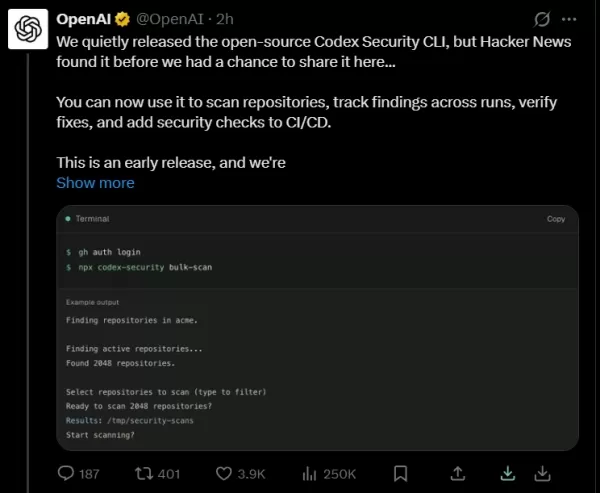
When integrated into CI/CD workflows, actively developed software projects can automatically execute security checks with every build, mitigating potential risks before code merges. The setup is straightforward: developers can install the @openai/codex-security package via npm, use the npx command to access help documentation, log in, and scan the current directory step by step to reveal the repository's security status.
Before execution, the system requires Node.js 22 or higher, Python 3.10 or higher, and appropriate access permissions for Codex Security. In CI environments, manual login is unnecessary; simply setting the OPENAI_API_KEY environment variable enables automatic authentication. The tool supports both ChatGPT account login and API key authentication, with parameters specifying the preferred method. For TypeScript projects, the official SDK provides an interface to retrieve the report path after scanning.
Each scan's trace is stored in the Codex Security working directory. If the default path is unwritable, developers can use the CODEX_SECURITY_STATE_DIR variable to specify an alternative directory. The code is now available on GitHub at openai/codex-security, accessible to anyone seeking to perform a code health check. By shifting security checks from manual spot inspections to a single command-line instruction, the most vulnerable defense line in the software supply chain is being proactively strengthened.
Related article
 Data Center Boom Fuels US Grid Innovation
The rapid expansion of artificial intelligence has triggered a massive spike in national energy consumption. While critics argue this surge is straining the nation’s aging electrical infrastructure, concerns persist that short-term power shortages co
Anthropic Hits $1.5B Copyright Deal to Compensate 500,000 Works
On Monday, a U.S. federal court granted final approval for a $1.5 billion class-action settlement between Anthropic and a coalition of authors and publishers, as reported by Reuters. The deal resolves ongoing litigation regarding Anthropic’s alleged
WeChat WeMM-Embedding Powers Moments Search and Video Highlights With 1 Billion Daily Calls
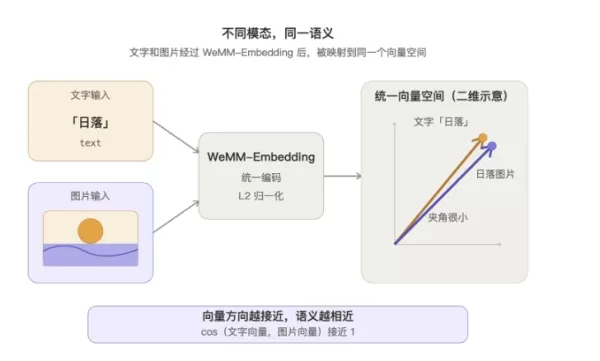
On September 4, WeChat AI announced the open-source release of its general multimodal embedding model, WeMM-Embedding. Available in 2B, 4B, and 9B versions, the model supports text, images, videos, visual documents, and any interleaved multimodal inp
Related Special Topic Recommendations
Design & Art
 Top AI Illustration Tools: Create Editorial Scenes and Cover Art Faster
2026 Latest Top-rated AI Illustration Tools: Our curated list features the best powerfully designed tools for creating stunning editorial scenes and eye-catching cover art quickly. Each option has gone through rigorous real-world tests, offering a free vs paid comparison to help you find the perfect match for your workflow. Try these must-try solutions today to unlock your AI edge and boost your creative productivity. Explore now at XIX.AI.
 10 tools
 xix.ai
Education and Learning
Top AI Tutors for Exam Prep: Practice Math, Science, and English
2026 Latest Top-Rated Best AI Tutors for Exam Prep are here on XIX.AI! Our curated list features powerful game-changing tools that offer free vs paid comparison, real-world tests, and weekly updated rankings. They help boost your writing efficiency, simplify complex topic learning, and unlock your academic potential. Explore now to Discover your perfect exam prep tool and Start creating today to Unlock your AI edge!
10 tools
xix.ai
Finance
AI Budget Planning Tools for Personal Money Management
2026 Latest Best Top-Rated AI Budget Planning Tools for Personal Money Management are here on XIX.AI! This curated collection features powerful, game-changing solutions that help you conduct real-world tests, understand spending habits, and create personalized plans to boost productivity. Enjoy a free vs paid comparison along with detailed rankings. Must-try tools designed to simplify money management and unlock your AI edge. Explore now!
11 tools
xix.ai
Health & Wellness
AI Sleep Tracking Assistants: Improve Recovery with Better Bedtime Habits
2026 Latest Best Top-Rated AI Sleep Tracking Assistants curated for ultimate recovery. This fully updated weekly guide features powerful tools that deliver real-world tests, free vs paid comparison, and detailed rankings to help you find the must-try solution that boosts sleep quality and supports better bedtime habits. Explore now at XIX.AI to Unlock your AI edge.
10 tools
xix.ai
Data Analysis
AI SQL Copilots for Product and Revenue Analytics
2026 Latest Best Top-Rated AI SQL Copilots for Product and Revenue Analytics! XIX.AI has curated a powerful, game-changing collection of must-try tools that undergo real-world tests through weekly updated rankings. These tools help users boost productivity significantly by accelerating data analysis, streamlining complex queries, and generating accurate insights to drive smarter business decisions. Explore now to Discover your perfect tool for unlocking your AI edge!
14 tools
xix.ai
Education and Learning
Best AI Homework Helpers That Teach: Learn Concepts, Not Just Answers
2026 Latest Best Top-Rated AI Homework Helpers That Teach Core Concepts Not Just Answers Powerful Tools for Students Must-Try Curated List Weekly Updated Free vs Paid Comparison Real-World Tests Accurate Rankings to Help You Unlock Your Full Learning Potential Explore now to Discover your perfect tool for smarter studying.
10 tools
xix.ai

 Comments (0)
0/500
On July 29, OpenAI introduced a specialized security scanning tool for code repositories. Named Codex Security CLI, this open-source command-line utility is designed to help developers scan codebases, detect and verify security vulnerabilities, and seamlessly integrate these checks into continuous integration and continuous delivery (CI/CD) pipelines.
Notably, the tool was identified prior to its official launch. OpenAI describes it as an early-stage release, with plans to enhance its capabilities based on user feedback. Featuring a command-line interface and a TypeScript SDK, the tool allows developers to scan repositories directly from the terminal, review code modifications, monitor security issues across execution cycles, and confirm whether vulnerabilities have been resolved.
When integrated into CI/CD workflows, actively developed software projects can automatically execute security checks with every build, mitigating potential risks before code merges. The setup is straightforward: developers can install the @openai/codex-security package via npm, use the npx command to access help documentation, log in, and scan the current directory step by step to reveal the repository's security status.
Before execution, the system requires Node.js 22 or higher, Python 3.10 or higher, and appropriate access permissions for Codex Security. In CI environments, manual login is unnecessary; simply setting the OPENAI_API_KEY environment variable enables automatic authentication. The tool supports both ChatGPT account login and API key authentication, with parameters specifying the preferred method. For TypeScript projects, the official SDK provides an interface to retrieve the report path after scanning.
Each scan's trace is stored in the Codex Security working directory. If the default path is unwritable, developers can use the CODEX_SECURITY_STATE_DIR variable to specify an alternative directory. The code is now available on GitHub at openai/codex-security, accessible to anyone seeking to perform a code health check. By shifting security checks from manual spot inspections to a single command-line instruction, the most vulnerable defense line in the software supply chain is being proactively strengthened.








 Data Center Boom Fuels US Grid Innovation
The rapid expansion of artificial intelligence has triggered a massive spike in national energy consumption. While critics argue this surge is straining the nation’s aging electrical infrastructure, concerns persist that short-term power shortages co
 Anthropic Hits $1.5B Copyright Deal to Compensate 500,000 Works
On Monday, a U.S. federal court granted final approval for a $1.5 billion class-action settlement between Anthropic and a coalition of authors and publishers, as reported by Reuters. The deal resolves ongoing litigation regarding Anthropic’s alleged
 WeChat WeMM-Embedding Powers Moments Search and Video Highlights With 1 Billion Daily Calls
On September 4, WeChat AI announced the open-source release of its general multimodal embedding model, WeMM-Embedding. Available in 2B, 4B, and 9B versions, the model supports text, images, videos, visual documents, and any interleaved multimodal inp

2026 Latest Top-rated AI Illustration Tools: Our curated list features the best powerfully designed tools for creating stunning editorial scenes and eye-catching cover art quickly. Each option has gone through rigorous real-world tests, offering a free vs paid comparison to help you find the perfect match for your workflow. Try these must-try solutions today to unlock your AI edge and boost your creative productivity. Explore now at XIX.AI.
10 tools
xix.ai

2026 Latest Top-Rated Best AI Tutors for Exam Prep are here on XIX.AI! Our curated list features powerful game-changing tools that offer free vs paid comparison, real-world tests, and weekly updated rankings. They help boost your writing efficiency, simplify complex topic learning, and unlock your academic potential. Explore now to Discover your perfect exam prep tool and Start creating today to Unlock your AI edge!
10 tools
xix.ai

2026 Latest Best Top-Rated AI Budget Planning Tools for Personal Money Management are here on XIX.AI! This curated collection features powerful, game-changing solutions that help you conduct real-world tests, understand spending habits, and create personalized plans to boost productivity. Enjoy a free vs paid comparison along with detailed rankings. Must-try tools designed to simplify money management and unlock your AI edge. Explore now!
11 tools
xix.ai

2026 Latest Best Top-Rated AI Sleep Tracking Assistants curated for ultimate recovery. This fully updated weekly guide features powerful tools that deliver real-world tests, free vs paid comparison, and detailed rankings to help you find the must-try solution that boosts sleep quality and supports better bedtime habits. Explore now at XIX.AI to Unlock your AI edge.
10 tools
xix.ai

2026 Latest Best Top-Rated AI SQL Copilots for Product and Revenue Analytics! XIX.AI has curated a powerful, game-changing collection of must-try tools that undergo real-world tests through weekly updated rankings. These tools help users boost productivity significantly by accelerating data analysis, streamlining complex queries, and generating accurate insights to drive smarter business decisions. Explore now to Discover your perfect tool for unlocking your AI edge!
14 tools
xix.ai

2026 Latest Best Top-Rated AI Homework Helpers That Teach Core Concepts Not Just Answers Powerful Tools for Students Must-Try Curated List Weekly Updated Free vs Paid Comparison Real-World Tests Accurate Rankings to Help You Unlock Your Full Learning Potential Explore now to Discover your perfect tool for smarter studying.
10 tools
xix.ai












