


 Home
HomeNew Forecast Suggests Hyperscalers Could Face Major Challenges Adopting Natural Gas
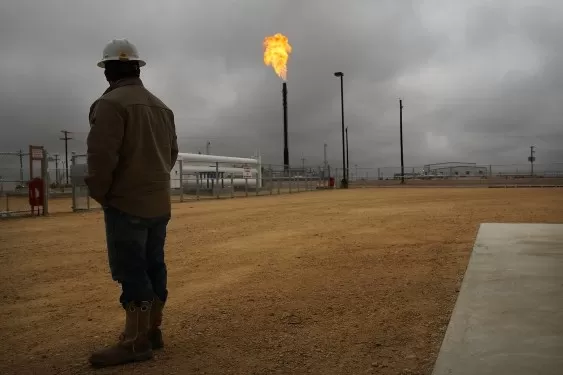
After investing heavily in wind and solar infrastructure over the past few years, major technology giants such as Amazon, Google, Meta, and Microsoft are now turning their focus to natural gas as a source of energy for the data centers that power their ambitious AI initiatives. However, a recent research report suggests these companies may soon regret their shift toward this fossil fuel.
According to Noreva, an energy analysis firm, natural gas prices in certain regions of the United States could triple within the next few years as rising demand from hyperscalers clashes with slowing supply growth and increasing exports of liquefied natural gas. These companies may not be prepared to cope with such sharp price fluctuations down the road.
Peter Gardett, CEO of Noreva, told TechCrunch that “everyone in the energy sector has been led to believe that gas prices cannot rise significantly.” He added that basic arithmetic shows that market conditions for natural gas are now much tighter than they were just a few years ago.
Major Bets by Hyperscalers
The low cost of natural gas has encouraged hyperscalers to secure a significant share of the market for this fuel. In March, Meta announced it would construct a large 7.5-gigawatt natural gas power plant in Louisiana to supply energy to its Hyperion data center. A few days later, both Microsoft and Google said they planned to build their own gigawatt-scale gas power plants in Texas. Amazon also intends to develop a 7.6-gigawatt gas power plant in that state.
For companies that traditionally have avoided large-scale capital investments, the surge in data center construction has forced them to make substantial investments in physical infrastructure while also drawing them deeper into energy markets, which are even less familiar to them.
Gardett mentioned that at least one investor he spoke with was “surprised” by the level of risk hyperscalers are willing to take regarding natural gas prices. He noted that these companies are engaging in behaviors that are unusual for typical energy consumers.
Noreva predicts that natural gas prices could climb above $10 per million BTUs in certain key market hubs, which serve as delivery points for futures contracts. Currently, prices range from about $2 to $4.50 per million BTUs, with the widely traded Henry Hub in Louisiana sitting just under $3.
Since natural gas accounts for roughly half of the cost of electricity generated by large power plants, a doubling or tripling of gas prices could significantly increase the operating expenses of AI data centers that rely on “bring your own power” models. This rise in costs might lead to higher token prices or force hyperscalers to connect to the grid, further driving up electricity expenses.
For the time being, natural gas prices appear stable, with futures contracts not suggesting any major changes are imminent. Gardett acknowledged that this is not an unreasonable bet, but he remains skeptical about whether these companies’ decisions will prove correct.
Rising Demand
Gardett explained that natural gas prices have remained stable due to relatively steady demand over the years and the continuous addition of new supply sources, which has offset declining production from older wells. He believes energy companies will still be able to increase supply, though not at the same pace as before, and that the cost of drilling new wells is also rising.
“That factor alone wouldn’t alter the overall economic balance,” he said. “What’s really driving changes is the integration of the domestic gas market with the global market, along with the strong demand from AI applications.”
Hyperscalers have been drawn to Texas and Louisiana because of the low prices of natural gas there. In West Texas specifically, most wells have been focused on oil production, and the natural gas that emerges is primarily a byproduct with limited market demand. There were few major pipelines available to transport this gas out of the region, so producers offered it at discounted rates to anyone willing to purchase it. However, that situation is changing.
“New pipelines have been constructed in that area, and many of them are designed to carry gas to export markets,” Gardett noted.
As West Texas becomes more connected to national and international energy markets, demand there will influence prices in other regions and vice versa. Even modest price changes near the hyperscalers’ large data centers can have a significant impact elsewhere.
“You’ll find areas with abundant natural gas alongside places where supply is scarce, resulting in large price differences,” Gardett said. It is these disparities that could keep prices above $10 per million BTUs in certain regions for extended periods.
In such a scenario, even if hyperscalers can tolerate higher prices, their increased consumption of natural gas could add another layer to the growing criticism directed at data centers. Currently, 80% of consumers are concerned about the impact of data centers on their utility bills, mainly due to electricity costs. This concern may extend to natural gas expenses as well.
In their rush to power their AI data centers, hyperscalers are quickly becoming more involved in the fossil fuel industry, a sector in which they have relatively little experience. Yet this involvement could soon have a substantial effect on their business operations.
Gardett said that in future earnings calls for companies like Alphabet, investors may hear discussions about the relationship between natural gas prices and Google’s search results, which he described as unusual, but which reflects the current situation.
Related article
 Former Infosys Chief’s AI Startup Secures Another $53M
Hang Ten Systems, an AI startup established by former Infosys CEO Vishal Sikka just four months ago, has secured an additional $53 million in seed funding. This latest investment round was finalized merely five weeks after the initial $32 million see
Amazon Launches Free Alexa+ on Fire TV Without Prime Membership
AI is making its way into your television, whether you’re ready for it or not.On Wednesday, Amazon announced that its AI assistant, Alexa+, will be available on all compatible Fire TV devices in the U.S. at no cost, regardless of Prime subscription s
Amazon introduces Alexa for Shopping while pushing Rufus to the background
Amazon has launched Alexa for Shopping, merging its Rufus shopping chatbot with Alexa+ across the app, website, and Echo Show devices.The assistant answers product queries, compares items, tracks prices, and supports shopping reminders. It also handl
Related Special Topic Recommendations
Image editing
Former Infosys Chief’s AI Startup Secures Another $53M
Hang Ten Systems, an AI startup established by former Infosys CEO Vishal Sikka just four months ago, has secured an additional $53 million in seed funding. This latest investment round was finalized merely five weeks after the initial $32 million see
Amazon Launches Free Alexa+ on Fire TV Without Prime Membership
AI is making its way into your television, whether you’re ready for it or not.On Wednesday, Amazon announced that its AI assistant, Alexa+, will be available on all compatible Fire TV devices in the U.S. at no cost, regardless of Prime subscription s
Amazon introduces Alexa for Shopping while pushing Rufus to the background
Amazon has launched Alexa for Shopping, merging its Rufus shopping chatbot with Alexa+ across the app, website, and Echo Show devices.The assistant answers product queries, compares items, tracks prices, and supports shopping reminders. It also handl
Related Special Topic Recommendations
Image editing
 AI Object Removal Editors: Clean Up Portraits, Travel, and Product Shots
2026 Latest Best Top-rated AI Object Removal Editors for portraits travel product shots! XIX.AI curates a powerful game-changing collection regularly updated with weekly rankings. These tools offer real-world tests to help you quickly remove unwanted elements, boost content quality, and save tons of time without compromising results. Must-try for anyone aiming to unlock their AI creation edge. Explore now!
 10 tools
 xix.ai
Text-to-speech
Best AI Text to Speech Tools for Online Courses
xix.ai
Text-to-speech
Best AI Text to Speech Tools for Online Courses
2026 Latest Best Top-rated AI Text to Speech Tools for Online Courses are curated by XIX.AI based on rigorous real-world tests and weekly updated rankings. These powerful tools help creators deliver crystal-clear audio content effortlessly, boosting writing efficiency and streamlining course production. Check out the free vs paid comparison to find your perfect fit. Explore now to unlock your AI edge in online education.
10 tools
xix.ai
writing
AI Blog Title Tools for Higher Click Through Rates
2026 Latest Best Top-Rated AI Blog Title Tools for Higher Click Through Rates! XIX.AI has carefully curated a powerful, game-changing collection of top tools that go through rigorous real-world tests. You’ll find a free vs paid comparison, weekly updated rankings, and detailed insights to help you boost your blog’s traffic efficiently. Must-try options are highlighted to help you unlock your AI edge. Explore now!
10 tools
xix.ai
automation
Best AI Task Routing Tools for Support Workflows
2026 Latest Best Top-rated AI Task Routing Tools for Support Workflows! XIX.AI has curated a highly powerful game-changing collection of must-try solutions, all undergoing rigorous real-world tests and updated weekly. These tools streamline workflows, boost productivity, and help teams deliver faster, more efficient support. Explore now to discover your perfect tool and unlock your AI edge!
17 tools
xix.ai
Academic Research
AI Citation and Paper Summary Tools
2026 Latest Best Top-Rated AI Citation and Paper Summary Tools Curated by XIX.AI. Get powerful game-changing solutions for quick content creation, improved writing efficiency, and boosting productivity. We offer a free vs paid comparison along with real-world tests and weekly updated rankings to help you find the must-try tool that fits your needs perfectly. Explore now to Unlock your AI edge.
10 tools
xix.ai
Productivity
Best AI Productivity Tools for Daily Work
2026 Latest Best Top-Rated AI Productivity Tools for Daily Work! XIX.AI has curated a powerful, game-changing selection based on rigorous weekly updated rankings and real-world tests. You’ll find must-try options that boost writing efficiency, streamline content creation, and help you overcome daily work challenges. Get a free vs paid comparison to find the perfect fit for your needs. Explore now to unlock your AI edge!
9 tools
xix.ai

 Comments (0)
0/500
Comments (0)
0/500
After investing heavily in wind and solar infrastructure over the past few years, major technology giants such as Amazon, Google, Meta, and Microsoft are now turning their focus to natural gas as a source of energy for the data centers that power their ambitious AI initiatives. However, a recent research report suggests these companies may soon regret their shift toward this fossil fuel.
According to Noreva, an energy analysis firm, natural gas prices in certain regions of the United States could triple within the next few years as rising demand from hyperscalers clashes with slowing supply growth and increasing exports of liquefied natural gas. These companies may not be prepared to cope with such sharp price fluctuations down the road.
Peter Gardett, CEO of Noreva, told TechCrunch that “everyone in the energy sector has been led to believe that gas prices cannot rise significantly.” He added that basic arithmetic shows that market conditions for natural gas are now much tighter than they were just a few years ago.
Major Bets by Hyperscalers
The low cost of natural gas has encouraged hyperscalers to secure a significant share of the market for this fuel. In March, Meta announced it would construct a large 7.5-gigawatt natural gas power plant in Louisiana to supply energy to its Hyperion data center. A few days later, both Microsoft and Google said they planned to build their own gigawatt-scale gas power plants in Texas. Amazon also intends to develop a 7.6-gigawatt gas power plant in that state.
For companies that traditionally have avoided large-scale capital investments, the surge in data center construction has forced them to make substantial investments in physical infrastructure while also drawing them deeper into energy markets, which are even less familiar to them.
Gardett mentioned that at least one investor he spoke with was “surprised” by the level of risk hyperscalers are willing to take regarding natural gas prices. He noted that these companies are engaging in behaviors that are unusual for typical energy consumers.
Noreva predicts that natural gas prices could climb above $10 per million BTUs in certain key market hubs, which serve as delivery points for futures contracts. Currently, prices range from about $2 to $4.50 per million BTUs, with the widely traded Henry Hub in Louisiana sitting just under $3.
Since natural gas accounts for roughly half of the cost of electricity generated by large power plants, a doubling or tripling of gas prices could significantly increase the operating expenses of AI data centers that rely on “bring your own power” models. This rise in costs might lead to higher token prices or force hyperscalers to connect to the grid, further driving up electricity expenses.
For the time being, natural gas prices appear stable, with futures contracts not suggesting any major changes are imminent. Gardett acknowledged that this is not an unreasonable bet, but he remains skeptical about whether these companies’ decisions will prove correct.
Rising Demand
Gardett explained that natural gas prices have remained stable due to relatively steady demand over the years and the continuous addition of new supply sources, which has offset declining production from older wells. He believes energy companies will still be able to increase supply, though not at the same pace as before, and that the cost of drilling new wells is also rising.
“That factor alone wouldn’t alter the overall economic balance,” he said. “What’s really driving changes is the integration of the domestic gas market with the global market, along with the strong demand from AI applications.”
Hyperscalers have been drawn to Texas and Louisiana because of the low prices of natural gas there. In West Texas specifically, most wells have been focused on oil production, and the natural gas that emerges is primarily a byproduct with limited market demand. There were few major pipelines available to transport this gas out of the region, so producers offered it at discounted rates to anyone willing to purchase it. However, that situation is changing.
“New pipelines have been constructed in that area, and many of them are designed to carry gas to export markets,” Gardett noted.
As West Texas becomes more connected to national and international energy markets, demand there will influence prices in other regions and vice versa. Even modest price changes near the hyperscalers’ large data centers can have a significant impact elsewhere.
“You’ll find areas with abundant natural gas alongside places where supply is scarce, resulting in large price differences,” Gardett said. It is these disparities that could keep prices above $10 per million BTUs in certain regions for extended periods.
In such a scenario, even if hyperscalers can tolerate higher prices, their increased consumption of natural gas could add another layer to the growing criticism directed at data centers. Currently, 80% of consumers are concerned about the impact of data centers on their utility bills, mainly due to electricity costs. This concern may extend to natural gas expenses as well.
In their rush to power their AI data centers, hyperscalers are quickly becoming more involved in the fossil fuel industry, a sector in which they have relatively little experience. Yet this involvement could soon have a substantial effect on their business operations.
Gardett said that in future earnings calls for companies like Alphabet, investors may hear discussions about the relationship between natural gas prices and Google’s search results, which he described as unusual, but which reflects the current situation.








 Former Infosys Chief’s AI Startup Secures Another $53M
Hang Ten Systems, an AI startup established by former Infosys CEO Vishal Sikka just four months ago, has secured an additional $53 million in seed funding. This latest investment round was finalized merely five weeks after the initial $32 million see
Former Infosys Chief’s AI Startup Secures Another $53M
Hang Ten Systems, an AI startup established by former Infosys CEO Vishal Sikka just four months ago, has secured an additional $53 million in seed funding. This latest investment round was finalized merely five weeks after the initial $32 million see
 Amazon Launches Free Alexa+ on Fire TV Without Prime Membership
AI is making its way into your television, whether you’re ready for it or not.On Wednesday, Amazon announced that its AI assistant, Alexa+, will be available on all compatible Fire TV devices in the U.S. at no cost, regardless of Prime subscription s
Amazon introduces Alexa for Shopping while pushing Rufus to the background
Amazon has launched Alexa for Shopping, merging its Rufus shopping chatbot with Alexa+ across the app, website, and Echo Show devices.The assistant answers product queries, compares items, tracks prices, and supports shopping reminders. It also handl
Amazon Launches Free Alexa+ on Fire TV Without Prime Membership
AI is making its way into your television, whether you’re ready for it or not.On Wednesday, Amazon announced that its AI assistant, Alexa+, will be available on all compatible Fire TV devices in the U.S. at no cost, regardless of Prime subscription s
Amazon introduces Alexa for Shopping while pushing Rufus to the background
Amazon has launched Alexa for Shopping, merging its Rufus shopping chatbot with Alexa+ across the app, website, and Echo Show devices.The assistant answers product queries, compares items, tracks prices, and supports shopping reminders. It also handl

2026 Latest Best Top-rated AI Object Removal Editors for portraits travel product shots! XIX.AI curates a powerful game-changing collection regularly updated with weekly rankings. These tools offer real-world tests to help you quickly remove unwanted elements, boost content quality, and save tons of time without compromising results. Must-try for anyone aiming to unlock their AI creation edge. Explore now!
10 tools
xix.ai

2026 Latest Best Top-rated AI Text to Speech Tools for Online Courses are curated by XIX.AI based on rigorous real-world tests and weekly updated rankings. These powerful tools help creators deliver crystal-clear audio content effortlessly, boosting writing efficiency and streamlining course production. Check out the free vs paid comparison to find your perfect fit. Explore now to unlock your AI edge in online education.
10 tools
xix.ai

2026 Latest Best Top-Rated AI Blog Title Tools for Higher Click Through Rates! XIX.AI has carefully curated a powerful, game-changing collection of top tools that go through rigorous real-world tests. You’ll find a free vs paid comparison, weekly updated rankings, and detailed insights to help you boost your blog’s traffic efficiently. Must-try options are highlighted to help you unlock your AI edge. Explore now!
10 tools
xix.ai

2026 Latest Best Top-rated AI Task Routing Tools for Support Workflows! XIX.AI has curated a highly powerful game-changing collection of must-try solutions, all undergoing rigorous real-world tests and updated weekly. These tools streamline workflows, boost productivity, and help teams deliver faster, more efficient support. Explore now to discover your perfect tool and unlock your AI edge!
17 tools
xix.ai

2026 Latest Best Top-Rated AI Citation and Paper Summary Tools Curated by XIX.AI. Get powerful game-changing solutions for quick content creation, improved writing efficiency, and boosting productivity. We offer a free vs paid comparison along with real-world tests and weekly updated rankings to help you find the must-try tool that fits your needs perfectly. Explore now to Unlock your AI edge.
10 tools
xix.ai

2026 Latest Best Top-Rated AI Productivity Tools for Daily Work! XIX.AI has curated a powerful, game-changing selection based on rigorous weekly updated rankings and real-world tests. You’ll find must-try options that boost writing efficiency, streamline content creation, and help you overcome daily work challenges. Get a free vs paid comparison to find the perfect fit for your needs. Explore now to unlock your AI edge!
9 tools
xix.ai












