


 Home
HomeWhat is the difference between association and causation in statistical analysis?
Understanding the relationships between variables is crucial in data analysis. While statistics helps us forecast outcomes, it's vital to distinguish between mere association and true causation. A relationship between two variables doesn't imply that one causes the other. This guide explores these core concepts and teaches you how to define populations, samples, and parameters, empowering you to make more reliable, data-informed decisions.
Key Points
Learn to differentiate between statistical association and causation.
Define the target population, the sample taken, and the key parameters in any study.
Explore various sampling methods and evaluate how well they represent a population.
Identify the use and limitations of convenience and systematic sampling.
Apply these statistical principles to enhance how you interpret data and make decisions.
Association vs. Causation: Unveiling the Statistical Truth
The Core Difference: Association and Causation
In data analysis, the goal is often to predict future events based on observed patterns. Sometimes, the objective is simply to determine if one variable is associated with another.
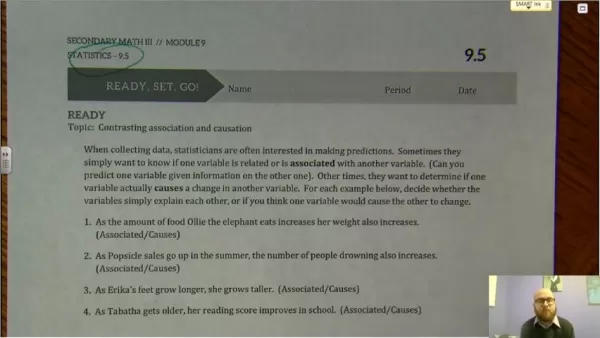
An association indicates a predictable link; knowing the value of one variable helps you estimate the other. For instance, both ice cream sales and crime rates tend to increase during summer months. They are correlated.
However, it's a critical error to assume this means causation. Causation means a change in one variable directly triggers a change in another. Proving causality is far more challenging and requires rigorous testing to eliminate other influencing factors. Increased ice cream sales do not cause more crime; a third variable, like hot weather, influences both trends.
Grasping this distinction is essential for sound decision-making. Mistaking correlation for cause can result in ineffective policies and incorrect conclusions. Robust statistical analysis aims to clarify these relationships, separating simple coincidence from genuine cause and effect.
Examples to Illustrate the Concepts
Consider these practical examples to clarify the difference between association and causation.
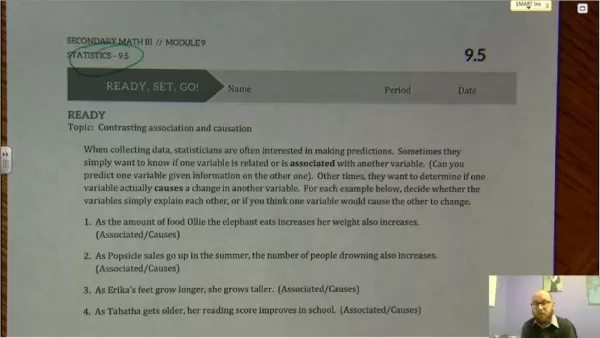
- Ollie the Elephant: As Ollie the elephant eats more food, her weight increases. Is this association or causation? Here, the quantity of food directly causes a change in Ollie's weight. This is a clear causal relationship.
- Popsicle Sales and Drowning: Popsicle sales rise in summer, and drowning incidents also increase. Is this association or causation? While these variables are related, selling more popsicles does not cause drownings. A third factor—summer heat and increased swimming—influences both. This is an association.
- Erika's Feet and Height: As Erika's feet grow longer, she gets taller. Is this association or causation? The growth of her feet and height are connected because Erika is undergoing overall physical development, showing a correlation. One could argue for a causal link, as growth plates in the feet and long bones contribute to simultaneous growth.
- Tabatha's Reading and Age: As Tabatha ages, her reading scores at school improve. Is this association or causation? With age, Tabatha gains more schooling and experience, which directly causes her reading ability to develop. We can reasonably attribute this improvement to her education.
Frequently Asked Questions
What is the most common mistake in statistical analysis?
The most frequent error is conflating association with causation. Observing that two variables change together does not prove one causes the other; other hidden factors may be at play.
How can I improve the representativeness of my sample?
Employ random sampling techniques such as simple random, systematic, or stratified sampling. Also, ensure your sample size is sufficiently large to capture the diversity of the population you're studying.
Why is it important to define the population accurately?
Precisely defining your target population ensures your sampling is focused and collects relevant data. For example, if you want insights about the general public but only survey college students, your results will be skewed and not representative.
Related Questions
What are some ethical considerations in statistical data sampling and analysis?
Ethics are foundational to responsible statistical work, ensuring data collection and interpretation avoid harm, bias, and misrepresentation. Protecting participant privacy is paramount. This involves obtaining informed consent, clearly explaining data usage, and allowing the right to withdraw. Anonymizing data and implementing strong security protocols are essential, especially with sensitive information. Combating bias is another critical duty. Researchers must proactively identify and mitigate biases in every stage, from data gathering to interpretation, and openly acknowledge study limitations and confounding variables. Transparency and honesty in reporting are non-negotiable. Findings must be presented accurately and completely, even when they contradict initial hypotheses, avoiding selective reporting or manipulation that could mislead. Data should be used responsibly for societal benefit, not to enable discrimination or harm. This requires considering a study's impact on different groups and advocating for equitable policies. Researchers must be accountable for their work, adhering to professional standards and welcoming peer review. Finally, disclosing and managing any conflicts of interest is vital to maintain objectivity and public trust. By upholding these ethical standards, statistical analysis becomes a trustworthy tool for progress that respects individual rights and community welfare.
Related article
 Musk Considered Leaving OpenAI to His Kids as Altman Testifies
This morning, OpenAI CEO Sam Altman took the stand to address former co-founder Elon Musk’s lawsuit challenging the company’s corporate structure.When asked about Musk’s claim that other founders “stole a charity” by launching a for-profit subsidiary
Sam Altman Sparks Debate Over AI's Deceleration
Listen onApple PodcastsListen onSpotifyOpenAI CEO Sam Altman recently suggested that it may be time to “pace the rate of AI development” to allow society to “harden around some of these new capability levels.”On the latest episode of TechCrunch’s Equ
Anthropic Opens Doors to EU Cybersecurity Agency as Mythos5 Model Faces Compliance Exam
Artificial intelligence compliance regulations are advancing significantly. Leading AI firm Anthropic has officially granted the European Union's cybersecurity authority access to its Mythos AI model, a pivotal move for this advanced large language m
Related Special Topic Recommendations
Business
Musk Considered Leaving OpenAI to His Kids as Altman Testifies
This morning, OpenAI CEO Sam Altman took the stand to address former co-founder Elon Musk’s lawsuit challenging the company’s corporate structure.When asked about Musk’s claim that other founders “stole a charity” by launching a for-profit subsidiary
Sam Altman Sparks Debate Over AI's Deceleration
Listen onApple PodcastsListen onSpotifyOpenAI CEO Sam Altman recently suggested that it may be time to “pace the rate of AI development” to allow society to “harden around some of these new capability levels.”On the latest episode of TechCrunch’s Equ
Anthropic Opens Doors to EU Cybersecurity Agency as Mythos5 Model Faces Compliance Exam
Artificial intelligence compliance regulations are advancing significantly. Leading AI firm Anthropic has officially granted the European Union's cybersecurity authority access to its Mythos AI model, a pivotal move for this advanced large language m
Related Special Topic Recommendations
Business
 Best AI Competitive Research Tools for Small Businesses
2026 Latest Best Top-rated AI Competitive Research Tools for Small Businesses! XIX.AI has curated a highly powerful game-changing collection, updated weekly with rigorous real-world tests and detailed rankings. You can find a comprehensive free vs paid comparison to help you identify the must-try tools that boost your productivity and give you a competitive edge. Explore now to discover your perfect tool!
 9 tools
 xix.ai
Image editing
Photoshop AI Retouch Tools for Ecommerce Apparel, Skin Cleanup, and Color Consistency
xix.ai
Image editing
Photoshop AI Retouch Tools for Ecommerce Apparel, Skin Cleanup, and Color Consistency
2026 Latest Best Photoshop AI retouch tools for ecommerce apparel, skin cleanup, and color consistency! This top-rated curated list features powerful game-changing solutions that help you boost writing efficiency, streamline content creation, and achieve perfect visual results effortlessly. Each tool has undergone real-world tests through weekly updated rankings, complete with free vs paid comparison details. Backed by XIX.AI, it’s the must-try guide for anyone aiming to unlock your AI edge. Explore now!
10 tools
xix.ai
Prompt
Best AI Prompt Libraries for ChatGPT Workflows
2026 Latest Best Top-Rated AI Prompt Libraries for optimizing all types of ChatGPT workflows. XIX.AI has curated a powerful, game-changing collection that goes through rigorous real-world tests to ensure top performance. You can find detailed free vs paid comparisons and expert rankings to help you choose the must-try tools that boost your productivity and unlock your AI edge. Explore now!
11 tools
xix.ai
Education and Learning
AI Quiz Builder Platforms for Teachers, Tutors, and Cohort-Based Learning Programs
2026 Latest Best AI Quiz Builder Platforms for Teachers, Tutors, and Cohort-Based Learning Programs! XIX.AI has curated a top-rated list of powerful game-changing tools that go through real-world tests to deliver accurate rankings. These must-try platforms help boost writing efficiency, streamline content creation, and simplify quiz design across all learning scenarios. Explore now to discover your perfect tool for unlocking your AI edge in teaching!
13 tools
xix.ai
code
AI Pull Request Review Tools for GitHub Teams Handling Refactors, Bugs, and Security Gaps
2026 Latest Best AI Pull Request Review Tools for GitHub Teams are here on XIX.AI! This top-rated curated list showcases powerful game-changing solutions that streamline refactoring, bug fixing, and security gap detection across all team workflows. Enjoy a free vs paid comparison along with real-world tests and detailed rankings to help you find the perfect tool that boosts productivity significantly. Explore now to unlock your AI edge!
12 tools
xix.ai
Text-to-speech
Best AI Text to Speech Tools for Natural Voiceovers
2026 Latest Best Top-rated AI Text to Speech Tools for Natural Voiceovers are here on XIX.AI! This curated list features powerful, game-changing options that deliver crystal-clear voices for every use case, backed by real-world tests and weekly updated rankings. Get a free vs paid comparison to find the must-try solution that boosts your productivity instantly. Explore now to Unlock your AI edge!
11 tools
xix.ai

 Comments (1)
0/500
Comments (1)
0/500
![MarkMartínez]()
這篇文章講得真清楚!以前總是把相關性和因果關係搞混,現在終於明白為什麼統計顯著不等於實際影響了。不過在實際應用中,要證明因果關係真的好難啊,尤其是社會科學研究🧐
Understanding the relationships between variables is crucial in data analysis. While statistics helps us forecast outcomes, it's vital to distinguish between mere association and true causation. A relationship between two variables doesn't imply that one causes the other. This guide explores these core concepts and teaches you how to define populations, samples, and parameters, empowering you to make more reliable, data-informed decisions.
Key Points
Learn to differentiate between statistical association and causation.
Define the target population, the sample taken, and the key parameters in any study.
Explore various sampling methods and evaluate how well they represent a population.
Identify the use and limitations of convenience and systematic sampling.
Apply these statistical principles to enhance how you interpret data and make decisions.
Association vs. Causation: Unveiling the Statistical Truth
The Core Difference: Association and Causation
In data analysis, the goal is often to predict future events based on observed patterns. Sometimes, the objective is simply to determine if one variable is associated with another.
An association indicates a predictable link; knowing the value of one variable helps you estimate the other. For instance, both ice cream sales and crime rates tend to increase during summer months. They are correlated.
However, it's a critical error to assume this means causation. Causation means a change in one variable directly triggers a change in another. Proving causality is far more challenging and requires rigorous testing to eliminate other influencing factors. Increased ice cream sales do not cause more crime; a third variable, like hot weather, influences both trends.
Grasping this distinction is essential for sound decision-making. Mistaking correlation for cause can result in ineffective policies and incorrect conclusions. Robust statistical analysis aims to clarify these relationships, separating simple coincidence from genuine cause and effect.
Examples to Illustrate the Concepts
Consider these practical examples to clarify the difference between association and causation.
- Ollie the Elephant: As Ollie the elephant eats more food, her weight increases. Is this association or causation? Here, the quantity of food directly causes a change in Ollie's weight. This is a clear causal relationship.
- Popsicle Sales and Drowning: Popsicle sales rise in summer, and drowning incidents also increase. Is this association or causation? While these variables are related, selling more popsicles does not cause drownings. A third factor—summer heat and increased swimming—influences both. This is an association.
- Erika's Feet and Height: As Erika's feet grow longer, she gets taller. Is this association or causation? The growth of her feet and height are connected because Erika is undergoing overall physical development, showing a correlation. One could argue for a causal link, as growth plates in the feet and long bones contribute to simultaneous growth.
- Tabatha's Reading and Age: As Tabatha ages, her reading scores at school improve. Is this association or causation? With age, Tabatha gains more schooling and experience, which directly causes her reading ability to develop. We can reasonably attribute this improvement to her education.
Frequently Asked Questions
What is the most common mistake in statistical analysis?
The most frequent error is conflating association with causation. Observing that two variables change together does not prove one causes the other; other hidden factors may be at play.
How can I improve the representativeness of my sample?
Employ random sampling techniques such as simple random, systematic, or stratified sampling. Also, ensure your sample size is sufficiently large to capture the diversity of the population you're studying.
Why is it important to define the population accurately?
Precisely defining your target population ensures your sampling is focused and collects relevant data. For example, if you want insights about the general public but only survey college students, your results will be skewed and not representative.
Related Questions
What are some ethical considerations in statistical data sampling and analysis?
Ethics are foundational to responsible statistical work, ensuring data collection and interpretation avoid harm, bias, and misrepresentation. Protecting participant privacy is paramount. This involves obtaining informed consent, clearly explaining data usage, and allowing the right to withdraw. Anonymizing data and implementing strong security protocols are essential, especially with sensitive information. Combating bias is another critical duty. Researchers must proactively identify and mitigate biases in every stage, from data gathering to interpretation, and openly acknowledge study limitations and confounding variables. Transparency and honesty in reporting are non-negotiable. Findings must be presented accurately and completely, even when they contradict initial hypotheses, avoiding selective reporting or manipulation that could mislead. Data should be used responsibly for societal benefit, not to enable discrimination or harm. This requires considering a study's impact on different groups and advocating for equitable policies. Researchers must be accountable for their work, adhering to professional standards and welcoming peer review. Finally, disclosing and managing any conflicts of interest is vital to maintain objectivity and public trust. By upholding these ethical standards, statistical analysis becomes a trustworthy tool for progress that respects individual rights and community welfare.








 Musk Considered Leaving OpenAI to His Kids as Altman Testifies
This morning, OpenAI CEO Sam Altman took the stand to address former co-founder Elon Musk’s lawsuit challenging the company’s corporate structure.When asked about Musk’s claim that other founders “stole a charity” by launching a for-profit subsidiary
Musk Considered Leaving OpenAI to His Kids as Altman Testifies
This morning, OpenAI CEO Sam Altman took the stand to address former co-founder Elon Musk’s lawsuit challenging the company’s corporate structure.When asked about Musk’s claim that other founders “stole a charity” by launching a for-profit subsidiary
 Sam Altman Sparks Debate Over AI's Deceleration
Listen onApple PodcastsListen onSpotifyOpenAI CEO Sam Altman recently suggested that it may be time to “pace the rate of AI development” to allow society to “harden around some of these new capability levels.”On the latest episode of TechCrunch’s Equ
Sam Altman Sparks Debate Over AI's Deceleration
Listen onApple PodcastsListen onSpotifyOpenAI CEO Sam Altman recently suggested that it may be time to “pace the rate of AI development” to allow society to “harden around some of these new capability levels.”On the latest episode of TechCrunch’s Equ
 Anthropic Opens Doors to EU Cybersecurity Agency as Mythos5 Model Faces Compliance Exam
Artificial intelligence compliance regulations are advancing significantly. Leading AI firm Anthropic has officially granted the European Union's cybersecurity authority access to its Mythos AI model, a pivotal move for this advanced large language m
Anthropic Opens Doors to EU Cybersecurity Agency as Mythos5 Model Faces Compliance Exam
Artificial intelligence compliance regulations are advancing significantly. Leading AI firm Anthropic has officially granted the European Union's cybersecurity authority access to its Mythos AI model, a pivotal move for this advanced large language m

2026 Latest Best Top-rated AI Competitive Research Tools for Small Businesses! XIX.AI has curated a highly powerful game-changing collection, updated weekly with rigorous real-world tests and detailed rankings. You can find a comprehensive free vs paid comparison to help you identify the must-try tools that boost your productivity and give you a competitive edge. Explore now to discover your perfect tool!
9 tools
xix.ai

2026 Latest Best Photoshop AI retouch tools for ecommerce apparel, skin cleanup, and color consistency! This top-rated curated list features powerful game-changing solutions that help you boost writing efficiency, streamline content creation, and achieve perfect visual results effortlessly. Each tool has undergone real-world tests through weekly updated rankings, complete with free vs paid comparison details. Backed by XIX.AI, it’s the must-try guide for anyone aiming to unlock your AI edge. Explore now!
10 tools
xix.ai

2026 Latest Best Top-Rated AI Prompt Libraries for optimizing all types of ChatGPT workflows. XIX.AI has curated a powerful, game-changing collection that goes through rigorous real-world tests to ensure top performance. You can find detailed free vs paid comparisons and expert rankings to help you choose the must-try tools that boost your productivity and unlock your AI edge. Explore now!
11 tools
xix.ai

2026 Latest Best AI Quiz Builder Platforms for Teachers, Tutors, and Cohort-Based Learning Programs! XIX.AI has curated a top-rated list of powerful game-changing tools that go through real-world tests to deliver accurate rankings. These must-try platforms help boost writing efficiency, streamline content creation, and simplify quiz design across all learning scenarios. Explore now to discover your perfect tool for unlocking your AI edge in teaching!
13 tools
xix.ai

2026 Latest Best AI Pull Request Review Tools for GitHub Teams are here on XIX.AI! This top-rated curated list showcases powerful game-changing solutions that streamline refactoring, bug fixing, and security gap detection across all team workflows. Enjoy a free vs paid comparison along with real-world tests and detailed rankings to help you find the perfect tool that boosts productivity significantly. Explore now to unlock your AI edge!
12 tools
xix.ai

2026 Latest Best Top-rated AI Text to Speech Tools for Natural Voiceovers are here on XIX.AI! This curated list features powerful, game-changing options that deliver crystal-clear voices for every use case, backed by real-world tests and weekly updated rankings. Get a free vs paid comparison to find the must-try solution that boosts your productivity instantly. Explore now to Unlock your AI edge!
11 tools
xix.ai

這篇文章講得真清楚!以前總是把相關性和因果關係搞混,現在終於明白為什麼統計顯著不等於實際影響了。不過在實際應用中,要證明因果關係真的好難啊,尤其是社會科學研究🧐












