


 Home
HomeInvestors Forecast AI to Begin Replacing Human Labor by 2026
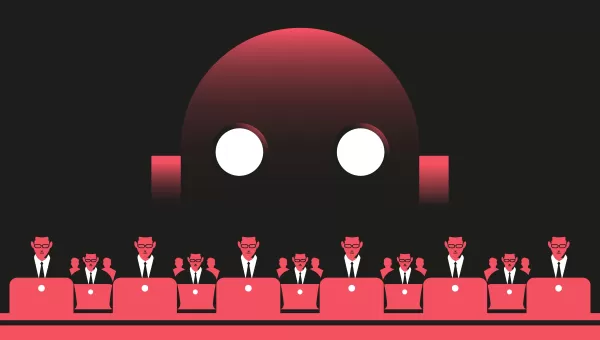
Worries about how AI will impact the workforce are growing just as fast as the technology itself, with new tools constantly emerging that promise greater automation and efficiency.
There is good reason for this concern.
A November MIT study estimated that 11.7% of jobs are already susceptible to AI automation. Surveys indicate that some employers are already cutting entry-level positions due to this technology, and companies have begun citing AI as a reason for layoffs.
As businesses integrate AI more deeply, many will likely re-evaluate their actual staffing needs.
In a recent TechCrunch survey, multiple enterprise venture capitalists predicted that AI will significantly reshape the corporate workforce in 2026. This insight was notable because the survey did not specifically ask about it.
Eric Bahn, co-founder and general partner at Hustle Fund, anticipates noticeable effects on labor in 2026, though the exact outcome remains unclear.
“I want to see which repetitive roles get automated, or even more complex logical tasks become more automated,” Bahn said. “Will it lead to more layoffs? Will it boost productivity? Or will AI simply augment the existing labor force to be more productive? These questions are still open, but 2026 seems poised for a major shift.”
Techcrunch event Join the Disrupt 2026 Waitlist
Join the Disrupt 2026 waitlist for priority access when Early Bird tickets are released. Past Disrupt events have featured industry giants like Google Cloud, Netflix, Microsoft, Box, Phia, a16z, ElevenLabs, Wayve, Hugging Face, Elad Gil, and Vinod Khosla. They are among over 250 leaders headlining 200+ sessions designed to accelerate your growth and sharpen your competitive edge. You'll also have the chance to connect with hundreds of startups driving innovation across all sectors.
Join the Disrupt 2026 Waitlist
Join the Disrupt 2026 waitlist for priority access when Early Bird tickets are released. Past Disrupt events have featured industry giants like Google Cloud, Netflix, Microsoft, Box, Phia, a16z, ElevenLabs, Wayve, Hugging Face, Elad Gil, and Vinod Khosla. They are among over 250 leaders headlining 200+ sessions designed to accelerate your growth and sharpen your competitive edge. You'll also have the chance to connect with hundreds of startups driving innovation across all sectors.
San Francisco | October 13-15, 2026 WAITLIST NOW Marell Evans, founder and managing partner at Exceptional Capital, predicts that companies aiming to boost AI spending will redirect funds from their labor and hiring budgets.
“I believe that alongside a steady rise in AI budgets, we will see more human labor cuts, and layoffs will continue to aggressively affect the U.S. employment rate,” Evans said.
Rajeev Dham, managing director at Sapphire, agrees that 2026 budgets will increasingly shift resources from labor to AI. Jason Mendel, a venture investor at Battery Ventures, added that by 2026, AI will evolve beyond a tool for boosting worker efficiency.
“2026 will be the year of agents, as software progresses from enhancing human productivity to automating the work itself, finally delivering on the promise of human labor displacement in certain fields,” Mendel said.
Antonia Dean, a partner at Black Operator Ventures, noted that even if companies aren't formally moving labor budgets to AI, they may still use AI as a justification for layoffs or cost-cutting.
“The tricky part is that many enterprises, regardless of their actual readiness to deploy AI successfully, will cite increased AI investment to explain cuts in other areas or workforce reductions,” Dean said. “In practice, AI will become a convenient scapegoat for executives covering for past mistakes.”
Many AI firms contend their technology doesn't erase jobs but instead frees workers for 'deep work' or higher-skilled roles by automating mundane, repetitive tasks.
However, not everyone is convinced by this argument, and anxiety about job automation persists. According to VCs specializing in the field, these fears are unlikely to subside in 2026.
Related article
 ByteDance’s Seed launches global campus drive, offering virtual shares to win top large model talent
In the competitive landscape of large language models, securing top-tier talent remains the most critical strategic asset.On April 1st, ByteDance announced the launch of its Seed global campus recruitment initiative, part of its large model talent de
Suno to Watermark Songs Amid Legal Battles
Suno, the platform enabling users to generate AI-created music, has unveiled new features to label platform-produced tracks, restrict downloads, and update community standards to curb unauthorized replicas. These updates arrive as Suno confronts mult
Musk Admits Grok Build Leaked User Code, Promises to Erase All Historical Data
Elon Musk directly addressed the privacy controversy surrounding Grok Build, beginning with a simple "True" to confirm the incident's validity. He pledged that all user data previously uploaded to SpaceXAI would be permanently erased, stating, "not a
Related Special Topic Recommendations
Design & Art
ByteDance’s Seed launches global campus drive, offering virtual shares to win top large model talent
In the competitive landscape of large language models, securing top-tier talent remains the most critical strategic asset.On April 1st, ByteDance announced the launch of its Seed global campus recruitment initiative, part of its large model talent de
Suno to Watermark Songs Amid Legal Battles
Suno, the platform enabling users to generate AI-created music, has unveiled new features to label platform-produced tracks, restrict downloads, and update community standards to curb unauthorized replicas. These updates arrive as Suno confronts mult
Musk Admits Grok Build Leaked User Code, Promises to Erase All Historical Data
Elon Musk directly addressed the privacy controversy surrounding Grok Build, beginning with a simple "True" to confirm the incident's validity. He pledged that all user data previously uploaded to SpaceXAI would be permanently erased, stating, "not a
Related Special Topic Recommendations
Design & Art
 AI Visual Style Reference Tools for Character Sheets, Moodboards, and Pitch Decks
2026 Latest Best AI Visual Style Reference Tools for Character Sheets, Moodboards, and Pitch Decks are here on XIX.AI! This curated top-rated list features powerful game-changing tools that go through rigorous real-world tests. You’ll find a free vs paid comparison, detailed rankings, and must-try options to help you boost creativity and streamline your workflow. Explore now to discover your perfect tool for boosting productivity!
 11 tools
 xix.ai
SEO
Best AI SERP Analysis Tools for Search Strategy
xix.ai
SEO
Best AI SERP Analysis Tools for Search Strategy
2026 Latest Best Top-rated AI SERP Analysis Tools for Search Strategy are curated by XIX.AI through rigorous real-world tests and weekly updated rankings. These powerful tools help you unlock hidden optimization opportunities, boost content performance, and gain a competitive edge in search. Discover your perfect tool to elevate your search strategy today. Explore now!
13 tools
xix.ai
Data Analysis
Best AI Anomaly Detection Tools for KPI Monitoring across SaaS and Ecommerce Teams
2026 Latest Best Top-rated AI Anomaly Detection Tools for KPI Monitoring in SaaS and Ecommerce teams! XIX.AI has curated a powerful, game-changing collection based on rigorous real-world tests and weekly updated rankings. You’ll find detailed free vs paid comparison insights to help you identify the must-try solution that boosts productivity and unlocks your AI edge. Explore now!
10 tools
xix.ai
writing
Best AI Outline Generators for Long-Form SEO Articles
2026 Latest Best Top-Rated AI Outline Generators for Long-Form SEO Articles, meticulously curated by XIX.AI. These powerful tools offer game-changing assistance in creating high-quality content quickly, boosting writing efficiency significantly. Get a free vs paid comparison along with real-world tests and detailed rankings to help you find the must-try option that suits your needs. Explore now to unlock your AI edge.
8 tools
xix.ai
Education and Learning
AI Study Tools for Homework and Exam Prep
2026 Latest Best AI Study Tools for Homework and Exam Prep! XIX.AI curates a top-rated list of powerful, game-changing tools that help students boost productivity, streamline homework completion, and ace exams through real-world tests. Get a free vs paid comparison, detailed rankings, and must-try options to unlock your AI edge. Explore now!
10 tools
xix.ai
Music composition
AI Vocal Demo Tools for Songwriters, Hooks, Toplines, and Multilingual Draft Sessions
2026 Latest Best AI Vocal Demo Tools for Songwriters, Hook Creators, and Multi-Language Content Teams! XIX.AI has curated a top-rated list of powerful game-changing tools that go through rigorous real-world tests. You’ll find detailed free vs paid comparison data, comprehensive rankings, and must-try options to help you boost writing efficiency and unlock your creative potential. Explore now to discover your perfect tool for all your content needs!
9 tools
xix.ai

 Comments (0)
0/500
Comments (0)
0/500
Worries about how AI will impact the workforce are growing just as fast as the technology itself, with new tools constantly emerging that promise greater automation and efficiency.
There is good reason for this concern.
A November MIT study estimated that 11.7% of jobs are already susceptible to AI automation. Surveys indicate that some employers are already cutting entry-level positions due to this technology, and companies have begun citing AI as a reason for layoffs.
As businesses integrate AI more deeply, many will likely re-evaluate their actual staffing needs.
In a recent TechCrunch survey, multiple enterprise venture capitalists predicted that AI will significantly reshape the corporate workforce in 2026. This insight was notable because the survey did not specifically ask about it.
Eric Bahn, co-founder and general partner at Hustle Fund, anticipates noticeable effects on labor in 2026, though the exact outcome remains unclear.
“I want to see which repetitive roles get automated, or even more complex logical tasks become more automated,” Bahn said. “Will it lead to more layoffs? Will it boost productivity? Or will AI simply augment the existing labor force to be more productive? These questions are still open, but 2026 seems poised for a major shift.”
Techcrunch eventJoin the Disrupt 2026 Waitlist
Join the Disrupt 2026 waitlist for priority access when Early Bird tickets are released. Past Disrupt events have featured industry giants like Google Cloud, Netflix, Microsoft, Box, Phia, a16z, ElevenLabs, Wayve, Hugging Face, Elad Gil, and Vinod Khosla. They are among over 250 leaders headlining 200+ sessions designed to accelerate your growth and sharpen your competitive edge. You'll also have the chance to connect with hundreds of startups driving innovation across all sectors.
Join the Disrupt 2026 Waitlist
Join the Disrupt 2026 waitlist for priority access when Early Bird tickets are released. Past Disrupt events have featured industry giants like Google Cloud, Netflix, Microsoft, Box, Phia, a16z, ElevenLabs, Wayve, Hugging Face, Elad Gil, and Vinod Khosla. They are among over 250 leaders headlining 200+ sessions designed to accelerate your growth and sharpen your competitive edge. You'll also have the chance to connect with hundreds of startups driving innovation across all sectors.
San Francisco | October 13-15, 2026 WAITLIST NOWMarell Evans, founder and managing partner at Exceptional Capital, predicts that companies aiming to boost AI spending will redirect funds from their labor and hiring budgets.
“I believe that alongside a steady rise in AI budgets, we will see more human labor cuts, and layoffs will continue to aggressively affect the U.S. employment rate,” Evans said.
Rajeev Dham, managing director at Sapphire, agrees that 2026 budgets will increasingly shift resources from labor to AI. Jason Mendel, a venture investor at Battery Ventures, added that by 2026, AI will evolve beyond a tool for boosting worker efficiency.
“2026 will be the year of agents, as software progresses from enhancing human productivity to automating the work itself, finally delivering on the promise of human labor displacement in certain fields,” Mendel said.
Antonia Dean, a partner at Black Operator Ventures, noted that even if companies aren't formally moving labor budgets to AI, they may still use AI as a justification for layoffs or cost-cutting.
“The tricky part is that many enterprises, regardless of their actual readiness to deploy AI successfully, will cite increased AI investment to explain cuts in other areas or workforce reductions,” Dean said. “In practice, AI will become a convenient scapegoat for executives covering for past mistakes.”
Many AI firms contend their technology doesn't erase jobs but instead frees workers for 'deep work' or higher-skilled roles by automating mundane, repetitive tasks.
However, not everyone is convinced by this argument, and anxiety about job automation persists. According to VCs specializing in the field, these fears are unlikely to subside in 2026.








 ByteDance’s Seed launches global campus drive, offering virtual shares to win top large model talent
In the competitive landscape of large language models, securing top-tier talent remains the most critical strategic asset.On April 1st, ByteDance announced the launch of its Seed global campus recruitment initiative, part of its large model talent de
ByteDance’s Seed launches global campus drive, offering virtual shares to win top large model talent
In the competitive landscape of large language models, securing top-tier talent remains the most critical strategic asset.On April 1st, ByteDance announced the launch of its Seed global campus recruitment initiative, part of its large model talent de
 Suno to Watermark Songs Amid Legal Battles
Suno, the platform enabling users to generate AI-created music, has unveiled new features to label platform-produced tracks, restrict downloads, and update community standards to curb unauthorized replicas. These updates arrive as Suno confronts mult
Suno to Watermark Songs Amid Legal Battles
Suno, the platform enabling users to generate AI-created music, has unveiled new features to label platform-produced tracks, restrict downloads, and update community standards to curb unauthorized replicas. These updates arrive as Suno confronts mult
 Musk Admits Grok Build Leaked User Code, Promises to Erase All Historical Data
Elon Musk directly addressed the privacy controversy surrounding Grok Build, beginning with a simple "True" to confirm the incident's validity. He pledged that all user data previously uploaded to SpaceXAI would be permanently erased, stating, "not a
Musk Admits Grok Build Leaked User Code, Promises to Erase All Historical Data
Elon Musk directly addressed the privacy controversy surrounding Grok Build, beginning with a simple "True" to confirm the incident's validity. He pledged that all user data previously uploaded to SpaceXAI would be permanently erased, stating, "not a

2026 Latest Best AI Visual Style Reference Tools for Character Sheets, Moodboards, and Pitch Decks are here on XIX.AI! This curated top-rated list features powerful game-changing tools that go through rigorous real-world tests. You’ll find a free vs paid comparison, detailed rankings, and must-try options to help you boost creativity and streamline your workflow. Explore now to discover your perfect tool for boosting productivity!
11 tools
xix.ai

2026 Latest Best Top-rated AI SERP Analysis Tools for Search Strategy are curated by XIX.AI through rigorous real-world tests and weekly updated rankings. These powerful tools help you unlock hidden optimization opportunities, boost content performance, and gain a competitive edge in search. Discover your perfect tool to elevate your search strategy today. Explore now!
13 tools
xix.ai

2026 Latest Best Top-rated AI Anomaly Detection Tools for KPI Monitoring in SaaS and Ecommerce teams! XIX.AI has curated a powerful, game-changing collection based on rigorous real-world tests and weekly updated rankings. You’ll find detailed free vs paid comparison insights to help you identify the must-try solution that boosts productivity and unlocks your AI edge. Explore now!
10 tools
xix.ai

2026 Latest Best Top-Rated AI Outline Generators for Long-Form SEO Articles, meticulously curated by XIX.AI. These powerful tools offer game-changing assistance in creating high-quality content quickly, boosting writing efficiency significantly. Get a free vs paid comparison along with real-world tests and detailed rankings to help you find the must-try option that suits your needs. Explore now to unlock your AI edge.
8 tools
xix.ai

2026 Latest Best AI Study Tools for Homework and Exam Prep! XIX.AI curates a top-rated list of powerful, game-changing tools that help students boost productivity, streamline homework completion, and ace exams through real-world tests. Get a free vs paid comparison, detailed rankings, and must-try options to unlock your AI edge. Explore now!
10 tools
xix.ai

2026 Latest Best AI Vocal Demo Tools for Songwriters, Hook Creators, and Multi-Language Content Teams! XIX.AI has curated a top-rated list of powerful game-changing tools that go through rigorous real-world tests. You’ll find detailed free vs paid comparison data, comprehensive rankings, and must-try options to help you boost writing efficiency and unlock your creative potential. Explore now to discover your perfect tool for all your content needs!
9 tools
xix.ai












