Heven AeroTech has engineered the Z1 hydrogen-powered drone for defense applications. Source: IonQ
The Drones & Robotics AI Summit kicked off last month at Pillsbury's New York offices with Ghost Robotics' CEO Gavin Kenneally showcasing the company's Vision 60 robotic quadruped. As he detailed its numerous deployments with the U.S. military, the captivated audience buzzed with anticipation.
Physical AI has truly matured. Industry estimates indicate venture and private equity investment in this sector surpassed $30 billion over the past year, more than doubling previous activity. The landscape has shifted dramatically since last year's summit: humanoid robotics hype, OpenClaw, and now autonomous weapons are transforming conflicts in the Middle East and Europe.
These opportunities will expand further with progress in generative AI and the emerging potential of quantum computing.
Ghost Robotics CEO Gavin Kenneally demonstrated the Vision 60 robotic dog at The Drones & Robotics AI Summit in New York last month. Credit: Mara Zalite
Heven AeroTech founder shares journey to 'unicorn' status
Following the event, I met with Bentzion Levinson, founder and CEO of Heven AeroTech, in Jerusalem during a lull between missile alert sirens. Over an hour-long conversation (free from interruptions), he recounted his UAV company's early path to becoming Israel's newest unicorn startup.
A key insight from our discussion was his embrace of quantum computing to enhance sensor data processing, facilitated by a broad partnership with IonQ, Heven's largest external shareholder. Levinson outlined his company's evolution and its dedication to addressing practical challenges for military personnel globally.
"After my military service, where I served as a combat commander, I volunteered for a national project," he recalled. "That project made me realize the incredible potential of drones. However, most drones on the market at the time—and still many today—were essentially flying cameras or sensors, often manufactured in China."
It was 2018, and the Israeli border with Gaza faced persistent threats from incendiary kites and balloons. Levinson spearheaded efforts to use drones for autonomously detecting and quickly extinguishing these fires.
"We initially deployed drones to spot fires, then evolved to using them for firefighting," he explained. "That marked our transition from flying cameras to flying robotic platforms."
This insight—moving from mere data collection to actionable intervention with UAVs—sparked his billion-dollar vision.
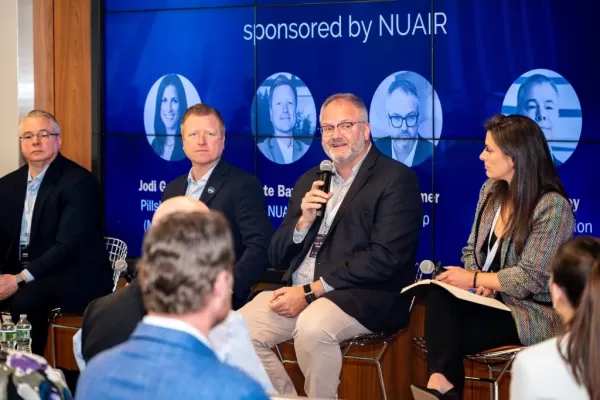
Nathaniel Bazydlo of NUAIR, Jeff Causey of Causey Aviation, Greg James of DroneUp, and Jodi Goldberg of Pillsbury examined UAV regulatory frameworks in New York. Credit: Mara Zalite
Drone startup defines two primary use cases
From these early experiences, Levinson identified two core use cases: rapid response and heavy payload delivery.
"The first is tactical, applicable to both defense and commercial scenarios," he continued, drawing from his background. "For missions like firefighting, you don't need to travel far. The critical factor is arriving within minutes to make a decisive impact."
"The second use case involves operating within a 10-mile radius, focusing on carrying substantial payloads," Levinson added. "This requires drones built for heavy lifting and stable flight. While the exact payloads may vary, we must be prepared to support diverse customer needs. This realization highlighted that many future applications will demand longer operational ranges."
Transitioning from batteries to hydrogen-powered UAVs
While collaborating with the Israel Defense Forces (IDF), the former soldier encountered these limitations directly, motivating him to address the market gap with his current hydrogen-fueled UAV.
"Batteries are suitable for short-range missions, but they lack the energy density for long-distance operations," Levinson explained. "Conventional drones often use combustion or jet engines, but these produce noticeable heat and noise signatures."
"Such signatures make them less viable for many defense applications and problematic for commercial use," he noted. "Imagine the disturbance of numerous loud drones overhead. Therefore, combustion or jet-powered aircraft face scalability challenges in civilian airspace. This led us to hydrogen fuel cell technology."
"Our initial product line features heavy-lift, battery-powered drones capable of carrying up to 100 pounds, extending our original concept," Levinson stated. "The second line, developed over the past five to six years, specializes in long-range, stealth missions using hydrogen fuel cells, now supported by our refueling infrastructure. We are the sole provider of long-endurance, autonomous hydrogen drones certified for use by the U.S. and Israeli governments."
Justin Rubin of Pillsbury (right) hosted Douglas Bush, former assistant secretary of the Army for acquisition, logistics, and technology (left), offering guidance to startups on Department of Defense procurement processes. Credit: Mara Zalite
In November 2025, IonQ spearheaded a $100 million Series B investment in Heven as part of a strategic technology alliance. IonQ's Chairman and CEO, Niccolo de Masi, remarked, "By integrating IonQ's leading quantum technologies, Heven AeroTech will unlock unprecedented UAS capabilities. This collaboration equips Heven's drones to execute missions with unmatched precision, resilience, and security."
Levinson elaborated on the partnership with IonQ and the novel innovations he is implementing through quantum computing.
"Late last year, we closed a major funding round at a billion-dollar valuation, led by IonQ, a public company and a leader in the quantum ecosystem. This investment supports our expansion into new technologies, including quantum systems," he said. "Since then, our focus has shifted to scaling production. We are establishing a large-scale facility that will serve as both a drone gigafactory and an innovation hub."
He mentioned this gigafactory will be located in Virginia to be closer to its primary customer base in the Washington, D.C. area. Levinson enthusiastically described how quantum technologies supercharge autonomy, akin to generative AI on steroids.
"Drone platforms are ultimately judged by their mission performance, which involves diverse operational profiles," Levinson noted. "Our challenge is heightened in environments like open ocean, where GPS is unavailable, making navigation exceptionally difficult."
"This need for reliable communication led our research teams to quantum technologies—specifically quantum sensing for navigation and quantum networking for communications," he explained. "These solutions allow our systems to navigate and communicate globally without relying on GPS or emitting detectable signatures."
The drone innovator continued: "Alternative navigation methods exist, such as vision-based systems that analyze ground imagery, but these fail over featureless terrain like oceans. Some companies use fiber-optic links on small drones for communication, yet these are impractical over vast distances. That's why we turned to quantum sensors and advanced atomic clocks for navigation."
A full audience engages with the defense technology panel featuring David Skinner of Griffiss Institute, Bentzion Levinson of Heven Aero, David Franco of Wild West Systems, and Ryan Eppley of Root Access. Credit: Mara Zalite
Networking and sensor advancements strengthen IonQ's market position
In September 2025, shortly before investing in Heven, IonQ acquired Vector Atomic, a leader in advanced quantum sensors for positioning, navigation, and timing (PNT) applications. Vector reported over $200 million in government contracts related to national security.
The company noted its technology portfolio included "high-performance atomic clocks, synchronization hardware, gravimeters, and inertial sensors, reinforcing IonQ's unique position as the only quantum firm integrating advanced computing, networking, and sensing on a unified platform."
IonQ stated the Vector acquisition solidified its competitive edge in the expanding quantum sensing and navigation market, which includes rivals like SandboxAQ, Q-CTRL, Infleqtion, Lockheed Martin, and RTX.
"We are collaborating with IonQ, the global leader in quantum standards today," Levinson said. "Together, we are miniaturizing these systems for drone integration."
After describing quantum navigation in GPS-denied settings, he highlighted its potential for stealthy, long-range communication.
"Communication is another critical area. Short-range links are vulnerable to jamming," Levinson pointed out. "While options like satellite communication and Starlink exist, they often emit detectable signatures that can reveal a drone's location."
"Quantum networking, where quantum sensors communicate with each other, enables secure, undetectable data exchange," he detailed. "This method is inherently resistant to jamming and interception."
The entrepreneur summarized the Heven-IonQ relationship: "IonQ's leadership in our latest funding round underscores the depth of our partnership. We believe these technologies are vital for ensuring drone effectiveness in future conflicts. If our drones can navigate and communicate covertly, it represents a paradigm shift."
This advantage is compounded by the cost efficiency of Heven's platform, further enhanced by quantum-enabled sensors.
"Our systems typically cost about 5% of traditional military drones," Levinson claimed. "They are multi-role platforms, offering far greater value per flight hour compared to single-use alternatives. We deploy them as mother ships to launch various capabilities—heavy-lift, long-endurance, quantum-enhanced drones. So, we deliver superior capability at a fraction of the cost."
Matthew Walsh of Waymo and Lydon Sleeper of Joby Aviation explore the complexities of deploying urban autonomous systems. Credit: Mara Zalite
Competition looms for hydrogen-powered defense drones
Currently, Heven operates in a relatively open market. While firms like Doosan produce hydrogen UAVs, and Elroy and Sabrewing manufacture hybrid models, Levinson asserts no competitor currently offers the same combination of long-range, heavy-payload capability with low observability in GPS-denied environments.
However, the competitive landscape is evolving. Companies such as Shield AI, AeroVironment, Kaman, and new entrants are poised to enter this growing defense technology sector, potentially challenging Heven's market share. In the long term, Heven's quantum collaboration with IonQ may become its most defensible advantage.
"We've been pioneers and hold a strong early-mover advantage, with five to six years of solving complex technical challenges," Levinson stated. "We anticipate more players will enter this space. Our robust IP portfolio, patents, and strategic technology partnerships position us well. We are focused on achieving scale and field deployment, confident in our leadership role."
Physical AI panel featuring Erik Nieves of Plus One Robotics, Rosalind Shinkle of Tuesday’s Lab, Nadav Orbach of RealSense, Duncan McIntyre of FieldAI, and Adam Hopkins of Sensetics. Credit: Mara Zalite
Last month, Kara Jones, Rebecca Breeden, and I hosted the annual Drones & Robotics AI Summit 2026. We extend our gratitude to all speakers, participants, attendees, and our partners: GENIUS NY, ff Venture Capital, Arkenstone Capital, Pillsbury Winthrop Shaw Pittman, Evercore, NUAIR, Samson Rose, HAUS, Punch Financial, Qapita, and AUVSI Empire State Chapter.
Speakers included Jeff Burnstein, Matthew Walsh, Erik Nieves, Rosalind Shinkle, Nadav Orbach, Duncan McIntyre, Adam Hopkins, Ben Verschueren, Joe Jones, Bentzion Levinson, Ryan Eppley, Jacob Andreesen, and the GNY cohorts. For more insights, listen to the Machine Minds Podcast.
Ghost Robotics Reflects on a Decade of Legged Robot InnovationGhost Robotics has delivered over 1,000 robots since its founding in 2015. | Source: Ghost RoboticsFor over ten years, Ghost Robotics has deployed legged robots in critical defense, security, and industrial operations. These robots run on the company
How to fix Core Web Vitals for better SEO rankingsStreamline Report Card Comments with AI ToolsIntroductionAI Tools for Generating Report Card CommentsMagic SchoolAlmanac AIChat GPTUsing Magic School to Generate Report Card CommentsLogging into Magic SchoolSelecting the Report Card Comments ToolCust
Slackbot Becomes an AI AgentSlackbot, the automated assistant embedded in Salesforce’s corporate messaging platform Slack, is evolving into an AI agent. Salesforce CTO Parker Harris envisions it achieving viral status comparable to OpenAI’s ChatGPT.The cloud software giant laun
2026 Latest Best AI Study Tools for Homework and Exam Prep! XIX.AI curates a top-rated list of powerful, game-changing tools that help students boost productivity, streamline homework completion, and ace exams through real-world tests. Get a free vs paid comparison, detailed rankings, and must-try options to unlock your AI edge. Explore now!
2026 Latest Best AI Vocal Demo Tools for Songwriters, Hook Creators, and Multi-Language Content Teams! XIX.AI has curated a top-rated list of powerful game-changing tools that go through rigorous real-world tests. You’ll find detailed free vs paid comparison data, comprehensive rankings, and must-try options to help you boost writing efficiency and unlock your creative potential. Explore now to discover your perfect tool for all your content needs!
2026 Latest Best Top-rated AI Competitive Research Tools for Small Businesses! XIX.AI has curated a highly powerful game-changing collection, updated weekly with rigorous real-world tests and detailed rankings. You can find a comprehensive free vs paid comparison to help you identify the must-try tools that boost your productivity and give you a competitive edge. Explore now to discover your perfect tool!
2026 Latest Best Photoshop AI retouch tools for ecommerce apparel, skin cleanup, and color consistency! This top-rated curated list features powerful game-changing solutions that help you boost writing efficiency, streamline content creation, and achieve perfect visual results effortlessly. Each tool has undergone real-world tests through weekly updated rankings, complete with free vs paid comparison details. Backed by XIX.AI, it’s the must-try guide for anyone aiming to unlock your AI edge. Explore now!
2026 Latest Best Top-Rated AI Prompt Libraries for optimizing all types of ChatGPT workflows. XIX.AI has curated a powerful, game-changing collection that goes through rigorous real-world tests to ensure top performance. You can find detailed free vs paid comparisons and expert rankings to help you choose the must-try tools that boost your productivity and unlock your AI edge. Explore now!
2026 Latest Best AI Quiz Builder Platforms for Teachers, Tutors, and Cohort-Based Learning Programs! XIX.AI has curated a top-rated list of powerful game-changing tools that go through real-world tests to deliver accurate rankings. These must-try platforms help boost writing efficiency, streamline content creation, and simplify quiz design across all learning scenarios. Explore now to discover your perfect tool for unlocking your AI edge in teaching!
Quantum autonomy? Sounds like a buzzword salad to justify military spending. But hey, a hydrogen drone that doesn't explode on the launch pad would be a nice change. 🤷♂️
By clicking "Accept All Cookies", you agree to the storing of cookies on your device to enhance site navigation, analyze site usage, and assist in our marketing efforts.Privacy Policy Notice
When you visit any website, it may store or retrieve information on your browser, mostly in the form of cookies. This information might be about you, your preferences or your device and is mostly used to make the site work as you expect it to. The information does not usually directly identify you, but it can give you a more personalized web experience. Because we respect your right to privacy, you can choose not to allow some types of cookies. Click on the different category headings to find out more and change our default settings.However, blocking some types of cookies may impact your experience of the site and the services we are able to offer. Privacy PolicyStatement
Manage Preferences
Strictly Necessary Cookie
Always Active
These cookies are necessary for the website to function and cannot be switched off in our systems. They are usually only set in response to actions made by you which amount to a request for services, such as setting your privacy preferences, logging in or filling in forms. You can set your browser to block or alert you about these cookies, but some parts of the site will not then work. These cookies do not store any personally identifiable information.



 Home
Home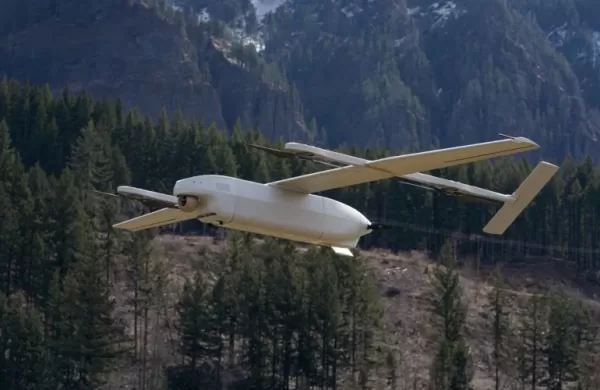





 Ghost Robotics Reflects on a Decade of Legged Robot Innovation
Ghost Robotics has delivered over 1,000 robots since its founding in 2015. | Source: Ghost RoboticsFor over ten years, Ghost Robotics has deployed legged robots in critical defense, security, and industrial operations. These robots run on the company
Ghost Robotics Reflects on a Decade of Legged Robot Innovation
Ghost Robotics has delivered over 1,000 robots since its founding in 2015. | Source: Ghost RoboticsFor over ten years, Ghost Robotics has deployed legged robots in critical defense, security, and industrial operations. These robots run on the company
 AI Study Tools for Homework and Exam Prep
 10 tools
 xix.ai
Music composition
xix.ai
Music composition

 Comments (1)
0/500
Comments (1)
0/500








 How to fix Core Web Vitals for better SEO rankings
Streamline Report Card Comments with AI ToolsIntroductionAI Tools for Generating Report Card CommentsMagic SchoolAlmanac AIChat GPTUsing Magic School to Generate Report Card CommentsLogging into Magic SchoolSelecting the Report Card Comments ToolCust
How to fix Core Web Vitals for better SEO rankings
Streamline Report Card Comments with AI ToolsIntroductionAI Tools for Generating Report Card CommentsMagic SchoolAlmanac AIChat GPTUsing Magic School to Generate Report Card CommentsLogging into Magic SchoolSelecting the Report Card Comments ToolCust
 Slackbot Becomes an AI Agent
Slackbot, the automated assistant embedded in Salesforce’s corporate messaging platform Slack, is evolving into an AI agent. Salesforce CTO Parker Harris envisions it achieving viral status comparable to OpenAI’s ChatGPT.The cloud software giant laun
Slackbot Becomes an AI Agent
Slackbot, the automated assistant embedded in Salesforce’s corporate messaging platform Slack, is evolving into an AI agent. Salesforce CTO Parker Harris envisions it achieving viral status comparable to OpenAI’s ChatGPT.The cloud software giant laun