


 Home
HomeBumble Debuts AI Dating Assistant 'Bee' to Refine User Connections
Bumble, the company behind the popular dating app, is now exploring generative AI technology. In its fourth-quarter earnings call on Wednesday, Bumble unveiled a new AI assistant named "Bee," designed to act as a personal matchmaker. Bee learns about users' values, relationship goals, communication preferences, lifestyle, and dating intentions through private conversations. These insights help the assistant suggest more relevant matches for each user.
According to Bumble founder and CEO Whitney Wolfe Herd, Bee is currently in an internal pilot phase, with a public beta launch planned soon.
Bee enables Bumble to gather richer information about its users by understanding their personal stories and preferences. This positions Bumble differently from competitors like Tinder, which recently revamped its platform amid slowing engagement from Gen Z users.
Users will interact with Bee much like other AI chatbots—through text and voice in a conversational style.
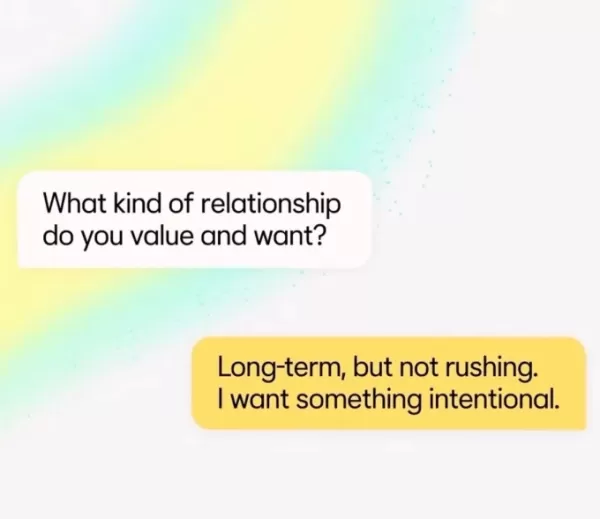
Image Credits:Bumble
Initially, Bee will support a new feature called "Dates," where it uses AI to recommend potential matches. Over time, Bee could expand into other areas, such as proposing date ideas or gathering anonymous feedback from past matches.
In the "Dates" experience, Bee starts by learning about the user through a private onboarding chat. It then identifies two individuals with shared intentions, values, and relationship goals. Both users receive a notification explaining why they are a good match.
This update is part of a broader tech and AI-driven transformation for Bumble, which has historically emphasized features that support women. The app introduced innovations like requiring women to message first, banning body-shaming, and blurring unsolicited explicit images.

Image Credits:Bumble
Now, Bumble aims to leverage AI to re-ignite user growth, especially as younger users—particularly from Gen Z—grow weary of swiping.
Herd noted that Bumble may test removing the swipe mechanism in certain markets. Instead of relying on binary yes/no swipes, the app will focus on features like "chapter-based" profiles, where users share different parts of their life story. This provides more data to fuel Bumble’s AI and matching algorithms.
"We plan to introduce more engaging ways for users to express interest in someone’s story, not just their profile. This will drive richer engagement, better conversations, and improved KPIs across the platform," Wolfe Herd explained. "We’re also taking a more deliberate approach to moving conversations offline, rather than letting them stall in endless chat loops."
Bumble is also exploring ways to better serve Gen Z users, who often prefer group social settings over traditional one-on-one dating.
The company has integrated AI into its app over several years, including tools for photo selection, user feedback, and safety enhancements. Wolfe Herd shared that Bumble's backend infrastructure has been upgraded to support these AI-driven features.
Bumble reported stronger-than-expected Q4 earnings, with revenue reaching $224.2 million and average revenue per paying user increasing 7.9% to $22.20. Following the announcement, the company’s stock surged by approximately 40%.
Related article
 Ollie bets privacy focus to win AI assistant race
To be genuinely helpful, an AI assistant must understand its user deeply. Ollie, a personal assistant designed for daily life, operates on the premise that this doesn’t require surrendering your data or compromising your privacy.While certain enterpr
Viral AI Assistant Instinct Launches Dedicated Email Address
Instinct, the rapidly emerging AI assistant now valued at $2.5 billion, is launching a feature that empowers it to act more independently on behalf of users: every user now receives a dedicated Instinct email address.Founder Noah Shinn announced on T
Canva's AI assistant now calls on multiple tools to create designs
New AI platforms promise to let you describe a task, have the assistant plan it and use the right tools, while remembering your preferences for future use. This is particularly valuable for design professionals who need a predictable, automated workf
Related Special Topic Recommendations
writing
Ollie bets privacy focus to win AI assistant race
To be genuinely helpful, an AI assistant must understand its user deeply. Ollie, a personal assistant designed for daily life, operates on the premise that this doesn’t require surrendering your data or compromising your privacy.While certain enterpr
Viral AI Assistant Instinct Launches Dedicated Email Address
Instinct, the rapidly emerging AI assistant now valued at $2.5 billion, is launching a feature that empowers it to act more independently on behalf of users: every user now receives a dedicated Instinct email address.Founder Noah Shinn announced on T
Canva's AI assistant now calls on multiple tools to create designs
New AI platforms promise to let you describe a task, have the assistant plan it and use the right tools, while remembering your preferences for future use. This is particularly valuable for design professionals who need a predictable, automated workf
Related Special Topic Recommendations
writing
 Best AI Outline Generators for Long-Form SEO Articles
2026 Latest Best Top-Rated AI Outline Generators for Long-Form SEO Articles, meticulously curated by XIX.AI. These powerful tools offer game-changing assistance in creating high-quality content quickly, boosting writing efficiency significantly. Get a free vs paid comparison along with real-world tests and detailed rankings to help you find the must-try option that suits your needs. Explore now to unlock your AI edge.
 8 tools
 xix.ai
Education and Learning
AI Study Tools for Homework and Exam Prep
xix.ai
Education and Learning
AI Study Tools for Homework and Exam Prep
2026 Latest Best AI Study Tools for Homework and Exam Prep! XIX.AI curates a top-rated list of powerful, game-changing tools that help students boost productivity, streamline homework completion, and ace exams through real-world tests. Get a free vs paid comparison, detailed rankings, and must-try options to unlock your AI edge. Explore now!
10 tools
xix.ai
Music composition
AI Vocal Demo Tools for Songwriters, Hooks, Toplines, and Multilingual Draft Sessions
2026 Latest Best AI Vocal Demo Tools for Songwriters, Hook Creators, and Multi-Language Content Teams! XIX.AI has curated a top-rated list of powerful game-changing tools that go through rigorous real-world tests. You’ll find detailed free vs paid comparison data, comprehensive rankings, and must-try options to help you boost writing efficiency and unlock your creative potential. Explore now to discover your perfect tool for all your content needs!
9 tools
xix.ai
Business
Best AI Competitive Research Tools for Small Businesses
2026 Latest Best Top-rated AI Competitive Research Tools for Small Businesses! XIX.AI has curated a highly powerful game-changing collection, updated weekly with rigorous real-world tests and detailed rankings. You can find a comprehensive free vs paid comparison to help you identify the must-try tools that boost your productivity and give you a competitive edge. Explore now to discover your perfect tool!
9 tools
xix.ai
Image editing
Photoshop AI Retouch Tools for Ecommerce Apparel, Skin Cleanup, and Color Consistency
2026 Latest Best Photoshop AI retouch tools for ecommerce apparel, skin cleanup, and color consistency! This top-rated curated list features powerful game-changing solutions that help you boost writing efficiency, streamline content creation, and achieve perfect visual results effortlessly. Each tool has undergone real-world tests through weekly updated rankings, complete with free vs paid comparison details. Backed by XIX.AI, it’s the must-try guide for anyone aiming to unlock your AI edge. Explore now!
10 tools
xix.ai
Prompt
Best AI Prompt Libraries for ChatGPT Workflows
2026 Latest Best Top-Rated AI Prompt Libraries for optimizing all types of ChatGPT workflows. XIX.AI has curated a powerful, game-changing collection that goes through rigorous real-world tests to ensure top performance. You can find detailed free vs paid comparisons and expert rankings to help you choose the must-try tools that boost your productivity and unlock your AI edge. Explore now!
11 tools
xix.ai

 Comments (0)
0/500
Comments (0)
0/500
Bumble, the company behind the popular dating app, is now exploring generative AI technology. In its fourth-quarter earnings call on Wednesday, Bumble unveiled a new AI assistant named "Bee," designed to act as a personal matchmaker. Bee learns about users' values, relationship goals, communication preferences, lifestyle, and dating intentions through private conversations. These insights help the assistant suggest more relevant matches for each user.
According to Bumble founder and CEO Whitney Wolfe Herd, Bee is currently in an internal pilot phase, with a public beta launch planned soon.
Bee enables Bumble to gather richer information about its users by understanding their personal stories and preferences. This positions Bumble differently from competitors like Tinder, which recently revamped its platform amid slowing engagement from Gen Z users.
Users will interact with Bee much like other AI chatbots—through text and voice in a conversational style.
Image Credits:Bumble
Initially, Bee will support a new feature called "Dates," where it uses AI to recommend potential matches. Over time, Bee could expand into other areas, such as proposing date ideas or gathering anonymous feedback from past matches.
In the "Dates" experience, Bee starts by learning about the user through a private onboarding chat. It then identifies two individuals with shared intentions, values, and relationship goals. Both users receive a notification explaining why they are a good match.
This update is part of a broader tech and AI-driven transformation for Bumble, which has historically emphasized features that support women. The app introduced innovations like requiring women to message first, banning body-shaming, and blurring unsolicited explicit images.
Image Credits:Bumble
Now, Bumble aims to leverage AI to re-ignite user growth, especially as younger users—particularly from Gen Z—grow weary of swiping.
Herd noted that Bumble may test removing the swipe mechanism in certain markets. Instead of relying on binary yes/no swipes, the app will focus on features like "chapter-based" profiles, where users share different parts of their life story. This provides more data to fuel Bumble’s AI and matching algorithms.
"We plan to introduce more engaging ways for users to express interest in someone’s story, not just their profile. This will drive richer engagement, better conversations, and improved KPIs across the platform," Wolfe Herd explained. "We’re also taking a more deliberate approach to moving conversations offline, rather than letting them stall in endless chat loops."
Bumble is also exploring ways to better serve Gen Z users, who often prefer group social settings over traditional one-on-one dating.
The company has integrated AI into its app over several years, including tools for photo selection, user feedback, and safety enhancements. Wolfe Herd shared that Bumble's backend infrastructure has been upgraded to support these AI-driven features.
Bumble reported stronger-than-expected Q4 earnings, with revenue reaching $224.2 million and average revenue per paying user increasing 7.9% to $22.20. Following the announcement, the company’s stock surged by approximately 40%.








 Ollie bets privacy focus to win AI assistant race
To be genuinely helpful, an AI assistant must understand its user deeply. Ollie, a personal assistant designed for daily life, operates on the premise that this doesn’t require surrendering your data or compromising your privacy.While certain enterpr
Ollie bets privacy focus to win AI assistant race
To be genuinely helpful, an AI assistant must understand its user deeply. Ollie, a personal assistant designed for daily life, operates on the premise that this doesn’t require surrendering your data or compromising your privacy.While certain enterpr
 Viral AI Assistant Instinct Launches Dedicated Email Address
Instinct, the rapidly emerging AI assistant now valued at $2.5 billion, is launching a feature that empowers it to act more independently on behalf of users: every user now receives a dedicated Instinct email address.Founder Noah Shinn announced on T
Viral AI Assistant Instinct Launches Dedicated Email Address
Instinct, the rapidly emerging AI assistant now valued at $2.5 billion, is launching a feature that empowers it to act more independently on behalf of users: every user now receives a dedicated Instinct email address.Founder Noah Shinn announced on T
 Canva's AI assistant now calls on multiple tools to create designs
New AI platforms promise to let you describe a task, have the assistant plan it and use the right tools, while remembering your preferences for future use. This is particularly valuable for design professionals who need a predictable, automated workf
Canva's AI assistant now calls on multiple tools to create designs
New AI platforms promise to let you describe a task, have the assistant plan it and use the right tools, while remembering your preferences for future use. This is particularly valuable for design professionals who need a predictable, automated workf

2026 Latest Best Top-Rated AI Outline Generators for Long-Form SEO Articles, meticulously curated by XIX.AI. These powerful tools offer game-changing assistance in creating high-quality content quickly, boosting writing efficiency significantly. Get a free vs paid comparison along with real-world tests and detailed rankings to help you find the must-try option that suits your needs. Explore now to unlock your AI edge.
8 tools
xix.ai

2026 Latest Best AI Study Tools for Homework and Exam Prep! XIX.AI curates a top-rated list of powerful, game-changing tools that help students boost productivity, streamline homework completion, and ace exams through real-world tests. Get a free vs paid comparison, detailed rankings, and must-try options to unlock your AI edge. Explore now!
10 tools
xix.ai

2026 Latest Best AI Vocal Demo Tools for Songwriters, Hook Creators, and Multi-Language Content Teams! XIX.AI has curated a top-rated list of powerful game-changing tools that go through rigorous real-world tests. You’ll find detailed free vs paid comparison data, comprehensive rankings, and must-try options to help you boost writing efficiency and unlock your creative potential. Explore now to discover your perfect tool for all your content needs!
9 tools
xix.ai

2026 Latest Best Top-rated AI Competitive Research Tools for Small Businesses! XIX.AI has curated a highly powerful game-changing collection, updated weekly with rigorous real-world tests and detailed rankings. You can find a comprehensive free vs paid comparison to help you identify the must-try tools that boost your productivity and give you a competitive edge. Explore now to discover your perfect tool!
9 tools
xix.ai

2026 Latest Best Photoshop AI retouch tools for ecommerce apparel, skin cleanup, and color consistency! This top-rated curated list features powerful game-changing solutions that help you boost writing efficiency, streamline content creation, and achieve perfect visual results effortlessly. Each tool has undergone real-world tests through weekly updated rankings, complete with free vs paid comparison details. Backed by XIX.AI, it’s the must-try guide for anyone aiming to unlock your AI edge. Explore now!
10 tools
xix.ai

2026 Latest Best Top-Rated AI Prompt Libraries for optimizing all types of ChatGPT workflows. XIX.AI has curated a powerful, game-changing collection that goes through rigorous real-world tests to ensure top performance. You can find detailed free vs paid comparisons and expert rankings to help you choose the must-try tools that boost your productivity and unlock your AI edge. Explore now!
11 tools
xix.ai












