


 Home
HomeU.S. government backs OpenAI in copyright dispute over LLM training
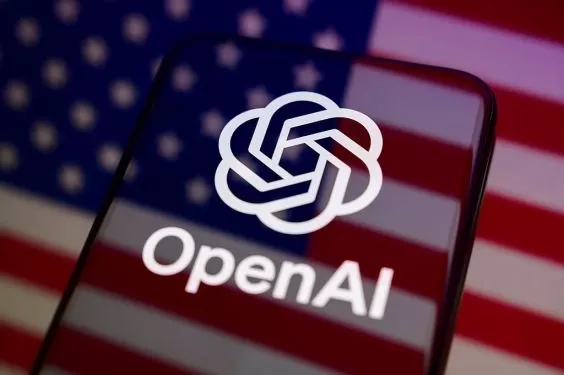
The Trump administration has submitted a 20-page brief supporting OpenAI in a copyright lawsuit filed by The New York Times, defending the company’s practice of using unlicensed copyrighted material to train its large language models.
“The United States has a strong interest in continuing to develop a robust and competitive
artificial intelligence industry that sets the standard for the practice and procedure of AI use
globally… As such, it is critical for the United States to ‘retain global leadership in artificial intelligence,’” the brief states, citing an executive order signed by President Donald Trump last year.
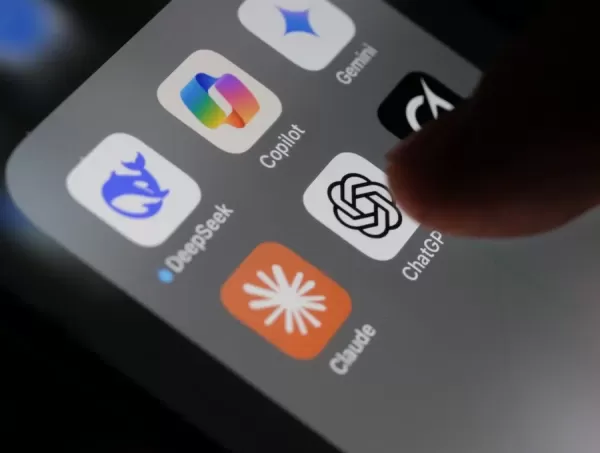
Large language models powering chatbots such as ChatGPT, Claude, and Gemini are trained on vast databases of published works, including copyrighted books, articles, and other media. AI companies have incorporated these materials into their training data without obtaining permission. In this case, The New York Times and other publishers argue that such unauthorized use constitutes copyright infringement.
The question of whether copyrighted material can be used to train AI is complex, sparking extensive legal debate. Discussions frequently focus on fair use, a provision of copyright law that permits certain uses of copyrighted works without permission. The current legal dispute centers on whether AI companies’ use of copyrighted works is sufficiently “transformative” to qualify as fair use.
“Constraining LLM development under a misunderstanding of fair use doctrine would thwart such creative and scientific progress while hindering American prosperity and economic mobility,” the brief argues.
Recent legal cases involving AI training and copyright infringement have generally favored AI companies. Last year, Judge William Alsup ordered Anthropic to pay a $1.5 billion settlement to a group of writers whose works were used to train the company’s AI models; however, Anthropic was not penalized for its AI training practices. Instead, the company was fined for using illegal shadow libraries to access the books used for training.
“Like any reader aspiring to be a writer, Anthropic’s LLMs trained upon works not to race ahead and replicate or supplant them — but to turn a hard corner and create something different,” Judge Alsup wrote, comparing the LLM’s training process to a human reading a book.
This new brief from the Trump administration does not constitute a ruling, as the case is being heard in the U.S. District Court for the Southern District of New York, which has jurisdiction over the matter. Nevertheless, the administration’s intervention may still carry significant weight.
Related article
 Microsoft exec calls AI data scraping 'biggest theft of labor in history,' unredacted filings show
Unsealed documents from the three-year-old copyright lawsuit filed by The New York Times against OpenAI and Microsoft reveal an admission that AI scraping constitutes theft and poses a severe threat to media outlets.According to the lawsuit, a senior
OpenAI GPT-6 Halves Token Costs Across Benchmarks as Sol and Luna Join
According to Artificial Analysis, GPT-6 Sol (max) ranks as the top model for intelligence, priced at $48. Image credit: Getty ImagesAfter OpenAI released GPT-6 Sol and Luna, Matt Weaver, Head of Solutions Engineering, explained to AI Magazine how the
The AI graveyard: A running list of projects and startups that didn’t make it
Relay, an AI-driven workflow automation platform positioned as a Zapier alternative, ceased operations on Monday. The service enabled users to automate email and task workflows via AI agents, but as OpenAI, Google, and other major platforms integrate
Related Special Topic Recommendations
Productivity
Microsoft exec calls AI data scraping 'biggest theft of labor in history,' unredacted filings show
Unsealed documents from the three-year-old copyright lawsuit filed by The New York Times against OpenAI and Microsoft reveal an admission that AI scraping constitutes theft and poses a severe threat to media outlets.According to the lawsuit, a senior
OpenAI GPT-6 Halves Token Costs Across Benchmarks as Sol and Luna Join
According to Artificial Analysis, GPT-6 Sol (max) ranks as the top model for intelligence, priced at $48. Image credit: Getty ImagesAfter OpenAI released GPT-6 Sol and Luna, Matt Weaver, Head of Solutions Engineering, explained to AI Magazine how the
The AI graveyard: A running list of projects and startups that didn’t make it
Relay, an AI-driven workflow automation platform positioned as a Zapier alternative, ceased operations on Monday. The service enabled users to automate email and task workflows via AI agents, but as OpenAI, Google, and other major platforms integrate
Related Special Topic Recommendations
Productivity
 Top AI Daily Planner Apps: Build Realistic Schedules for Deep Work
2026 Latest Top-Rated AI Daily Planner Apps make creating realistic deep work schedules effortless. This curated list features powerful, game-changing tools that go through real-world tests to ensure accuracy and effectiveness. You’ll find a free vs paid comparison along with detailed rankings based on usability and results. XIX.AI is part of this trusted collection. Explore now to discover your perfect tool and unlock your AI edge for staying focused and productive every day.
 11 tools
 xix.ai
Data Analysis
Best AI Chart Builder Tools for Fast Reporting
xix.ai
Data Analysis
Best AI Chart Builder Tools for Fast Reporting
2026 Latest Best Top-rated AI Chart Builder Tools for Fast Reporting are here on XIX.AI! This curated list features powerful game-changing tools that deliver accurate professional charts with just a few clicks, helping you boost writing efficiency and streamline content creation. Get a free vs paid comparison along with real-world tests and detailed rankings to find the must-try solution for your needs. Explore now to unlock your AI edge!
9 tools
xix.ai
chatbot
AI Live Chat Routing Tools for Ecommerce Queues, VIP Buyers, and Return Requests
2026 Latest Best Top-rated AI Live Chat Routing Tools for Ecommerce Queues, VIP Buyers, and Return Requests. This curated list features powerful game-changing solutions that boost productivity dramatically through real-world tests. It includes a free vs paid comparison along with detailed rankings to help you find the perfect fit. XIX.AI stands out as a trusted provider in this space. Explore now to Unlock your AI edge!
9 tools
xix.ai
writing
Best AI Editing Tools for ESL Writers: Improve Tone, Grammar, and Flow
2026 Latest Best Top-Rated AI Editing Tools for ESL Writers are here on XIX.AI! This curated list features powerful game-changing tools that go through real-world tests to ensure accuracy. You can find a free vs paid comparison alongside detailed rankings to help you pick the must-try solution that boosts your writing tone, grammar, and flow perfectly. Explore now to Unlock your AI edge!
9 tools
xix.ai
Software Development
Best AI Bug Triage Tools for Engineering Teams
2026 Latest Best Top-Rated AI Bug Triage Tools for Engineering Teams! XIX.AI has curated a powerful, game-changing collection of must-try tools that go through rigorous real-world tests to deliver accurate issue analysis and efficient resolution. Get a free vs paid comparison along with detailed rankings to help you find the perfect solution that boosts your team’s productivity significantly. Explore now to unlock your AI edge!
9 tools
xix.ai
Image editing
Best AI Portrait Enhancers: Improve Lighting, Skin Tone, and Sharpness
2026 Latest Best Top-rated AI Portrait Enhancers curated for ultimate image quality. These powerful tools deliver game-changing results by boosting lighting, skin tone, and sharpness effortlessly, perfect for creators needing to enhance photos quickly. XIX.AI provides a free vs paid comparison along with real-world tests and weekly updated rankings. Discover your perfect tool to unlock your AI edge today. Explore now!
7 tools
xix.ai

 Comments (0)
0/500
Comments (0)
0/500
The Trump administration has submitted a 20-page brief supporting OpenAI in a copyright lawsuit filed by The New York Times, defending the company’s practice of using unlicensed copyrighted material to train its large language models.
“The United States has a strong interest in continuing to develop a robust and competitive
artificial intelligence industry that sets the standard for the practice and procedure of AI use
globally… As such, it is critical for the United States to ‘retain global leadership in artificial intelligence,’” the brief states, citing an executive order signed by President Donald Trump last year.
Large language models powering chatbots such as ChatGPT, Claude, and Gemini are trained on vast databases of published works, including copyrighted books, articles, and other media. AI companies have incorporated these materials into their training data without obtaining permission. In this case, The New York Times and other publishers argue that such unauthorized use constitutes copyright infringement.
The question of whether copyrighted material can be used to train AI is complex, sparking extensive legal debate. Discussions frequently focus on fair use, a provision of copyright law that permits certain uses of copyrighted works without permission. The current legal dispute centers on whether AI companies’ use of copyrighted works is sufficiently “transformative” to qualify as fair use.
“Constraining LLM development under a misunderstanding of fair use doctrine would thwart such creative and scientific progress while hindering American prosperity and economic mobility,” the brief argues.
Recent legal cases involving AI training and copyright infringement have generally favored AI companies. Last year, Judge William Alsup ordered Anthropic to pay a $1.5 billion settlement to a group of writers whose works were used to train the company’s AI models; however, Anthropic was not penalized for its AI training practices. Instead, the company was fined for using illegal shadow libraries to access the books used for training.
“Like any reader aspiring to be a writer, Anthropic’s LLMs trained upon works not to race ahead and replicate or supplant them — but to turn a hard corner and create something different,” Judge Alsup wrote, comparing the LLM’s training process to a human reading a book.
This new brief from the Trump administration does not constitute a ruling, as the case is being heard in the U.S. District Court for the Southern District of New York, which has jurisdiction over the matter. Nevertheless, the administration’s intervention may still carry significant weight.








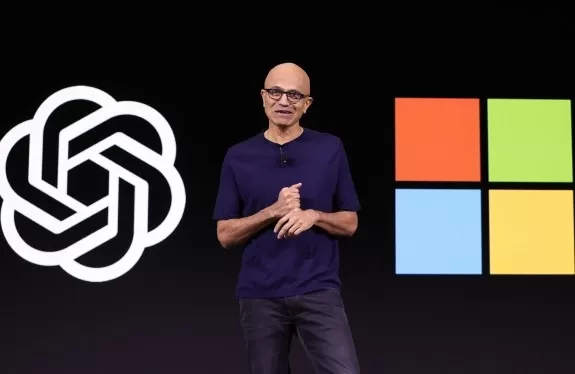 Microsoft exec calls AI data scraping 'biggest theft of labor in history,' unredacted filings show
Unsealed documents from the three-year-old copyright lawsuit filed by The New York Times against OpenAI and Microsoft reveal an admission that AI scraping constitutes theft and poses a severe threat to media outlets.According to the lawsuit, a senior
Microsoft exec calls AI data scraping 'biggest theft of labor in history,' unredacted filings show
Unsealed documents from the three-year-old copyright lawsuit filed by The New York Times against OpenAI and Microsoft reveal an admission that AI scraping constitutes theft and poses a severe threat to media outlets.According to the lawsuit, a senior
 OpenAI GPT-6 Halves Token Costs Across Benchmarks as Sol and Luna Join
According to Artificial Analysis, GPT-6 Sol (max) ranks as the top model for intelligence, priced at $48. Image credit: Getty ImagesAfter OpenAI released GPT-6 Sol and Luna, Matt Weaver, Head of Solutions Engineering, explained to AI Magazine how the
OpenAI GPT-6 Halves Token Costs Across Benchmarks as Sol and Luna Join
According to Artificial Analysis, GPT-6 Sol (max) ranks as the top model for intelligence, priced at $48. Image credit: Getty ImagesAfter OpenAI released GPT-6 Sol and Luna, Matt Weaver, Head of Solutions Engineering, explained to AI Magazine how the
 The AI graveyard: A running list of projects and startups that didn’t make it
Relay, an AI-driven workflow automation platform positioned as a Zapier alternative, ceased operations on Monday. The service enabled users to automate email and task workflows via AI agents, but as OpenAI, Google, and other major platforms integrate
The AI graveyard: A running list of projects and startups that didn’t make it
Relay, an AI-driven workflow automation platform positioned as a Zapier alternative, ceased operations on Monday. The service enabled users to automate email and task workflows via AI agents, but as OpenAI, Google, and other major platforms integrate

2026 Latest Top-Rated AI Daily Planner Apps make creating realistic deep work schedules effortless. This curated list features powerful, game-changing tools that go through real-world tests to ensure accuracy and effectiveness. You’ll find a free vs paid comparison along with detailed rankings based on usability and results. XIX.AI is part of this trusted collection. Explore now to discover your perfect tool and unlock your AI edge for staying focused and productive every day.
11 tools
xix.ai

2026 Latest Best Top-rated AI Chart Builder Tools for Fast Reporting are here on XIX.AI! This curated list features powerful game-changing tools that deliver accurate professional charts with just a few clicks, helping you boost writing efficiency and streamline content creation. Get a free vs paid comparison along with real-world tests and detailed rankings to find the must-try solution for your needs. Explore now to unlock your AI edge!
9 tools
xix.ai

2026 Latest Best Top-rated AI Live Chat Routing Tools for Ecommerce Queues, VIP Buyers, and Return Requests. This curated list features powerful game-changing solutions that boost productivity dramatically through real-world tests. It includes a free vs paid comparison along with detailed rankings to help you find the perfect fit. XIX.AI stands out as a trusted provider in this space. Explore now to Unlock your AI edge!
9 tools
xix.ai
2026 Latest Best Top-Rated AI Editing Tools for ESL Writers are here on XIX.AI! This curated list features powerful game-changing tools that go through real-world tests to ensure accuracy. You can find a free vs paid comparison alongside detailed rankings to help you pick the must-try solution that boosts your writing tone, grammar, and flow perfectly. Explore now to Unlock your AI edge!
9 tools
xix.ai

2026 Latest Best Top-Rated AI Bug Triage Tools for Engineering Teams! XIX.AI has curated a powerful, game-changing collection of must-try tools that go through rigorous real-world tests to deliver accurate issue analysis and efficient resolution. Get a free vs paid comparison along with detailed rankings to help you find the perfect solution that boosts your team’s productivity significantly. Explore now to unlock your AI edge!
9 tools
xix.ai

2026 Latest Best Top-rated AI Portrait Enhancers curated for ultimate image quality. These powerful tools deliver game-changing results by boosting lighting, skin tone, and sharpness effortlessly, perfect for creators needing to enhance photos quickly. XIX.AI provides a free vs paid comparison along with real-world tests and weekly updated rankings. Discover your perfect tool to unlock your AI edge today. Explore now!
7 tools
xix.ai












