


 Home
HomeSynology Tightens Restrictions on Third-Party NAS Hard Drives
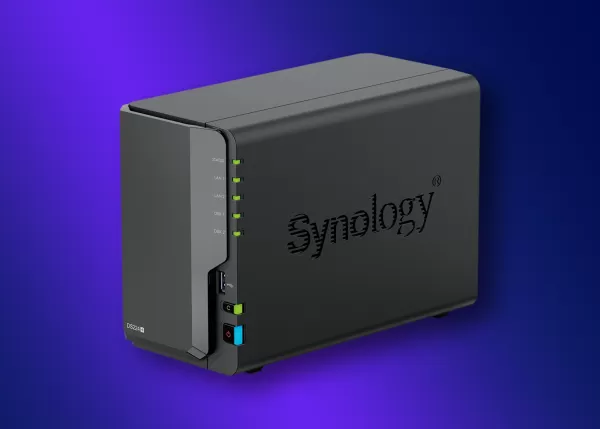
Synology, a well-known name in the world of network attached storage (NAS), has announced some significant changes coming to its future devices. According to a statement given to *Ars Technica*, the company is set to introduce new restrictions on the use of third-party hard drives in its upcoming NAS models. This move could make it more challenging for users to utilize non-Synology drives for common tasks such as backing up household computers or running local media servers. However, there's a silver lining for current Synology NAS owners: these changes won't impact your existing devices.
In an EU press release, Synology specified that "starting with Plus Series models released in 2025," only drives that are either Synology-branded or certified by the company will provide access to the full suite of features and support. *Ars* reports that Synology will update its compatibility lists to clearly indicate which third-party drives have been certified.
What Does This Mean for Users?
Without Synology-approved drives, users might find themselves unable to perform essential functions like pooling storage across multiple disks or utilizing the company's drive lifespan analysis tools. It's worth noting that these restrictions won't apply to Synology's J- and Value-series devices, nor will they affect consumer-grade Synology Plus devices released in 2024 or earlier. Additionally, hard drives transferred from existing NAS systems to this year's models will remain unaffected, as per the company's press release.
Why the Change?
A Synology spokesperson explained to *Ars* that the decision stems from "extensive internal testing," which has shown that drives subjected to a rigorous validation process are less likely to fail and cause ongoing compatibility issues when used with Synology systems. The company's press release echoes this sentiment, stating that the new restrictions aim to "reduce compatibility issues and increase system reliability and performance." Synology did not immediately respond to *The Verge*'s request for further comment.
While these restrictions might be frustrating, it's worth acknowledging that Synology is implementing them in a less harsh manner than, say, a printer company that might block third-party ink through a software update. Still, the reality remains that future Synology NAS device owners will have fewer options—and potentially higher costs—when it comes to choosing the hard drives they'll use.
Related article
 Microsoft, Azure and AI Tech Combat California Wildfire Risks
Microsoft invests in AI-driven wildfire detection, with Juan Lavista Ferres, CVP and Chief Data Scientist, discussing strategies to mitigate environmental damage.According to NASA, climate change impacts everyone on Earth, manifesting as rising tempe
Microsoft CEO Slams AI Labs Over Distillation
Satya Nadella, Microsoft’s CEO, calls out AI labs for hypocrisy regarding distillation criticism, a remark widely interpreted as targeting Anthropic. Credit: Getty ImagesMicrosoft CEO Satya Nadella challenges AI developers for limiting model distilla
Meta Challenges AWS and Google Cloud in Cloud Computing
Mark Zuckerberg, CEO of Meta. Image credit: Getty ImagesMark Zuckerberg confirms that selling computing capacity is an option as Meta Compute prepares to enter the cloud market, competing with Amazon and Google.Meta has announced plans to launch a cl
Related Special Topic Recommendations
Data Analysis
Microsoft, Azure and AI Tech Combat California Wildfire Risks
Microsoft invests in AI-driven wildfire detection, with Juan Lavista Ferres, CVP and Chief Data Scientist, discussing strategies to mitigate environmental damage.According to NASA, climate change impacts everyone on Earth, manifesting as rising tempe
Microsoft CEO Slams AI Labs Over Distillation
Satya Nadella, Microsoft’s CEO, calls out AI labs for hypocrisy regarding distillation criticism, a remark widely interpreted as targeting Anthropic. Credit: Getty ImagesMicrosoft CEO Satya Nadella challenges AI developers for limiting model distilla
Meta Challenges AWS and Google Cloud in Cloud Computing
Mark Zuckerberg, CEO of Meta. Image credit: Getty ImagesMark Zuckerberg confirms that selling computing capacity is an option as Meta Compute prepares to enter the cloud market, competing with Amazon and Google.Meta has announced plans to launch a cl
Related Special Topic Recommendations
Data Analysis
 Best AI Anomaly Detection Tools for KPI Monitoring across SaaS and Ecommerce Teams
2026 Latest Best Top-rated AI Anomaly Detection Tools for KPI Monitoring in SaaS and Ecommerce teams! XIX.AI has curated a powerful, game-changing collection based on rigorous real-world tests and weekly updated rankings. You’ll find detailed free vs paid comparison insights to help you identify the must-try solution that boosts productivity and unlocks your AI edge. Explore now!
 10 tools
 xix.ai
writing
Best AI Outline Generators for Long-Form SEO Articles
xix.ai
writing
Best AI Outline Generators for Long-Form SEO Articles
2026 Latest Best Top-Rated AI Outline Generators for Long-Form SEO Articles, meticulously curated by XIX.AI. These powerful tools offer game-changing assistance in creating high-quality content quickly, boosting writing efficiency significantly. Get a free vs paid comparison along with real-world tests and detailed rankings to help you find the must-try option that suits your needs. Explore now to unlock your AI edge.
8 tools
xix.ai
Education and Learning
AI Study Tools for Homework and Exam Prep
2026 Latest Best AI Study Tools for Homework and Exam Prep! XIX.AI curates a top-rated list of powerful, game-changing tools that help students boost productivity, streamline homework completion, and ace exams through real-world tests. Get a free vs paid comparison, detailed rankings, and must-try options to unlock your AI edge. Explore now!
10 tools
xix.ai
Music composition
AI Vocal Demo Tools for Songwriters, Hooks, Toplines, and Multilingual Draft Sessions
2026 Latest Best AI Vocal Demo Tools for Songwriters, Hook Creators, and Multi-Language Content Teams! XIX.AI has curated a top-rated list of powerful game-changing tools that go through rigorous real-world tests. You’ll find detailed free vs paid comparison data, comprehensive rankings, and must-try options to help you boost writing efficiency and unlock your creative potential. Explore now to discover your perfect tool for all your content needs!
9 tools
xix.ai
Business
Best AI Competitive Research Tools for Small Businesses
2026 Latest Best Top-rated AI Competitive Research Tools for Small Businesses! XIX.AI has curated a highly powerful game-changing collection, updated weekly with rigorous real-world tests and detailed rankings. You can find a comprehensive free vs paid comparison to help you identify the must-try tools that boost your productivity and give you a competitive edge. Explore now to discover your perfect tool!
9 tools
xix.ai
Image editing
Photoshop AI Retouch Tools for Ecommerce Apparel, Skin Cleanup, and Color Consistency
2026 Latest Best Photoshop AI retouch tools for ecommerce apparel, skin cleanup, and color consistency! This top-rated curated list features powerful game-changing solutions that help you boost writing efficiency, streamline content creation, and achieve perfect visual results effortlessly. Each tool has undergone real-world tests through weekly updated rankings, complete with free vs paid comparison details. Backed by XIX.AI, it’s the must-try guide for anyone aiming to unlock your AI edge. Explore now!
10 tools
xix.ai

 Comments (16)
0/500
Comments (16)
0/500
![KevinAnderson]()
Synology's move to restrict third-party drives feels like a sneaky way to lock users into their ecosystem. 😕 I get they want control, but this could alienate DIY fans who love NAS for its flexibility. Anyone else worried about the cost creep?
![KeithMoore]()
Synology's move to restrict third-party drives feels like a cash grab. Locking users into their ecosystem is frustrating—freedom to choose hardware matters! 😒
![MarkWilson]()
Synology's move to restrict third-party drives feels like a walled garden approach—kinda frustrating for DIY enthusiasts like me! 😕 Curious how this impacts performance vs. their branded drives.
![DouglasMartínez]()
Wow, Synology locking down third-party drives? Kinda feels like they're trying to trap us into their ecosystem. Hope this doesn’t jack up prices! 😕
![JonathanRamirez]()
Synology's move to restrict third-party drives feels like a cash grab. Locking users into their ecosystem is such a bummer—why not let us choose our own hardware? 😕
![JohnHernández]()
Synology's move to lock down third-party drives feels like a cash grab. Why limit user choice when NAS is all about flexibility? 😒 I get they want reliability, but this could push folks to competitors.
Synology, a well-known name in the world of network attached storage (NAS), has announced some significant changes coming to its future devices. According to a statement given to *Ars Technica*, the company is set to introduce new restrictions on the use of third-party hard drives in its upcoming NAS models. This move could make it more challenging for users to utilize non-Synology drives for common tasks such as backing up household computers or running local media servers. However, there's a silver lining for current Synology NAS owners: these changes won't impact your existing devices.
In an EU press release, Synology specified that "starting with Plus Series models released in 2025," only drives that are either Synology-branded or certified by the company will provide access to the full suite of features and support. *Ars* reports that Synology will update its compatibility lists to clearly indicate which third-party drives have been certified.
What Does This Mean for Users?
Without Synology-approved drives, users might find themselves unable to perform essential functions like pooling storage across multiple disks or utilizing the company's drive lifespan analysis tools. It's worth noting that these restrictions won't apply to Synology's J- and Value-series devices, nor will they affect consumer-grade Synology Plus devices released in 2024 or earlier. Additionally, hard drives transferred from existing NAS systems to this year's models will remain unaffected, as per the company's press release.
Why the Change?
A Synology spokesperson explained to *Ars* that the decision stems from "extensive internal testing," which has shown that drives subjected to a rigorous validation process are less likely to fail and cause ongoing compatibility issues when used with Synology systems. The company's press release echoes this sentiment, stating that the new restrictions aim to "reduce compatibility issues and increase system reliability and performance." Synology did not immediately respond to *The Verge*'s request for further comment.
While these restrictions might be frustrating, it's worth acknowledging that Synology is implementing them in a less harsh manner than, say, a printer company that might block third-party ink through a software update. Still, the reality remains that future Synology NAS device owners will have fewer options—and potentially higher costs—when it comes to choosing the hard drives they'll use.








 Microsoft, Azure and AI Tech Combat California Wildfire Risks
Microsoft invests in AI-driven wildfire detection, with Juan Lavista Ferres, CVP and Chief Data Scientist, discussing strategies to mitigate environmental damage.According to NASA, climate change impacts everyone on Earth, manifesting as rising tempe
Microsoft, Azure and AI Tech Combat California Wildfire Risks
Microsoft invests in AI-driven wildfire detection, with Juan Lavista Ferres, CVP and Chief Data Scientist, discussing strategies to mitigate environmental damage.According to NASA, climate change impacts everyone on Earth, manifesting as rising tempe
 Microsoft CEO Slams AI Labs Over Distillation
Satya Nadella, Microsoft’s CEO, calls out AI labs for hypocrisy regarding distillation criticism, a remark widely interpreted as targeting Anthropic. Credit: Getty ImagesMicrosoft CEO Satya Nadella challenges AI developers for limiting model distilla
Microsoft CEO Slams AI Labs Over Distillation
Satya Nadella, Microsoft’s CEO, calls out AI labs for hypocrisy regarding distillation criticism, a remark widely interpreted as targeting Anthropic. Credit: Getty ImagesMicrosoft CEO Satya Nadella challenges AI developers for limiting model distilla
 Meta Challenges AWS and Google Cloud in Cloud Computing
Mark Zuckerberg, CEO of Meta. Image credit: Getty ImagesMark Zuckerberg confirms that selling computing capacity is an option as Meta Compute prepares to enter the cloud market, competing with Amazon and Google.Meta has announced plans to launch a cl
Meta Challenges AWS and Google Cloud in Cloud Computing
Mark Zuckerberg, CEO of Meta. Image credit: Getty ImagesMark Zuckerberg confirms that selling computing capacity is an option as Meta Compute prepares to enter the cloud market, competing with Amazon and Google.Meta has announced plans to launch a cl

2026 Latest Best Top-rated AI Anomaly Detection Tools for KPI Monitoring in SaaS and Ecommerce teams! XIX.AI has curated a powerful, game-changing collection based on rigorous real-world tests and weekly updated rankings. You’ll find detailed free vs paid comparison insights to help you identify the must-try solution that boosts productivity and unlocks your AI edge. Explore now!
10 tools
xix.ai

2026 Latest Best Top-Rated AI Outline Generators for Long-Form SEO Articles, meticulously curated by XIX.AI. These powerful tools offer game-changing assistance in creating high-quality content quickly, boosting writing efficiency significantly. Get a free vs paid comparison along with real-world tests and detailed rankings to help you find the must-try option that suits your needs. Explore now to unlock your AI edge.
8 tools
xix.ai

2026 Latest Best AI Study Tools for Homework and Exam Prep! XIX.AI curates a top-rated list of powerful, game-changing tools that help students boost productivity, streamline homework completion, and ace exams through real-world tests. Get a free vs paid comparison, detailed rankings, and must-try options to unlock your AI edge. Explore now!
10 tools
xix.ai

2026 Latest Best AI Vocal Demo Tools for Songwriters, Hook Creators, and Multi-Language Content Teams! XIX.AI has curated a top-rated list of powerful game-changing tools that go through rigorous real-world tests. You’ll find detailed free vs paid comparison data, comprehensive rankings, and must-try options to help you boost writing efficiency and unlock your creative potential. Explore now to discover your perfect tool for all your content needs!
9 tools
xix.ai

2026 Latest Best Top-rated AI Competitive Research Tools for Small Businesses! XIX.AI has curated a highly powerful game-changing collection, updated weekly with rigorous real-world tests and detailed rankings. You can find a comprehensive free vs paid comparison to help you identify the must-try tools that boost your productivity and give you a competitive edge. Explore now to discover your perfect tool!
9 tools
xix.ai

2026 Latest Best Photoshop AI retouch tools for ecommerce apparel, skin cleanup, and color consistency! This top-rated curated list features powerful game-changing solutions that help you boost writing efficiency, streamline content creation, and achieve perfect visual results effortlessly. Each tool has undergone real-world tests through weekly updated rankings, complete with free vs paid comparison details. Backed by XIX.AI, it’s the must-try guide for anyone aiming to unlock your AI edge. Explore now!
10 tools
xix.ai

Synology's move to restrict third-party drives feels like a sneaky way to lock users into their ecosystem. 😕 I get they want control, but this could alienate DIY fans who love NAS for its flexibility. Anyone else worried about the cost creep?
Synology's move to restrict third-party drives feels like a cash grab. Locking users into their ecosystem is frustrating—freedom to choose hardware matters! 😒
Synology's move to restrict third-party drives feels like a walled garden approach—kinda frustrating for DIY enthusiasts like me! 😕 Curious how this impacts performance vs. their branded drives.
Wow, Synology locking down third-party drives? Kinda feels like they're trying to trap us into their ecosystem. Hope this doesn’t jack up prices! 😕
Synology's move to restrict third-party drives feels like a cash grab. Locking users into their ecosystem is such a bummer—why not let us choose our own hardware? 😕
Synology's move to lock down third-party drives feels like a cash grab. Why limit user choice when NAS is all about flexibility? 😒 I get they want reliability, but this could push folks to competitors.












