


 Home
HomeSoftBank and Microsoft partner on AI-powered call center to ease Japan labor shortage
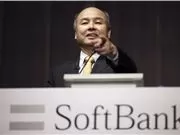
Confronted with persistent labor shortages and rising operational costs in Japan's call center industry, SoftBank Corp. has partnered with Microsoft to build a next-generation intelligent customer service platform powered by Microsoft Azure AI (including Azure OpenAI Service and the AI Foundry model stack), accelerating digital and intelligent transformation across the customer service sector.
1. Strategic Drivers: Moving from "Support" to "Autonomy"
SoftBank's transformation aims to create a customer service system that matches human-grade service standards, offers zero wait times, and operates 24/7. Its technical roadmap unfolds in two clear phases:
First Stage (Human-Machine Collaboration): SoftBank has already deployed an AI-assisted customer service model. Acting as a co-pilot, AI optimizes workflows in real time, handles repetitive queries, and supports human agents, significantly reducing the time to first response for customers.
Second Stage (Full Automation): SoftBank is gradually moving toward a fully automated call center, where AI agents (Agentic AI) directly manage complex, end-to-end business processes. This approach aims to deliver true scalability and automation, solving the operational bottlenecks that Japan's service economy faces under labor constraints.
2. Technical Core: Full-Stack Integration of Azure AI
SoftBank's decision to collaborate closely with Microsoft hinges on leveraging Microsoft's full-stack strengths in large language models and enterprise infrastructure:
Core Architecture: A scalable AI pipeline built on Azure OpenAI Service, Azure App Service, and Azure SQL Database.
Intelligent Hub: Uses the Azure AI Foundry model stack to ensure the system handles high-concurrency voice and text interactions while maintaining enterprise-grade security and compliance.
Business Integration: The system goes beyond conversations, achieving precise understanding of customer needs and rapid decision-making through deep integration with CRM and internal business data.
3. Industry Insights: Building a Replicable "Service Modernization" Model
SoftBank's approach has become an important benchmark for the global telecom and service industries:
Industry Standardization: SoftBank plans to commercialize this entire AI customer service solution as a standard product for the broader industry, helping other companies facing similar labor challenges achieve service transformation.
Collaboration of AI Agents: This partnership confirms a core industry trend for 2026 — AI is shifting from a "passive retrieval tool" to an "intelligent agent capable of autonomously planning and executing complex tasks."
Addressing Operational Pressure: In Japan's highly competitive telecom market, this attempt to restructure service architecture through technology has become a necessary step to maintain business continuity and profit margins.
Related article
 U.S. Stocks Hit Historic Milestone as AI and Aerospace Giants Prepare for Trillion-Dollar Debut
Elon Musk, Sam Altman, and Dario Amodei, three titans of the technology sector, are advancing toward initial public offerings for their respective ventures. With SpaceX, OpenAI, and Anthropic—three industry behemoths nearing trillion-dollar valuation
Swedish AI Startup Lovable Eyes $13.2 Billion Valuation After Major Funding Round
As AI-driven coding tools gain traction, Swedish startup Lovable has secured a major funding round. The company aims to raise $3 billion, potentially boosting its valuation to $13.2 billion—double the $6.6 billion recorded last December. Menlo Ventur
Google Tests Remy AI Agent for Gemini as Focus Shifts to User Control
According to Business Insider, Google is testing Remy, a new AI personal agent for Gemini. This tool aims to execute tasks on behalf of users, streamlining both professional workflows and daily routines.Currently, Remy is undergoing testing in an int
Related Special Topic Recommendations
writing
U.S. Stocks Hit Historic Milestone as AI and Aerospace Giants Prepare for Trillion-Dollar Debut
Elon Musk, Sam Altman, and Dario Amodei, three titans of the technology sector, are advancing toward initial public offerings for their respective ventures. With SpaceX, OpenAI, and Anthropic—three industry behemoths nearing trillion-dollar valuation
Swedish AI Startup Lovable Eyes $13.2 Billion Valuation After Major Funding Round
As AI-driven coding tools gain traction, Swedish startup Lovable has secured a major funding round. The company aims to raise $3 billion, potentially boosting its valuation to $13.2 billion—double the $6.6 billion recorded last December. Menlo Ventur
Google Tests Remy AI Agent for Gemini as Focus Shifts to User Control
According to Business Insider, Google is testing Remy, a new AI personal agent for Gemini. This tool aims to execute tasks on behalf of users, streamlining both professional workflows and daily routines.Currently, Remy is undergoing testing in an int
Related Special Topic Recommendations
writing
 Best AI Outline Generators for Long-Form SEO Articles
2026 Latest Best Top-Rated AI Outline Generators for Long-Form SEO Articles, meticulously curated by XIX.AI. These powerful tools offer game-changing assistance in creating high-quality content quickly, boosting writing efficiency significantly. Get a free vs paid comparison along with real-world tests and detailed rankings to help you find the must-try option that suits your needs. Explore now to unlock your AI edge.
 8 tools
 xix.ai
Education and Learning
AI Study Tools for Homework and Exam Prep
xix.ai
Education and Learning
AI Study Tools for Homework and Exam Prep
2026 Latest Best AI Study Tools for Homework and Exam Prep! XIX.AI curates a top-rated list of powerful, game-changing tools that help students boost productivity, streamline homework completion, and ace exams through real-world tests. Get a free vs paid comparison, detailed rankings, and must-try options to unlock your AI edge. Explore now!
10 tools
xix.ai
Music composition
AI Vocal Demo Tools for Songwriters, Hooks, Toplines, and Multilingual Draft Sessions
2026 Latest Best AI Vocal Demo Tools for Songwriters, Hook Creators, and Multi-Language Content Teams! XIX.AI has curated a top-rated list of powerful game-changing tools that go through rigorous real-world tests. You’ll find detailed free vs paid comparison data, comprehensive rankings, and must-try options to help you boost writing efficiency and unlock your creative potential. Explore now to discover your perfect tool for all your content needs!
9 tools
xix.ai
Business
Best AI Competitive Research Tools for Small Businesses
2026 Latest Best Top-rated AI Competitive Research Tools for Small Businesses! XIX.AI has curated a highly powerful game-changing collection, updated weekly with rigorous real-world tests and detailed rankings. You can find a comprehensive free vs paid comparison to help you identify the must-try tools that boost your productivity and give you a competitive edge. Explore now to discover your perfect tool!
9 tools
xix.ai
Image editing
Photoshop AI Retouch Tools for Ecommerce Apparel, Skin Cleanup, and Color Consistency
2026 Latest Best Photoshop AI retouch tools for ecommerce apparel, skin cleanup, and color consistency! This top-rated curated list features powerful game-changing solutions that help you boost writing efficiency, streamline content creation, and achieve perfect visual results effortlessly. Each tool has undergone real-world tests through weekly updated rankings, complete with free vs paid comparison details. Backed by XIX.AI, it’s the must-try guide for anyone aiming to unlock your AI edge. Explore now!
10 tools
xix.ai
Prompt
Best AI Prompt Libraries for ChatGPT Workflows
2026 Latest Best Top-Rated AI Prompt Libraries for optimizing all types of ChatGPT workflows. XIX.AI has curated a powerful, game-changing collection that goes through rigorous real-world tests to ensure top performance. You can find detailed free vs paid comparisons and expert rankings to help you choose the must-try tools that boost your productivity and unlock your AI edge. Explore now!
11 tools
xix.ai

 Comments (1)
0/500
Comments (1)
0/500
![TimothyHernández]()
I was totally surprised to hear SoftBank and Microsoft teamed up for this AI call center solution — it seems like a real game-changer for Japan’s struggling service industry. I wonder if other companies will follow suit to cut costs without sacrificing quality.
Confronted with persistent labor shortages and rising operational costs in Japan's call center industry, SoftBank Corp. has partnered with Microsoft to build a next-generation intelligent customer service platform powered by Microsoft Azure AI (including Azure OpenAI Service and the AI Foundry model stack), accelerating digital and intelligent transformation across the customer service sector.
1. Strategic Drivers: Moving from "Support" to "Autonomy"
SoftBank's transformation aims to create a customer service system that matches human-grade service standards, offers zero wait times, and operates 24/7. Its technical roadmap unfolds in two clear phases:
First Stage (Human-Machine Collaboration): SoftBank has already deployed an AI-assisted customer service model. Acting as a co-pilot, AI optimizes workflows in real time, handles repetitive queries, and supports human agents, significantly reducing the time to first response for customers.
Second Stage (Full Automation): SoftBank is gradually moving toward a fully automated call center, where AI agents (Agentic AI) directly manage complex, end-to-end business processes. This approach aims to deliver true scalability and automation, solving the operational bottlenecks that Japan's service economy faces under labor constraints.
2. Technical Core: Full-Stack Integration of Azure AI
SoftBank's decision to collaborate closely with Microsoft hinges on leveraging Microsoft's full-stack strengths in large language models and enterprise infrastructure:
Core Architecture: A scalable AI pipeline built on Azure OpenAI Service, Azure App Service, and Azure SQL Database.
Intelligent Hub: Uses the Azure AI Foundry model stack to ensure the system handles high-concurrency voice and text interactions while maintaining enterprise-grade security and compliance.
Business Integration: The system goes beyond conversations, achieving precise understanding of customer needs and rapid decision-making through deep integration with CRM and internal business data.
3. Industry Insights: Building a Replicable "Service Modernization" Model
SoftBank's approach has become an important benchmark for the global telecom and service industries:
Industry Standardization: SoftBank plans to commercialize this entire AI customer service solution as a standard product for the broader industry, helping other companies facing similar labor challenges achieve service transformation.
Collaboration of AI Agents: This partnership confirms a core industry trend for 2026 — AI is shifting from a "passive retrieval tool" to an "intelligent agent capable of autonomously planning and executing complex tasks."
Addressing Operational Pressure: In Japan's highly competitive telecom market, this attempt to restructure service architecture through technology has become a necessary step to maintain business continuity and profit margins.








 U.S. Stocks Hit Historic Milestone as AI and Aerospace Giants Prepare for Trillion-Dollar Debut
Elon Musk, Sam Altman, and Dario Amodei, three titans of the technology sector, are advancing toward initial public offerings for their respective ventures. With SpaceX, OpenAI, and Anthropic—three industry behemoths nearing trillion-dollar valuation
U.S. Stocks Hit Historic Milestone as AI and Aerospace Giants Prepare for Trillion-Dollar Debut
Elon Musk, Sam Altman, and Dario Amodei, three titans of the technology sector, are advancing toward initial public offerings for their respective ventures. With SpaceX, OpenAI, and Anthropic—three industry behemoths nearing trillion-dollar valuation
 Swedish AI Startup Lovable Eyes $13.2 Billion Valuation After Major Funding Round
As AI-driven coding tools gain traction, Swedish startup Lovable has secured a major funding round. The company aims to raise $3 billion, potentially boosting its valuation to $13.2 billion—double the $6.6 billion recorded last December. Menlo Ventur
Google Tests Remy AI Agent for Gemini as Focus Shifts to User Control
According to Business Insider, Google is testing Remy, a new AI personal agent for Gemini. This tool aims to execute tasks on behalf of users, streamlining both professional workflows and daily routines.Currently, Remy is undergoing testing in an int
Swedish AI Startup Lovable Eyes $13.2 Billion Valuation After Major Funding Round
As AI-driven coding tools gain traction, Swedish startup Lovable has secured a major funding round. The company aims to raise $3 billion, potentially boosting its valuation to $13.2 billion—double the $6.6 billion recorded last December. Menlo Ventur
Google Tests Remy AI Agent for Gemini as Focus Shifts to User Control
According to Business Insider, Google is testing Remy, a new AI personal agent for Gemini. This tool aims to execute tasks on behalf of users, streamlining both professional workflows and daily routines.Currently, Remy is undergoing testing in an int

2026 Latest Best Top-Rated AI Outline Generators for Long-Form SEO Articles, meticulously curated by XIX.AI. These powerful tools offer game-changing assistance in creating high-quality content quickly, boosting writing efficiency significantly. Get a free vs paid comparison along with real-world tests and detailed rankings to help you find the must-try option that suits your needs. Explore now to unlock your AI edge.
8 tools
xix.ai

2026 Latest Best AI Study Tools for Homework and Exam Prep! XIX.AI curates a top-rated list of powerful, game-changing tools that help students boost productivity, streamline homework completion, and ace exams through real-world tests. Get a free vs paid comparison, detailed rankings, and must-try options to unlock your AI edge. Explore now!
10 tools
xix.ai

2026 Latest Best AI Vocal Demo Tools for Songwriters, Hook Creators, and Multi-Language Content Teams! XIX.AI has curated a top-rated list of powerful game-changing tools that go through rigorous real-world tests. You’ll find detailed free vs paid comparison data, comprehensive rankings, and must-try options to help you boost writing efficiency and unlock your creative potential. Explore now to discover your perfect tool for all your content needs!
9 tools
xix.ai

2026 Latest Best Top-rated AI Competitive Research Tools for Small Businesses! XIX.AI has curated a highly powerful game-changing collection, updated weekly with rigorous real-world tests and detailed rankings. You can find a comprehensive free vs paid comparison to help you identify the must-try tools that boost your productivity and give you a competitive edge. Explore now to discover your perfect tool!
9 tools
xix.ai

2026 Latest Best Photoshop AI retouch tools for ecommerce apparel, skin cleanup, and color consistency! This top-rated curated list features powerful game-changing solutions that help you boost writing efficiency, streamline content creation, and achieve perfect visual results effortlessly. Each tool has undergone real-world tests through weekly updated rankings, complete with free vs paid comparison details. Backed by XIX.AI, it’s the must-try guide for anyone aiming to unlock your AI edge. Explore now!
10 tools
xix.ai

2026 Latest Best Top-Rated AI Prompt Libraries for optimizing all types of ChatGPT workflows. XIX.AI has curated a powerful, game-changing collection that goes through rigorous real-world tests to ensure top performance. You can find detailed free vs paid comparisons and expert rankings to help you choose the must-try tools that boost your productivity and unlock your AI edge. Explore now!
11 tools
xix.ai

I was totally surprised to hear SoftBank and Microsoft teamed up for this AI call center solution — it seems like a real game-changer for Japan’s struggling service industry. I wonder if other companies will follow suit to cut costs without sacrificing quality.












