


 Home
HomeIs Robot Exploitation a Global Issue or Influenced by Culture?
A recent study published in Scientific Reports by researchers from LMU Munich and Waseda University Tokyo sheds light on how cultural attitudes influence the way people interact with artificial intelligence. The findings reveal a stark contrast between Japan and the United States, particularly in how people treat cooperative AI agents.
As autonomous technologies like self-driving cars become more integrated into our daily lives, understanding these cultural differences is crucial for their successful implementation across different societies.
Cultural Divide in Human-AI Cooperation
Dr. Jurgis Karpus, the lead researcher from LMU Munich, emphasized the importance of these findings as self-driving technology becomes a reality. "As self-driving technology becomes a reality, these everyday encounters will define how we share the road with intelligent machines," he stated.
The study is one of the first to comprehensively examine how humans from different cultures interact with artificial agents when their interests may not align. It challenges the notion that exploiting cooperative AI is a universal behavior, suggesting that cultural attitudes toward AI could lead to varying integration challenges as autonomous technologies become more common.
Research Methodology: Game Theory Reveals Behavioral Differences
The researchers used classic behavioral economics experiments, such as the Trust Game and the Prisoner's Dilemma, to compare interactions between participants from Japan and the United States with both human and AI partners. These games were designed to simulate real-life scenarios, including traffic situations, where participants had to choose between self-interest and mutual benefit.
The results showed that while American participants were significantly less cooperative with AI than with humans, Japanese participants treated both human and AI partners with similar levels of cooperation.
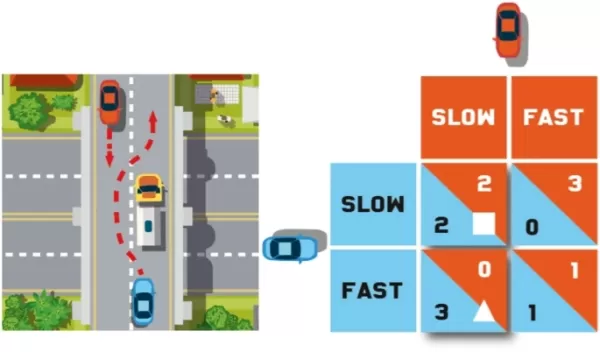 Karpus, J., Shirai, R., Verba, J.T. et al.
Guilt as a Key Factor in Cultural Differences
The study suggests that feelings of guilt play a significant role in these cultural differences. In the United States, people tend to feel remorse when exploiting another human but not when exploiting a machine. In contrast, Japanese participants reported similar levels of guilt whether they mistreated a person or an AI.
Dr. Karpus noted that Western thinking often views exploiting a robot as harmless because it doesn't have feelings, which may lead to a greater willingness to exploit machines. The study's emotional response data supported these findings, showing that Japanese participants felt more negative emotions and less positive emotions after exploiting AI compared to their American counterparts.
Animism and the Perception of Robots
The cultural and historical context in Japan, with its roots in animism and Buddhist beliefs that non-living objects can possess souls, may explain these differences. This background could lead to a more inclusive perception of robots, making Japanese participants more likely to see AI as capable of experiencing emotions and worthy of moral consideration.
Implications for Autonomous Technology Adoption
These cultural attitudes could significantly impact the adoption of autonomous technologies. Dr. Karpus suggested that Japan's respectful treatment of robots might lead to quicker adoption of technologies like autonomous taxis in Tokyo compared to Western cities.
The study also highlights potential challenges in integrating autonomous vehicles into societies where people are more likely to exploit them, which could affect their efficiency and safety.
Broader Implications for AI Development
The findings underscore the importance of considering cultural factors in the design and deployment of AI systems. Ignoring these nuances could lead to slower adoption rates and potential misuse of AI technologies in different regions.
Limitations and Future Research Directions
While the study provides valuable insights, it focused primarily on Japan and the United States. Further research across a broader range of cultures is needed to understand global variations in human-AI interaction. Additionally, the researchers suggest that field studies with actual autonomous technologies could validate these findings and that more targeted studies are needed to explore the psychological mechanisms behind these cultural differences.
"Our present findings temper the generalization of these results and show that algorithm exploitation is not a cross-cultural phenomenon," the researchers concluded.
Related article
 Khosla-backed Genesis AI Unveils Full-Stack Robotics Solution
Genesis AI, a startup that secured a $105 million seed round to develop foundational AI for robotics, has launched its inaugural model, GENE-26.5, featuring unexpectedly dexterous hands. In a demonstration video, the company highlighted various advan
How US$900m Funding Will Shape XPENG’s Robotics Vision
XPENG’s robotics division secures over US$900 million in funding, achieving a post-money valuation exceeding US$6.3 billion and accelerating the deployment of physical AI. Credit: XPENGSven De Smet, Head of Brand & Marketing at XPENG Europe, describe
Japan Launches World’s First National AI Infrastructure with NVIDIA
Japan's Ministry of Economy, Trade and Industry plans to deploy approximately 10 million AI-powered robots across 18 industries by 2040, addressing the country's growing labor shortage, according to NHK. Credit: NVIDIAThe Japanese government, along w
Related Special Topic Recommendations
SEO
Khosla-backed Genesis AI Unveils Full-Stack Robotics Solution
Genesis AI, a startup that secured a $105 million seed round to develop foundational AI for robotics, has launched its inaugural model, GENE-26.5, featuring unexpectedly dexterous hands. In a demonstration video, the company highlighted various advan
How US$900m Funding Will Shape XPENG’s Robotics Vision
XPENG’s robotics division secures over US$900 million in funding, achieving a post-money valuation exceeding US$6.3 billion and accelerating the deployment of physical AI. Credit: XPENGSven De Smet, Head of Brand & Marketing at XPENG Europe, describe
Japan Launches World’s First National AI Infrastructure with NVIDIA
Japan's Ministry of Economy, Trade and Industry plans to deploy approximately 10 million AI-powered robots across 18 industries by 2040, addressing the country's growing labor shortage, according to NHK. Credit: NVIDIAThe Japanese government, along w
Related Special Topic Recommendations
SEO
 Best AI SERP Analysis Tools for Search Strategy
2026 Latest Best Top-rated AI SERP Analysis Tools for Search Strategy are curated by XIX.AI through rigorous real-world tests and weekly updated rankings. These powerful tools help you unlock hidden optimization opportunities, boost content performance, and gain a competitive edge in search. Discover your perfect tool to elevate your search strategy today. Explore now!
 13 tools
 xix.ai
Data Analysis
Best AI Anomaly Detection Tools for KPI Monitoring across SaaS and Ecommerce Teams
xix.ai
Data Analysis
Best AI Anomaly Detection Tools for KPI Monitoring across SaaS and Ecommerce Teams
2026 Latest Best Top-rated AI Anomaly Detection Tools for KPI Monitoring in SaaS and Ecommerce teams! XIX.AI has curated a powerful, game-changing collection based on rigorous real-world tests and weekly updated rankings. You’ll find detailed free vs paid comparison insights to help you identify the must-try solution that boosts productivity and unlocks your AI edge. Explore now!
10 tools
xix.ai
writing
Best AI Outline Generators for Long-Form SEO Articles
2026 Latest Best Top-Rated AI Outline Generators for Long-Form SEO Articles, meticulously curated by XIX.AI. These powerful tools offer game-changing assistance in creating high-quality content quickly, boosting writing efficiency significantly. Get a free vs paid comparison along with real-world tests and detailed rankings to help you find the must-try option that suits your needs. Explore now to unlock your AI edge.
8 tools
xix.ai
Education and Learning
AI Study Tools for Homework and Exam Prep
2026 Latest Best AI Study Tools for Homework and Exam Prep! XIX.AI curates a top-rated list of powerful, game-changing tools that help students boost productivity, streamline homework completion, and ace exams through real-world tests. Get a free vs paid comparison, detailed rankings, and must-try options to unlock your AI edge. Explore now!
10 tools
xix.ai
Music composition
AI Vocal Demo Tools for Songwriters, Hooks, Toplines, and Multilingual Draft Sessions
2026 Latest Best AI Vocal Demo Tools for Songwriters, Hook Creators, and Multi-Language Content Teams! XIX.AI has curated a top-rated list of powerful game-changing tools that go through rigorous real-world tests. You’ll find detailed free vs paid comparison data, comprehensive rankings, and must-try options to help you boost writing efficiency and unlock your creative potential. Explore now to discover your perfect tool for all your content needs!
9 tools
xix.ai
Business
Best AI Competitive Research Tools for Small Businesses
2026 Latest Best Top-rated AI Competitive Research Tools for Small Businesses! XIX.AI has curated a highly powerful game-changing collection, updated weekly with rigorous real-world tests and detailed rankings. You can find a comprehensive free vs paid comparison to help you identify the must-try tools that boost your productivity and give you a competitive edge. Explore now to discover your perfect tool!
9 tools
xix.ai

 Comments (27)
0/500
Comments (27)
0/500
![WalterKing]()
Interessant, wie kulturelle Unterschiede unsere Sicht auf KI prägen. In Deutschland würde man vielleicht mehr über Datenschutz und Regulierung diskutieren, während es hier um 'Ausbeutung' geht. 🤔 Macht das Roboter wirklich zu einer Art 'kulturellen Spiegel'?
![ScottPerez]()
Es curioso cómo la percepción cultural influye en nuestra relación con la tecnología. Mientras en EE.UU. se habla de explotación robótica, en Japón hay una visión más integradora. ¿Será que los occidentales proyectamos nuestros propios traumas históricos en las máquinas? 😅 Esto me hace pensar en la ética detrás de los asistentes virtuales y cómo los tratamos.
![ScottPerez]()
Qué interesante estudio sobre las diferencias culturales en el trato a los robots 🧐 En Latinoamérica apenas estamos empezando a adoptar esta tecnología, pero ya veo cómo algunos países podrían malinterpretar su uso. ¿Será que terminaremos romantizando las máquinas como en Japón o explotándolas como en EE.UU.? Parece que el futuro de la ética robótica dependerá mucho de nuestra idiosincrasia...
![JeffreyMartinez]()
This article got me thinking—cultural views on AI are wild! Japan's all about harmony with robots, while the US seems more skeptical. Makes me wonder how my own culture shapes my take on AI. 🤔
![DouglasScott]()
This article really opened my eyes to how culture shapes our view of AI. Japan’s respect for robots is fascinating, but I wonder if it could lead to over-reliance. Cool study, though! 🤖
![RobertSanchez]()
Fascinating read! It's wild how Japan's all about harmony with AI, while the US seems more skeptical. Makes me wonder if cultural vibes shape our trust in robots 🤔. Could this affect global AI ethics?
A recent study published in Scientific Reports by researchers from LMU Munich and Waseda University Tokyo sheds light on how cultural attitudes influence the way people interact with artificial intelligence. The findings reveal a stark contrast between Japan and the United States, particularly in how people treat cooperative AI agents.
As autonomous technologies like self-driving cars become more integrated into our daily lives, understanding these cultural differences is crucial for their successful implementation across different societies.
Cultural Divide in Human-AI Cooperation
Dr. Jurgis Karpus, the lead researcher from LMU Munich, emphasized the importance of these findings as self-driving technology becomes a reality. "As self-driving technology becomes a reality, these everyday encounters will define how we share the road with intelligent machines," he stated.
The study is one of the first to comprehensively examine how humans from different cultures interact with artificial agents when their interests may not align. It challenges the notion that exploiting cooperative AI is a universal behavior, suggesting that cultural attitudes toward AI could lead to varying integration challenges as autonomous technologies become more common.
Research Methodology: Game Theory Reveals Behavioral Differences
The researchers used classic behavioral economics experiments, such as the Trust Game and the Prisoner's Dilemma, to compare interactions between participants from Japan and the United States with both human and AI partners. These games were designed to simulate real-life scenarios, including traffic situations, where participants had to choose between self-interest and mutual benefit.
The results showed that while American participants were significantly less cooperative with AI than with humans, Japanese participants treated both human and AI partners with similar levels of cooperation.
Karpus, J., Shirai, R., Verba, J.T. et al.
Guilt as a Key Factor in Cultural Differences
The study suggests that feelings of guilt play a significant role in these cultural differences. In the United States, people tend to feel remorse when exploiting another human but not when exploiting a machine. In contrast, Japanese participants reported similar levels of guilt whether they mistreated a person or an AI.
Dr. Karpus noted that Western thinking often views exploiting a robot as harmless because it doesn't have feelings, which may lead to a greater willingness to exploit machines. The study's emotional response data supported these findings, showing that Japanese participants felt more negative emotions and less positive emotions after exploiting AI compared to their American counterparts.
Animism and the Perception of Robots
The cultural and historical context in Japan, with its roots in animism and Buddhist beliefs that non-living objects can possess souls, may explain these differences. This background could lead to a more inclusive perception of robots, making Japanese participants more likely to see AI as capable of experiencing emotions and worthy of moral consideration.
Implications for Autonomous Technology Adoption
These cultural attitudes could significantly impact the adoption of autonomous technologies. Dr. Karpus suggested that Japan's respectful treatment of robots might lead to quicker adoption of technologies like autonomous taxis in Tokyo compared to Western cities.
The study also highlights potential challenges in integrating autonomous vehicles into societies where people are more likely to exploit them, which could affect their efficiency and safety.
Broader Implications for AI Development
The findings underscore the importance of considering cultural factors in the design and deployment of AI systems. Ignoring these nuances could lead to slower adoption rates and potential misuse of AI technologies in different regions.
Limitations and Future Research Directions
While the study provides valuable insights, it focused primarily on Japan and the United States. Further research across a broader range of cultures is needed to understand global variations in human-AI interaction. Additionally, the researchers suggest that field studies with actual autonomous technologies could validate these findings and that more targeted studies are needed to explore the psychological mechanisms behind these cultural differences.
"Our present findings temper the generalization of these results and show that algorithm exploitation is not a cross-cultural phenomenon," the researchers concluded.








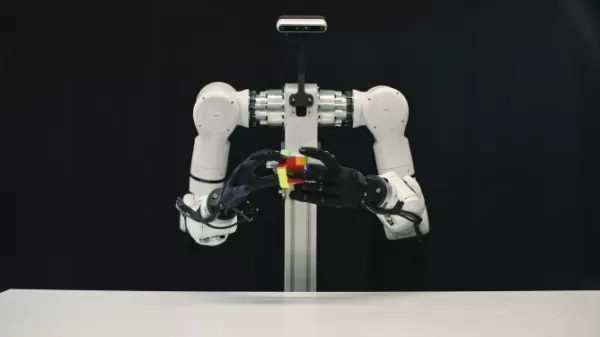 Khosla-backed Genesis AI Unveils Full-Stack Robotics Solution
Genesis AI, a startup that secured a $105 million seed round to develop foundational AI for robotics, has launched its inaugural model, GENE-26.5, featuring unexpectedly dexterous hands. In a demonstration video, the company highlighted various advan
Khosla-backed Genesis AI Unveils Full-Stack Robotics Solution
Genesis AI, a startup that secured a $105 million seed round to develop foundational AI for robotics, has launched its inaugural model, GENE-26.5, featuring unexpectedly dexterous hands. In a demonstration video, the company highlighted various advan
 How US$900m Funding Will Shape XPENG’s Robotics Vision
XPENG’s robotics division secures over US$900 million in funding, achieving a post-money valuation exceeding US$6.3 billion and accelerating the deployment of physical AI. Credit: XPENGSven De Smet, Head of Brand & Marketing at XPENG Europe, describe
How US$900m Funding Will Shape XPENG’s Robotics Vision
XPENG’s robotics division secures over US$900 million in funding, achieving a post-money valuation exceeding US$6.3 billion and accelerating the deployment of physical AI. Credit: XPENGSven De Smet, Head of Brand & Marketing at XPENG Europe, describe
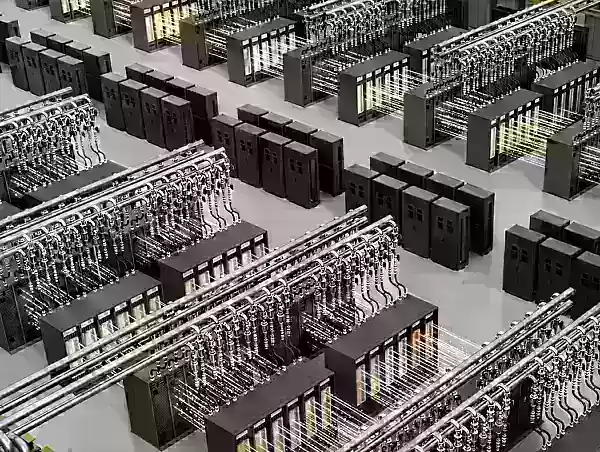 Japan Launches World’s First National AI Infrastructure with NVIDIA
Japan's Ministry of Economy, Trade and Industry plans to deploy approximately 10 million AI-powered robots across 18 industries by 2040, addressing the country's growing labor shortage, according to NHK. Credit: NVIDIAThe Japanese government, along w
Japan Launches World’s First National AI Infrastructure with NVIDIA
Japan's Ministry of Economy, Trade and Industry plans to deploy approximately 10 million AI-powered robots across 18 industries by 2040, addressing the country's growing labor shortage, according to NHK. Credit: NVIDIAThe Japanese government, along w

2026 Latest Best Top-rated AI SERP Analysis Tools for Search Strategy are curated by XIX.AI through rigorous real-world tests and weekly updated rankings. These powerful tools help you unlock hidden optimization opportunities, boost content performance, and gain a competitive edge in search. Discover your perfect tool to elevate your search strategy today. Explore now!
13 tools
xix.ai

2026 Latest Best Top-rated AI Anomaly Detection Tools for KPI Monitoring in SaaS and Ecommerce teams! XIX.AI has curated a powerful, game-changing collection based on rigorous real-world tests and weekly updated rankings. You’ll find detailed free vs paid comparison insights to help you identify the must-try solution that boosts productivity and unlocks your AI edge. Explore now!
10 tools
xix.ai

2026 Latest Best Top-Rated AI Outline Generators for Long-Form SEO Articles, meticulously curated by XIX.AI. These powerful tools offer game-changing assistance in creating high-quality content quickly, boosting writing efficiency significantly. Get a free vs paid comparison along with real-world tests and detailed rankings to help you find the must-try option that suits your needs. Explore now to unlock your AI edge.
8 tools
xix.ai

2026 Latest Best AI Study Tools for Homework and Exam Prep! XIX.AI curates a top-rated list of powerful, game-changing tools that help students boost productivity, streamline homework completion, and ace exams through real-world tests. Get a free vs paid comparison, detailed rankings, and must-try options to unlock your AI edge. Explore now!
10 tools
xix.ai

2026 Latest Best AI Vocal Demo Tools for Songwriters, Hook Creators, and Multi-Language Content Teams! XIX.AI has curated a top-rated list of powerful game-changing tools that go through rigorous real-world tests. You’ll find detailed free vs paid comparison data, comprehensive rankings, and must-try options to help you boost writing efficiency and unlock your creative potential. Explore now to discover your perfect tool for all your content needs!
9 tools
xix.ai

2026 Latest Best Top-rated AI Competitive Research Tools for Small Businesses! XIX.AI has curated a highly powerful game-changing collection, updated weekly with rigorous real-world tests and detailed rankings. You can find a comprehensive free vs paid comparison to help you identify the must-try tools that boost your productivity and give you a competitive edge. Explore now to discover your perfect tool!
9 tools
xix.ai

Interessant, wie kulturelle Unterschiede unsere Sicht auf KI prägen. In Deutschland würde man vielleicht mehr über Datenschutz und Regulierung diskutieren, während es hier um 'Ausbeutung' geht. 🤔 Macht das Roboter wirklich zu einer Art 'kulturellen Spiegel'?
Es curioso cómo la percepción cultural influye en nuestra relación con la tecnología. Mientras en EE.UU. se habla de explotación robótica, en Japón hay una visión más integradora. ¿Será que los occidentales proyectamos nuestros propios traumas históricos en las máquinas? 😅 Esto me hace pensar en la ética detrás de los asistentes virtuales y cómo los tratamos.
Qué interesante estudio sobre las diferencias culturales en el trato a los robots 🧐 En Latinoamérica apenas estamos empezando a adoptar esta tecnología, pero ya veo cómo algunos países podrían malinterpretar su uso. ¿Será que terminaremos romantizando las máquinas como en Japón o explotándolas como en EE.UU.? Parece que el futuro de la ética robótica dependerá mucho de nuestra idiosincrasia...
This article got me thinking—cultural views on AI are wild! Japan's all about harmony with robots, while the US seems more skeptical. Makes me wonder how my own culture shapes my take on AI. 🤔
This article really opened my eyes to how culture shapes our view of AI. Japan’s respect for robots is fascinating, but I wonder if it could lead to over-reliance. Cool study, though! 🤖
Fascinating read! It's wild how Japan's all about harmony with AI, while the US seems more skeptical. Makes me wonder if cultural vibes shape our trust in robots 🤔. Could this affect global AI ethics?












